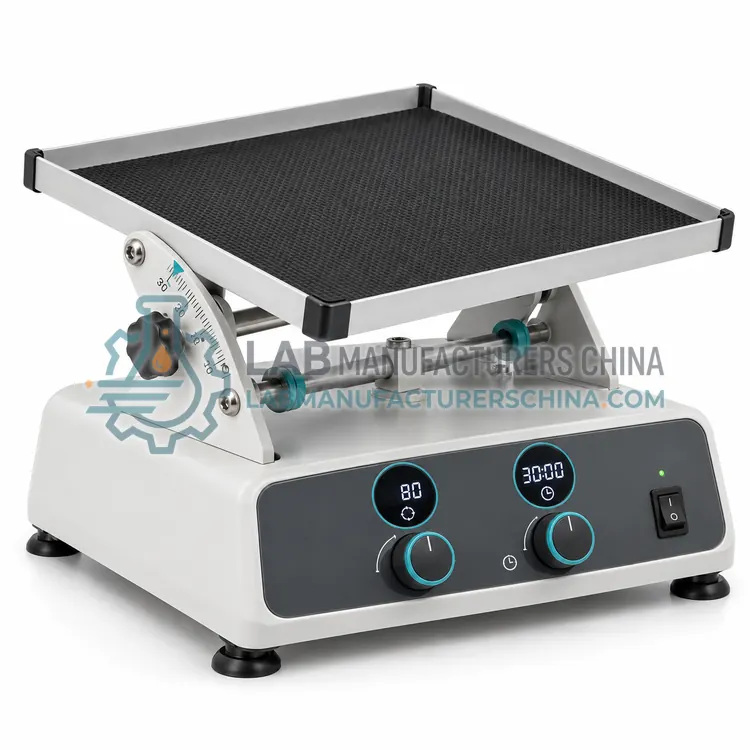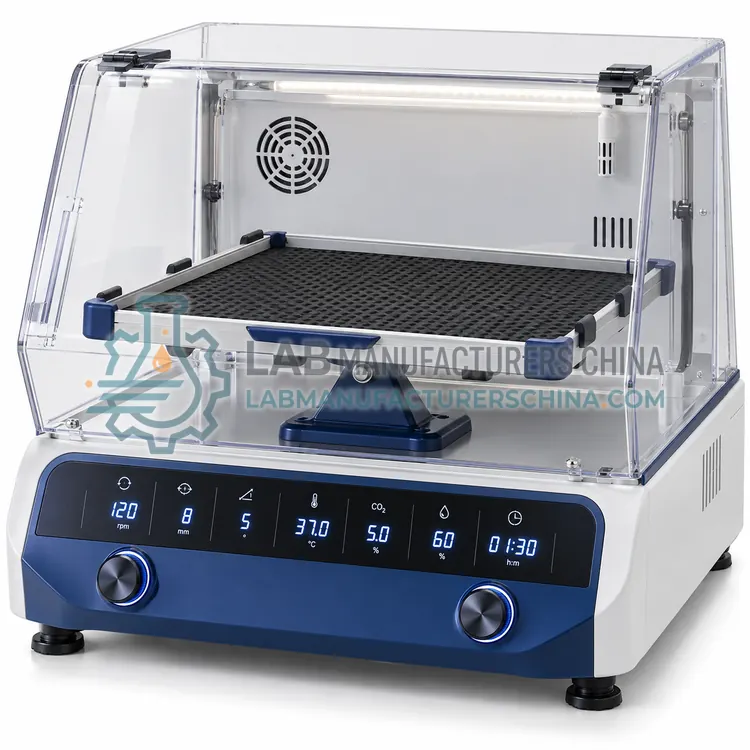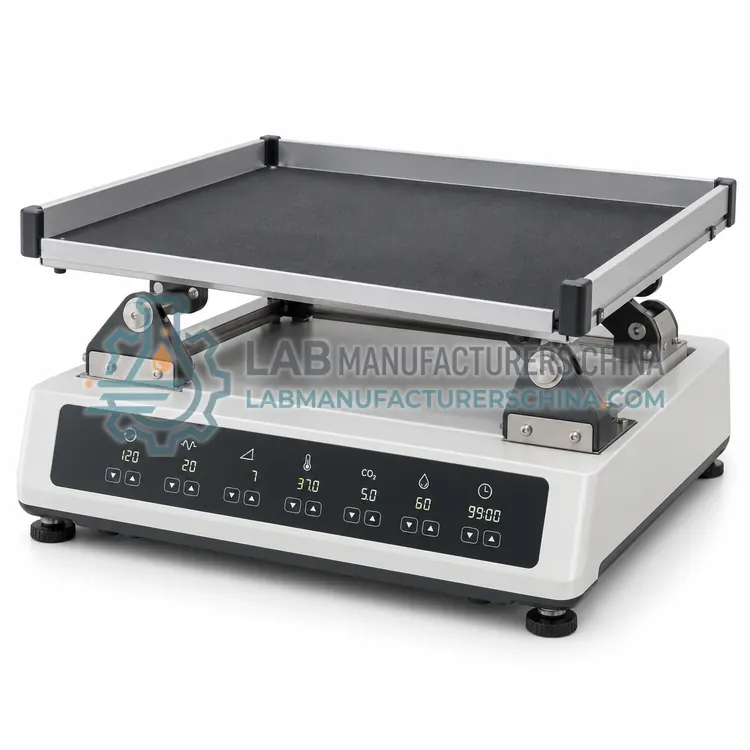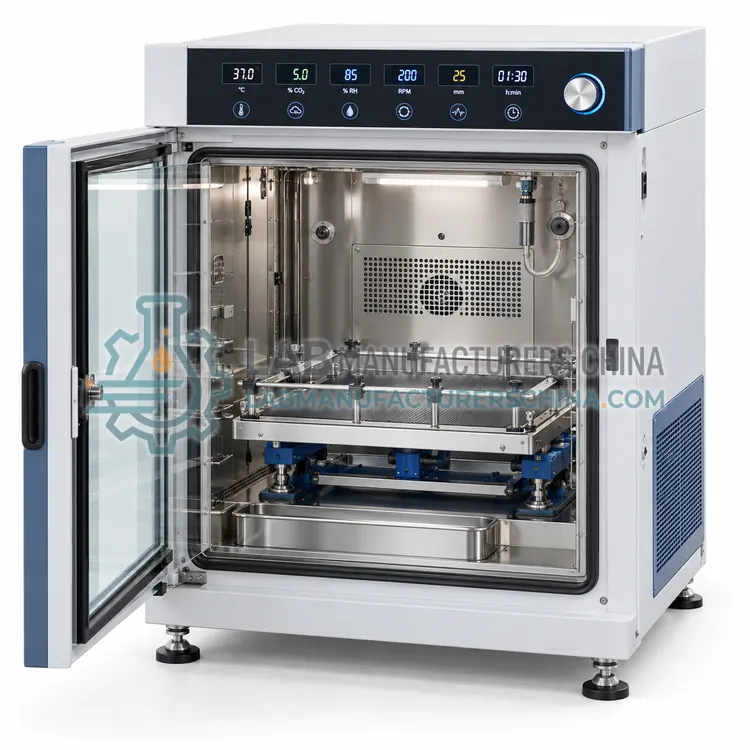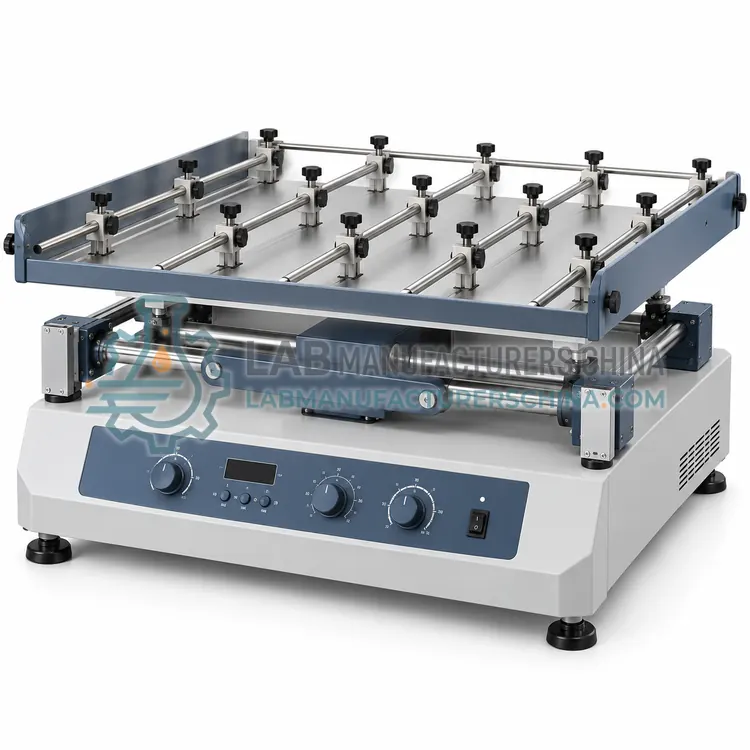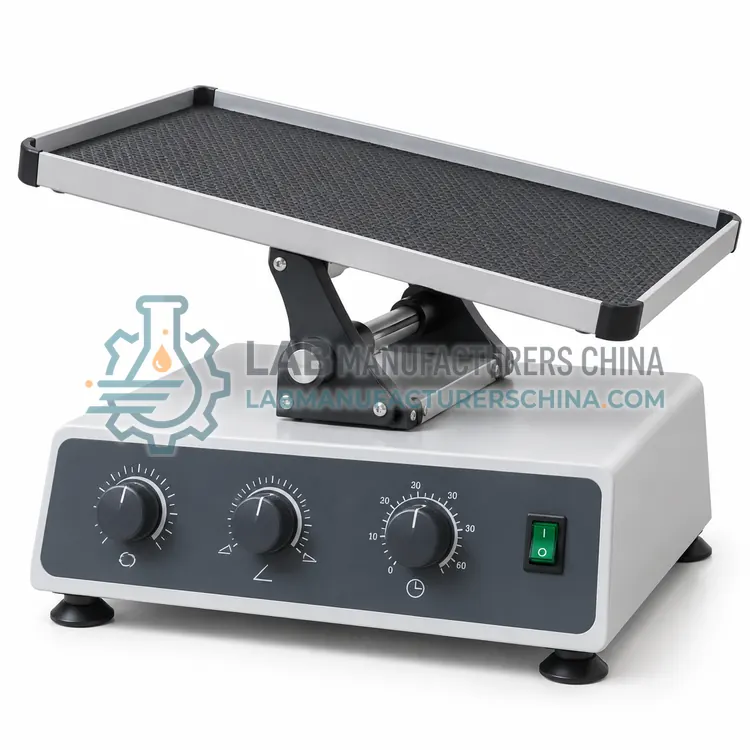
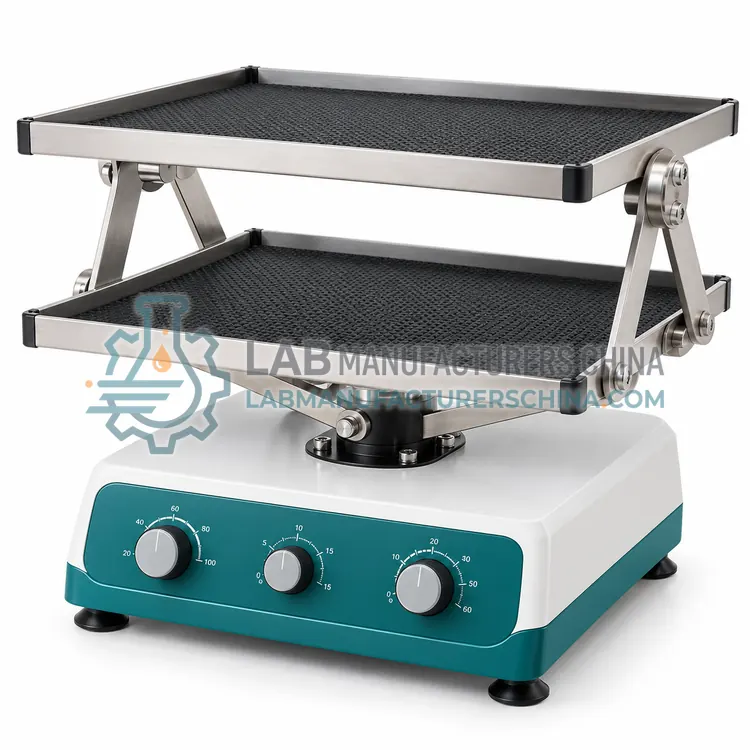
Dual-Platform Rocking Shaker
双平台摇摆摇床
- SKU ROS-0004
- Rocking Shakers
- CE (to be confirmed)
- ISO 9001 manufacturing (to be confirmed)
- RoHS (to be confirmed)
Price on request — FOB / CIF quoted per order
Prices depend on configuration, quantity and destination port.
Key specifications
| Platform size | 200×200 to 350×350 mm each |
|---|---|
| Platforms | 2 |
| Tilt angle | 3–12 degrees |
| Speed range | 5–80 tilts/min |
| Load rating | 1–5 kg per platform |
| Speed control | Shared or independent |
Request a quote Download brochure · to be provided
By Lab Manufacturers China Technical TeamLast reviewed Standards: IEC 61010-1, IEC 61010-2-051, ISO 9001
What is the Dual-Platform Rocking Shaker?
A dual-platform rocking shaker carries two independent tilting platforms in one housing. It is chosen to run two staining or incubation batches side by side while saving valuable and limited bench space.
What is the Dual-Platform Rocking Shaker?
A dual-platform rocking shaker carries two independent tilting platforms in one housing. It is chosen to run two staining or incubation batches side by side while saving valuable and limited bench space.
Overview
The dual-platform rocker places two tilting platforms in one base, each with its own tray area and, in many models, independent speed control, so two staining or blotting runs proceed without interference. Tilt is usually fixed or set per platform, and speeds run 5 to 80 tilts per minute with platforms of 200 to 350 mm each. Load ratings of 1 to 5 kg per platform suit gel frames, membranes and small boxes. A shared motor may drive both platforms, or each may have its own drive for full independence. Rubber mats or clips hold items secure. The design saves bench space and reduces the number of separate rockers, which suits busy blotting and staining laboratories handling several samples at once.
How does it work?
A rocking shaker pivots the platform about a central axis, so one end rises while the other falls, and the motion reverses each cycle. The drive is a motor turning a cam or crank that lifts the platform on alternating sides, and the tilt angle, usually 3 to 15 degrees, sets how far liquid flows each way. Because the movement is slow and symmetrical, shear is low and liquid spreads evenly over membranes, gels and slides without foaming or splashing. Speed is set in tilts per minute, from about 5 to 80, and rubber mats or dimpled platforms keep items from sliding. The gentle action suits fragile membranes and antibody incubations, and the open platform allows trays, gel frames and boxes to be placed directly. Timers and, on some models, programmable tilt and speed improve reproducibility.
What are the key features?
- Two tilting platforms in one housing
- Independent speed control on many models
- Platforms of 200 to 350 mm each
- Load rating of 1 to 5 kg per platform
- Shared or independent drive per platform
- Rubber mats or clips to secure items
What are the technical specifications?
A typical dual-platform rocking shaker configuration offers platform size of 200×200 to 350×350 mm each, platforms of 2, tilt angle of 3–12 degrees, speed range of 5–80 tilts/min, load rating of 1–5 kg per platform and speed control of Shared or independent. Values are indicative of the product class; the exact figures for each configuration are confirmed on the quotation and the calibration documents supplied with the instrument.
Which applications is it used for?
The Dual-Platform Rocking Shaker is used in parallel staining batches, two blotting incubations at once, sample comparison under identical motion and space-limited staining laboratories. Across the wider Rocking Shakers class, laboratories also deploy it for gel staining and destaining, western and Southern blotting and antibody and probe incubation.
Which standards and certifications apply?
Relevant standards and methods include IEC 61010-1, IEC 61010-2-051 and ISO 9001. Certification candidates for this model are CE, ISO 9001 manufacturing and RoHS; each is to be confirmed for the specific configuration before shipment, and certificates are supplied only where they have been issued.
Place the unit on a level, stable surface with clearance for the tilting platform, and use the rubber mat or clips so membranes, gels and boxes do not slide. Load items evenly around the axis so the drive is not strained, and stay within the load rating. For blotting and antibody work, use enough solution to keep the membrane wet but not so much that it floats off. Clean spills promptly and rinse trays to prevent residue that could contaminate later experiments. Check the pivot, cam and belt for wear on schedule, and confirm that the materials suit the solutions and temperatures used, especially in cold rooms.
How do I select the right Dual-Platform Rocking Shaker?
Select the dual-platform rocker when two batches must run side by side or under identical motion, and bench space is limited. Two single rockers give full independence at higher cost. In the RFQ, specify platform count and size, independent speed, tilt and load per platform.
How does it compare with other Rocking Shakers variants?
Choose a rocking shaker when gentle, low-shear movement is needed, as for gel staining, membrane washing, blotting and antibody incubation, where orbital or reciprocal motion could damage the substrate or cause foaming. Set the tilt angle from the task, using 3 to 8 degrees for membranes and slides and 8 to 15 degrees for mixing larger volumes. Match the platform size and mat to the trays, frames or boxes you will place on it, and confirm the load rating. Decide whether a fixed or adjustable tilt is needed, and whether a timer, digital control or dual platform improves your workflow. Confirm that the unit suits the temperature, such as a cold room, where it will be used.
Full specifications
| Platform size | 200×200 to 350×350 mm each |
|---|---|
| Platforms | 2 |
| Tilt angle | 3–12 degrees |
| Speed range | 5–80 tilts/min |
| Load rating | 1–5 kg per platform |
| Speed control | Shared or independent |
| Timer range | 1 min to 99 h |
| Speed accuracy | ±1 tilt/min |
| Power | 40–120 W |
| Power supply | 220 V, 50/60 Hz |
Indicative values for this product class. Final specifications are confirmed on the quotation and in the calibration documents supplied with the instrument.
Applications
- Parallel staining batches
- Two blotting incubations at once
- Sample comparison under identical motion
- Space-limited staining laboratories
Key features
- Two tilting platforms in one housing
- Independent speed control on many models
- Platforms of 200 to 350 mm each
- Load rating of 1 to 5 kg per platform
- Shared or independent drive per platform
- Rubber mats or clips to secure items
Frequently asked questions about Dual-Platform Rocking Shaker
On many models, yes, with separate speed control so each batch can run at its own setting. On simpler units a shared motor drives both platforms at the same speed, so the two runs must use identical conditions.
Yes. It replaces two separate rockers with one housing, halving the bench footprint and reducing cable clutter. This suits staining and blotting benches where several samples are processed at once but space is limited.
On models with independent tilt, yes, so a gentle membrane incubation can run alongside stronger mixing. On shared-tilt models both platforms use the same angle, and the tilt is set by the common mechanism.
It gently tilts a platform so liquid moves back and forth over a membrane, gel or sample. Typical uses are gel staining, blotting, antibody incubation, membrane washing and blood mixing, where low shear and even wetting matter more than vigorous agitation.
Use 3 to 8 degrees for membranes, gels and slides, where gentle flow prevents damage, and 8 to 15 degrees when mixing larger volumes or thicker samples. Higher angles move liquid further but can wash small items off the platform.
Most run 5 to 80 tilts per minute. Slow speeds suit antibody incubation and fragile membranes, while faster speeds mix solutions more quickly. The method usually specifies the setting, and gentle speeds are preferred for long incubations.
Related models