Lab Manufacturers China

Reciprocal Shakers

往复摇床

RES · Laboratory Shakers · 5 models

By Lab Manufacturers China Technical TeamLast reviewed Standards: IEC 61010-1, IEC 61010-2-051, ISO 9001

Standards referenced

  • IEC 61010-1
  • IEC 61010-2-051
  • ISO 9001

What are Reciprocal Shakers?

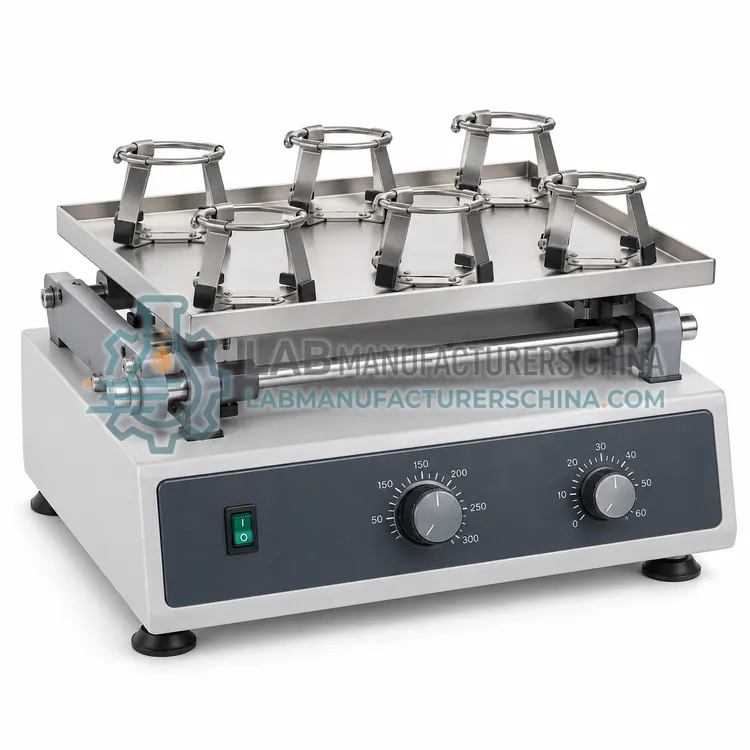
Reciprocal shakers move a platform in a straight back-and-forth line, producing a shearing action stronger than orbital motion. Strokes run from 10 to 50 mm at 20 to 300 strokes per minute, and they are used for washing, extraction, staining and shear-sensitive mixing.

5 models of Reciprocal Shakers

The 5 models below are current configurations; specifications are confirmed on quotation.

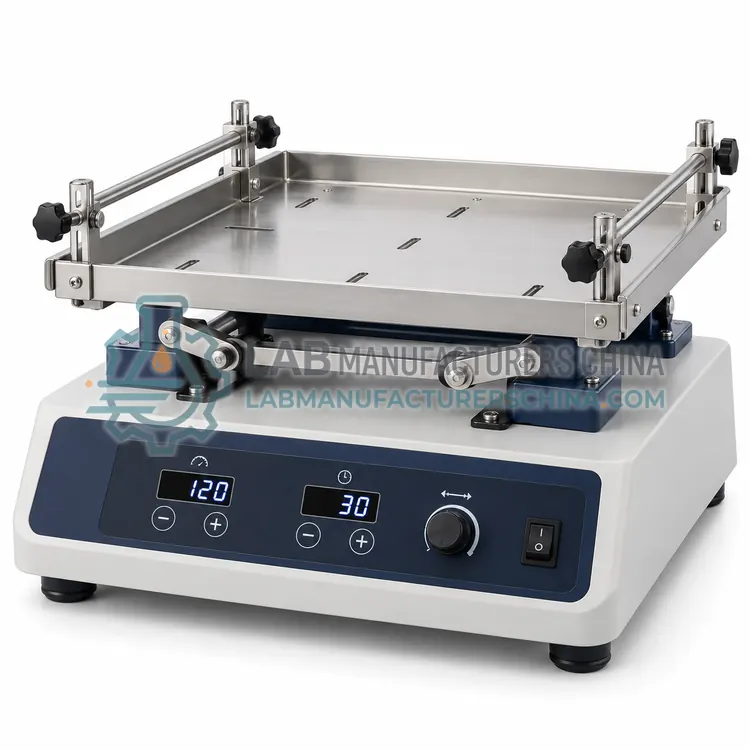
Benchtop Reciprocating Shaker

台式往复摇床

  • RES-0001
  • Reciprocal Shakers
  • CE (to be confirmed)
  • ISO 9001 manufacturing (to be confirmed)
  • RoHS (to be confirmed)
Platform size:
250×250 to 400×400 mm
Stroke length:
10–30 mm
Speed range:
20–250 strokes/min
Load rating:
2–8 kg
Speed accuracy:
±1 stroke/min
Timer range:
1 min to 99 h

A benchtop reciprocating shaker is a compact linear-motion unit for routine washing, extraction and staining. It is chosen for small vessel sets and individual workstations where modest loads are handled several times a day.

Request a quote
View details

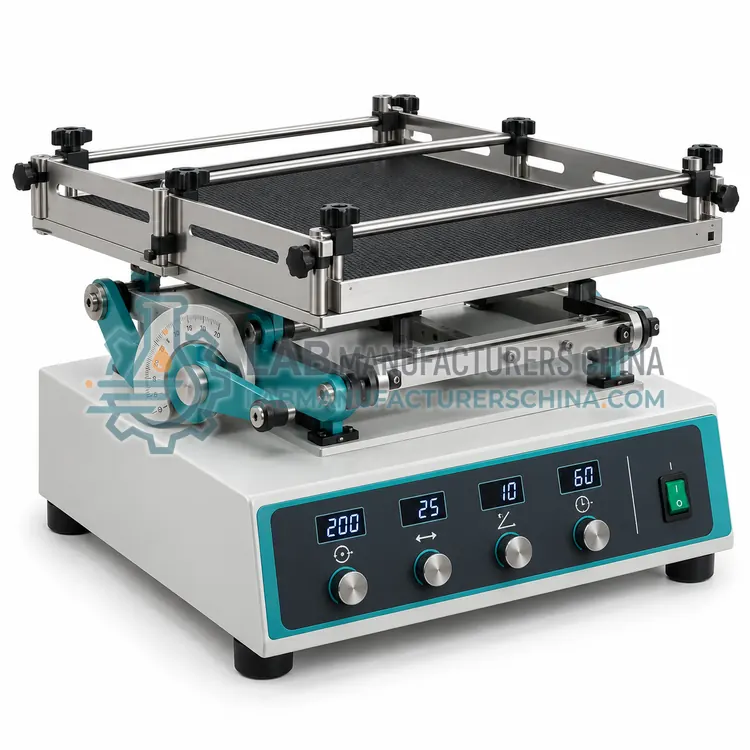
Digital Reciprocating Shaker

数字往复摇床

  • RES-0002
  • Reciprocal Shakers
  • CE (to be confirmed)
  • ISO 9001 manufacturing (to be confirmed)
  • RoHS (to be confirmed)
Platform size:
300×300 to 500×500 mm
Stroke length:
15–40 mm
Speed range:
20–250 strokes/min
Load rating:
5–15 kg
Speed resolution:
1 stroke/min
Speed accuracy:
±1 stroke/min

A digital reciprocating shaker sets and holds stroke frequency and time precisely with a microprocessor controller. It is chosen when linear-motion methods must be reproducible, documented and transferred reliably between operators and sites.

Request a quote
View details

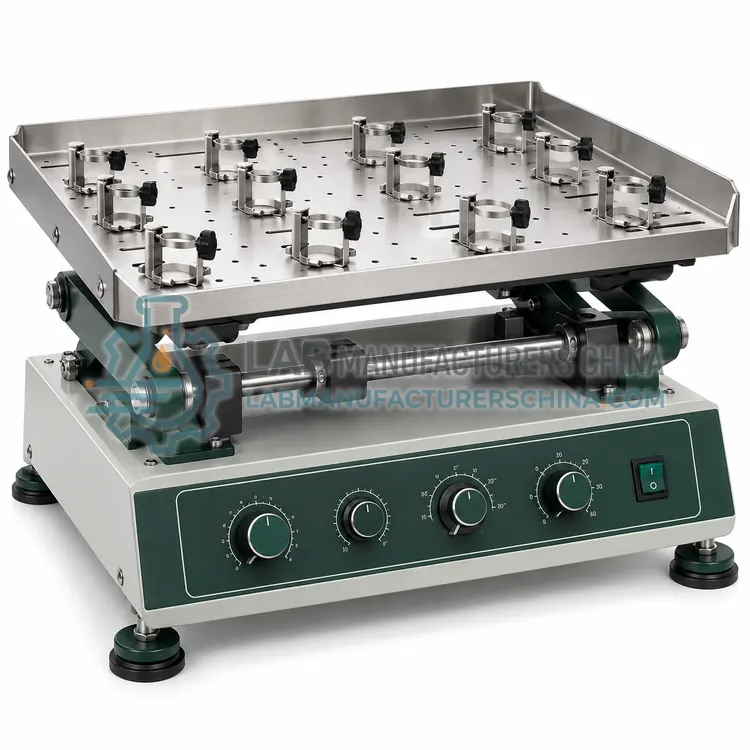
Adjustable-Stroke Reciprocating Shaker

可调行程往复摇床

  • RES-0003
  • Reciprocal Shakers
  • CE (to be confirmed)
  • ISO 9001 manufacturing (to be confirmed)
  • RoHS (to be confirmed)
Platform size:
300×300 to 600×600 mm
Stroke length:
10–50 mm, adjustable
Speed range:
20–300 strokes/min
Load rating:
5–20 kg
Stroke adjustment:
Continuous or stepped
Speed accuracy:
±1 stroke/min

An adjustable-stroke reciprocating shaker lets the operator change stroke length as well as speed for different methods. It is chosen when one unit must cover both gentle and vigorous linear agitation methods.

Request a quote
View details

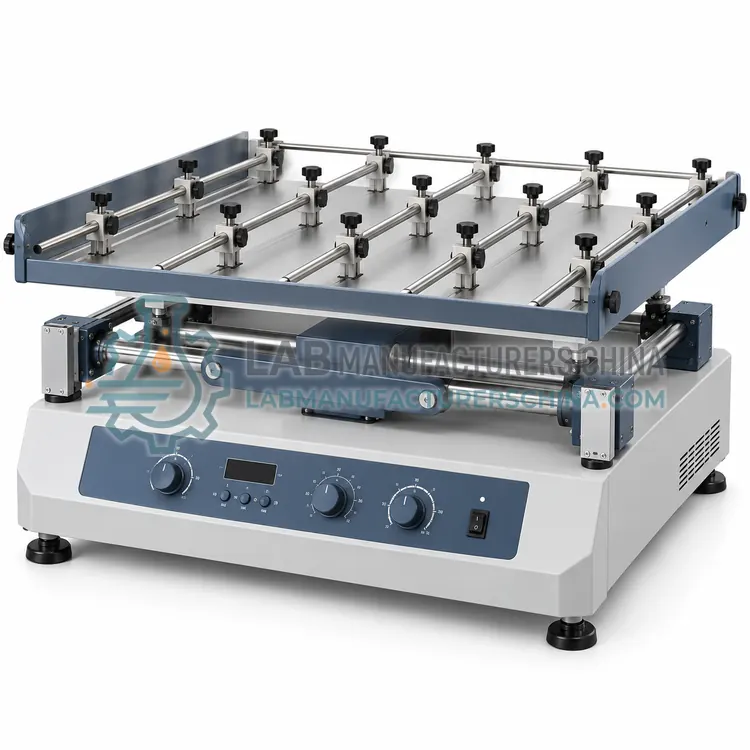
Heavy-Duty Reciprocating Shaker

重载往复摇床

  • RES-0004
  • Reciprocal Shakers
  • CE (to be confirmed)
  • ISO 9001 manufacturing (to be confirmed)
  • RoHS (to be confirmed)
Platform size:
500×500 to 1000×1000 mm
Stroke length:
20–50 mm
Speed range:
20–250 strokes/min
Load rating:
20–60 kg
Duty cycle:
Continuous
Vibration control:
Counterweight or opposed platform

A heavy-duty reciprocating shaker drives large loads continuously with reinforced guides and strong bearings. It is chosen for dense vessel sets, large trays and multi-day linear agitation in the most demanding of workflows.

Request a quote
View details

Large-Capacity Reciprocating Shaker

大容量往复摇床

  • RES-0005
  • Reciprocal Shakers
  • CE (to be confirmed)
  • ISO 9001 manufacturing (to be confirmed)
  • RoHS (to be confirmed)
Platform size:
700×700 to 1200×1200 mm
Stroke length:
20–50 mm
Speed range:
20–200 strokes/min
Load rating:
20–50 kg
Trays supported:
2–6
Duty cycle:
Continuous

A large-capacity reciprocating shaker provides a wide platform for many trays, racks or vessels in one run. It is chosen when the working area rather than the load mass limits the throughput of the laboratory.

Request a quote
View details

Compare Reciprocal Shakers models

ModelPlatform sizeStroke lengthSpeed rangeLoad ratingSpeed accuracy
Benchtop Reciprocating ShakerRES-0001250×250 to 400×400 mm10–30 mm20–250 strokes/min2–8 kg±1 stroke/min
Digital Reciprocating ShakerRES-0002300×300 to 500×500 mm15–40 mm20–250 strokes/min5–15 kg±1 stroke/min
Adjustable-Stroke Reciprocating ShakerRES-0003300×300 to 600×600 mm10–50 mm, adjustable20–300 strokes/min5–20 kg±1 stroke/min
Heavy-Duty Reciprocating ShakerRES-0004500×500 to 1000×1000 mm20–50 mm20–250 strokes/min20–60 kg±1 stroke/min
Large-Capacity Reciprocating ShakerRES-0005700×700 to 1200×1200 mm20–50 mm20–200 strokes/min20–50 kg—

Indicative values for this product class. Final specifications are confirmed on the quotation and in the calibration documents supplied with the instrument.

How do Reciprocal Shakers work?

A reciprocal shaker converts rotary motor motion into linear motion with a crank and slider or an eccentric link, so the platform moves back and forth along one axis. Stroke length is set by the crank radius and typically ranges from 10 to 50 mm, while speed is set in strokes per minute from about 20 to 300. The back-and-forth movement creates shear at the liquid surface and along the vessel wall, which helps with washing, extraction and mixing of viscous samples where orbital motion alone is too gentle. A guide rail or linear bearing keeps the platform straight, and a counterweight or dual-opposed platform reduces vibration. Closed-loop control holds speed against load, timers run the cycle, and clamps or trays secure vessels so they do not slide with the motion.

Which Reciprocal Shakers variants are available?

  • Benchtop Reciprocating Shaker — A benchtop reciprocating shaker is a compact linear-motion unit for routine washing, extraction and staining.
  • Digital Reciprocating Shaker — A digital reciprocating shaker sets and holds stroke frequency and time precisely with a microprocessor controller.
  • Adjustable-Stroke Reciprocating Shaker — An adjustable-stroke reciprocating shaker lets the operator change stroke length as well as speed for different methods.
  • Heavy-Duty Reciprocating Shaker — A heavy-duty reciprocating shaker drives large loads continuously with reinforced guides and strong bearings.
  • Large-Capacity Reciprocating Shaker — A large-capacity reciprocating shaker provides a wide platform for many trays, racks or vessels in one run.

How do I choose the right variant?

Choose a reciprocal shaker when linear shear is wanted rather than swirling, as in washing, extraction, staining and some homogenization steps. Set the stroke length from the vessel and the shear needed, since longer strokes move the liquid more but can splash, and set the speed from the method. Match the platform and clamps to the vessels, and the load rating to the total mass at the chosen speed. Decide between a single and an opposed dual platform, where the second platform balances the first and reduces vibration. Confirm the duty cycle for long runs, and specify the timer, soft start and power supply.

Where are Reciprocal Shakers used?

Reciprocal Shakers are specified in washing and rinsing of samples, liquid-liquid and solid-liquid extraction, staining and destaining procedures, mixing of viscous or high-solids samples, elution and washing in assays and soil and waste extraction.

Which standards and certifications apply?

Work with Reciprocal Shakers is commonly governed by IEC 61010-1, IEC 61010-2-051 and ISO 9001. Instrument certifications such as CE marking are confirmed per configuration and never assumed.

What are the key considerations before purchase?

Clamp or tray every vessel so it cannot slide with the reciprocating motion, and load the platform symmetrically to reduce vibration. Place the unit on a level, rigid surface with clearance for the moving platform, since reciprocal action can transmit vibration to the bench. Stay within the load rating at the working stroke and speed, and use a soft start or lower speed when vessels are full. Clean spills promptly to protect the rails and clamps. Lubricate or inspect the linear bearings and guides on schedule, check belts and fasteners for wear, and replace worn clamps that no longer hold vessels firmly.

Frequently asked questions about Reciprocal Shakers

A reciprocal shaker moves the platform in a straight line, creating shear that suits washing, extraction and staining. An orbital shaker moves it in a circle, giving smooth swirling motion better suited to culture, gentle mixing and aeration.

Need help specifying Reciprocal Shakers?

Request a quote