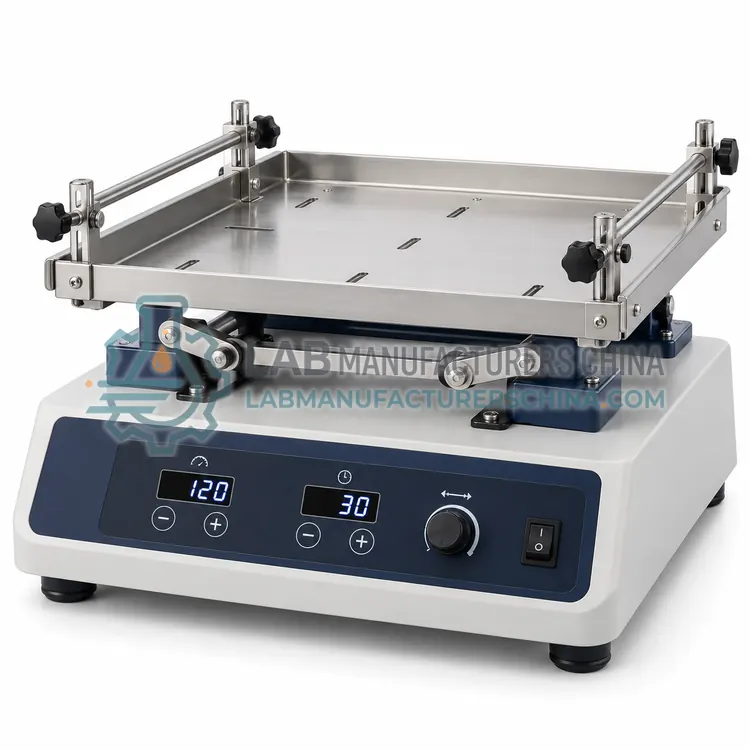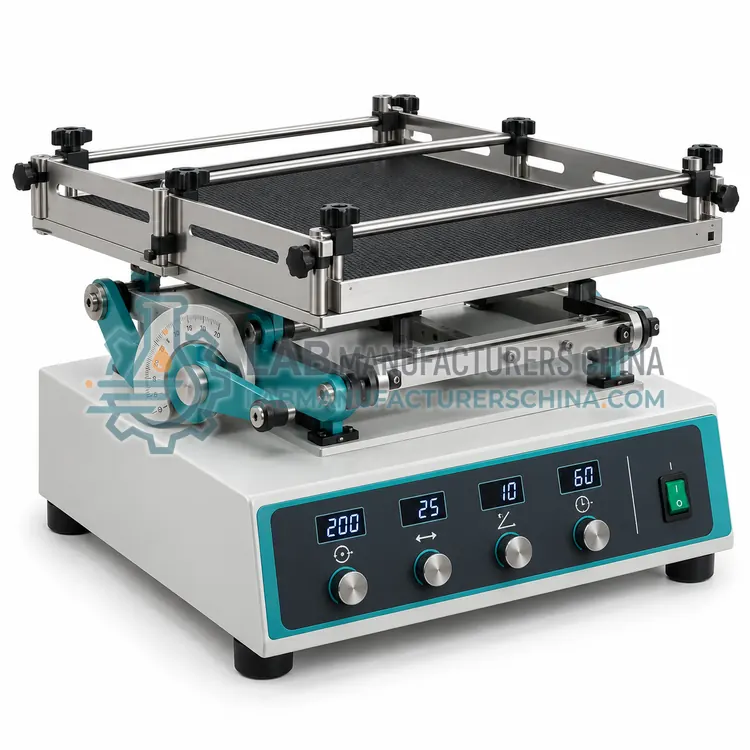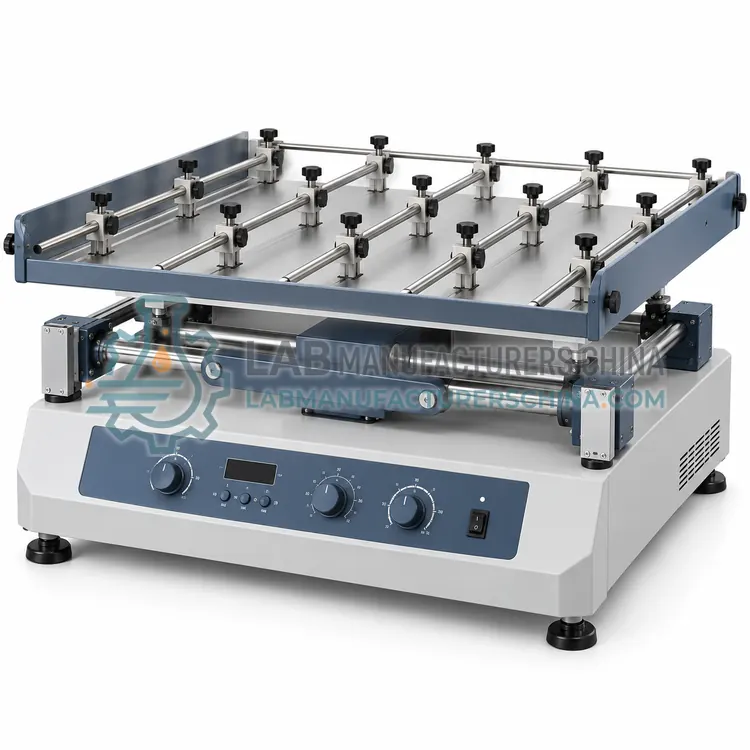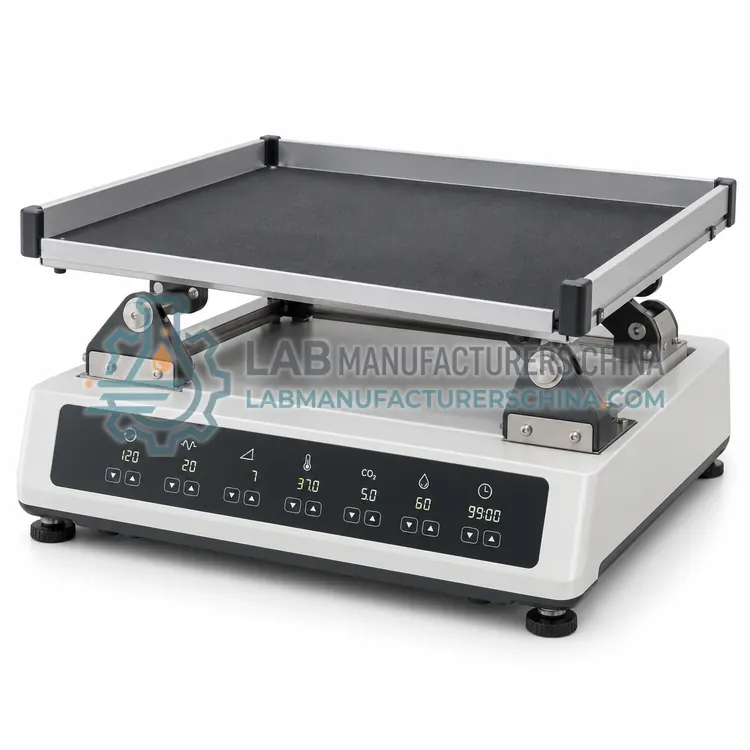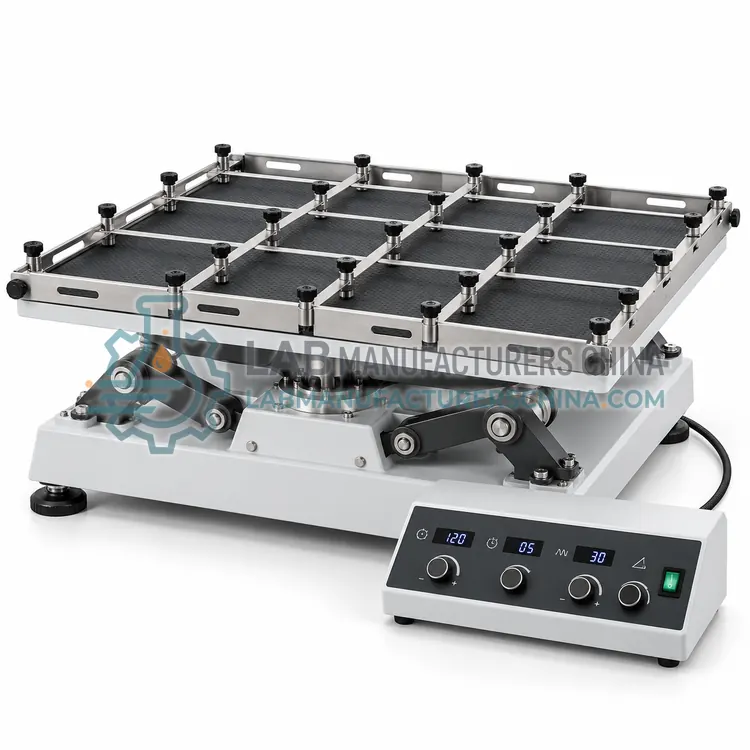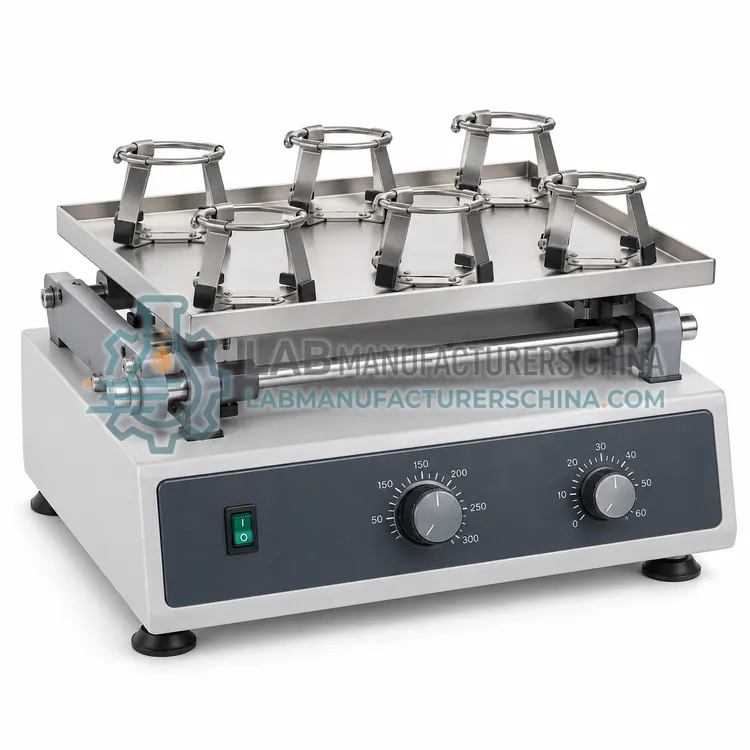
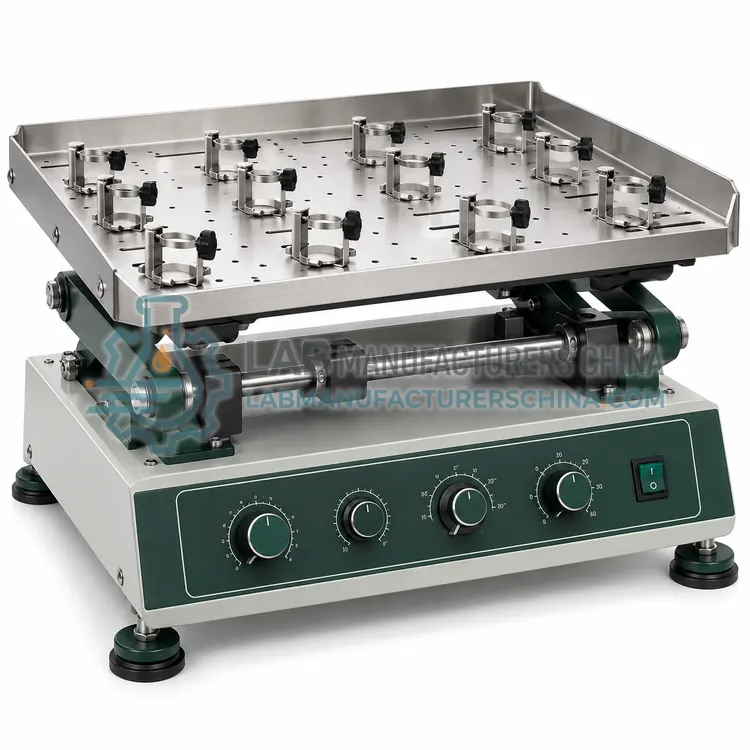
Heavy-Duty Reciprocating Shaker
重载往复摇床
- SKU RES-0004
- Reciprocal Shakers
- CE (to be confirmed)
- ISO 9001 manufacturing (to be confirmed)
- RoHS (to be confirmed)
Price on request — FOB / CIF quoted per order
Prices depend on configuration, quantity and destination port.
Key specifications
| Platform size | 500×500 to 1000×1000 mm |
|---|---|
| Stroke length | 20–50 mm |
| Speed range | 20–250 strokes/min |
| Load rating | 20–60 kg |
| Duty cycle | Continuous |
| Vibration control | Counterweight or opposed platform |
Request a quote Download brochure · to be provided
By Lab Manufacturers China Technical TeamLast reviewed Standards: IEC 61010-1, IEC 61010-2-051, ISO 9001
What is the Heavy-Duty Reciprocating Shaker?
A heavy-duty reciprocating shaker drives large loads continuously with reinforced guides and strong bearings. It is chosen for dense vessel sets, large trays and multi-day linear agitation in the most demanding of workflows.
What is the Heavy-Duty Reciprocating Shaker?
A heavy-duty reciprocating shaker drives large loads continuously with reinforced guides and strong bearings. It is chosen for dense vessel sets, large trays and multi-day linear agitation in the most demanding of workflows.
Overview
The heavy-duty reciprocal shaker is built for weight and long runs, with a reinforced platform of 500 to 1000 mm, load ratings of 20 to 60 kg and linear guides or bearings rated for continuous duty. Strokes of 20 to 50 mm and speeds of 20 to 250 strokes per minute suit bulky trays, racks and large vessels. A powerful motor with soft start protects the drive and reduces splashing, and closed-loop control holds speed under changing load. Counterweights or an opposed second platform cancel much of the vibration, so the unit stays put and runs quietly. Platforms accept large trays, clamp rails and racks. It suits industrial extraction, large-format washing and scale-up mixing where reliability over long periods matters.
How does it work?
A reciprocal shaker converts rotary motor motion into linear motion with a crank and slider or an eccentric link, so the platform moves back and forth along one axis. Stroke length is set by the crank radius and typically ranges from 10 to 50 mm, while speed is set in strokes per minute from about 20 to 300. The back-and-forth movement creates shear at the liquid surface and along the vessel wall, which helps with washing, extraction and mixing of viscous samples where orbital motion alone is too gentle. A guide rail or linear bearing keeps the platform straight, and a counterweight or dual-opposed platform reduces vibration. Closed-loop control holds speed against load, timers run the cycle, and clamps or trays secure vessels so they do not slide with the motion.
What are the key features?
- Reinforced platform of 500 to 1000 mm
- Load rating of 20 to 60 kg
- Linear guides rated for continuous duty
- Strokes of 20 to 50 mm at 20 to 250 per minute
- Counterweight or opposed platform to reduce vibration
- Powerful motor with soft start
What are the technical specifications?
A typical heavy-duty reciprocating shaker configuration offers platform size of 500×500 to 1000×1000 mm, stroke length of 20–50 mm, speed range of 20–250 strokes/min, load rating of 20–60 kg, duty cycle of Continuous and vibration control of Counterweight or opposed platform. Values are indicative of the product class; the exact figures for each configuration are confirmed on the quotation and the calibration documents supplied with the instrument.
Which applications is it used for?
The Heavy-Duty Reciprocating Shaker is used in industrial-scale extraction, large-format washing and rinsing, scale-up mixing with many vessels and multi-day continuous agitation. Across the wider Reciprocal Shakers class, laboratories also deploy it for washing and rinsing of samples, liquid-liquid and solid-liquid extraction and staining and destaining procedures.
Which standards and certifications apply?
Relevant standards and methods include IEC 61010-1, IEC 61010-2-051 and ISO 9001. Certification candidates for this model are CE, ISO 9001 manufacturing and RoHS; each is to be confirmed for the specific configuration before shipment, and certificates are supplied only where they have been issued.
Clamp or tray every vessel so it cannot slide with the reciprocating motion, and load the platform symmetrically to reduce vibration. Place the unit on a level, rigid surface with clearance for the moving platform, since reciprocal action can transmit vibration to the bench. Stay within the load rating at the working stroke and speed, and use a soft start or lower speed when vessels are full. Clean spills promptly to protect the rails and clamps. Lubricate or inspect the linear bearings and guides on schedule, check belts and fasteners for wear, and replace worn clamps that no longer hold vessels firmly.
How do I select the right Heavy-Duty Reciprocating Shaker?
Select the heavy-duty reciprocal shaker when loads exceed about 10 kg, trays are large, or agitation runs for days. Benchtop units are cheaper for light, intermittent work. In the RFQ, specify load mass, platform size, stroke, speed, duty cycle and clamp or tray types.
How does it compare with other Reciprocal Shakers variants?
Choose a reciprocal shaker when linear shear is wanted rather than swirling, as in washing, extraction, staining and some homogenization steps. Set the stroke length from the vessel and the shear needed, since longer strokes move the liquid more but can splash, and set the speed from the method. Match the platform and clamps to the vessels, and the load rating to the total mass at the chosen speed. Decide between a single and an opposed dual platform, where the second platform balances the first and reduces vibration. Confirm the duty cycle for long runs, and specify the timer, soft start and power supply.
Full specifications
| Platform size | 500×500 to 1000×1000 mm |
|---|---|
| Stroke length | 20–50 mm |
| Speed range | 20–250 strokes/min |
| Load rating | 20–60 kg |
| Duty cycle | Continuous |
| Vibration control | Counterweight or opposed platform |
| Soft start | Standard |
| Speed accuracy | ±1 stroke/min |
| Power | 200–600 W |
| Power supply | 220/380 V, 50/60 Hz |
Indicative values for this product class. Final specifications are confirmed on the quotation and in the calibration documents supplied with the instrument.
Applications
- Industrial-scale extraction
- Large-format washing and rinsing
- Scale-up mixing with many vessels
- Multi-day continuous agitation
Key features
- Reinforced platform of 500 to 1000 mm
- Load rating of 20 to 60 kg
- Linear guides rated for continuous duty
- Strokes of 20 to 50 mm at 20 to 250 per minute
- Counterweight or opposed platform to reduce vibration
- Powerful motor with soft start
Frequently asked questions about Heavy-Duty Reciprocating Shaker
Typically 20 to 60 kg when balanced and evenly distributed, with the rating falling at longer strokes and higher speeds. Guides, bearings and the crank are sized together, so the rating applies only with the load arranged as recommended.
A counterweight or an opposed second platform moves out of phase with the load, cancelling much of the reaction force. This keeps the unit quiet and prevents it from creeping across the floor, and it allows heavier loads at higher speeds.
Yes, when rated for continuous duty and set up correctly. Clamps must hold vessels firmly, the load must be balanced and within rating, and the timer set for the run. An alarm or automatic stop on overload adds safety for unattended operation.
A reciprocal shaker moves the platform in a straight line, creating shear that suits washing, extraction and staining. An orbital shaker moves it in a circle, giving smooth swirling motion better suited to culture, gentle mixing and aeration.
Use 10 to 20 mm for gentle washing and small vessels, and 25 to 50 mm when more liquid movement or shear is needed. Longer strokes agitate more strongly but splash more, so the stroke is matched to the vessel and the method.
The second platform moves in opposition to the first, which cancels much of the vibration and lets the unit run more quietly and stably. This is useful for heavy loads and for long runs where vibration would otherwise creep the unit across the bench.
Related models