Lab Manufacturers China

Automated Urinalysis Systems

全自动尿液分析系统

AUS · Urinalysis Analyzers · 5 models

By Lab Manufacturers China Technical TeamLast reviewed Standards: ISO 15189, CLSI GP16, CLSI EP05

Standards referenced

  • ISO 15189
  • CLSI GP16
  • CLSI EP05
  • CLSI AUTO10
  • CLSI POCT04
  • IEC 61010-1
  • IEC 61010-2-101

What are Automated Urinalysis Systems?

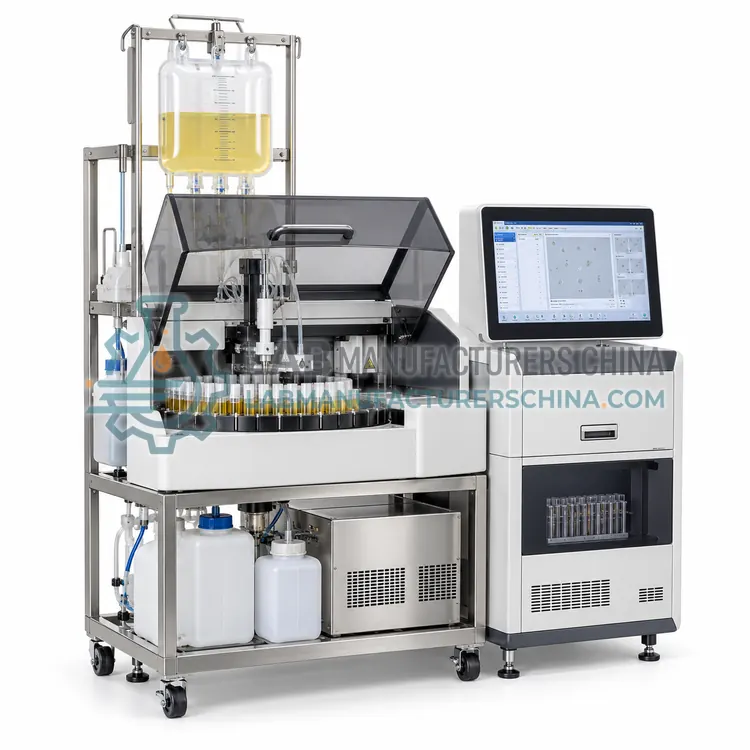
Automated urinalysis systems combine reagent strip chemistry with sediment analysis on one platform, so a single urine sample yields a complete report. They handle sample loading, mixing, measurement and reporting automatically and serve hospital laboratories with routine urinalysis workloads.

5 models of Automated Urinalysis Systems

The 5 models below are current configurations; specifications are confirmed on quotation.

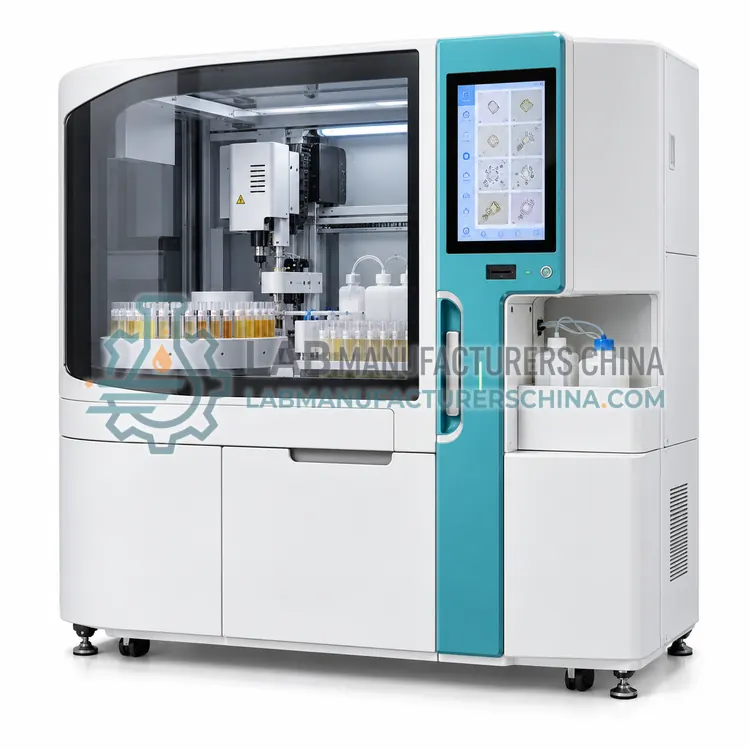
Automated Urinalysis Workstation

全自动尿液分析工作站

  • AUS-0001
  • Automated Urinalysis Systems
  • CE (to be confirmed)
  • ISO 13485 manufacturing (to be confirmed)
  • NMPA class II registration (to be confirmed)
Combined throughput:
60–120 samples/h
Chemistry parameters:
10–14 parameters per sample
Sediment method:
Flow cytometry or digital imaging
Sediment particles reported:
RBC, WBC, epithelial cells, casts, crystals, bacteria, yeast
Sample volume:
1–3 mL fresh urine
Sample positions:
40–80 with continuous loading

An automated urinalysis workstation combines strip chemistry and sediment analysis in one instrument with a shared sample path and single report. It suits hospital laboratories that report chemistry and microscopy results together for several hundred samples per day.

Request a quote
View details

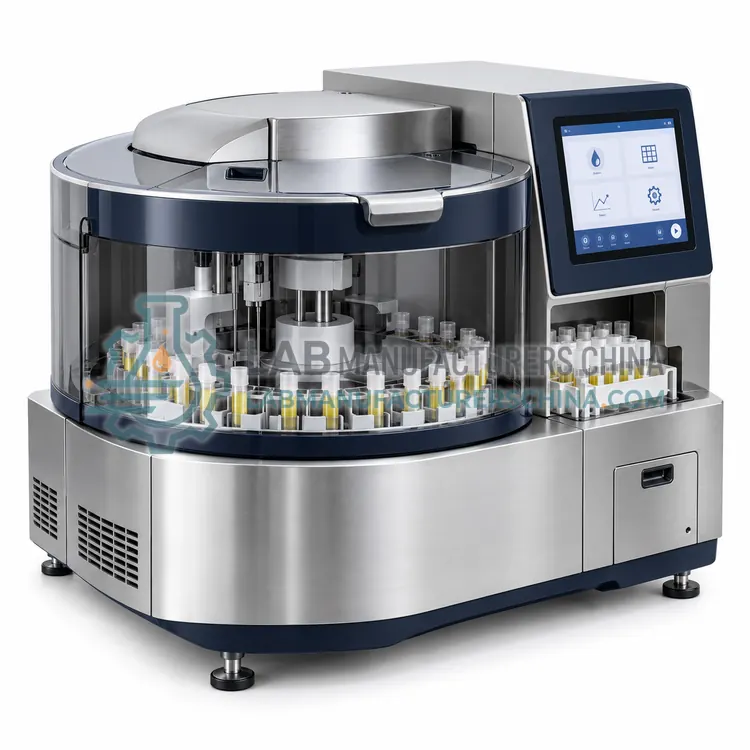
Fully Automated Urinalysis Analyzer with Flow Imaging Sediment Module

带流动成像沉渣模块的全自动尿液分析仪

  • AUS-0002
  • Automated Urinalysis Systems
  • CE (to be confirmed)
  • ISO 13485 manufacturing (to be confirmed)
  • NMPA class II registration (to be confirmed)
Sediment method:
Flow imaging with digital pattern recognition
Images per sample:
Up to 1,000 particle images stored
Particle classes:
RBC, WBC, epithelial, casts, crystals, bacteria, yeast
Throughput:
60–120 samples/h combined
Sample volume:
1–2 mL per sediment analysis
Image resolution:
About 1 µm per pixel

This analyzer uses flow imaging in the sediment module, capturing digital images of particles as they pass a camera and classifying them with pattern recognition. It retains images for review, which suits laboratories that want visual evidence with each sediment result.

Request a quote
View details

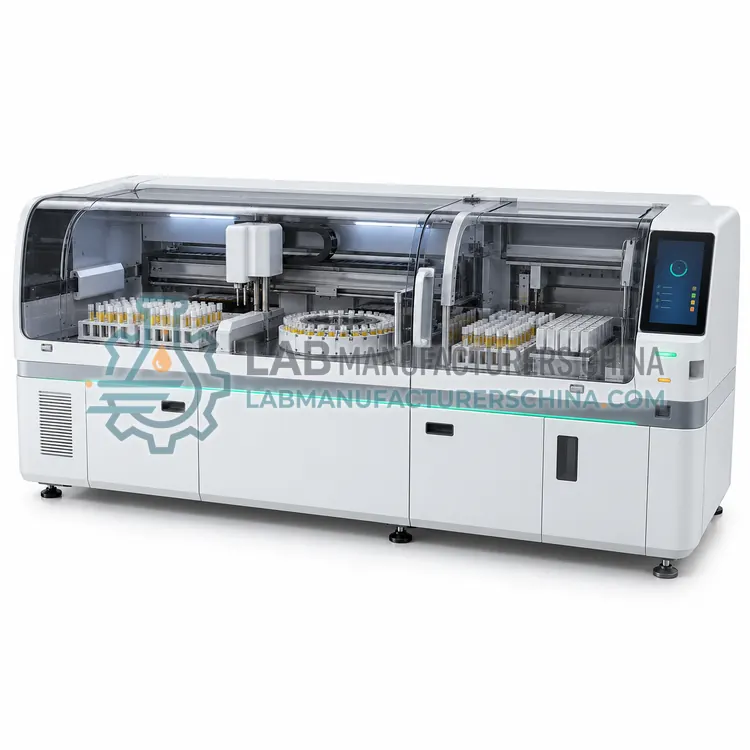
Modular Automated Urinalysis System

模块化全自动尿液分析系统

  • AUS-0003
  • Automated Urinalysis Systems
  • CE (to be confirmed)
  • ISO 13485 manufacturing (to be confirmed)
  • NMPA class II registration (to be confirmed)
Modules:
Chemistry module plus sediment module
Throughput per module:
Chemistry 120–200 strips/h; sediment 60–120 samples/h
Sample transfer:
Short transfer mechanism or manual transfer
Middleware functions:
Result merging, review rules, quality control
Sample volume:
1–3 mL shared; 0.5 mL minimum per module
Data storage:
50,000 records across the system

A modular urinalysis system consists of a chemistry module and a sediment module that can operate together or independently, sharing one middleware layer. It suits laboratories that want to add sediment analysis later or keep one module running during maintenance.

Request a quote
View details

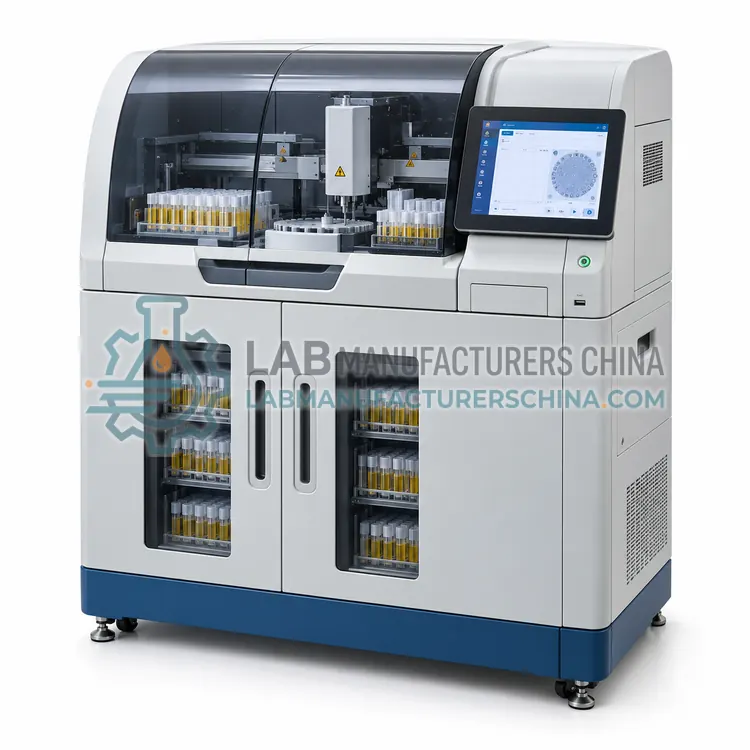
Track-Connected Automated Urinalysis System

轨道连接的全自动尿液分析系统

  • AUS-0004
  • Automated Urinalysis Systems
  • CE (to be confirmed)
  • ISO 13485 manufacturing (to be confirmed)
  • NMPA class II registration (to be confirmed)
Connection:
Track divert and return modules
Combined throughput:
80–150 samples/h
Tube handling:
Barcode read at entry and exit
Chemistry parameters:
10–14 parameters per sample
Sediment method:
Flow cytometry or flow imaging
Result generation:
Combined report under one accession number

This system connects urinalysis chemistry and sediment modules to a laboratory automation track, receiving urine tubes by barcode and returning them after analysis. It suits core laboratories where urinalysis is one discipline on a shared automation line.

Request a quote
View details

High-Throughput Automated Urinalysis System

高通量全自动尿液分析系统

  • AUS-0005
  • Automated Urinalysis Systems
  • CE (to be confirmed)
  • ISO 13485 manufacturing (to be confirmed)
  • NMPA class II registration (to be confirmed)
Throughput:
200–400 samples/h combined
Sample positions:
100–200 with continuous loading
Strip capacity:
Up to 400 strips onboard
Sediment method:
Flow cytometry or flow imaging
Chemical parameters:
10–14 parameters per sample
Quality control:
Per-line controls with cross-line comparison

A high-throughput urinalysis system processes 200 to 400 samples per hour with parallel chemistry and sediment lines and continuous loading. It suits large hospital and reference laboratories that report urinalysis in volumes comparable to other routine disciplines.

Request a quote
View details

Compare Automated Urinalysis Systems models

ModelCombined throughputChemistry parametersSediment methodSample volumeSample positions
Automated Urinalysis WorkstationAUS-000160–120 samples/h10–14 parameters per sampleFlow cytometry or digital imaging1–3 mL fresh urine40–80 with continuous loading
Fully Automated Urinalysis Analyzer with Flow Imaging Sediment ModuleAUS-0002——Flow imaging with digital pattern recognition1–2 mL per sediment analysis—
Modular Automated Urinalysis SystemAUS-0003———1–3 mL shared; 0.5 mL minimum per module—
Track-Connected Automated Urinalysis SystemAUS-000480–150 samples/h10–14 parameters per sampleFlow cytometry or flow imaging——
High-Throughput Automated Urinalysis SystemAUS-0005——Flow cytometry or flow imaging—100–200 with continuous loading

Indicative values for this product class. Final specifications are confirmed on the quotation and in the calibration documents supplied with the instrument.

How do Automated Urinalysis Systems work?

The platform links two analytical modules through one sample and one worklist. The chemistry module dips a reagent strip, reads the pads by reflectance photometry at defined wavelengths, applies colour and ascorbate compensation and reports semiquantitative categories. The sediment module either uses flow cytometry with a nucleic acid stain and scatter signals to classify particles by size, granularity and fluorescence, or images a sediment chamber or centrifuged slide and classifies particles by pattern recognition. The software merges both result sets into one report, applies review rules such as reflex microscopy for flagged samples, and transmits results to the laboratory information system. Sample barcode reading, mixing before aspiration and automatic washing between samples reduce operator handling and improve traceability, while quality control records and reagent lot tracking support accreditation.

Which Automated Urinalysis Systems variants are available?

  • Automated Urinalysis Workstation — An automated urinalysis workstation combines strip chemistry and sediment analysis in one instrument with a shared sample path and single report.
  • Fully Automated Urinalysis Analyzer with Flow Imaging Sediment Module — This analyzer uses flow imaging in the sediment module, capturing digital images of particles as they pass a camera and classifying them with pattern recognition.
  • Modular Automated Urinalysis System — A modular urinalysis system consists of a chemistry module and a sediment module that can operate together or independently, sharing one middleware layer.
  • Track-Connected Automated Urinalysis System — This system connects urinalysis chemistry and sediment modules to a laboratory automation track, receiving urine tubes by barcode and returning them after analysis.
  • High-Throughput Automated Urinalysis System — A high-throughput urinalysis system processes 200 to 400 samples per hour with parallel chemistry and sediment lines and continuous loading.

How do I choose the right variant?

Choose an automated urinalysis system when sediment results are required routinely and the daily sample number exceeds a few hundred, or when manual microscopy cannot keep up with the workload. Compare systems by which sediment technology is used, the particle classes reported, whether a microscope image is available for review, and the review rules offered. Check the chemistry parameters, cross-contamination control between samples, barcode handling and the combined report format. Confirm the throughput on a realistic mixture of normal and abnormal samples, since flagged samples take longer, and the sample volume needed for both modules. Verify LIS integration and the traceability features, and plan a downtime procedure because a single platform carries both chemistry and sediment reporting.

Where are Automated Urinalysis Systems used?

Automated Urinalysis Systems are specified in hospital routine urinalysis with combined reporting, nephrology and urology outpatient testing, emergency department urine screening and high-volume screening programmes.

Which standards and certifications apply?

Work with Automated Urinalysis Systems is commonly governed by ISO 15189, CLSI GP16, CLSI EP05, CLSI AUTO10, CLSI POCT04, IEC 61010-1 and IEC 61010-2-101. Instrument certifications such as CE marking are confirmed per configuration and never assumed.

What are the key considerations before purchase?

Install the system on a level bench with controlled temperature, stable power and enough space for reagent and waste containers, and verify each module separately before validating the combined workflow with a set of normal and abnormal samples compared against manual microscopy. Define the review rules and test them before go-live, since rule errors affect which results are released automatically. Daily work includes running chemistry control strips and sediment control material, checking reagent and strip status and inspecting the flow cell or imaging chamber for deposits. Wash solutions, cuvettes and flow cells require scheduled cleaning, and results flagged by the system should be reviewed according to documented criteria. Treat all urine samples and waste as potentially infectious.

Frequently asked questions about Automated Urinalysis Systems

Chemistry parameters such as glucose, protein, blood, leukocyte esterase, nitrite, ketones, bilirubin, urobilinogen, pH and specific gravity, together with sediment counts for red cells, white cells, epithelial cells, casts, crystals, bacteria and yeast, usually with semiquantitative categories.

Need help specifying Automated Urinalysis Systems?

Request a quote