Summary
Dissolution testing measures how much drug substance releases from a dosage form into a defined medium over time. USP <711> describes apparatus 1 (basket), 2 (paddle), 3 (reciprocating cylinder) and 4 (flow-through cell). Choose the apparatus by dosage form, then confirm mechanical qualification, temperature control, sampling and data integrity.
What is dissolution testing and why is it done?
Dissolution testing measures the rate and extent to which the active ingredient is released from a solid oral dosage form, such as a tablet or capsule, into a specified liquid medium under controlled conditions. It is an in vitro test, but it is used throughout the product lifecycle: to support formulation development, to release batches in quality control, to compare products during scale-up and post-approval changes, and as a surrogate for bioavailability in some cases.
Because a drug must dissolve before it can be absorbed, dissolution behavior links the physical properties of a formulation, such as particle size, hardness, coating and excipients, to performance in the body. A failure can point to a problem in granulation, compression, coating or storage.
The general chapter USP <711> Dissolution, and the harmonized chapters Ph. Eur. 2.9.3 and JP 6.10, set out the apparatus, procedure and acceptance criteria, while each drug product monograph specifies the apparatus, medium, volume, speed, time and tolerance for that product. The general chapters are harmonized through the Pharmacopoeial Discussion Group and ICH Q4B, but details still differ, so the pharmacopoeia that governs your market should be checked.
What are apparatus 1, 2, 3 and 4?
USP <711> describes four apparatus for oral dosage forms.
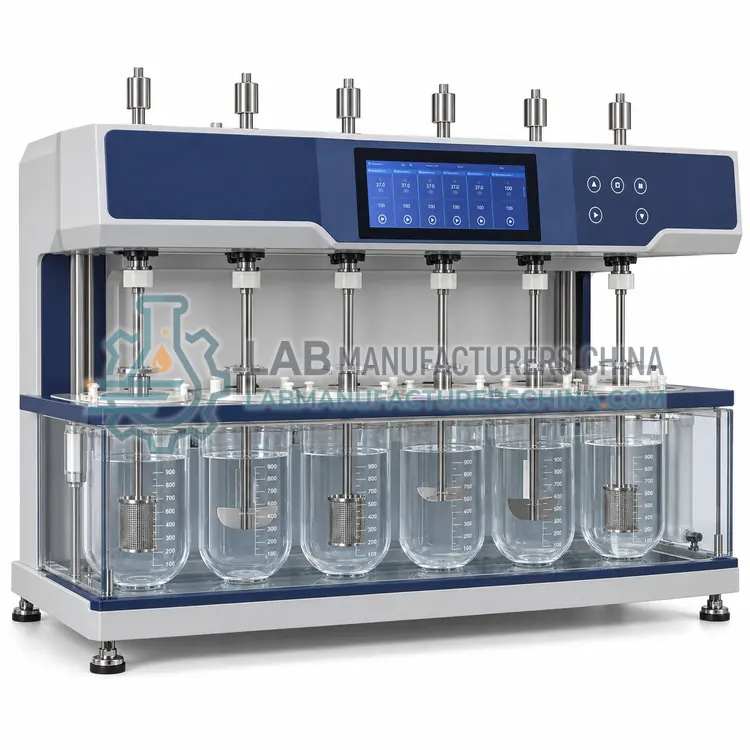
- Apparatus 1 (basket): a cylindrical wire mesh basket, usually 40 mesh, is attached to a rotating shaft and holds the dosage form. Typical speed is 50 to 100 rpm. It suits capsules and products that tend to float or disintegrate into pieces.
- Apparatus 2 (paddle): a paddle rotates in a vessel with the dosage form sinking to the bottom. Typical speed is 50 to 75 rpm. It is the most widely used apparatus for tablets. Sinkers are used to keep capsules submerged.
- Apparatus 3 (reciprocating cylinder): dosage forms in cylinders move up and down through a series of vessels, allowing quick medium changes. It suits extended-release products and pH-gradient studies.
- Apparatus 4 (flow-through cell): medium is pumped through a cell containing the dosage form, in open or closed loop. It suits poorly soluble drugs, implants and products needing sink conditions or continuous medium change.
Apparatus 1 and 2 use a vessel of 1 L with a hemispherical bottom, commonly filled with 500 to 900 mL of medium at 37 ± 0.5 °C. Other USP chapters describe Apparatus 5, 6 and 7 for transdermal products, found in <724>.
How is a dissolution tester qualified?
The tester must be shown to meet mechanical and performance requirements before it is used for regulated testing. Qualification follows the usual sequence of design, installation, operational and performance qualification, with USP <1058> Analytical Instrument Qualification as the general framework.
Mechanical calibration checks the geometry that affects hydrodynamics. Typical items are the following.
- Shaft verticality and wobble: shaft or paddle wobble of 1.0 mm or less at the lower end.
- Vessel centering: the shaft must be within 2 mm of the vessel axis.
- Paddle or basket height above the vessel bottom: 25 ± 2 mm.
- Vessel dimensions and vessel verticality, and tolerances on vessel volume and shape.
- Rotation speed, typically within ±2 % of the set value, and temperature within ±0.5 °C.
- Vibration at the vessel level, which should be minimized because it alters the hydrodynamics.
Performance verification uses USP reference standard tablets, such as prednisone tablets (disintegrating and non-disintegrating types) and salicylic acid, tested according to the current lot instructions. Laboratories may also follow the ASTM E2503 practice for qualification of dissolution equipment.
Repeat verification at defined intervals, commonly every six months, and after moving or repairing the instrument.
How do medium, sampling and acceptance criteria work?
The medium is chosen to reflect the drug's solubility and the intended physiological conditions. Options include 0.1 N hydrochloric acid, pH 4.5 acetate buffer and pH 6.8 phosphate buffer, sometimes with surfactant for poorly soluble substances. Media are normally deaerated, because dissolved gas can form bubbles on the dosage form or basket and change results. Methods for deaeration are described in USP <711>.
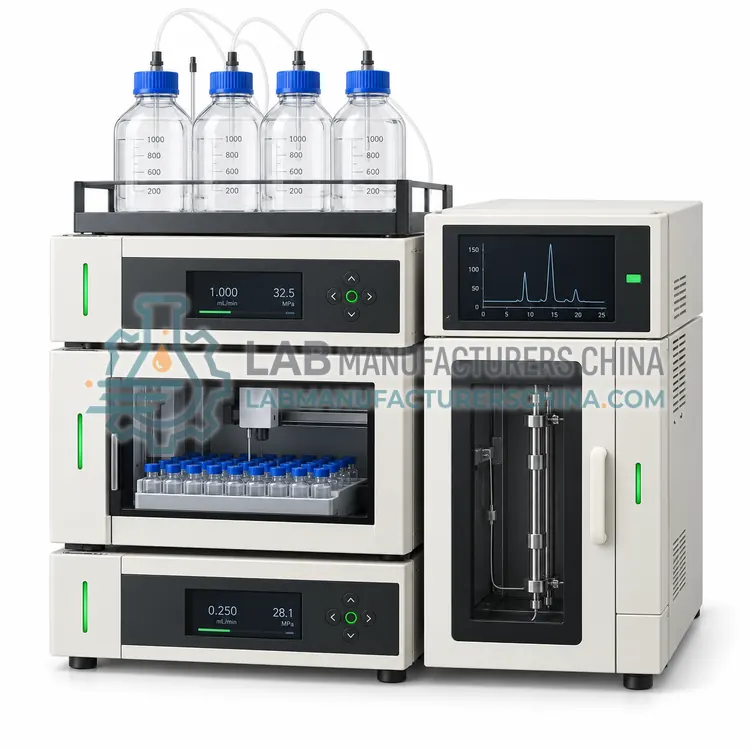
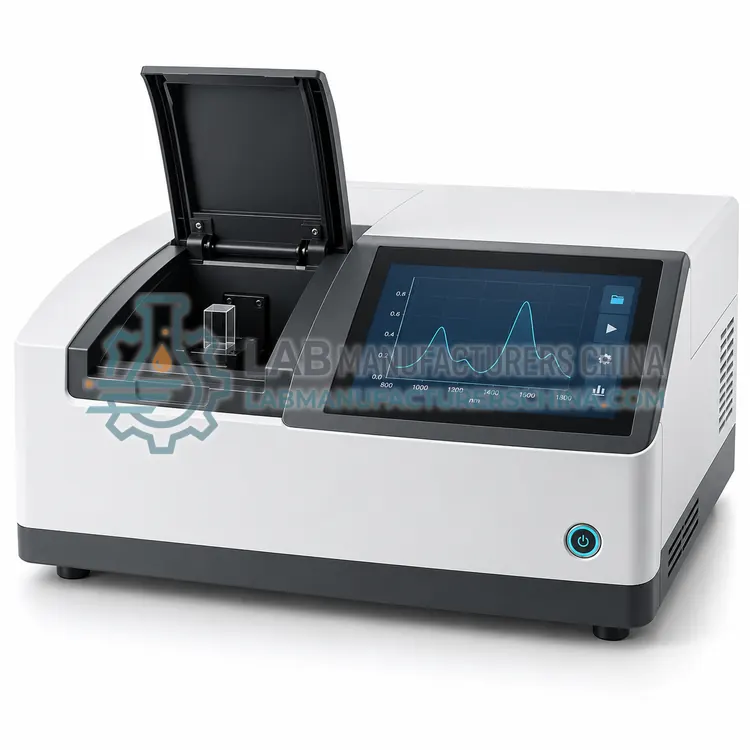
Sampling is done at specified times and from a specified zone, midway between the surface and the top of the paddle or basket, at least 1 cm from the vessel wall. Samples are filtered, and the sampling cannulas, filters and any media replacement must be validated for adsorption and dilution effects. Analysis is commonly by UV spectrophotometry or HPLC.
For immediate-release products, acceptance is expressed as Q, the amount dissolved as a percentage of the labeled content. Stage S1 tests six units, each needing at least Q + 5 %. If not met, Stage S2 adds six units, with average at least Q and no unit below Q − 15 %. Stage S3 tests twelve more units. Extended-release and delayed-release products have their own tables (L1 to L3 and A1 to A3), and the product monograph must be followed.
What should a buyer specify for a dissolution tester?
Match the tester to your methods rather than buying the largest configuration. The following points belong in an RFQ.
- Apparatus: 1 and 2 on one unit, or 3 or 4 if required; state the number of vessels, commonly 6 or 8, and whether a 12-position model is needed for throughput.
- Vessel and accessories: 1 L vessels, peak vessels or mini-vessels for low-dose products, paddles, baskets, sinkers, and compatible vessel materials such as glass or inert polymer.
- Temperature control: water bath or waterless heating, range and uniformity, for example 37 ± 0.5 °C.
- Drive: speed range (for example 25 to 250 rpm) and accuracy.
- Sampling: manual, semi-automatic or fully automatic with filtration, media replacement and fraction collection, with connection to UV or HPLC.
- Media preparation: an integrated or separate degassing and heating system.
- Software: user levels, audit trail, electronic records and signatures, and export formats, relevant for GMP and data integrity practice.
- Documentation: IQ/OQ protocols, mechanical calibration certificate, and performance verification guidance.
- Service: calibration support, preventive maintenance and spare parts.
Confirm any certification, such as CE, from documents before purchase.
Which common problems affect dissolution results?
Dissolution is sensitive to small changes, so variability often comes from the set-up rather than the product. Typical causes are listed below.
- Vibration from nearby equipment, or an unlevelled bench, which raises variability with paddle methods.
- Dissolved air in the medium, leading to bubbles on the tablet or basket mesh.
- Incorrect vessel centering, paddle height or shaft wobble.
- Coning, where undissolved material piles up at the bottom center below the paddle at low speed, which gives slow and variable results. It is addressed by method development and justified adjustments, not by ad hoc speed changes.
- Capsule shell cross-linking, typically in gelatin capsules after storage, where enzymes such as pepsin or pancreatin may be added to the medium as described in USP <711>.
- Filter adsorption, evaporation loss during long runs, and sample carry-over in automated systems.
- Incorrect medium temperature or pH, or incorrect preparation of buffers.
When a result fails, follow the laboratory's out-of-specification procedure, starting with checking instrument records, preparation and calculation, before any retest. Keep the tester's maintenance and calibration logs current so the investigation can exclude equipment causes quickly.