Summary
Buying laboratory equipment directly from Chinese manufacturers delivers substantial cost efficiencies when supported by rigorous technical qualification. Follow a structured procurement methodology: define precise instrument specifications, verify supplier licenses and calibration traceability, conduct pre-shipment inspections, and establish transparent warranty and spare parts commitments.
Understanding the laboratory equipment manufacturing landscape in China
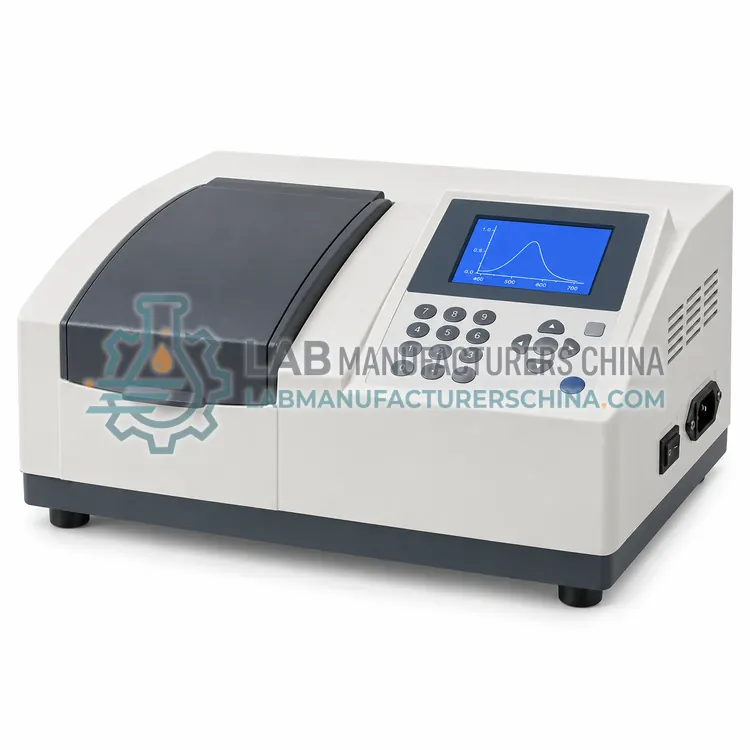
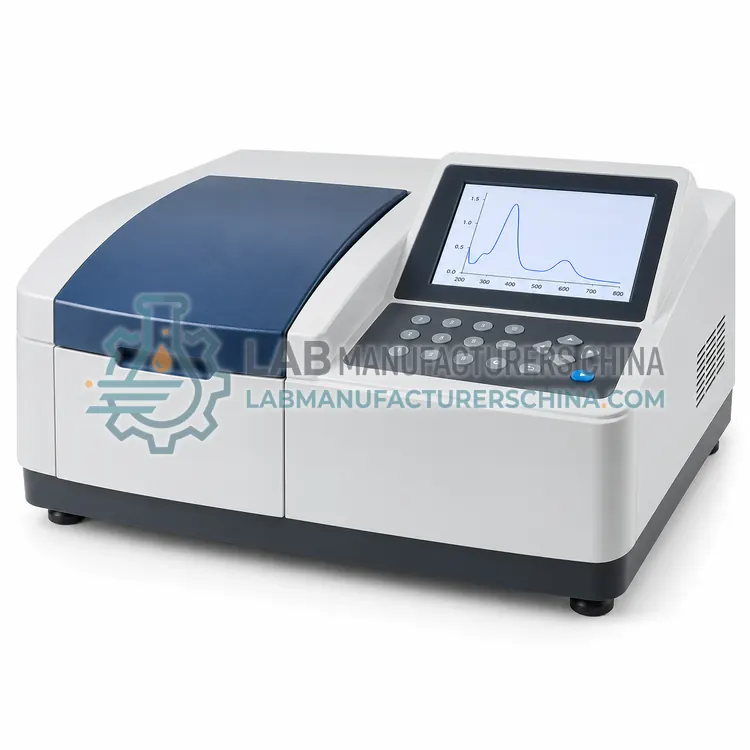
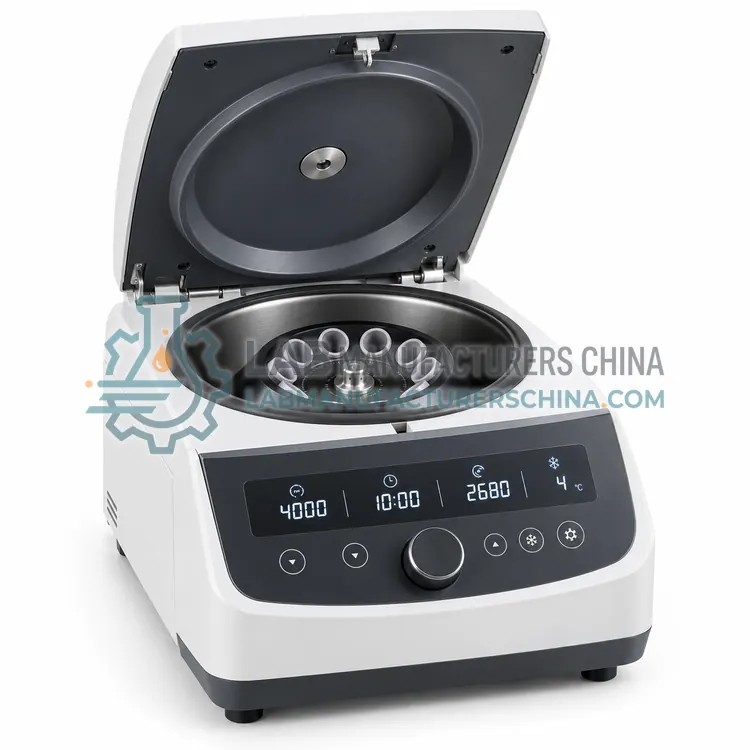
China has emerged as one of the world's primary manufacturing hubs for scientific instruments, ranging from benchtop general laboratory equipment such as centrifuges, autoclaves, and balances to sophisticated analytical systems including spectrophotometers, chromatographs, and biosafety cabinets. However, the supplier ecosystem is diverse, comprising three distinct entity types.
First are genuine original equipment manufacturers (OEMs). These facilities maintain in-house research and development teams, CNC machining workshops, optical cleanrooms, electronic assembly lines, and dedicated metrology testing stations. Sourcing directly from genuine manufacturers delivers direct factory pricing, engineering customization capabilities, and long-term spare parts availability.
Second are value-added technical integrators. These companies procure core platforms from specialist partner factories and integrate custom automation, specialized detectors, or proprietary analytical software. When technically competent, integrators provide valuable turnkey and multi-category consolidation services.
Third are general commercial trading companies. Trading intermediaries frequently market catalogue equipment with substantial markups without possessing technical engineering staff, calibration standards, or direct control over manufacturing quality.
Successful procurement begins by identifying whether your prospective vendor is a genuine manufacturer or an intermediary, and structuring your technical evaluations accordingly.
How to qualify and verify a Chinese laboratory equipment supplier
Institutional buyers and QA managers must verify supplier legitimacy before issuing purchase contracts or depositing funds. A structured supplier qualification process includes four essential checkpoints.
First, verify official business registration. Request the supplier's Chinese Business License (营业执照) and inspect the 18-digit Unified Social Credit Code (USCC). Search the national enterprise credit registry (gsxt.gov.cn) to verify the registered capital, legal representative, business address, and operational scope. The business scope should explicitly include manufacturing (生产, 制造), not merely commercial sales (销售, 贸易).
Second, audit quality management system certifications. Many vendors claim ISO 9001, ISO 13485, or CE certifications. Always request full-page certificate copies showing the accreditation body, certificate number, validity dates, and certified scope. Verify the certificate's status on the National Certification and Accreditation Administration (CNCA) portal (cnca.gov.cn) for Chinese registrations, or through the relevant European notified body registry.
Third, inspect manufacturing infrastructure. Request a live video audit or unedited photographic walkthrough of the factory floor, machining centers, assembly bays, and quality inspection staging areas. Verify that precision measuring instruments (calipers, multimeters, temperature probes) display valid calibration seals.
Fourth, review technical customer references and testing capability. Inquire whether the supplier has fulfilled institutional tenders or export consignments in your geographic region, and ask for anonymized test reports and technical compliance sheets.
Writing an unambiguous RFQ and technical specification sheet
Vague procurement inquiries lead to mismatched quotations and unexpected discrepancies upon delivery. A rigorous Request for Quotation (RFQ) establishes clear technical boundaries.
- Define analytical performance thresholds: specify numerical limits with measurement units and testing conditions rather than qualitative adjectives. For a spectrophotometer, state wavelength range (e.g. 190–1100 nm), spectral bandwidth (e.g. 1.0 nm or variable 0.5–4.0 nm), wavelength accuracy (±0.3 nm), and stray light (< 0.05 %T at 220 nm and 340 nm). For a laboratory oven, specify temperature range, temperature uniformity (e.g. ±1.5 °C at 100 °C), and chamber material (grade 304 stainless steel).
- Mandate power requirements: clearly state the destination country's supply voltage, frequency, and plug configuration (e.g. 110 V / 60 Hz with NEMA 5-15, or 230 V / 50 Hz with BS 1363 UK 3-pin). Never assume an instrument is universal voltage unless verified by engineering datasheets.
- Specify exact accessories: itemize all necessary peripheral items, including sample holders, quartz vs glass cuvettes, centrifuge rotor capacities, temperature probes, and consumables needed for initial commissioning.
- Detail software and compliance requirements: specify operating system compatibility, display language, user access hierarchy, audit trail functionality, and regulatory compliance standards (such as USP, Ph. Eur., ASTM, or ISO).
Managing OEM customization, private labeling, and custom voltages
Many international distributors and brand owners purchase from Chinese manufacturers under OEM or private label agreements to build distinct brand equity. Successful OEM execution requires attention to key engineering variables.
Branding customization ranges from basic exterior logo silk-screening, custom chassis paint finishes, and laser-engraved metal nameplates, to custom firmware splash screens and localized instruction manuals. Request vector artwork templates from the manufacturer and approve physical pre-production photographs before mass application.
Electrical adaptation is critical. Ensure the manufacturer modifies not just the external power plug, but the internal transformer, power supply circuitry, and frequency-sensitive induction motors. Equipment featuring motors (such as centrifuges, vacuum pumps, and shakers) built for 50 Hz power grids will overheat or run off-speed if operated on 60 Hz grids without dedicated windings or variable frequency inverters.
Minimum order quantities (MOQs) for private label branding vary across product categories. Standard benchtop equipment can frequently be branded with low trial MOQs starting at 5 to 10 units. Negotiate low MOQs for initial evaluation shipments before committing to larger production runs.
Navigating international shipping terms (Incoterms) and export packing
Transport logistics represent a substantial portion of international procurement costs. Selecting the appropriate Incoterm and packaging specification safeguards both your budget and your equipment.
Under FOB (Free on Board), the buyer selects the freight forwarder and pays ocean freight, retaining full control over shipping schedules and terminal handling charges. Under CIF (Cost, Insurance and Freight) or CIP (Carriage and Insurance Paid to), the Chinese manufacturer coordinates shipping to your port or airport, which is often more convenient for buyers without established freight agreements.
Packaging specifications must be explicitly mandated in the purchase contract. Fragile laboratory instrumentation requires rigid export wooden crates constructed from heat-treated solid wood stamped with the IPPC mark per ISPM 15 standards, or heavy-duty multi-layer plywood crates exempt from fumigation. Internal packaging must feature CNC-contoured high-density foam (EPE or EVA) immobilizing the chassis, paired with hermetically sealed vacuum moisture-proof foil bags containing active desiccant packs. For delicate optics and analytical balances, require external ShockWatch and TiltWatch impact indicators to detect transport mishandling.
Factory acceptance testing (FAT) and pre-shipment inspection (PSI)
Once equipment leaves the manufacturing facility and clears Chinese customs, rectifying defects becomes logistically complex and expensive. Pre-shipment verification is your most potent risk-mitigation tool.
- Factory Acceptance Testing (FAT): for capital analytical instruments or turnkey lots, establish a formal FAT checklist before production begins. The FAT evaluates dimensional compliance, power-on diagnostic checks, safety interlock functioning, baseline stability, and parameter verification using calibrated reference standards. FAT can be conducted via live high-definition video walkthroughs or in person by client engineers.
- Independent third-party pre-shipment inspection (PSI): retain an international inspection agency (such as SGS, Bureau Veritas, Intertek, or CCIC) to conduct an on-site audit prior to container loading. The inspector checks random samples according to ANSI/ASQ Z1.4 (ISO 2859-1) sampling standards, verifying physical aesthetics, quantity counts, serial numbers against the packing list, barcode readability, drop-test packaging resistance, and basic functional operation.
- Calibration certificate audit: verify that every measurement instrument is accompanied by a serial-specific factory calibration report detailing reference equipment traceability and test uncertainties.
Securing after-sales support, warranty terms, and spare parts
The total cost of ownership of laboratory equipment depends on after-sales responsiveness and long-term parts availability.
Negotiate clear warranty terms in the sales contract. Standard industry practice provides 12 to 24 months of warranty coverage against manufacturing defects from the date of delivery. The agreement must clearly define the procedure for resolving warranty claims: diagnostic turnaround times (e.g. engineering evaluation within 24 hours), courier dispatch of replacement boards or sub-assemblies (e.g. shipped via DHL/FedEx within 48 to 72 hours at manufacturer expense), and provision of technical labor.
To prevent costly laboratory downtime in remote locations, order a bundled 1-year or 3-year consumable spare parts kit alongside the initial instrument order. These kits should include wear items such as deuterium and halogen lamps, O-rings, peristaltic pump tubing, mechanical seals, and heating elements. Finally, obtain written manufacturer commitments guaranteeing spare parts availability for 5 to 10 years following product purchase, safeguarding your equipment investment throughout its operational lifespan.