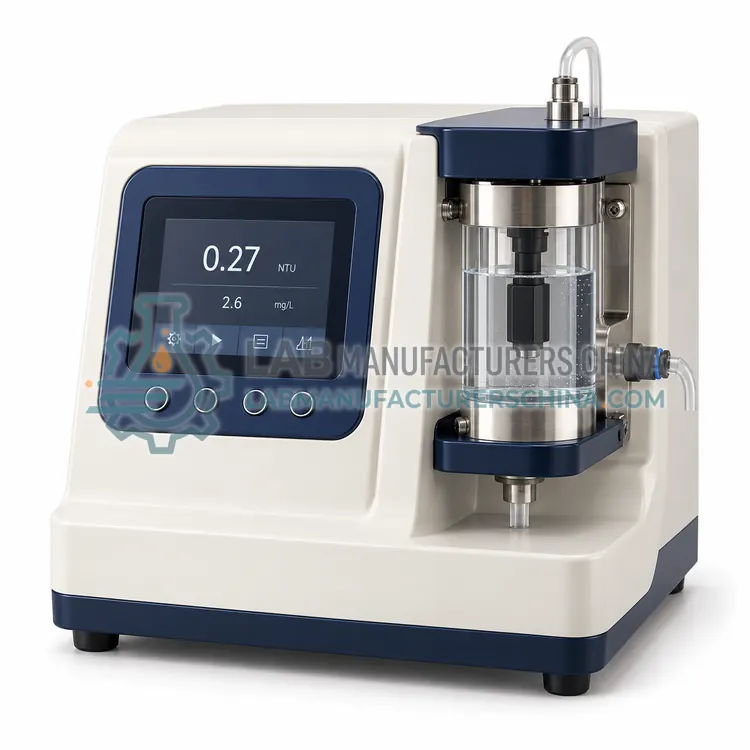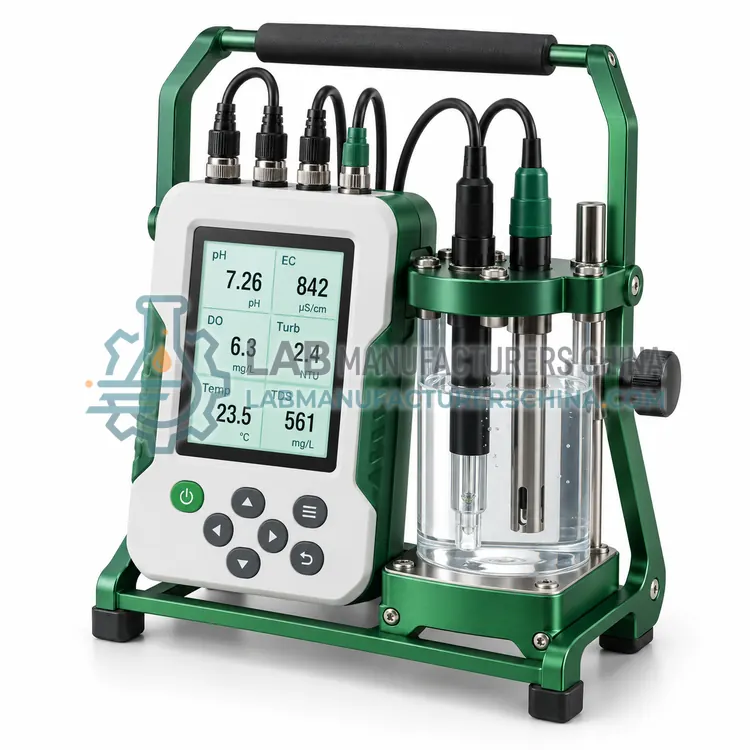
Multiparameter Water Quality Sonde
多参数水质监测探头
- SKU WAM-0001
- Water Monitoring
- CE (to be confirmed)
- RoHS (to be confirmed)
- ISO 9001 manufacturing (to be confirmed)
Price on request — FOB / CIF quoted per order
Prices depend on configuration, quantity and destination port.
Key specifications
| pH range and accuracy | 0–14, ±0.1 pH |
|---|---|
| Conductivity range | 0–200 mS/cm, ±0.5% of reading |
| Dissolved oxygen range | 0–50 mg/L, ±0.1 mg/L |
| Turbidity range | 0–1000 NTU, ±2% |
| Temperature range | −5 to 50 °C, ±0.15 °C |
| Depth rating | 0–100 m |
Request a quote Download brochure · to be provided
By Lab Manufacturers China Technical TeamLast reviewed Standards: ISO 5667-1, ISO 7027-1 (turbidity), ISO 5814 (dissolved oxygen)
What is the Multiparameter Water Quality Sonde?
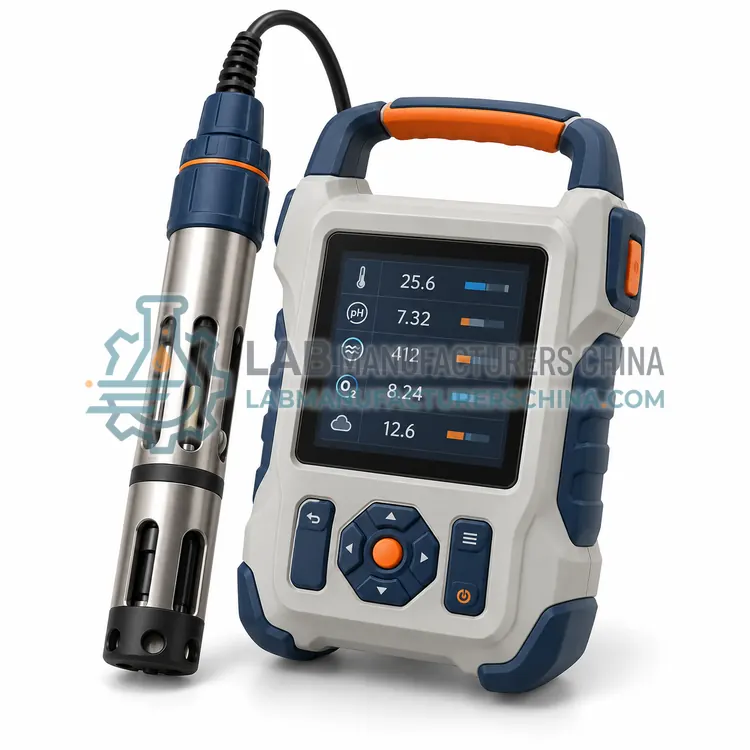
A submersible probe that carries several sensors, typically pH, conductivity, dissolved oxygen, turbidity and temperature, on one cable. It is the right choice for profiling rivers, lakes and reservoirs, or for long-term unattended logging where full laboratory analysis is not required.
What is the Multiparameter Water Quality Sonde?
A submersible probe that carries several sensors, typically pH, conductivity, dissolved oxygen, turbidity and temperature, on one cable. It is the right choice for profiling rivers, lakes and reservoirs, or for long-term unattended logging where full laboratory analysis is not required.
Overview
The multiparameter sonde is a cylindrical, sealed instrument that is deployed from a bridge, buoy or bank-side pole and logs readings at set intervals. A typical six-port model combines temperature, conductivity, pH, optical dissolved oxygen, turbidity and either chlorophyll or ORP, with built-in memory for weeks of data. Optical dissolved oxygen sensors eliminate membrane replacement and oxygen consumption, while wiper brushes clean optical windows between readings. Depth sensors allow vertical profiling to 100 m. Battery operation for several months is feasible at 15-minute intervals, and outputs include SDI-12, RS-485 Modbus and Bluetooth. Accuracy is sufficient for trend analysis, regulatory screening and process optimization, but laboratory confirmation is still required for legal compliance.
How does it work?
Water monitors combine sensors with a controller and communication unit. Electrochemical sensors measure pH by glass electrode potential, conductivity by electrode cell resistance, and dissolved oxygen by optical luminescence quenching or a membrane-covered amperometric cell. Turbidity uses nephelometric scattering of light at 90 degrees, typically at 860 nm per ISO 7027. Ammonia, nitrate and fluoride use ion-selective electrodes, while COD, total phosphorus and total nitrogen analyzers automate digestion and photometric detection, often with UV absorbance at 254 nm as a proxy for organics. Multiparameter sondes integrate several sensors on one cable. Automatic cleaning with wipers or air blasts limits fouling. Data loggers record readings with time stamps, and telemetry sends results over cellular, satellite or radio links to a central platform with alarms.
What are the key features?
- Six-port housing accepts interchangeable sensors for field configuration by the user.
- Optical dissolved oxygen sensor needs no membrane and is not flow dependent.
- Integrated wiper keeps turbidity and fluorescence windows clean during long deployments.
- Depth sensor enables vertical profiling of lakes and reservoirs to 100 m.
- Internal memory and batteries support unattended logging for several months.
- SDI-12 and Modbus outputs connect to telemetry and SCADA systems.
What are the technical specifications?
A typical multiparameter water quality sonde configuration offers pH range and accuracy of 0–14, ±0.1 pH, conductivity range of 0–200 mS/cm, ±0.5% of reading, dissolved oxygen range of 0–50 mg/L, ±0.1 mg/L, turbidity range of 0–1000 NTU, ±2%, temperature range of −5 to 50 °C, ±0.15 °C and depth rating of 0–100 m. Values are indicative of the product class; the exact figures for each configuration are confirmed on the quotation and the calibration documents supplied with the instrument.
Which applications is it used for?
The Multiparameter Water Quality Sonde is used in river and lake profiling, reservoir management, aquaculture pond monitoring and groundwater well sampling. Across the wider Water Monitoring class, laboratories also deploy it for surface water and river monitoring, wastewater effluent compliance and drinking water source protection.
Which standards and certifications apply?
Relevant standards and methods include ISO 5667-1, ISO 7027-1 (turbidity), ISO 5814 (dissolved oxygen), ISO 10523 (pH), HJ 355, HJ 377 and IEC 61010-1. Certification candidates for this model are CE, RoHS and ISO 9001 manufacturing; each is to be confirmed for the specific configuration before shipment, and certificates are supplied only where they have been issued.
Install sensors where flow is representative and away from dead zones, and ensure cable glands and enclosures meet the stated ingress protection. Calibrate pH with two or three buffers, dissolved oxygen in air-saturated water or at zero, and turbidity with formazin or polymer standards, following the manufacturer schedule. Cleaning intervals depend on biofouling, from weekly in warm eutrophic water to monthly in clean streams. Replace membranes, electrolytes and reagent cartridges on time, and keep maintenance logs. For regulatory use, validate data against laboratory reference results and apply quality flags. Protect telemetry equipment from lightning and confirm cellular coverage before deployment.
How do I select the right Multiparameter Water Quality Sonde?
Select the sonde when you need several parameters at one location with long logging life and depth profiling, and when laboratory-grade nutrient or COD data is not required. Siblings such as online COD stations offer chemical parameters but need a shelter and reagents. In an RFQ, specify the sensor list, depth rating, cable length, output protocol and battery life expected.
How does it compare with other Water Monitoring variants?
Begin with the parameters required by the permit or the monitoring objective, then the deployment style. Spot checks and river surveys favor handheld meters or multiparameter sondes, while compliance monitoring of effluent needs online analyzers with automatic calibration and sample conditioning. Check measurement range and accuracy against the regulatory limits, for example ammonia nitrogen at 0.05–100 mg/L or COD up to 2000 mg/L. Consider fouling in raw wastewater, which may need ultrasonic or brush cleaning, and sensor life for consumables such as membranes and reagents. For remote locations, evaluate battery or solar power and telemetry. Confirm data protocols and calibration support, and choose IP68 or IP65 enclosures suited to immersion or outdoor cabinets.
Full specifications
| pH range and accuracy | 0–14, ±0.1 pH |
|---|---|
| Conductivity range | 0–200 mS/cm, ±0.5% of reading |
| Dissolved oxygen range | 0–50 mg/L, ±0.1 mg/L |
| Turbidity range | 0–1000 NTU, ±2% |
| Temperature range | −5 to 50 °C, ±0.15 °C |
| Depth rating | 0–100 m |
| Ingress protection | IP68 |
| Outputs | SDI-12, RS-485 Modbus, Bluetooth |
| Internal memory | Up to 500,000 records |
| Power | 4 × D cell or 8–16 VDC external |
Indicative values for this product class. Final specifications are confirmed on the quotation and in the calibration documents supplied with the instrument.
Applications
- River and lake profiling
- Reservoir management
- Aquaculture pond monitoring
- Groundwater well sampling
Key features
- Six-port housing accepts interchangeable sensors for field configuration by the user.
- Optical dissolved oxygen sensor needs no membrane and is not flow dependent.
- Integrated wiper keeps turbidity and fluorescence windows clean during long deployments.
- Depth sensor enables vertical profiling of lakes and reservoirs to 100 m.
- Internal memory and batteries support unattended logging for several months.
- SDI-12 and Modbus outputs connect to telemetry and SCADA systems.
Frequently asked questions about Multiparameter Water Quality Sonde
With a 15-minute logging interval and optical sensors, battery-powered sondes commonly run two to six months. Duration depends on the wiper use, sensor count, temperature and logging rate, and external solar or mains power extends deployments indefinitely.
They need less frequent calibration than membrane sensors, typically a one or two point check every one to three months in air-saturated water and a zero solution. The sensing cap must be replaced about once a year because the luminescent dye degrades.
Optional ion-selective electrodes can measure ammonium, nitrate and chloride, but they drift more than other sensors and need frequent calibration. Optical UV nitrate sensors are an alternative that avoid reagents and suit cleaner water.
Typical parameters are pH, conductivity, temperature, dissolved oxygen, turbidity, ORP, ammonia nitrogen, COD, total phosphorus and total nitrogen. Systems can be configured with only the sensors required by the permit or monitoring objective, and some add chlorophyll, nitrate or blue-green algae probes.
Cleaning frequency depends on fouling. Clean streams may need monthly service, while warm nutrient-rich or wastewater applications may need weekly cleaning. Automatic wipers, air blasts or ultrasonic cleaners extend intervals, and trends in sensor drift indicate when manual cleaning is overdue.
A sonde is an immersed probe with multiple sensors reading directly in the water, suited to rivers, lakes and tanks. An online analyzer pumps sample to a cabinet where it is conditioned and measured, often with reagents, enabling COD, nutrients and metals at higher accuracy.