Motorized Paper Thickness Tester
电动纸张厚度测定仪
- SKU TTE-0002
- Thickness Testing
- CE (to be confirmed)
- ISO 9001 manufacturing (to be confirmed)
Price on request — FOB / CIF quoted per order
Prices depend on configuration, quantity and destination port.
Key specifications
| Contact pressure | 100 kPa for paper, others on request |
|---|---|
| Measuring foot diameter | 16 mm standard |
| Reading resolution | 0.1–1 µm depending on model |
| Lowering speed | Controlled, per method |
| Dwell time | Programmable, typically 2–5 s |
| Measuring range | 0–10 mm |
Request a quote Download brochure · to be provided
By Lab Manufacturers China Technical TeamLast reviewed Standards: ISO 534, ISO 3034, ISO 12625-3
What is the Motorized Paper Thickness Tester?
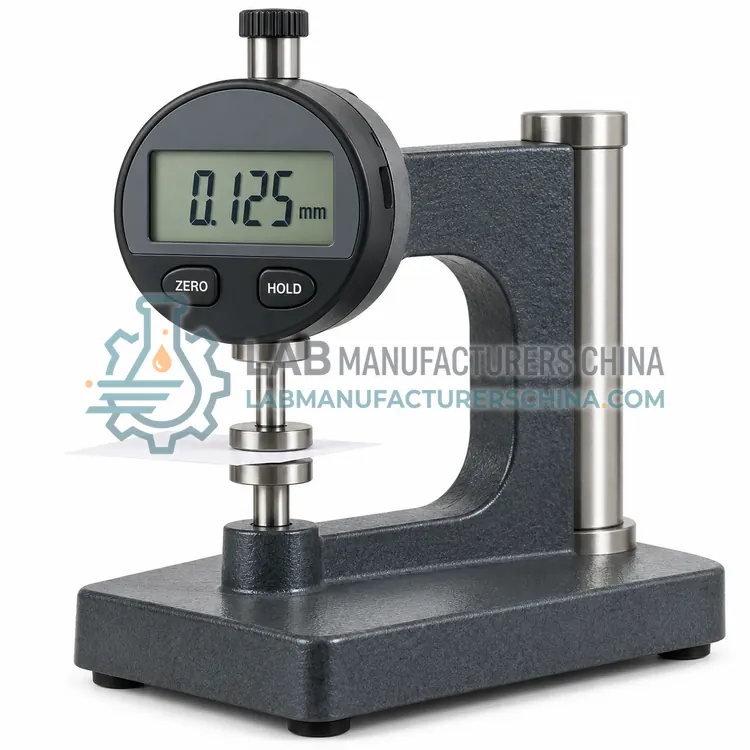
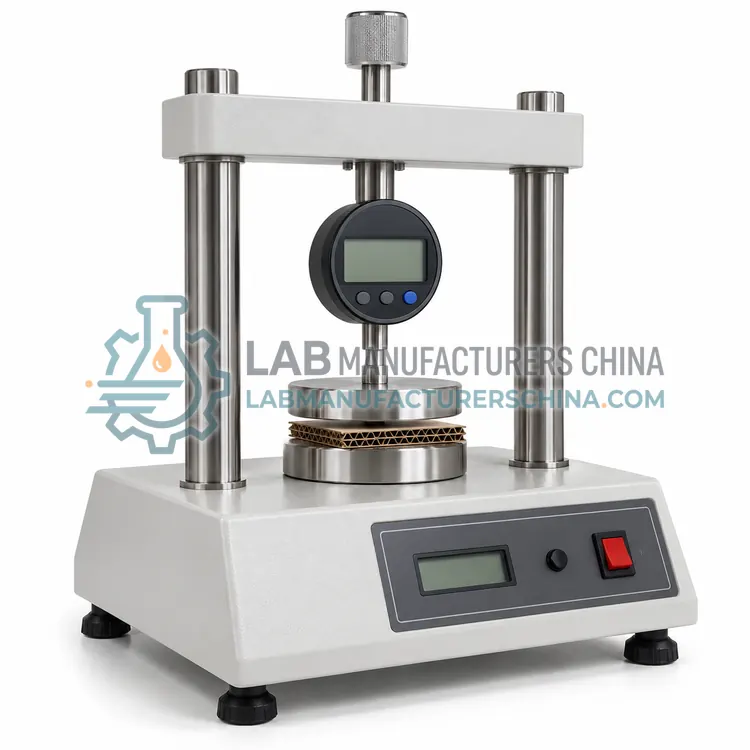
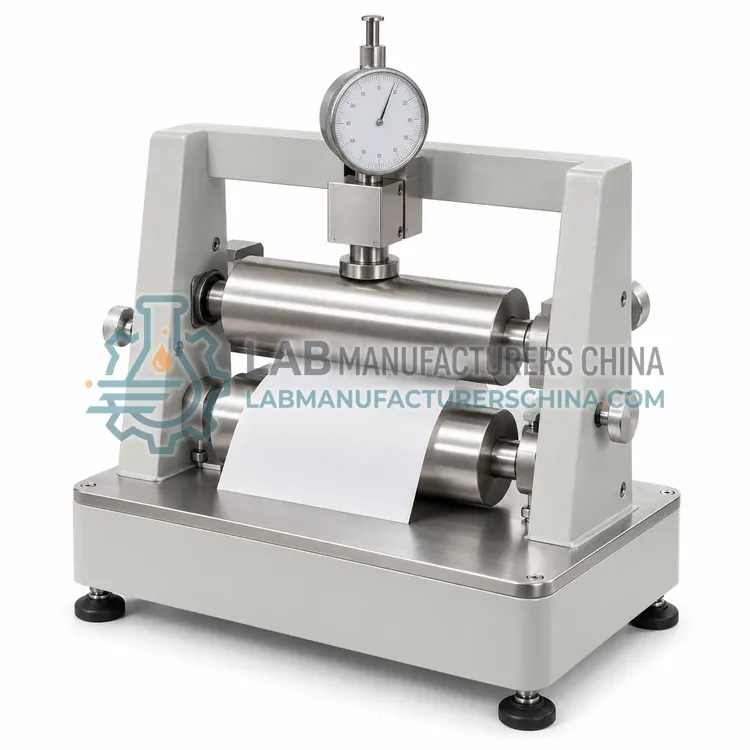
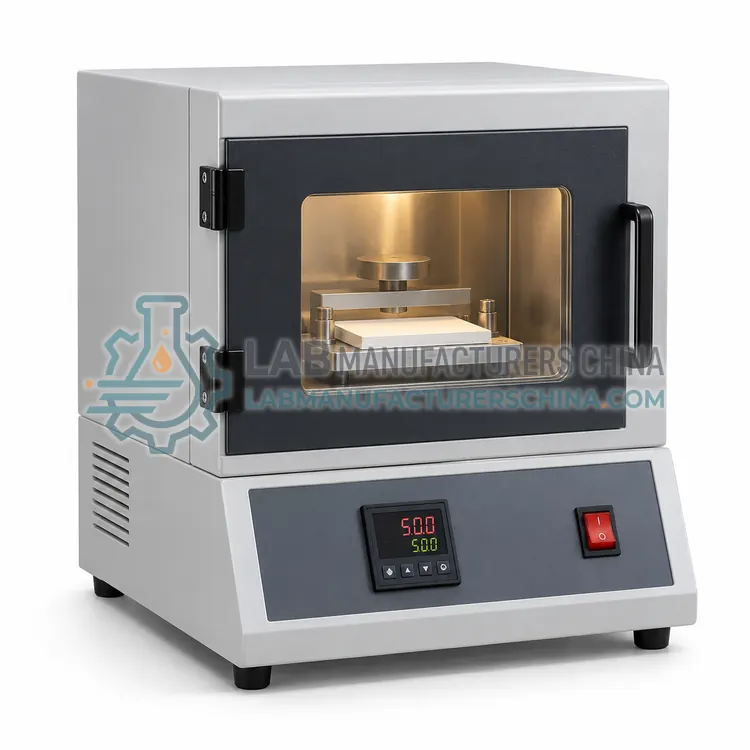
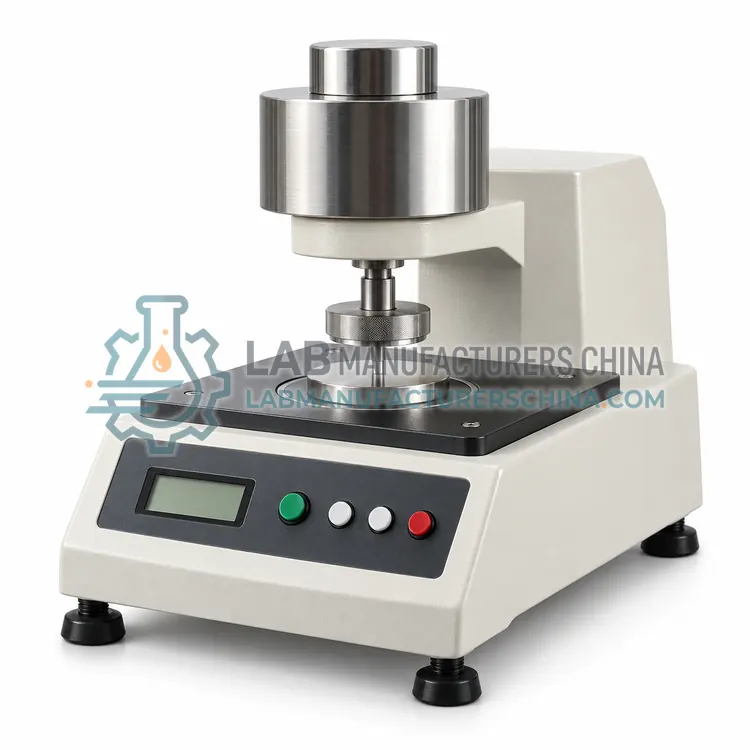
A motorized thickness tester lowers the measuring foot at a controlled speed and holds the specified pressure for a set interval before reading. It removes operator technique from the measurement and is suited to routine testing series.
What is the Motorized Paper Thickness Tester?
A motorized thickness tester lowers the measuring foot at a controlled speed and holds the specified pressure for a set interval before reading. It removes operator technique from the measurement and is suited to routine testing series.
Overview
A motorised drive raises and lowers the measuring head, and the load is applied either by a calibrated spring or by a dead weight with a lever system, with an electronic sensor reading the displacement. The dwell time is timed automatically, so each reading is taken under identical conditions and the difference between operators disappears, which is important when many measurements are made in a shift. Some models move the specimen automatically or index a strip so that a defined number of positions are measured and the mean and range are calculated directly. The measuring foot, anvil and applied load still have to comply with the standard, so a motorised instrument is not a substitute for the correct geometry, only for the correct handling.
How does it work?
Because paper is compressible, thickness depends strongly on the pressure applied, the area of the measuring foot and the dwell time. Standards therefore define the contact pressure, usually 100 kPa for paper, the foot diameter, and the time between lowering the foot and reading the value, so results from different laboratories are comparable. A dead-weight instrument applies the load through calibrated masses on a fixed-area foot and reads displacement with a dial gauge or digital sensor, while motorised instruments lower the foot at a controlled speed and hold the specified pressure for a set interval. Board and tissue thickness use larger pressures or different foot geometries, and corrugated board requires a foot large enough to bridge the flutes and a comparator plate, so the correct geometry is defined by the product standard rather than chosen freely by the laboratory.
What are the key features?
- Motorised raising and lowering of the foot
- Automatic dwell timing before each reading
- Digital display with statistical evaluation
- Automatic specimen indexing options
- Calibrated spring or dead-weight loading
- Data output to quality systems
What are the technical specifications?
A typical motorized paper thickness tester configuration offers contact pressure of 100 kPa for paper, others on request, measuring foot diameter of 16 mm standard, reading resolution of 0.1–1 µm depending on model, lowering speed of Controlled, per method, dwell time of Programmable, typically 2–5 s and measuring range of 0–10 mm. Values are indicative of the product class; the exact figures for each configuration are confirmed on the quotation and the calibration documents supplied with the instrument.
Which applications is it used for?
The Motorized Paper Thickness Tester is used in high-volume routine thickness testing, multi-point measurement across a sheet, production control at paper and board mills and incoming inspection of board deliveries. Across the wider Thickness Testing class, laboratories also deploy it for thickness and apparent density of paper and board, corrugated board caliper verification and tissue and lightweight paper thickness testing.
Which standards and certifications apply?
Relevant standards and methods include ISO 534, ISO 3034, ISO 12625-3, TAPPI T411, TAPPI T551, ASTM D645 and IEC 61010-1. Certification candidates for this model are CE and ISO 9001 manufacturing; each is to be confirmed for the specific configuration before shipment, and certificates are supplied only where they have been issued.
Condition specimens to the standard atmosphere before testing, because thickness changes with moisture and the change is not fully reversible within a short time. Clean the foot and anvil, since dust or fibre on the surfaces is added to the reading, and check the foot diameter and parallelism at intervals. Lower the foot gently at the defined speed, take the reading at the specified time and lift the foot between readings, and avoid taking measurements on the same spot twice. Verify the instrument with certified shims or gauge blocks at several points in the measuring range, and keep the calibration certificate with the instrument record.
How do I select the right Motorized Paper Thickness Tester?
Choose a motorised instrument when many readings are taken each shift, when several operators share the instrument, or when statistics must be recorded automatically. Confirm that the loading mechanism can be verified at the specified pressure and that the foot geometry matches the standard, and check the data export format against your quality system.
How does it compare with other Thickness Testing variants?
Select the instrument from the product standard you test against. Flat paper and board are measured with a 100 kPa dead-weight or motorised instrument with a defined foot area, tissue papers require the smaller pressure and foot of their own method, and corrugated or heavy board needs a dedicated gauge with the correct foot diameter and a rigid comparator plate. Choose a motorised instrument when many readings are needed or when operator technique must be removed, and a dead-weight instrument when simplicity and direct traceability of the applied load matter. An online caliper is specified only when continuous reel or sheet thickness data must be recorded during production, since it is measured without contact pressure and therefore correlates with, rather than reproduces, laboratory values.
Full specifications
| Contact pressure | 100 kPa for paper, others on request |
|---|---|
| Measuring foot diameter | 16 mm standard |
| Reading resolution | 0.1–1 µm depending on model |
| Lowering speed | Controlled, per method |
| Dwell time | Programmable, typically 2–5 s |
| Measuring range | 0–10 mm |
| Statistics | Mean, range and standard deviation |
| Data output | USB or network export |
Indicative values for this product class. Final specifications are confirmed on the quotation and in the calibration documents supplied with the instrument.
Applications
- High-volume routine thickness testing
- Multi-point measurement across a sheet
- Production control at paper and board mills
- Incoming inspection of board deliveries
Key features
- Motorised raising and lowering of the foot
- Automatic dwell timing before each reading
- Digital display with statistical evaluation
- Automatic specimen indexing options
- Calibrated spring or dead-weight loading
- Data output to quality systems
Frequently asked questions about Motorized Paper Thickness Tester
Its advantage is repeatability rather than inherent accuracy: removing hand lowering and hand timing removes operator scatter. The absolute result still depends on whether the contact pressure and foot area match the standard, which must be verified in the same way as for a dead-weight instrument.
By placing a load cell or calibrated force gauge between the foot and the anvil and reading the force at the moment of contact, or by comparing with a dead-weight instrument on certified shims. The check should be carried out at the pressure used in the method and recorded.
Paper continues to compress after the foot contacts the surface, so the reading depends on how long the pressure has been applied. Automatic timing ensures that every reading is taken at the same interval, which removes one of the largest sources of scatter in manual testing.
Paper is a compressible fibrous network, so a higher contact pressure compresses the sheet and reduces the measured thickness. A pressure that is too low does not close the surface, giving an erratic and high reading. Standards fix the pressure, foot area and dwell time so that laboratories obtain comparable values.
Apparent density is the basis weight divided by the thickness, expressed in kilograms per cubic metre, with basis weight in grams per square metre and thickness in millimetres. It reflects the sheet structure and is used to compare formation and refining levels between samples of similar composition.
Thickness varies across a sheet because of formation, pressing and calendering, and the variation is often larger than the measurement uncertainty of the instrument. A defined number of readings across the sheet, with the mean and range reported, describes the sample far better than a single value.