Online Turbidity Analyzer for Water Treatment
水处理在线浊度分析仪
- SKU TME-0004
- Turbidity Meters
- CE (to be confirmed)
- ISO 9001 manufacturing (to be confirmed)
Price on request — FOB / CIF quoted per order
Prices depend on configuration, quantity and destination port.
Key specifications
| Range | 0–100 or 0–4000 NTU, model specific |
|---|---|
| Resolution | 0.001 NTU at low range |
| Accuracy | ±2 percent of reading or better |
| Measurement mode | Flow-through or immersion |
| Cleaning | Air blast, wiper or ultrasonic |
| Output signals | 4–20 mA, Modbus, Ethernet |
Request a quote Download brochure · to be provided
By Lab Manufacturers China Technical TeamLast reviewed Standards: ISO 7027-1, ISO 7027-2, EPA 180.1
What is the Online Turbidity Analyzer for Water Treatment?
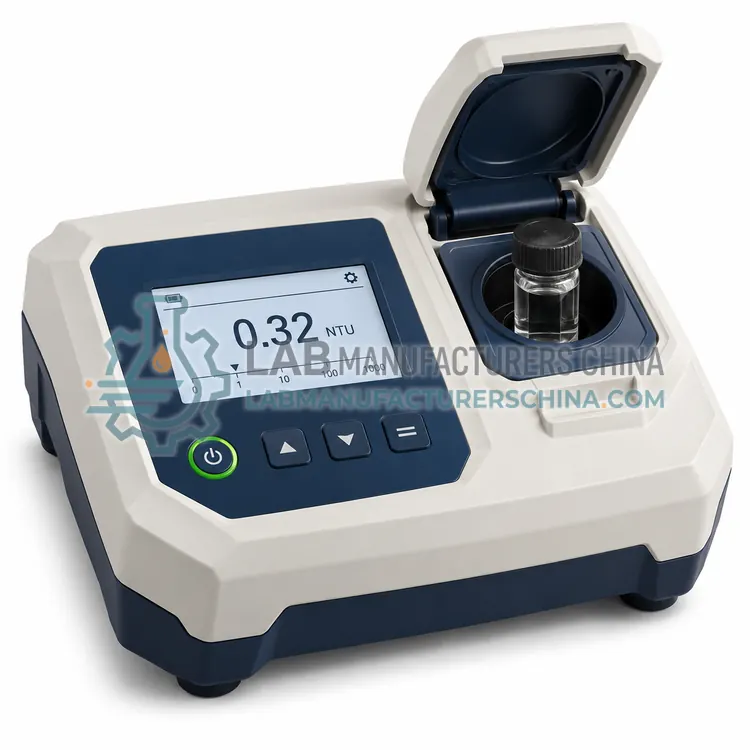
An online turbidity analyzer continuously measures turbidity in a flowing water stream and transmits the result to plant control. It supports coagulation, filtration and backwash control in drinking water and wastewater plants.
What is the Online Turbidity Analyzer for Water Treatment?
An online turbidity analyzer continuously measures turbidity in a flowing water stream and transmits the result to plant control. It supports coagulation, filtration and backwash control in drinking water and wastewater plants.
Overview
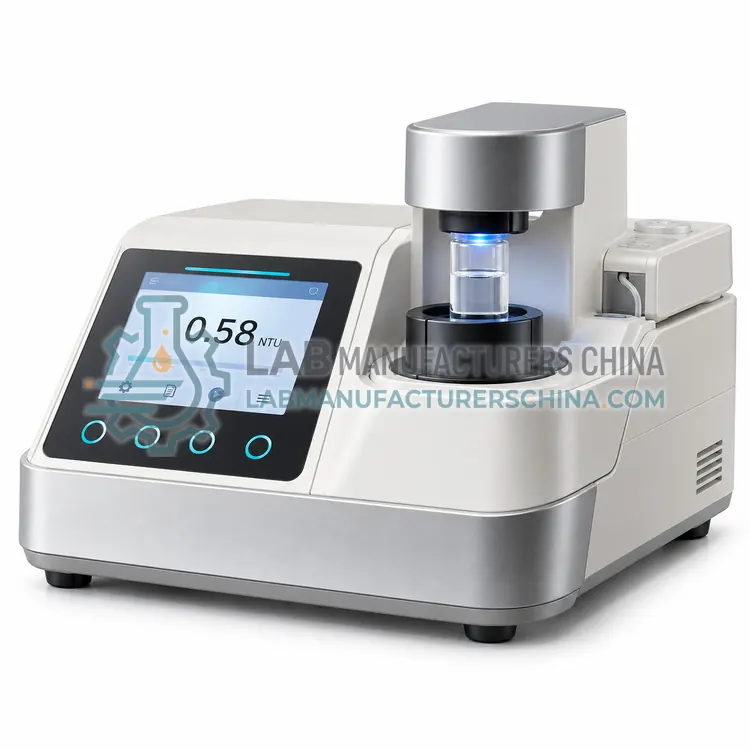
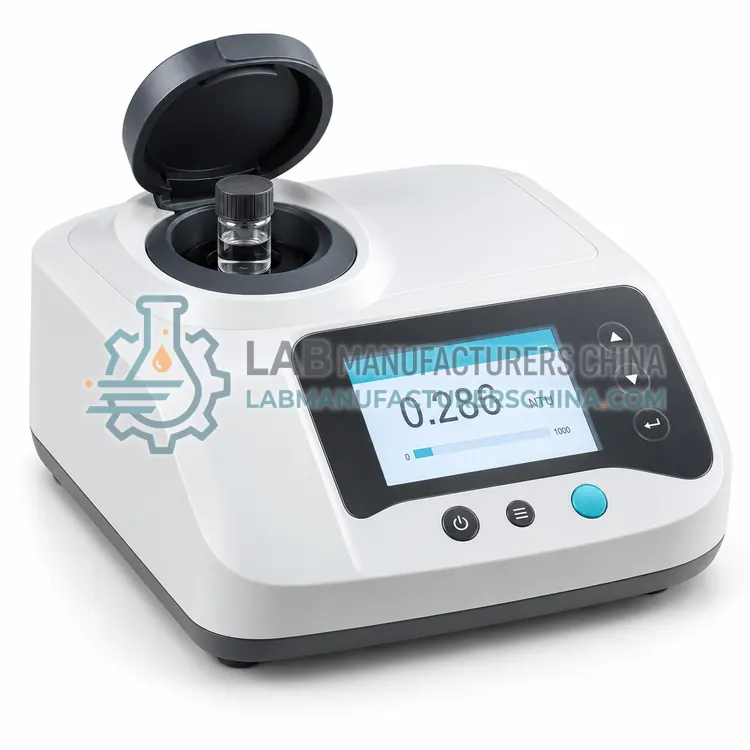
The analyzer mounts on a panel or in an enclosure beside the process, with a flow-through cell or an immersion sensor measuring 90-degree scatter continuously. Because the optical windows are exposed to the process, automatic cleaning by air blast, wiper, ultrasonic or chemical rinse is essential, and the cleaning interval is set by fouling rate. Outputs include 4–20 mA, Modbus or Ethernet for control systems and relays for alarms, and the analyzer can calculate rolling averages that regulators accept for filtered water monitoring. Accuracy depends on calibration against formazin standards and verification against grab samples, and drift is usually corrected by electronic offset or by adjusting the calibration to laboratory results at defined intervals.
How does it work?
Nephelometric turbidity measurement shines a light beam into the sample and measures the light scattered at 90 degrees by suspended particles, since scattering increases with particle number, size and refractive index. ISO 7027 specifies the optical design, including wavelength and detector geometry, while EPA 180.1 specifies a tungsten lamp and a slightly different geometry, so instruments are usually labelled to one method. Ratio turbidimeters add a second or third detector at other angles and divide the signals, which compensates for colour and lamp ageing and extends the useful range. Backscatter instruments measure light scattered at angles greater than 90 degrees and suit high-turbidity samples beyond the range of nephelometry. Turbidity is formally a ratio of scattered to transmitted light and is reported in nephelometric turbidity units (NTU).
What are the key features?
- Continuous 90-degree scatter measurement in flow-through or immersion cell
- Automatic cleaning by air blast, wiper or ultrasonic
- 4–20 mA, Modbus and Ethernet outputs for control systems
- Alarm relays and configurable rolling averages
- Verification against grab samples at defined intervals
- Enclosure rated for plant environments
What are the technical specifications?
A typical online turbidity analyzer for water treatment configuration offers range of 0–100 or 0–4000 NTU, model specific, resolution of 0.001 NTU at low range, accuracy of ±2 percent of reading or better, measurement mode of Flow-through or immersion, cleaning of Air blast, wiper or ultrasonic and output signals of 4–20 mA, Modbus, Ethernet. Values are indicative of the product class; the exact figures for each configuration are confirmed on the quotation and the calibration documents supplied with the instrument.
Which applications is it used for?
The Online Turbidity Analyzer for Water Treatment is used in filtered water turbidity monitoring at treatment works, coagulant dosing and settling control, backwash initiation based on turbidity and wastewater effluent and final discharge monitoring. Across the wider Turbidity Meters class, laboratories also deploy it for drinking water turbidity compliance testing, filter performance and backwash control and raw water and river quality monitoring.
Which standards and certifications apply?
Relevant standards and methods include ISO 7027-1, ISO 7027-2, EPA 180.1, Standard Methods 2130 B and ISO/IEC 17025. Certification candidates for this model are CE and ISO 9001 manufacturing; each is to be confirmed for the specific configuration before shipment, and certificates are supplied only where they have been issued.
Turbidity is sensitive to handling, so sample bottles should be clean and free of scratches, and measurements should be made promptly because particles settle and temperature changes. Dilution changes the particle population and is generally avoided. Formazin is the primary standard but is toxic and unstable, so stabilised formazin or polymer standards are used routinely and replaced before expiry. Low-level instruments need careful zeroing with ultrapure water and checks for stray light and bubbles, which cause positive bias. Online instruments require scheduled cleaning of the optical windows and verification against grab samples. Keep calibration records, and note the method and instrument model on every report, since results from different optical designs are not directly comparable.
How do I select the right Online Turbidity Analyzer for Water Treatment?
Select an online analyzer when continuous turbidity data must drive process control or trigger alarms, as in drinking water filtration. Confirm the range and resolution at your working levels, the cleaning method for your water quality, and that output protocols match the plant control system.
How does it compare with other Turbidity Meters variants?
Start from the method named in your regulation, because ISO 7027 and EPA 180.1 instruments are not interchangeable for compliance reporting. Portable meters suit field checks, river surveys and emergency sampling, while benchtop instruments give better repeatability and temperature control for laboratory compliance work. Ratio turbidimeters handle coloured or strongly absorbing samples better and reduce the effect of lamp drift. Choose a backscatter instrument when samples exceed the nephelometric range, as in sludge and raw wastewater. Online analyzers provide continuous data for filtration and coagulation control and are typically calibrated against the laboratory meter. Confirm the calibration standards, the range required and whether low-level resolution near 0.02 NTU is needed.
Full specifications
| Range | 0–100 or 0–4000 NTU, model specific |
|---|---|
| Resolution | 0.001 NTU at low range |
| Accuracy | ±2 percent of reading or better |
| Measurement mode | Flow-through or immersion |
| Cleaning | Air blast, wiper or ultrasonic |
| Output signals | 4–20 mA, Modbus, Ethernet |
| Alarm relays | 2–4 configurable |
| Sample flow | 0.2–1 L/min |
| Enclosure | IP65 or IP66 |
| Calibration interval | Monthly or process dependent |
Indicative values for this product class. Final specifications are confirmed on the quotation and in the calibration documents supplied with the instrument.
Applications
- Filtered water turbidity monitoring at treatment works
- Coagulant dosing and settling control
- Backwash initiation based on turbidity
- Wastewater effluent and final discharge monitoring
Key features
- Continuous 90-degree scatter measurement in flow-through or immersion cell
- Automatic cleaning by air blast, wiper or ultrasonic
- 4–20 mA, Modbus and Ethernet outputs for control systems
- Alarm relays and configurable rolling averages
- Verification against grab samples at defined intervals
- Enclosure rated for plant environments
Frequently asked questions about Online Turbidity Analyzer for Water Treatment
Biofilm, scale and suspended solids accumulate on the optical windows and cause readings to drift high. Automatic cleaning keeps the optical path clear so that calibration holds over weeks instead of hours.
By comparing the reading with a grab sample measured on a calibrated benchtop instrument, and by checking the zero against filtered water. Verification is normally performed weekly or monthly and recorded for compliance evidence.
Yes, when the analyser is calibrated and verified under an approved programme and the regulation allows continuous monitoring. Many drinking water rules specify turbidity limits expressed as rolling averages over defined periods.
NTU stands for nephelometric turbidity unit, the scale used to report turbidity measured by light scattering at 90 degrees. It is defined against formazin standards, and instruments calibrated to different optical geometries may report different values for the same sample.
ISO 7027 uses near-infrared light around 860 nm, while EPA 180.1 uses a tungsten lamp with a broadband visible spectrum. The designs respond differently to coloured samples, so the method named in the regulation determines which instrument to use.
Formazin is the primary reference because it forms reproducibly and gives a defined scatter, so the NTU scale is traceable to it. It is toxic and unstable, so laboratories use stabilised formazin or cross-calibrated polymer standards for routine work.
Related models