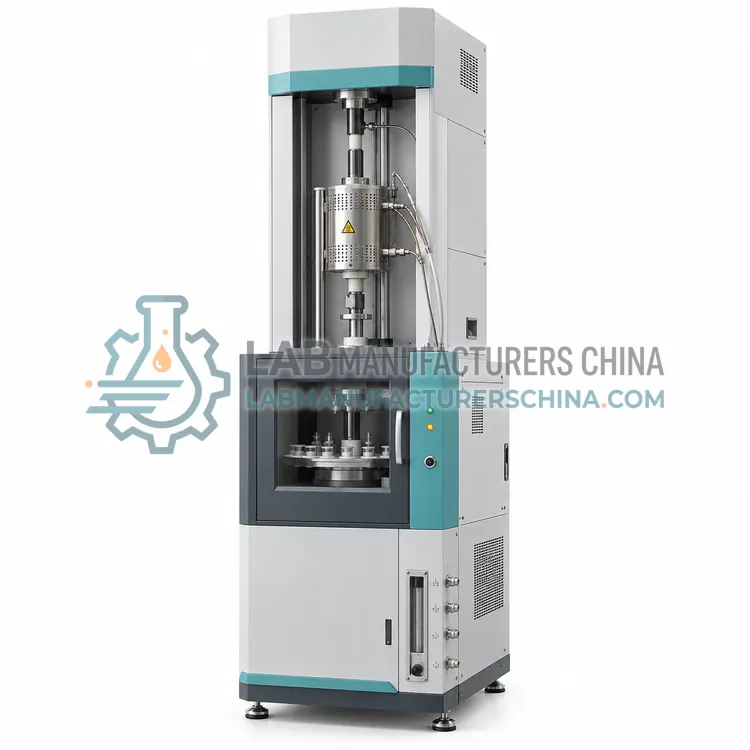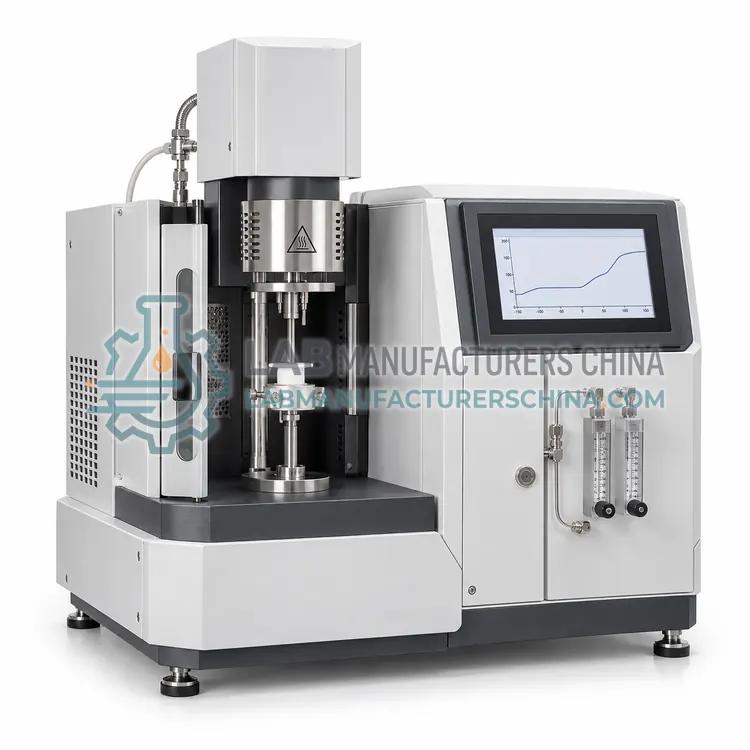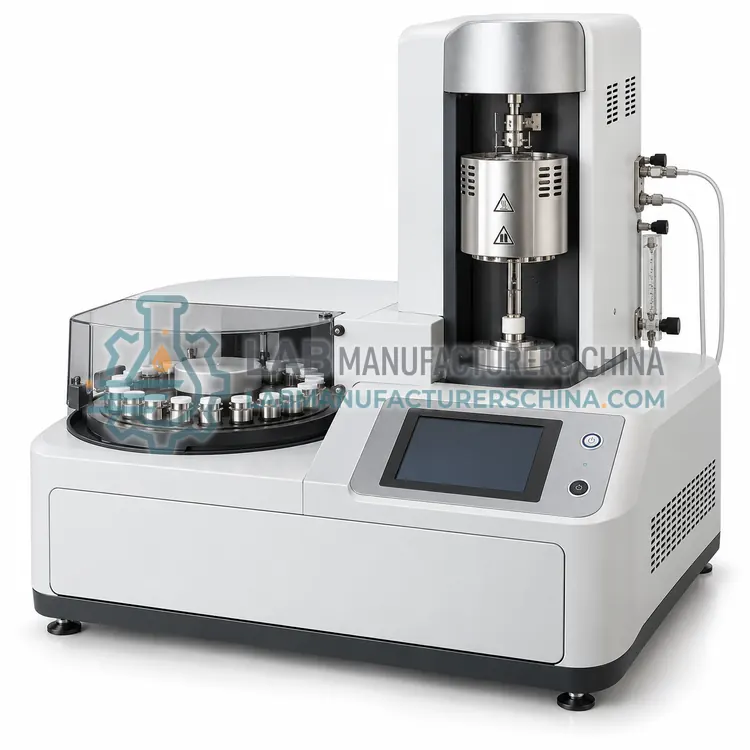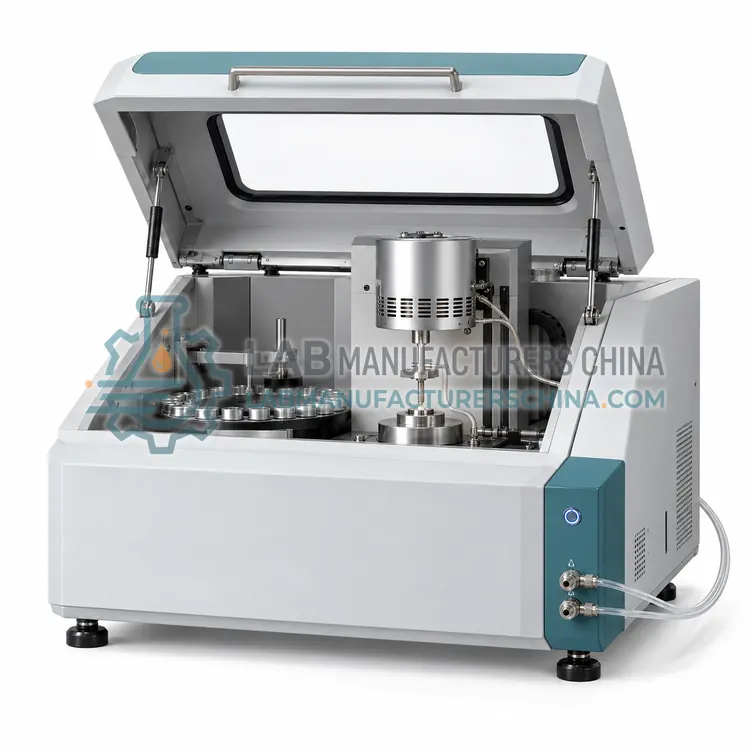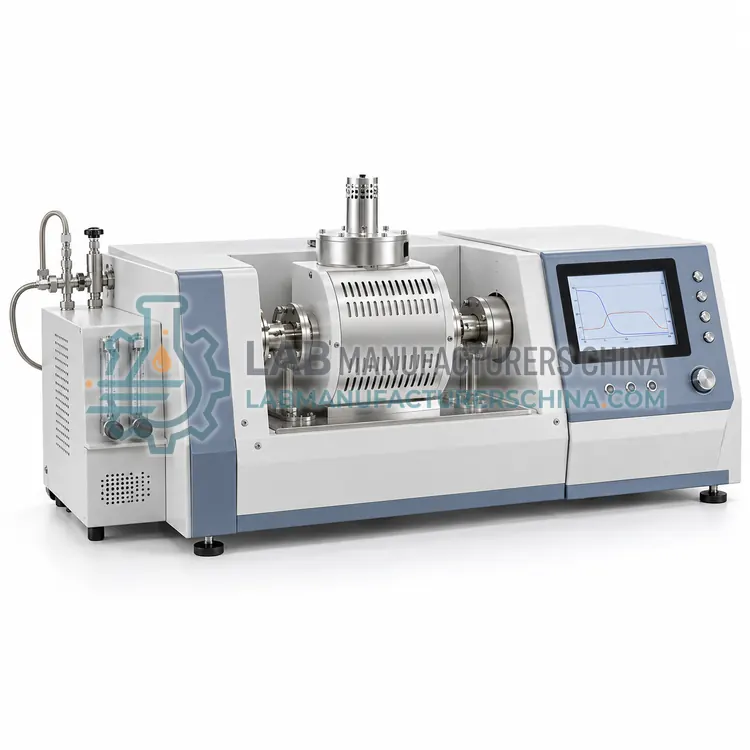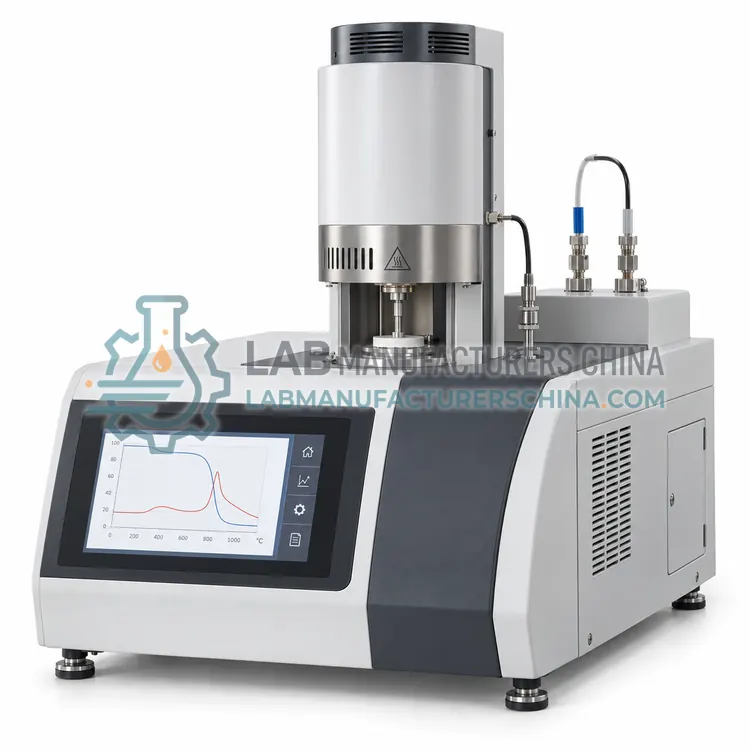
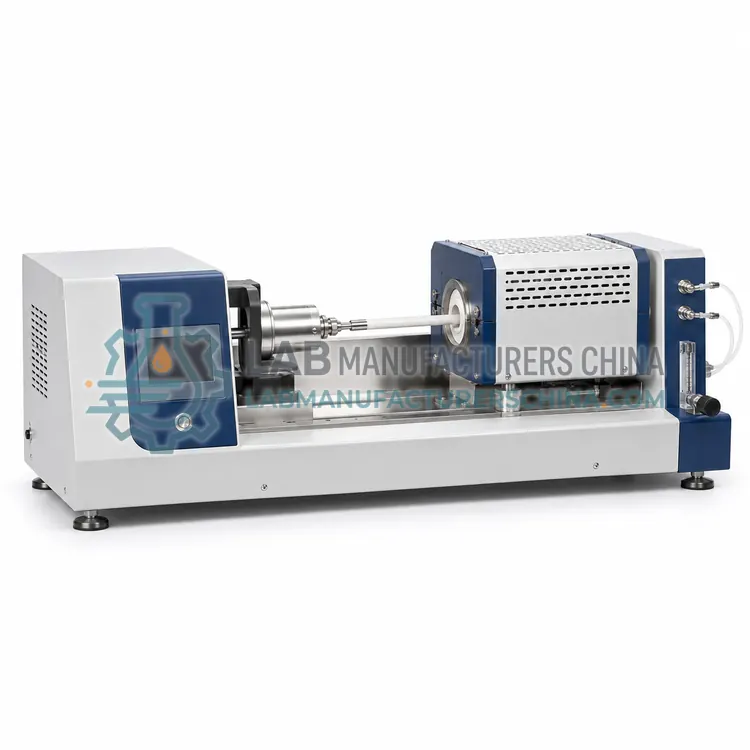
Horizontal Push-Rod Dilatometer
水平推杆式膨胀仪
- SKU TMA-0002
- TMA
- CE (to be confirmed)
- IEC 61010-1 safety (to be confirmed)
- ISO 9001 manufacturing (to be confirmed)
Price on request — FOB / CIF quoted per order
Prices depend on configuration, quantity and destination port.
Key specifications
| Temperature range | Ambient–1600 °C |
|---|---|
| Displacement resolution | 10–100 nm |
| Contact force | < 1 N, adjustable |
| Specimen length | 25–50 mm |
| Heating rate | 1–10 °C/min |
| Temperature accuracy | ±1 °C |
Request a quote Download brochure · to be provided
By Lab Manufacturers China Technical TeamLast reviewed Standards: ASTM E831, ASTM E1363, ASTM D696
What is the Horizontal Push-Rod Dilatometer?
A horizontal push-rod dilatometer places the specimen on a flat bed with the probe moving horizontally, which eliminates errors from gravity and probe weight. It measures precise thermal expansion of ceramics, glasses, metals and refractories over long specimens.
What is the Horizontal Push-Rod Dilatometer?
A horizontal push-rod dilatometer places the specimen on a flat bed with the probe moving horizontally, which eliminates errors from gravity and probe weight. It measures precise thermal expansion of ceramics, glasses, metals and refractories over long specimens.
Overview
In the horizontal design the specimen lies in a cradle or on a support tube inside the furnace, and a push-rod acts on one end while the reference end is fixed. Because the probe does not rest on the specimen, the applied load can be very low, which reduces creep and point-loading errors and makes the configuration suitable for brittle and low-expansion materials. Specimen lengths of 25 to 50 millimetres give high sensitivity to small expansion, and the measurement is corrected with a calibration run on a certified standard such as fused silica, alumina or platinum. Typical specifications include a temperature range from ambient to 1600 degrees Celsius, displacement resolution of 10 to 100 nanometres, contact force below 1 newton and a heating rate of 1 to 10 degrees Celsius per minute. Applications include glass-to-metal sealing, refractory expansion curves, ceramic substrate matching and the expansion of composites reinforced with fibres of different expansion coefficient.
How does it work?
A probe rests on the specimen and is connected to a linear variable differential transformer, which converts displacement into an electrical signal with resolution near one nanometre. A furnace programs the temperature while a defined static or oscillating load holds the probe in contact. Depending on the probe and holder fitted, the instrument measures expansion, compression, penetration, tension or three-point bending, and the same displacement channel serves all modes. Coefficient of thermal expansion is calculated from the slope of the expansion curve over a chosen temperature interval, and softening or glass transition temperatures are read from the onset of probe penetration. Calibration uses reference materials of known expansion such as fused silica or aluminium, plus melting point standards for the temperature channel. Probe material, load and contact geometry must be recorded because they influence the measured displacement, and sample preparation must give parallel, flat faces.
What are the key features?
- Horizontal specimen bed eliminating gravity and probe-weight effects
- Contact force below 1 N for brittle and low-expansion materials
- Specimen lengths of 25–50 mm for high expansion sensitivity
- Furnace to 1600 °C with alumina or graphite tube options
- Correction using certified expansion reference materials
- Optional dual push-rod for differential specimen comparison
What are the technical specifications?
A typical horizontal push-rod dilatometer configuration offers temperature range of Ambient–1600 °C, displacement resolution of 10–100 nm, contact force of < 1 N, adjustable, specimen length of 25–50 mm, heating rate of 1–10 °C/min and temperature accuracy of ±1 °C. Values are indicative of the product class; the exact figures for each configuration are confirmed on the quotation and the calibration documents supplied with the instrument.
Which applications is it used for?
The Horizontal Push-Rod Dilatometer is used in glass to metal sealing compatibility, refractory and firebrick expansion, ceramic substrate and package matching, composite expansion behaviour and metal alloy expansion in inert gas. Across the wider TMA class, laboratories also deploy it for coefficient of thermal expansion of metals and ceramics, polymer softening and glass transition and electronic substrate and packaging materials.
Which standards and certifications apply?
Relevant standards and methods include ASTM E831, ASTM E1363, ASTM D696, ISO 11359-1, ISO 11359-2 and IEC 61010-1. Certification candidates for this model are CE, IEC 61010-1 safety and ISO 9001 manufacturing; each is to be confirmed for the specific configuration before shipment, and certificates are supplied only where they have been issued.
Prepare specimens with parallel, flat and smooth faces, and record the original length precisely, because expansion results are normalized to it. Keep the load low enough to avoid deforming the sample, and allow the probe to settle at the starting temperature before beginning the ramp. Verify the expansion channel with a certified reference such as fused silica or aluminium and check the temperature channel with melting point standards. Beware of systematic artefacts: probe and holder expansion must be subtracted, and soft samples can show apparent shrinkage from creep under load. Keep the furnace and probe clean, replace worn probes, and use the correct purge gas to avoid oxidation or reaction with the specimen. Record mode, load, probe material, gas and calibration data with every curve.
How do I select the right Horizontal Push-Rod Dilatometer?
Select a horizontal dilatometer for precise expansion of rigid, brittle or low-expansion materials, and when long specimens are available. For soft polymers and multi-mode testing, a vertical instrument is more versatile. In an RFQ, specify temperature range, furnace tube material, specimen length, contact force and reference standards.
How does it compare with other TMA variants?
Decide the measurement mode first, because it dictates the probe and holder: expansion requires a flat-ended probe and often a horizontal or vertical dilatometer configuration, penetration and compression suit polymers and soft materials, tension suits films and fibres, and three-point bending suits rigid bars. Then set the temperature range, since it determines whether the furnace uses quartz, alumina or graphite and whether cooling uses liquid nitrogen or mechanical refrigeration. Displacement resolution matters most for thin films and low-expansion ceramics, where nanometre sensitivity is needed. Load range and control quality decide whether soft, low-modulus samples can be measured without deformation caused by the probe itself. Check the atmosphere and vacuum options, calibration standards supplied, sample preparation tooling and whether the instrument can be upgraded with a humidity generator or an automatic sample changer.
Full specifications
| Temperature range | Ambient–1600 °C |
|---|---|
| Displacement resolution | 10–100 nm |
| Contact force | < 1 N, adjustable |
| Specimen length | 25–50 mm |
| Heating rate | 1–10 °C/min |
| Temperature accuracy | ±1 °C |
| Furnace tube | Alumina or graphite |
| Atmosphere | Air, argon, nitrogen, vacuum option |
| Reference standards | Fused silica, alumina, platinum |
| Correction | Calibration run subtraction or stored coefficient |
Indicative values for this product class. Final specifications are confirmed on the quotation and in the calibration documents supplied with the instrument.
Applications
- Glass to metal sealing compatibility
- Refractory and firebrick expansion
- Ceramic substrate and package matching
- Composite expansion behaviour
- Metal alloy expansion in inert gas
Key features
- Horizontal specimen bed eliminating gravity and probe-weight effects
- Contact force below 1 N for brittle and low-expansion materials
- Specimen lengths of 25–50 mm for high expansion sensitivity
- Furnace to 1600 °C with alumina or graphite tube options
- Correction using certified expansion reference materials
- Optional dual push-rod for differential specimen comparison
Frequently asked questions about Horizontal Push-Rod Dilatometer
Because the probe rests on a bed rather than on the specimen, the contact pressure stays very low and does not vary with probe weight. This avoids local crushing at the contact point and eliminates the small but systematic error that vertical loading introduces in brittle materials.
Longer specimens improve resolution of small expansion, so 25 to 50 millimetres is common for ceramics and glasses. The specimen must have parallel ends and a uniform cross-section, and larger dimensions should be checked against the furnace tube clearance and the maximum load.
It should be just enough to maintain contact, typically below 1 newton for ceramics. Higher forces can cause elastic compression that is read as apparent shrinkage, and in soft materials they cause creep, so record and control the contact force for every run.
It measures dimensional change of a specimen under a controlled load as temperature changes. From that curve it determines thermal expansion coefficient, shrinkage on curing or sintering, softening and penetration onset, glass transition by expansion, and dimensional stability of films and composites.
The probe and holder also expand with temperature, and their contribution must be subtracted to isolate the sample behaviour. Fused silica has a very low and well-known expansion, so it is used for low-expansion samples and as the reference material for calibration.
It is the slope of the expansion curve divided by the original specimen length, expressed in parts per million per degree Celsius. The value depends strongly on the temperature interval chosen, so the interval must be stated, for example 20 to 100 degrees Celsius.
Related models