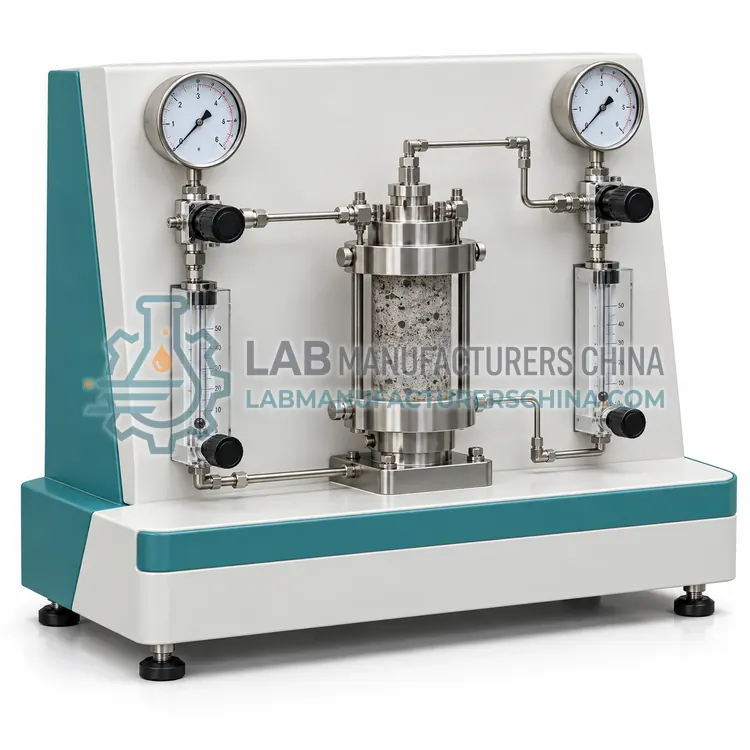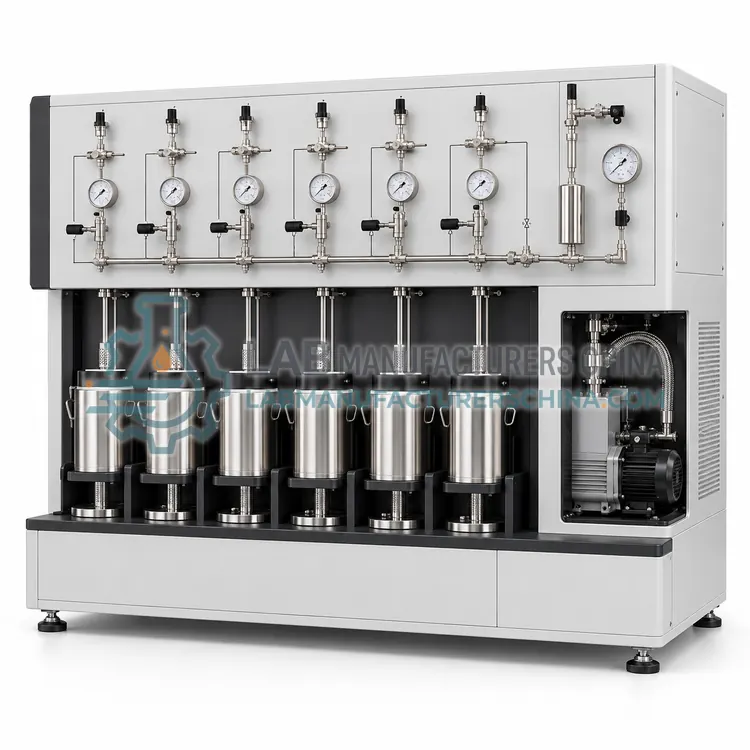
High-Vacuum Volumetric Physisorption Analyzer for Micropore and Mesopore Analysis
微孔与介孔分析用高真空容量法物理吸附分析仪
- CE (to be confirmed)
- +2
Welcome to Lab Manufacturers China — laboratory instruments direct from a Chinese manufacturer
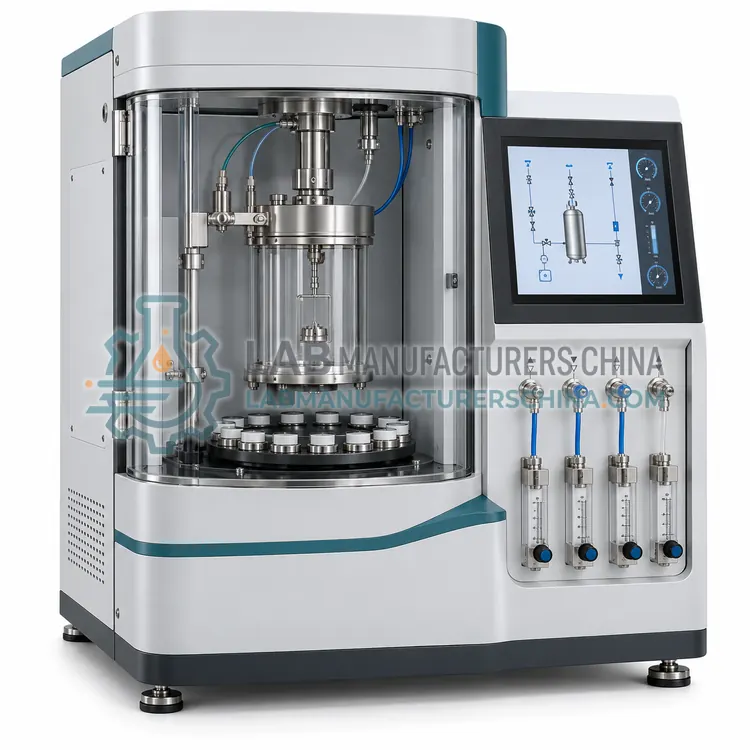
重量法动态蒸汽吸附分析仪
Price on request — FOB / CIF quoted per order
Prices depend on configuration, quantity and destination port.
| Balance resolution | 0.1 µg |
|---|---|
| Sample mass | 1–100 mg |
| Humidity range | 0–98% RH |
| Humidity accuracy | ±1.0% RH |
| Temperature range | 5–60 °C |
| Temperature stability | ±0.1 °C |
By Lab Manufacturers China Technical TeamLast reviewed Standards: ISO 9277, ISO 15901-2, ISO 15901-3
An instrument that weighs a sample on a microbalance while relative humidity or solvent vapor concentration is stepped under controlled temperature. It gives moisture sorption isotherms, kinetics and vapor-based surface area, making it suitable for pharmaceuticals, food, polymers and porous materials.
An instrument that weighs a sample on a microbalance while relative humidity or solvent vapor concentration is stepped under controlled temperature. It gives moisture sorption isotherms, kinetics and vapor-based surface area, making it suitable for pharmaceuticals, food, polymers and porous materials.
A dynamic vapor sorption analyzer places a few milligrams of sample on a recording microbalance inside a temperature-controlled chamber, then exposes it to a programmed sequence of relative humidity or organic vapor partial pressure produced by mixing dry and saturated carrier gas. Mass change is recorded until a dm/dt criterion is met, typically below 0.002 percent per minute, and the equilibrium uptake is plotted against relative humidity to give sorption and desorption isotherms. Hysteresis shows pore structure and amorphous content. Using water, nitrogen-free organic vapors or krypton-free methods, BET analysis gives surface area in a relevant environment. Typical balance resolution is 0.1 µg and temperature range is 5 to 60 °C, extendable to 85 °C on some models.
These analyzers expose a degassed solid to an adsorbate and measure how much is taken up. In static volumetric physisorption, known doses of nitrogen, argon or krypton are admitted to a manifold and sample tube at 77 K or 87 K, and the pressure drop after equilibration gives the adsorbed volume. Isotherms are analyzed with BET for surface area, t-plot and DFT methods for micropores, and BJH for mesopores. Gravimetric systems weigh the sample directly while vapor pressure is controlled. Chemisorption analyzers dose hydrogen, CO or oxygen at elevated temperature and use thermal conductivity detection for temperature-programmed reduction and desorption. Key components are vacuum pumps, pressure transducers, a cryogenic bath or furnace, and analysis software.
A typical gravimetric dynamic vapor sorption analyzer configuration offers balance resolution of 0.1 µg, sample mass of 1–100 mg, humidity range of 0–98% RH, humidity accuracy of ±1.0% RH, temperature range of 5–60 °C and temperature stability of ±0.1 °C. Values are indicative of the product class; the exact figures for each configuration are confirmed on the quotation and the calibration documents supplied with the instrument.
The Gravimetric Dynamic Vapor Sorption Analyzer is used in moisture uptake of drug substances, amorphous content determination, packaging and polymer permeation studies and food stability and shelf life. Across the wider Surface Area Analyzers class, laboratories also deploy it for catalyst and support characterization, battery electrode powder analysis and activated carbon and adsorbent testing.
Relevant standards and methods include ISO 9277, ISO 15901-2, ISO 15901-3, ASTM D3663 and ASTM D4365. Certification candidates for this model are CE, ISO 9001 manufacturing and RoHS; each is to be confirmed for the specific configuration before shipment, and certificates are supplied only where they have been issued.
Sample degassing is the main source of error; select temperature and time so that moisture and volatiles are removed without changing the structure, and weigh the sample after degassing. Use adequate sample mass to provide at least 1 m² of total surface area, or 0.05 m² with krypton. Check free-space calibration and leak rates regularly. Ensure a reliable supply of high-purity gases, typically 99.999 percent, and monitor liquid nitrogen levels. Verify performance with certified reference materials of known surface area. Place the unit on a stable bench with ventilation for cryogenic and hydrogen work, and follow local rules for compressed gas cylinders.
Select this variant when humidity- or solvent-dependent behavior is the question, for example hygroscopicity classification per Ph. Eur. 5.11, or when volumetric systems would need unrealistic adsorbates. It is not a substitute for nitrogen BET on catalysts. In an RFQ, specify humidity and temperature range, vapor types, sample mass and kinetic data export format.
Decide first what must be measured. Surface area and mesopore size of powders, catalysts and electrode materials suit a volumetric physisorption analyzer; micropore work requires turbomolecular pumping and low-pressure transducers. Very low area films and substrates need krypton capability. Water or solvent uptake calls for a gravimetric vapor sorption analyzer. Metal dispersion and acid site measurements need a chemisorption system with a furnace and detector. Hydrogen and methane storage research needs a high-pressure sorption analyzer. Compare the number of analysis ports, degassing stations, pressure range, transducer accuracy, liquid nitrogen consumption and compliance with ISO 9277 and ISO 15901-2 when specifying.
| Balance resolution | 0.1 µg |
|---|---|
| Sample mass | 1–100 mg |
| Humidity range | 0–98% RH |
| Humidity accuracy | ±1.0% RH |
| Temperature range | 5–60 °C |
| Temperature stability | ±0.1 °C |
| Gas flow rate | 0–200 mL/min |
| Mass stability | < 0.5 µg/h |
| Vapor options | Water; ethanol, acetone and others optional |
| Isotherm points | Up to 100 programmed steps |
Indicative values for this product class. Final specifications are confirmed on the quotation and in the calibration documents supplied with the instrument.
It plots equilibrium water content against relative humidity at constant temperature. The shape indicates hygroscopicity, hydrate formation, amorphous content and pore structure, and the hysteresis between sorption and desorption shows how water is bound or trapped.
A typical 0 to 90 to 0 percent relative humidity isotherm in 10 percent steps takes 1 to 5 days depending on material and the dm/dt criterion. Nonporous crystalline powders equilibrate within minutes per step, while polymers and amorphous solids take hours.
It can estimate a vapor-accessible surface area using water or organic vapors with BET analysis, but values depend on the adsorbate and differ from nitrogen area. Use it for application-relevant surface behavior rather than for standard ISO 9277 reporting.
A BET analyzer measures gas adsorption on a solid at cryogenic temperature and applies the Brunauer–Emmett–Teller model to calculate specific surface area in m²/g. Most instruments also give pore volume and pore size distribution from the same isotherm.
Degassing removes water, solvents and adsorbed gases that would otherwise occupy the surface and bias the measured area. Temperature and time depend on the material, for example 150–300 °C for many oxides, and must not collapse the pore structure.
Not usually. Physisorption analyzers measure area and pores using nitrogen at 77 K, while metal dispersion requires chemisorption of hydrogen or CO at controlled temperatures with a furnace and detector. Some combined platforms offer both modules in one cabinet.
微孔与介孔分析用高真空容量法物理吸附分析仪
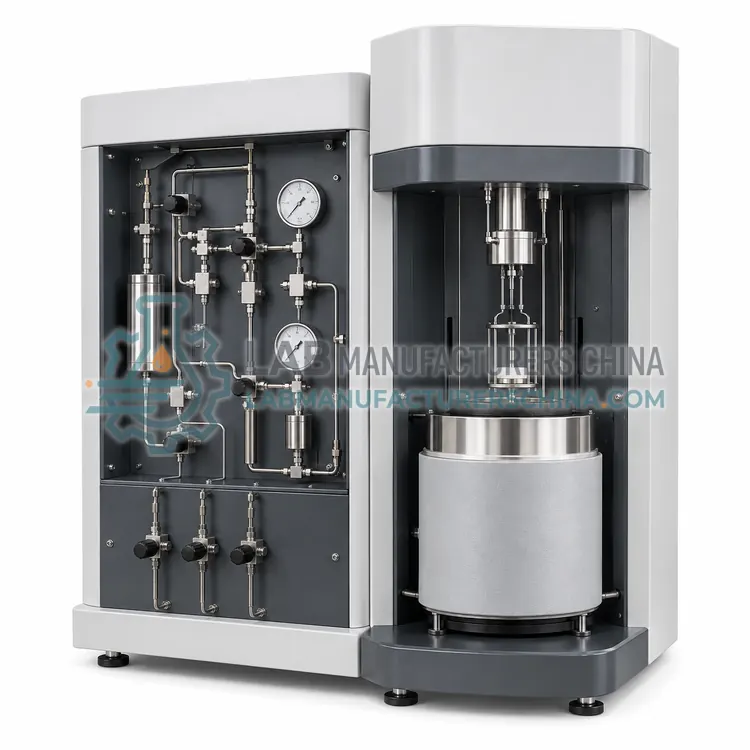
薄膜与平整基底用氪气低比表面积分析仪
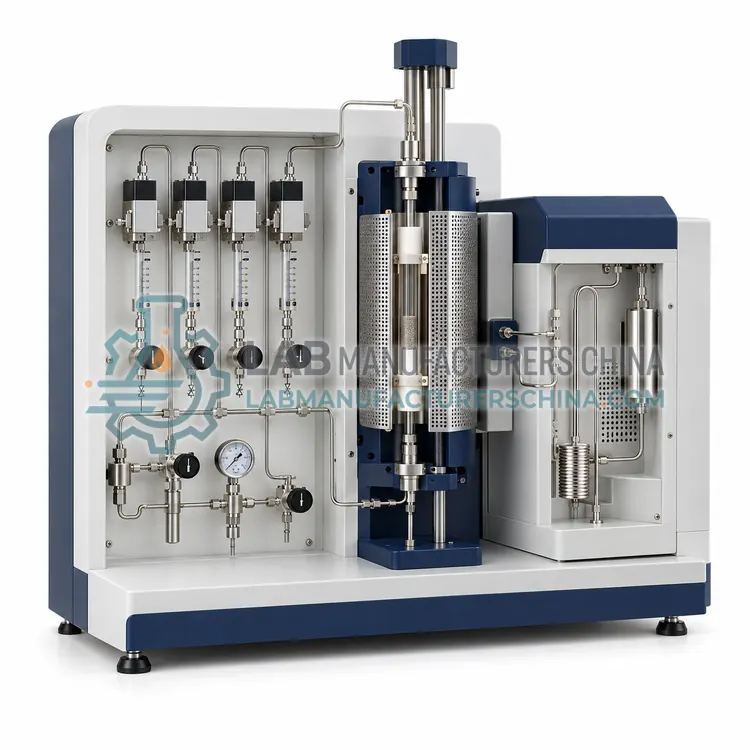
催化剂金属分散度及 TPR/TPD 化学吸附分析仪
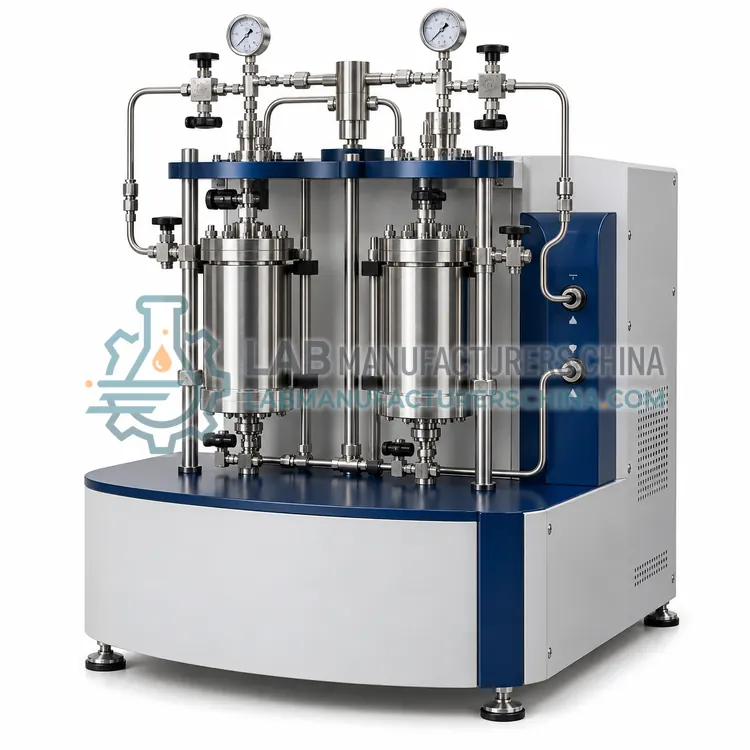
氢气与二氧化碳储存研究用高压气体吸附分析仪