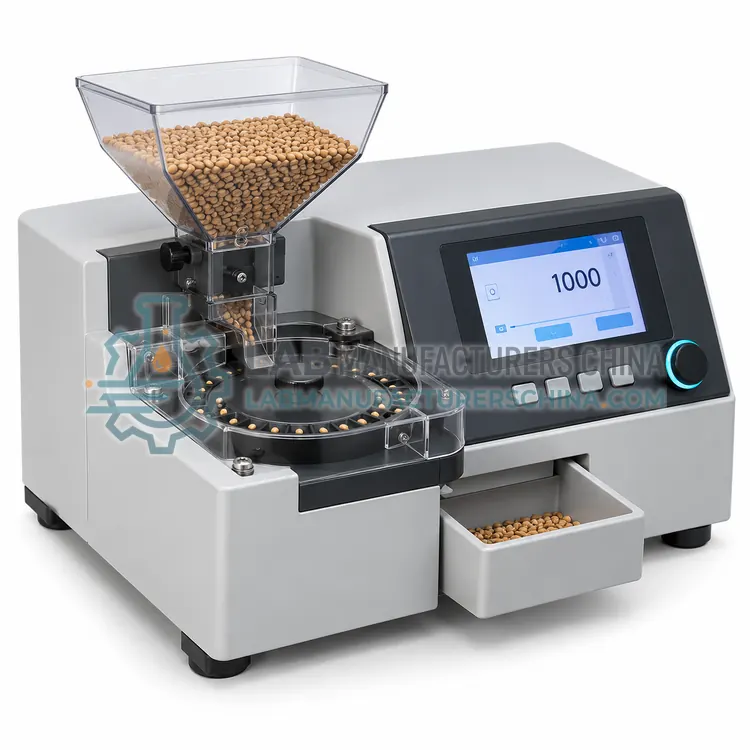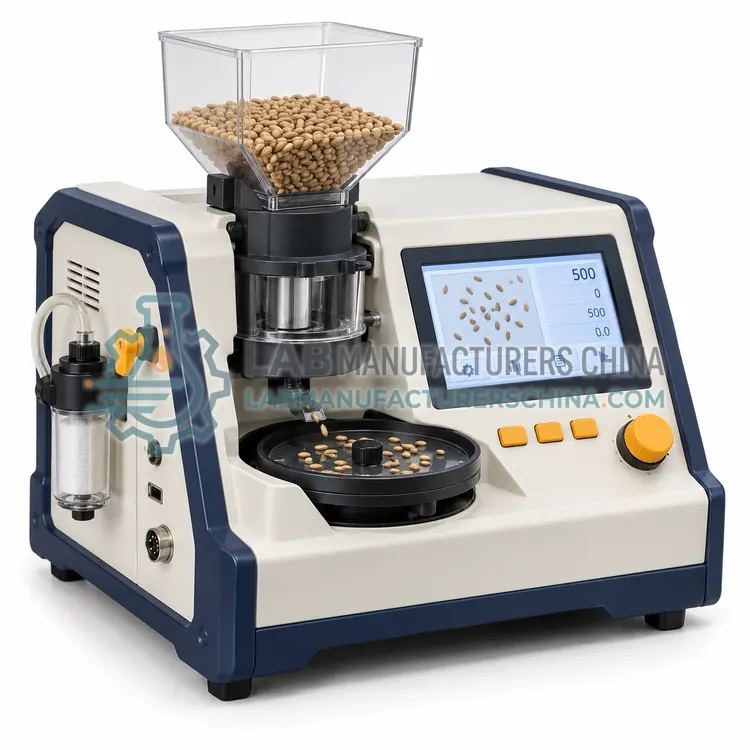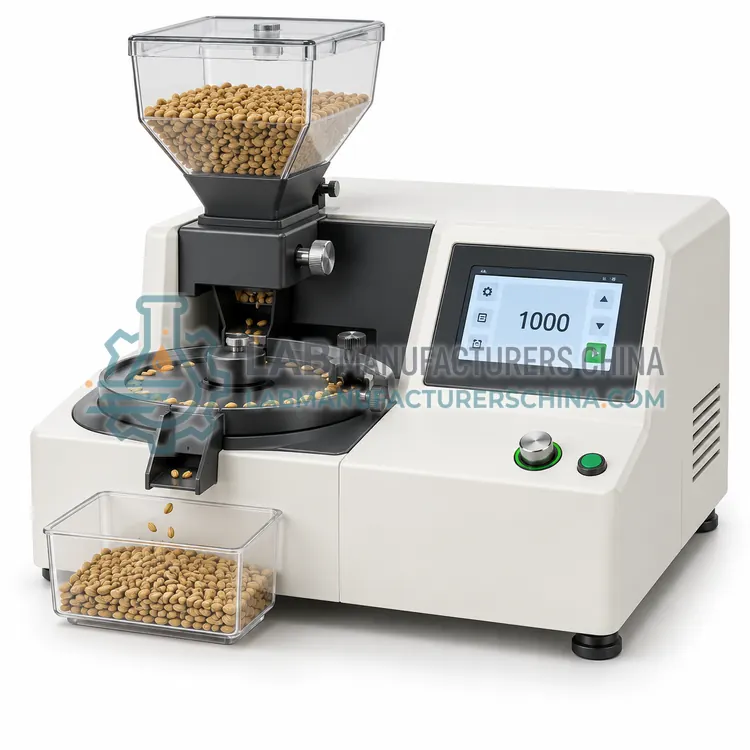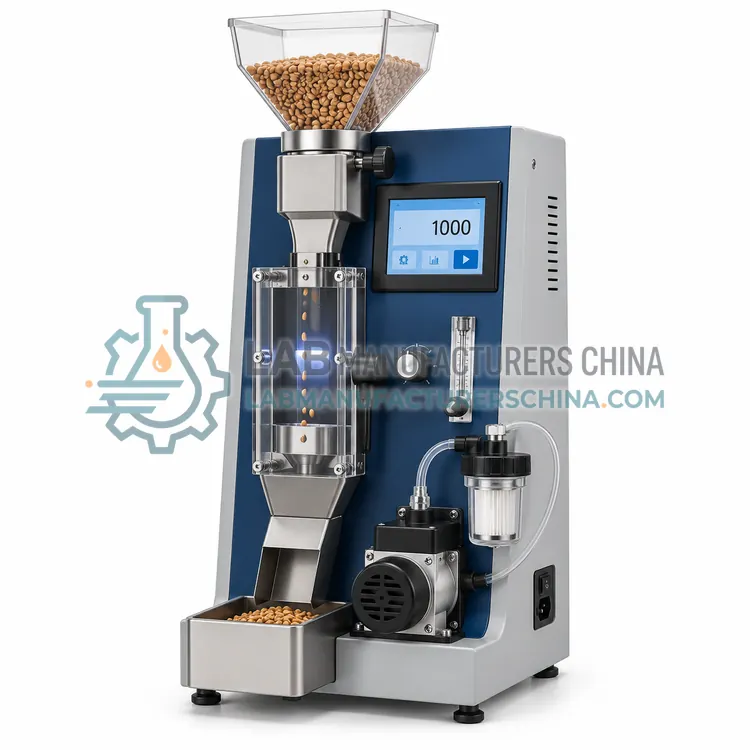
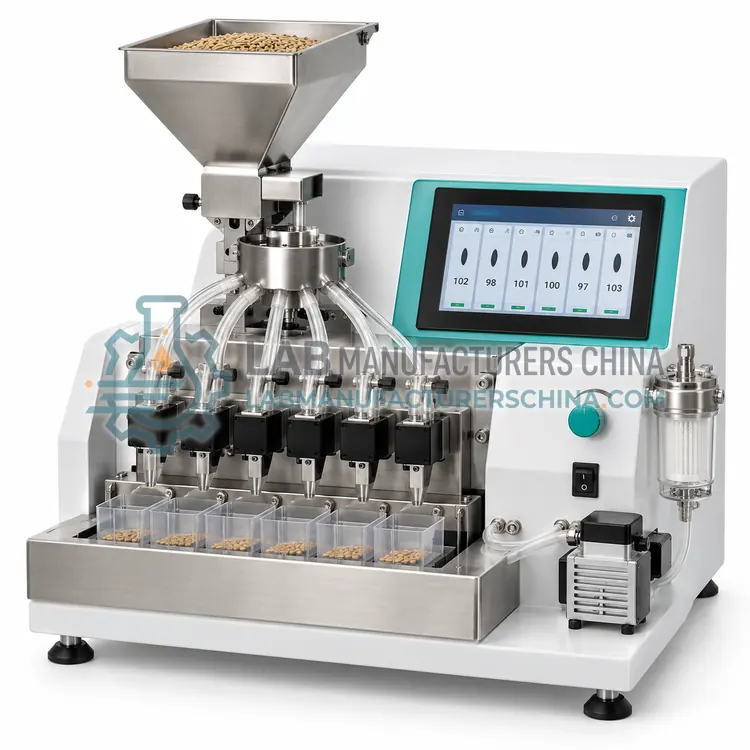
Photoelectric Seed Counter
光电式种子计数仪
- SKU SEC-0001
- Seed Counters
- CE (to be confirmed)
- RoHS (to be confirmed)
- ISO 9001 manufacturing (to be confirmed)
Price on request — FOB / CIF quoted per order
Prices depend on configuration, quantity and destination port.
Key specifications
| Counting principle | Photoelectric beam interruption |
|---|---|
| Counting range | 1–9999 seeds |
| Seed size range | 1–12 mm |
| Throughput | 300–3000 seeds/min |
| Counting accuracy | ±0.5% for uniform seeds |
| Feed method | Vibrating channel or rotating drum |
Request a quote Download brochure · to be provided
By Lab Manufacturers China Technical TeamLast reviewed Standards: ISTA International Rules for Seed Testing, ISO 520 (1000-grain mass), AOSA Rules for Testing Seeds
What is the Photoelectric Seed Counter?
A counter that detects each seed as it falls through a light beam and totalises the pulses. It is the right choice for fast, routine counting of round, uniform seeds such as cereals and pulses in seed testing.
What is the Photoelectric Seed Counter?
A counter that detects each seed as it falls through a light beam and totalises the pulses. It is the right choice for fast, routine counting of round, uniform seeds such as cereals and pulses in seed testing.
Overview
The photoelectric seed counter feeds seeds down a chute or vibrating channel so that they pass singly through a light beam. A photodetector senses each interruption and a microprocessor totalises the count, which is displayed and can be set to stop at a target number. Rotating drum and disc feeders are used to separate and align seeds before the beam. Throughput reaches hundreds to thousands of seeds per minute, making the instrument suitable for preparing many replicate samples for germination and purity tests. Accuracy is high for round, clean seeds within the size range but falls when seeds are flat, elongated or mixed with chaff, because two seeds can pass together or one can be missed. Sensitivity and feed rate are adjustable, and the instrument is verified with a known seed number. Debris and dust on the optical window must be removed regularly.
How does it work?
Seed counters use several counting principles. Photoelectric counters drop seeds through a chute where a beam and sensor detect each seed, and pulses are totalised; the method suits round, uniform seeds. Vacuum head counters use a plate with perforations and gentle suction to pick up one seed per hole, so the operator can transfer an exact number to a tray or paper. Electronic tray counters place an image sensor beneath a grooved tray and count seeds from their shadows or contours, which handles irregular shapes and mixes. Weighing-based counters determine the number from the mass of a sample and the thousand-grain weight, which is fast but indirect. Automatic dosing systems combine counting with dispensing into packets or germination trays. Calibration with a known seed number and cleaning between species keep counts accurate.
What are the key features?
- Counts hundreds to thousands of seeds per minute.
- Adjustable sensitivity matches different seed sizes.
- Target count stop function prepares exact replicates.
- Vibrating feed separates clumping seeds before the beam.
- Digital display and memory store counts per sample.
- Simple optical path is easy to clean and maintain.
What are the technical specifications?
A typical photoelectric seed counter configuration offers counting principle of Photoelectric beam interruption, counting range of 1–9999 seeds, seed size range of 1–12 mm, throughput of 300–3000 seeds/min, counting accuracy of ±0.5% for uniform seeds and feed method of Vibrating channel or rotating drum. Values are indicative of the product class; the exact figures for each configuration are confirmed on the quotation and the calibration documents supplied with the instrument.
Which applications is it used for?
The Photoelectric Seed Counter is used in germination replicate preparation, cereal and pulse seed counting, thousand-grain weight samples and sowing rate trials. Across the wider Seed Counters class, laboratories also deploy it for germination test sample preparation, thousand-grain weight determination and seed purity analysis.
Which standards and certifications apply?
Relevant standards and methods include ISTA International Rules for Seed Testing, ISO 520 (1000-grain mass), AOSA Rules for Testing Seeds, GB/T 3543.1 and ISTA Chapter 2 (sampling). Certification candidates for this model are CE, RoHS and ISO 9001 manufacturing; each is to be confirmed for the specific configuration before shipment, and certificates are supplied only where they have been issued.
Calibrate or verify the counter with a known seed number for each species before routine use, and recheck after changing settings or cleaning. Keep the counting path free of dust, chaff and broken seeds, because debris produces false counts. Control moisture and static, which cause seeds to clump and bridge, especially in small or oily species. For germination work, handle counted seeds gently to avoid damage, and record the species, variety, thousand-grain weight and count for traceability. Clean between species to prevent carry-over of small seeds, and store the instrument in a dry place. When weighing-based counting is used, verify the thousand-grain weight regularly and confirm that it still applies to the current seed lot.
How do I select the right Photoelectric Seed Counter?
Select the photoelectric counter for high-throughput counting of round, uniform, clean seeds. For small or irregular seeds, use a vacuum or image-based counter. In an RFQ, specify the seed size range, throughput and whether a target count stop is needed.
How does it compare with other Seed Counters variants?
Choose according to seed size, shape and the required accuracy. Photoelectric counters are fast and simple for round seeds such as cereals, but irregular or very small seeds may be missed or double-counted. Vacuum head counters give exact, hand-verified numbers and suit small or sticky seeds and germination work, though throughput is lower. Image-based tray counters handle mixed and irregular seeds and can report size data at the same time. Weighing-based counters are fastest for large batches but inherit the error of the thousand-grain weight, so they suit sowing-rate estimates rather than reference counts. Consider the seed size range, throughput, whether an exact transferred number is needed, and cleaning and calibration requirements. For ISTA or national seed testing, confirm that the counting method fits the prescribed procedure.
Full specifications
| Counting principle | Photoelectric beam interruption |
|---|---|
| Counting range | 1–9999 seeds |
| Seed size range | 1–12 mm |
| Throughput | 300–3000 seeds/min |
| Counting accuracy | ±0.5% for uniform seeds |
| Feed method | Vibrating channel or rotating drum |
| Target count function | Adjustable stop |
| Data memory | Up to 1000 records |
| Power supply | 220 VAC, 50 Hz |
| Operating temperature | 5–40 °C |
| Weight | 5–15 kg |
Indicative values for this product class. Final specifications are confirmed on the quotation and in the calibration documents supplied with the instrument.
Applications
- Germination replicate preparation
- Cereal and pulse seed counting
- Thousand-grain weight samples
- Sowing rate trials
Key features
- Counts hundreds to thousands of seeds per minute.
- Adjustable sensitivity matches different seed sizes.
- Target count stop function prepares exact replicates.
- Vibrating feed separates clumping seeds before the beam.
- Digital display and memory store counts per sample.
- Simple optical path is easy to clean and maintain.
Frequently asked questions about Photoelectric Seed Counter
Dust, chaff and broken seed coats can interrupt the beam and register extra counts, and two seeds passing together may be counted as one or two. Cleaning the optical path and sieving out debris before counting reduce these errors.
Accuracy is best at moderate feed rates, typically several hundred to two thousand seeds per minute for cereals. Running faster increases the chance of double or missed counts, so the feed is set to the highest speed that still meets the accuracy requirement.
Poorly. Chaff and attached appendages cause bridging and false interruptions, so chaffy seeds are usually de-awned or counted by vacuum or image methods. If used, clean the sample thoroughly and slow the feed.
For small, light or sticky seeds such as grasses, vegetables and brassicas, a vacuum head counter is most reliable because each perforation holds one seed and the operator confirms the number visually. Photoelectric counters can miss or double-count very small seeds.
Count a sample of known seed number, or weigh a known number and compare, and adjust the sensitivity or suction until the counter reads correctly. Recheck after cleaning or when switching species, and keep a record for traceability.
Moisture and static electricity make light or oily seeds stick together and bridge at the feed opening, causing under-counting. Keeping seeds dry, using an antistatic device and gentle vibration at the feed helps them separate.
Related models