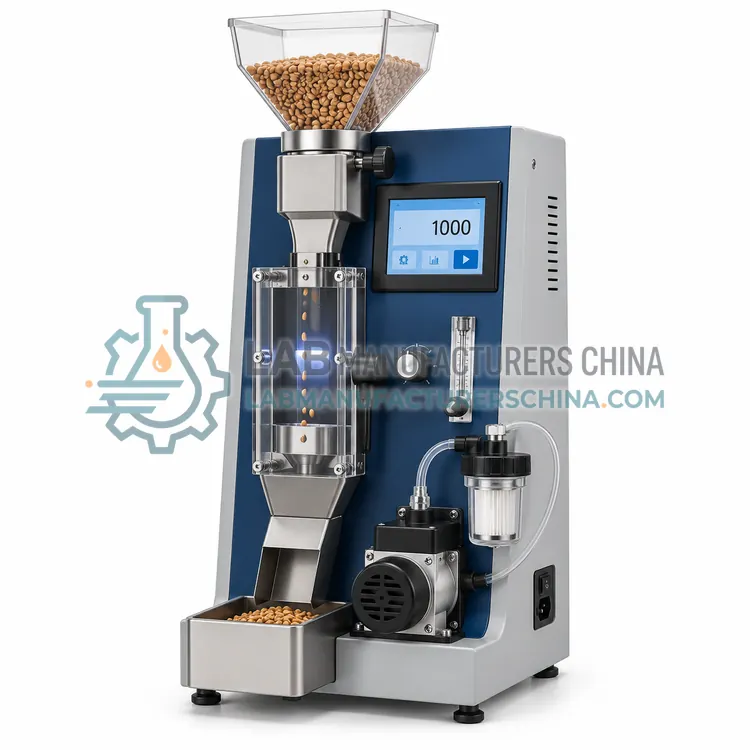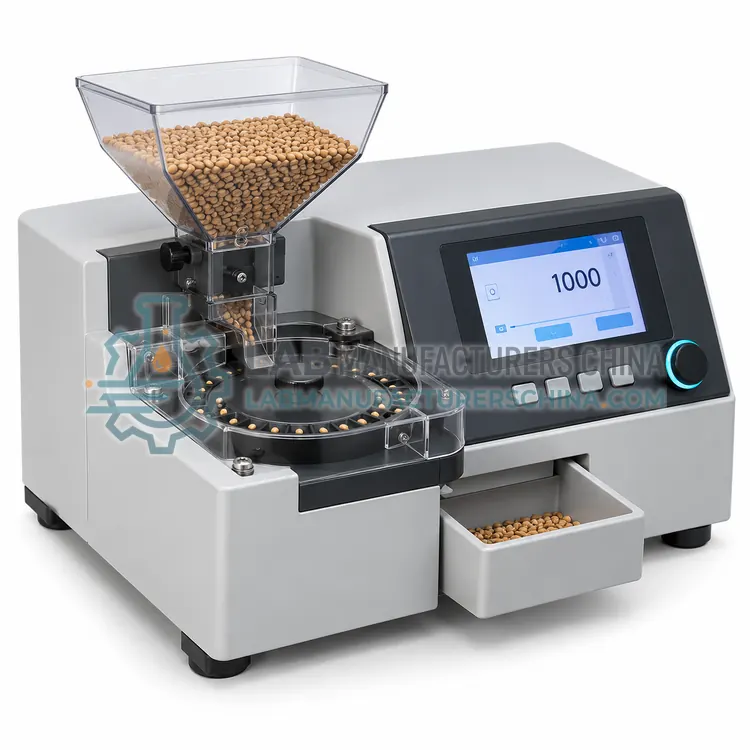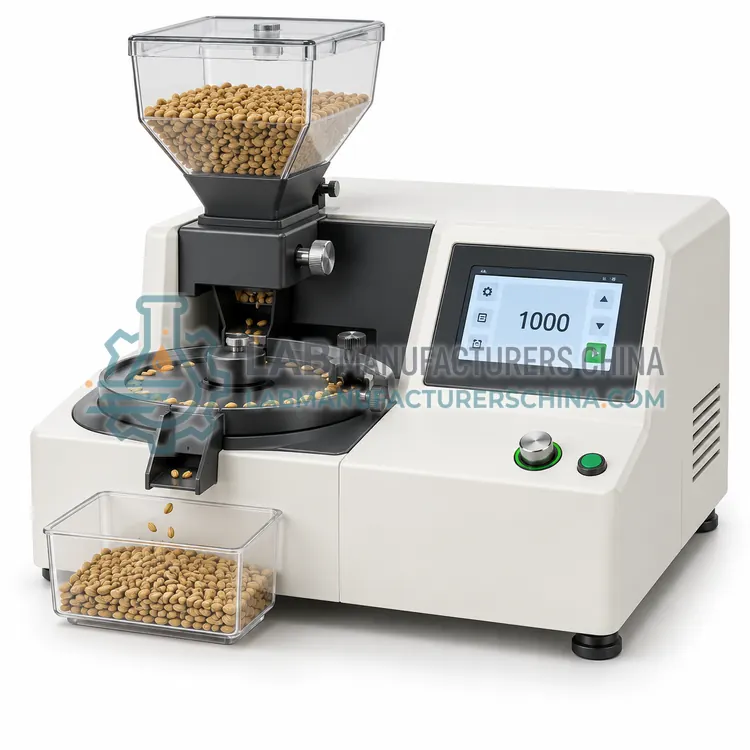
Digital Weighing Seed Counter
带称量功能的数字种子计数仪
- SKU SEC-0004
- Seed Counters
- CE (to be confirmed)
- RoHS (to be confirmed)
- ISO 9001 manufacturing (to be confirmed)
Price on request — FOB / CIF quoted per order
Prices depend on configuration, quantity and destination port.
Key specifications
| Counting principle | Mass divided by thousand-grain weight |
|---|---|
| Balance capacity | 600–5000 g |
| Balance resolution | 0.001–0.01 g |
| Count range | 1–100,000 seeds (estimate) |
| Thousand-grain memory | Multiple species and varieties |
| Counting time | 1–3 s per sample |
Request a quote Download brochure · to be provided
By Lab Manufacturers China Technical TeamLast reviewed Standards: ISTA International Rules for Seed Testing, ISO 520 (1000-grain mass), AOSA Rules for Testing Seeds
What is the Digital Weighing Seed Counter?
A counter that estimates seed number from the mass of a sample and a stored thousand-grain weight. It is the right choice for fast batch counting and sowing rate work where exact reference counts are not required.
What is the Digital Weighing Seed Counter?
A counter that estimates seed number from the mass of a sample and a stored thousand-grain weight. It is the right choice for fast batch counting and sowing rate work where exact reference counts are not required.
Overview
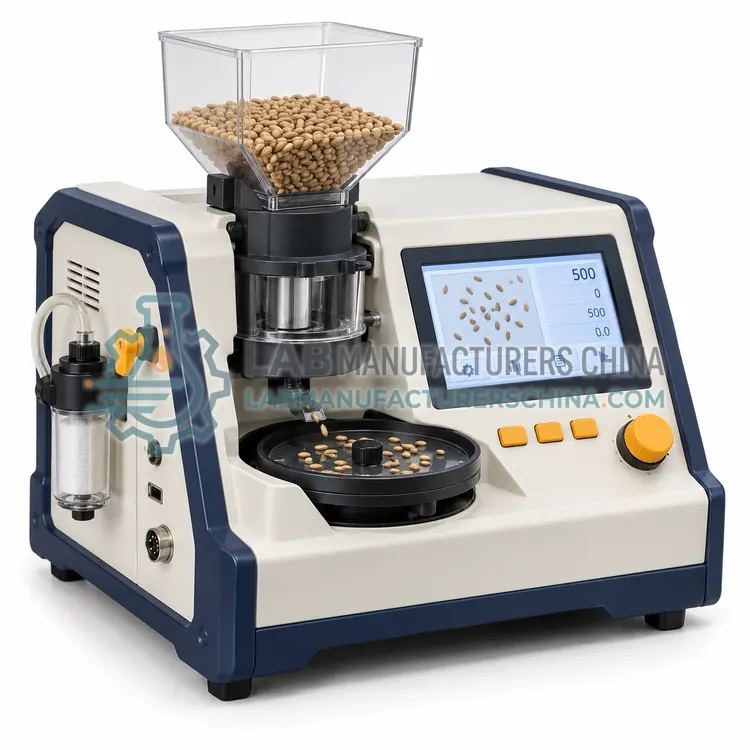
The digital weighing seed counter combines a precision balance with software that divides the measured mass by the thousand-grain weight to estimate the number of seeds. The operator first establishes the thousand-grain weight, either by entering a published value or by counting and weighing a reference sample once, after which any subsequent sample mass is converted to an approximate count in seconds. This makes the method extremely fast for large batches and is well suited to calculating sowing rates, bag filling and checking that seed lots meet a target weight. The estimated count is only as good as the thousand-grain weight, so it must be representative of the current lot, and seed moisture and variety affect the mass. Some instruments accept multiple calibration entries per species and store results for traceability. The balance requires level, stable support and periodic calibration, and errors from static or wind must be controlled.
How does it work?
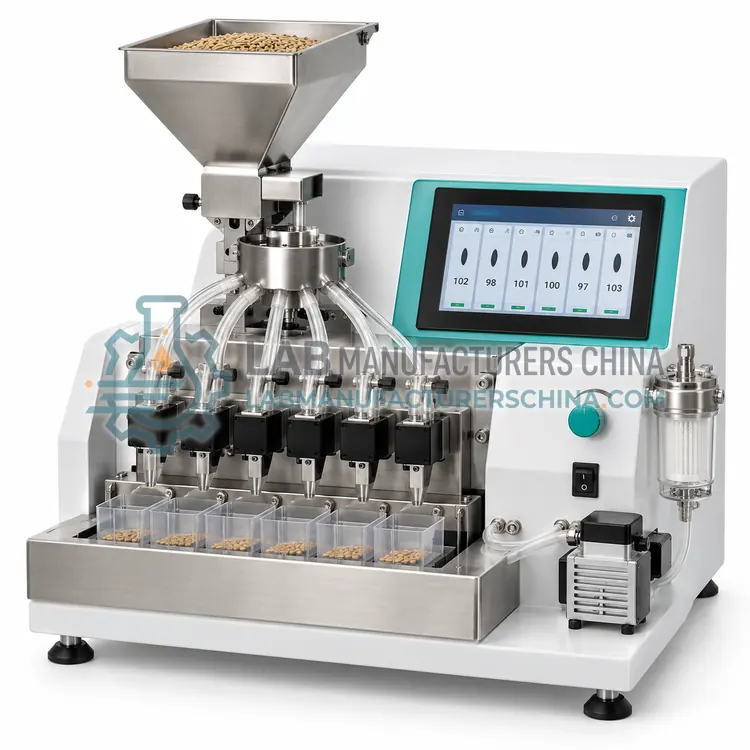
Seed counters use several counting principles. Photoelectric counters drop seeds through a chute where a beam and sensor detect each seed, and pulses are totalised; the method suits round, uniform seeds. Vacuum head counters use a plate with perforations and gentle suction to pick up one seed per hole, so the operator can transfer an exact number to a tray or paper. Electronic tray counters place an image sensor beneath a grooved tray and count seeds from their shadows or contours, which handles irregular shapes and mixes. Weighing-based counters determine the number from the mass of a sample and the thousand-grain weight, which is fast but indirect. Automatic dosing systems combine counting with dispensing into packets or germination trays. Calibration with a known seed number and cleaning between species keep counts accurate.
What are the key features?
- Estimates seed number from mass in seconds.
- Thousand-grain weight stored per species for repeat use.
- Extremely fast for large batches and bag checks.
- Precision balance with automatic calibration option.
- Results logged with sample identity for traceability.
- Well suited to sowing rate and target weight calculations.
What are the technical specifications?
A typical digital weighing seed counter configuration offers counting principle of Mass divided by thousand-grain weight, balance capacity of 600–5000 g, balance resolution of 0.001–0.01 g, count range of 1–100,000 seeds (estimate), thousand-grain memory of Multiple species and varieties and counting time of 1–3 s per sample. Values are indicative of the product class; the exact figures for each configuration are confirmed on the quotation and the calibration documents supplied with the instrument.
Which applications is it used for?
The Digital Weighing Seed Counter is used in sowing rate calculation, bag filling and target weight checks, large-batch seed lot assessment and field trial seed preparation. Across the wider Seed Counters class, laboratories also deploy it for germination test sample preparation, thousand-grain weight determination and seed purity analysis.
Which standards and certifications apply?
Relevant standards and methods include ISTA International Rules for Seed Testing, ISO 520 (1000-grain mass), AOSA Rules for Testing Seeds, GB/T 3543.1 and ISTA Chapter 2 (sampling). Certification candidates for this model are CE, RoHS and ISO 9001 manufacturing; each is to be confirmed for the specific configuration before shipment, and certificates are supplied only where they have been issued.
Calibrate or verify the counter with a known seed number for each species before routine use, and recheck after changing settings or cleaning. Keep the counting path free of dust, chaff and broken seeds, because debris produces false counts. Control moisture and static, which cause seeds to clump and bridge, especially in small or oily species. For germination work, handle counted seeds gently to avoid damage, and record the species, variety, thousand-grain weight and count for traceability. Clean between species to prevent carry-over of small seeds, and store the instrument in a dry place. When weighing-based counting is used, verify the thousand-grain weight regularly and confirm that it still applies to the current seed lot.
How do I select the right Digital Weighing Seed Counter?
Select the weighing counter for fast estimates when thousand-grain weight is well established, and when exact reference counts are not needed. For germination and purity replicates, use a direct counter. In an RFQ, specify balance capacity and resolution, species list and data export needs.
How does it compare with other Seed Counters variants?
Choose according to seed size, shape and the required accuracy. Photoelectric counters are fast and simple for round seeds such as cereals, but irregular or very small seeds may be missed or double-counted. Vacuum head counters give exact, hand-verified numbers and suit small or sticky seeds and germination work, though throughput is lower. Image-based tray counters handle mixed and irregular seeds and can report size data at the same time. Weighing-based counters are fastest for large batches but inherit the error of the thousand-grain weight, so they suit sowing-rate estimates rather than reference counts. Consider the seed size range, throughput, whether an exact transferred number is needed, and cleaning and calibration requirements. For ISTA or national seed testing, confirm that the counting method fits the prescribed procedure.
Full specifications
| Counting principle | Mass divided by thousand-grain weight |
|---|---|
| Balance capacity | 600–5000 g |
| Balance resolution | 0.001–0.01 g |
| Count range | 1–100,000 seeds (estimate) |
| Thousand-grain memory | Multiple species and varieties |
| Counting time | 1–3 s per sample |
| Accuracy | Depends on thousand-grain weight error |
| Calibration | Internal or external weights |
| Outputs | USB, RS-232, printer |
| Power supply | 220 VAC, 50 Hz or battery |
| Operating temperature | 10–35 °C |
Indicative values for this product class. Final specifications are confirmed on the quotation and in the calibration documents supplied with the instrument.
Applications
- Sowing rate calculation
- Bag filling and target weight checks
- Large-batch seed lot assessment
- Field trial seed preparation
Key features
- Estimates seed number from mass in seconds.
- Thousand-grain weight stored per species for repeat use.
- Extremely fast for large batches and bag checks.
- Precision balance with automatic calibration option.
- Results logged with sample identity for traceability.
- Well suited to sowing rate and target weight calculations.
Frequently asked questions about Digital Weighing Seed Counter
Accuracy depends entirely on the thousand-grain weight and its variability within the lot. If the stored value is off by two percent, the estimated count is off by about two percent, so it suits estimates rather than reference counts.
Count and weigh a known number of seeds, ideally several replicates, and scale to one thousand. Published values can be used as a starting point but should be confirmed for each lot because variety and moisture change the mass.
Static electricity, draughts, vibration and an unlevel surface cause unstable readings, especially for very small sample masses. Use an antistatic device, shield the pan, level the instrument and calibrate with external weights periodically.
For small, light or sticky seeds such as grasses, vegetables and brassicas, a vacuum head counter is most reliable because each perforation holds one seed and the operator confirms the number visually. Photoelectric counters can miss or double-count very small seeds.
Count a sample of known seed number, or weigh a known number and compare, and adjust the sensitivity or suction until the counter reads correctly. Recheck after cleaning or when switching species, and keep a record for traceability.
Moisture and static electricity make light or oily seeds stick together and bridge at the feed opening, causing under-counting. Keeping seeds dry, using an antistatic device and gentle vibration at the feed helps them separate.
Related models