384-Well Real-Time PCR System
384 孔实时荧光定量 PCR 系统
- SKU RTP-0002
- Real-Time PCR
- CE (to be confirmed)
- ISO 9001 manufacturing (to be confirmed)
Price on request — FOB / CIF quoted per order
Prices depend on configuration, quantity and destination port.
Key specifications
| Block format | 384-well plate (96-well block optional) |
|---|---|
| Optical channels | 4 to 6 |
| Temperature range | 4–100 °C |
| Max ramp rate | 2.5–3.5 °C/s |
| Block uniformity | ±0.4 °C |
| Reaction volume | 5–20 µL |
Request a quote Download brochure · to be provided
By Lab Manufacturers China Technical TeamLast reviewed Standards: ISO 20395, ISO 22174, CLSI MM06
What is the 384-Well Real-Time PCR System?
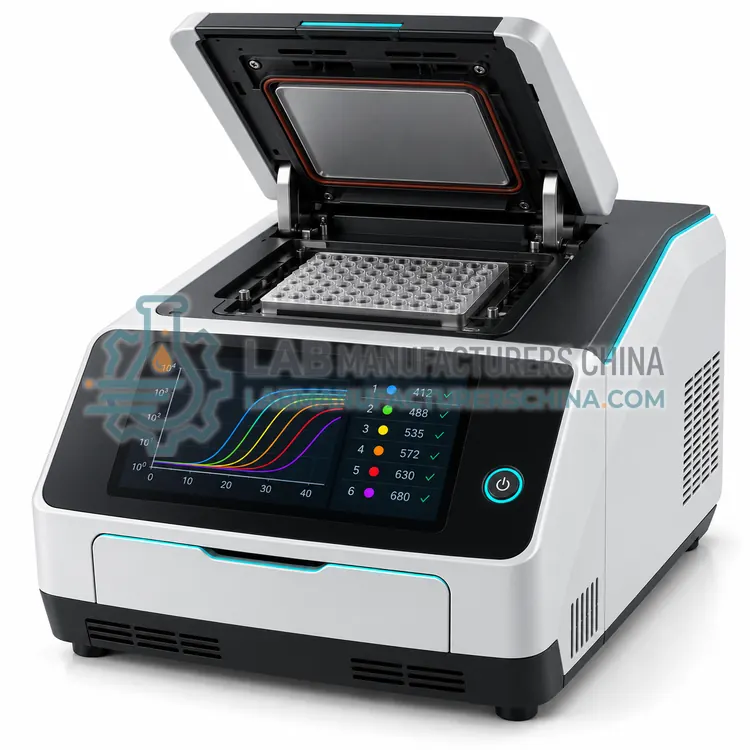
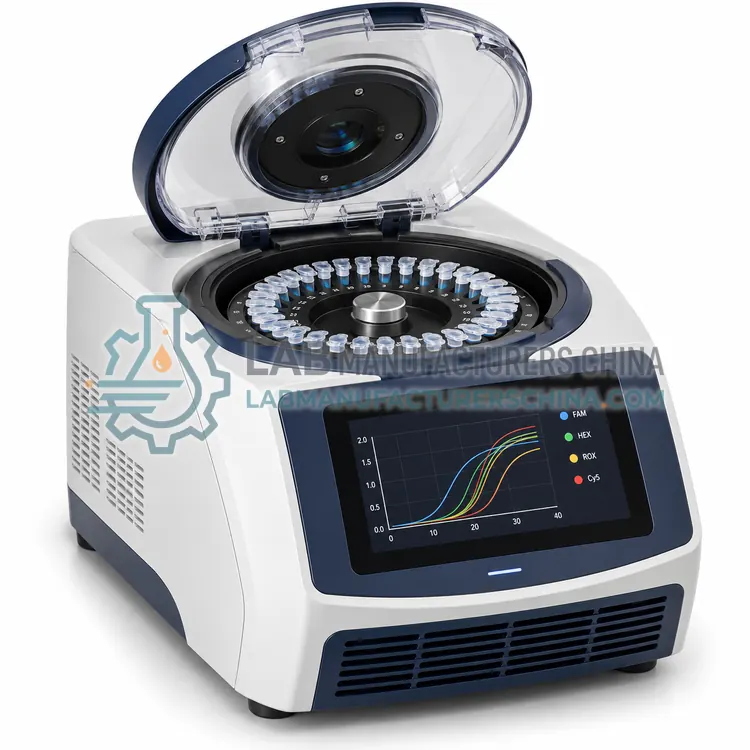
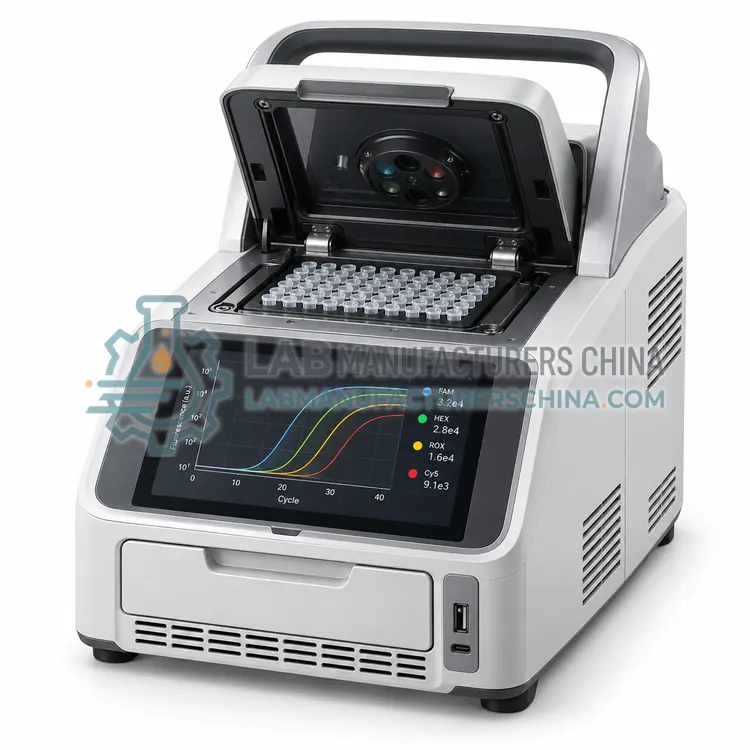
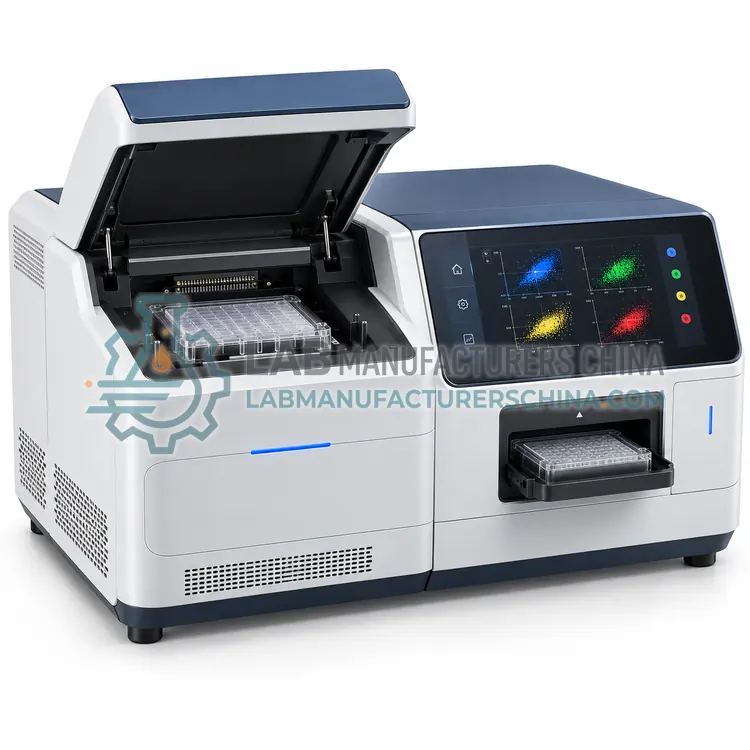
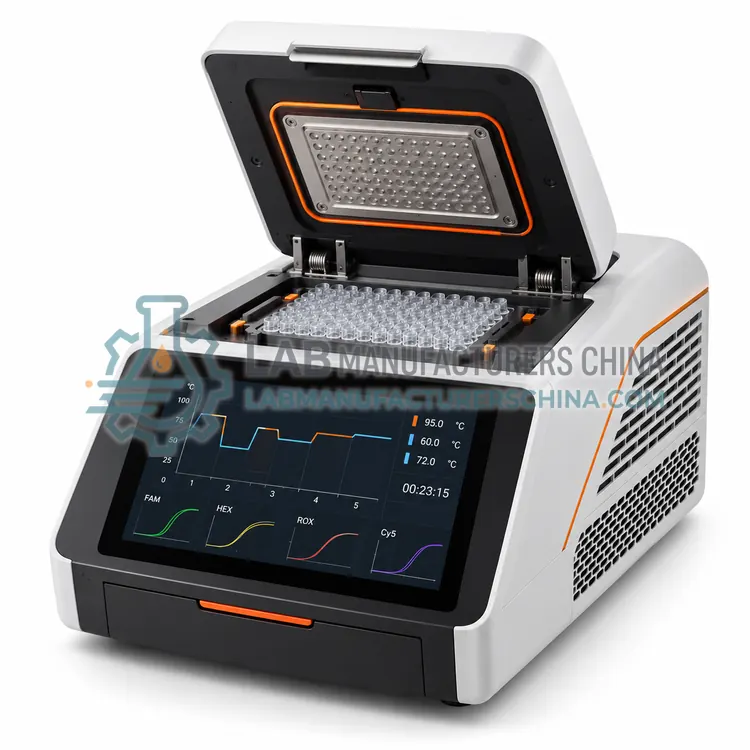
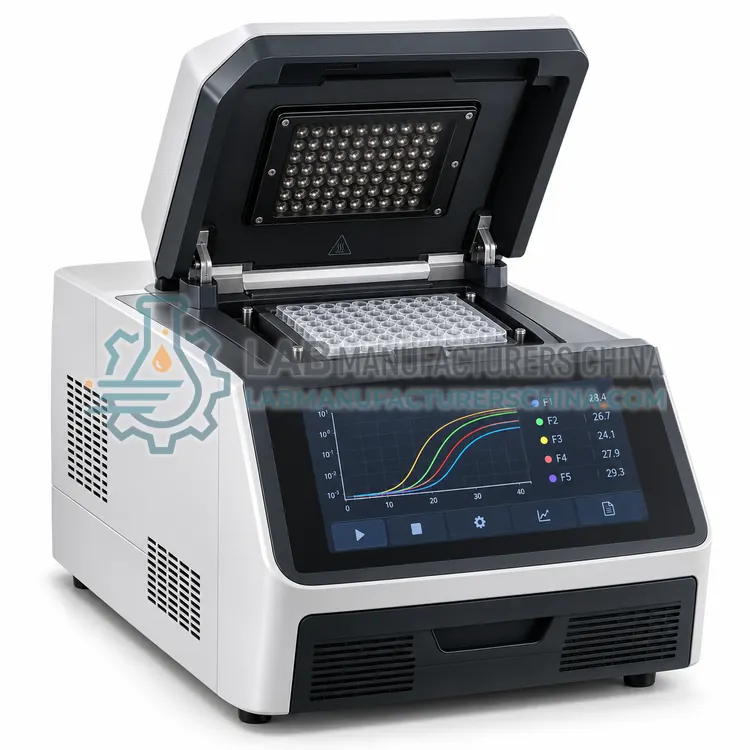
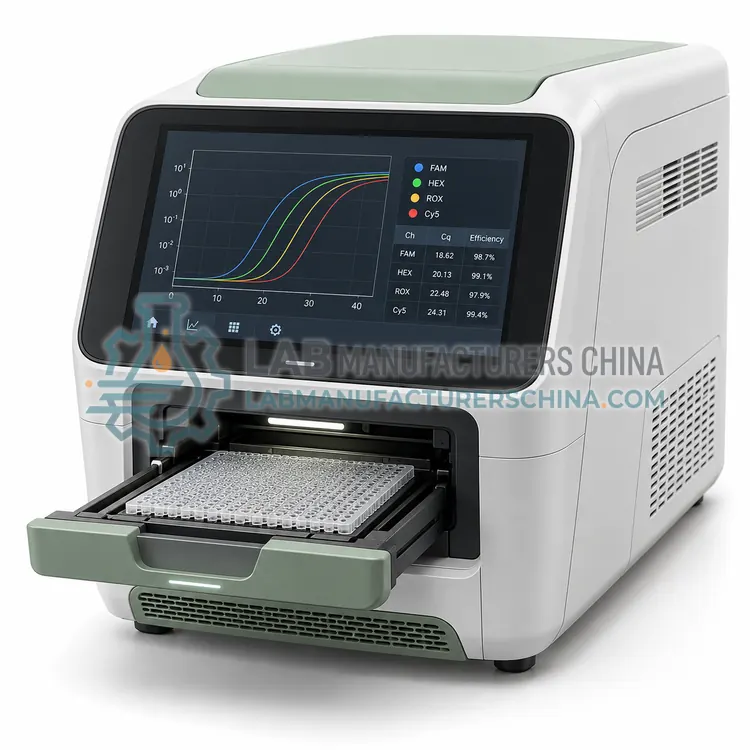
A 384-well real-time PCR system reads a full 384-well plate with whole-plate imaging or fast scanning, with reaction volumes of 5–20 µL. It is the right choice for high-throughput expression profiling, genotyping and screening laboratories that process hundreds of samples per run.
What is the 384-Well Real-Time PCR System?
A 384-well real-time PCR system reads a full 384-well plate with whole-plate imaging or fast scanning, with reaction volumes of 5–20 µL. It is the right choice for high-throughput expression profiling, genotyping and screening laboratories that process hundreds of samples per run.
Overview
The 384-well system uses a large Peltier block with edge compensation and a high-density optical module, often using a camera or multi-fiber scanner to read all wells almost simultaneously. Ramp rates of 1.5–3.5 °C/s and uniformity of ±0.4 °C are typical. Reaction volumes of 5–10 µL reduce reagent cost per well, but require precise liquid handling and optical seals that resist evaporation. Four to six channels are available. Software supports batch plate set-up, automated analysis of hundreds of targets, and export to LIMS. A motorized plate drawer and robotic interface allow integration with liquid handlers and plate stackers. Throughput can exceed 1,000 reactions per hour when the instrument is automated. Laboratories should validate edge-well performance and the limit of detection at low volumes.
How does it work?
A real-time PCR system pairs a Peltier or air-heated thermal block with an excitation source, filters and a detector. Reactions contain a fluorescent reporter: either an intercalating dye such as SYBR Green that binds double-stranded DNA, or sequence-specific probes such as hydrolysis (TaqMan-type) or molecular beacon probes. Excitation light from LEDs or halogen lamps passes through a filter set, and emission is read by a photodiode, PMT or CCD at the end of each annealing or extension step. The software plots fluorescence against cycle number and assigns a quantification cycle, Cq or Ct, where the signal crosses a threshold. Cq relates inversely to the logarithm of starting copy number, enabling standard-curve or relative quantification. Melt curve analysis adds product specificity checks.
What are the key features?
- Whole-plate imaging or fast scanning of all 384 wells
- Edge-compensated block for uniform performance
- Motorized plate drawer for robotic integration
- Batch analysis of hundreds of targets with LIMS export
- Reaction volumes down to 5 µL to reduce reagent cost
- Optional 96-well block for mixed workloads
What are the technical specifications?
A typical 384-well real-time pcr system configuration offers block format of 384-well plate (96-well block optional), optical channels of 4 to 6, temperature range of 4–100 °C, max ramp rate of 2.5–3.5 °C/s, block uniformity of ±0.4 °C and reaction volume of 5–20 µL. Values are indicative of the product class; the exact figures for each configuration are confirmed on the quotation and the calibration documents supplied with the instrument.
Which applications is it used for?
The 384-Well Real-Time PCR System is used in high-throughput gene expression profiling, large-scale SNP genotyping, compound and siRNA screening and biobank and cohort studies. Across the wider Real-Time PCR class, laboratories also deploy it for clinical pathogen nucleic acid testing, gene expression analysis by RT-qPCR and food and GMO testing.
Which standards and certifications apply?
Relevant standards and methods include ISO 20395, ISO 22174, CLSI MM06, CLSI MM19, IEC 61010-1, IEC 61010-2-101 and MIQE guidelines (research reporting). Certification candidates for this model are CE and ISO 9001 manufacturing; each is to be confirmed for the specific configuration before shipment, and certificates are supplied only where they have been issued.
Install the instrument on a level, vibration-free bench away from sunlight, with ambient temperature of 15–30 °C and stable mains. Perform optical calibration with the supplier's dye or ROX calibration plates at installation and after lamp or LED replacement. Verify thermal uniformity annually. Use optically clear, low-fluorescence plates and seals that match the well format, and avoid fingerprints on the seal. Keep pre- and post-PCR areas separate and never open amplified plates near the instrument. Clinical laboratories should plan for software validation, access control and audit trail in line with their quality system, and keep backups of run files and melt-curve data.
How do I select the right 384-Well Real-Time PCR System?
Select the 384-well system when daily workloads exceed a few hundred reactions and pipetting is automated. It lowers reagent cost per reaction but needs validation at small volumes and suitable plates. In an RFQ, specify plate type, channel count, edge-well uniformity, automation interface, maximum daily throughput, LIMS export requirements and whether a 96-well block should be included.
How does it compare with other Real-Time PCR variants?
Decide first on throughput and format: 96-well suits most laboratories, 384-well suits high-volume screening, and rotor or portable designs suit small batches. Then match the number of optical channels to your multiplex needs, since four channels cover most dual- or triplex assays with an internal control, while five or six channels support larger panels. Check that the excitation and emission filters fit your dyes, including FAM, HEX/VIC, ROX and Cy5. Compare thermal uniformity and ramp rate, detection sensitivity at low copy number, and software features such as absolute quantification, melt curves and gene-expression analysis. For regulated diagnostics, confirm audit trail, user levels and data-export options, and ask whether IVD registration support exists.
Full specifications
| Block format | 384-well plate (96-well block optional) |
|---|---|
| Optical channels | 4 to 6 |
| Temperature range | 4–100 °C |
| Max ramp rate | 2.5–3.5 °C/s |
| Block uniformity | ±0.4 °C |
| Reaction volume | 5–20 µL |
| Dynamic range | ≥ 7 logs |
| Excitation source | LED or halogen lamp |
| Typical 40-cycle run time | 60–90 min |
| Automation interface | Motorized drawer, robotic API |
| Power supply | 100–240 V AC, 50/60 Hz, about 1000 W |
Indicative values for this product class. Final specifications are confirmed on the quotation and in the calibration documents supplied with the instrument.
Applications
- High-throughput gene expression profiling
- Large-scale SNP genotyping
- Compound and siRNA screening
- Biobank and cohort studies
Key features
- Whole-plate imaging or fast scanning of all 384 wells
- Edge-compensated block for uniform performance
- Motorized plate drawer for robotic integration
- Batch analysis of hundreds of targets with LIMS export
- Reaction volumes down to 5 µL to reduce reagent cost
- Optional 96-well block for mixed workloads
Frequently asked questions about 384-Well Real-Time PCR System
Well-designed assays can reach comparable sensitivity, but small volumes lower the total template per well. Increase template concentration or use pre-amplification for very low-copy targets, and verify limit of detection during validation.
Not strictly, but manual pipetting of 5–10 µL into 384 wells is slow and error prone. Most users pair the instrument with a liquid handler or dispenser to get reproducible pipetting and realise the throughput advantage.
A 40-cycle protocol typically takes 60–90 minutes because of the larger thermal mass. Fast chemistries and optimized blocks shorten this, but expect runs to be longer than comparable 96-well runs.
It measures fluorescence from a dye or probe every cycle and records the cycle at which signal crosses a threshold, the Cq value. Lower Cq means more starting template. Comparing Cq with a standard curve or reference gene gives absolute or relative quantity.
Dye-based qPCR, for example SYBR Green, binds any double-stranded DNA and is low cost but less specific, so melt curves are needed. Probe-based qPCR uses sequence-specific probes, gives higher specificity, and allows multiplexing in different fluorescence channels.
Most single-target assays with an internal control need two to four channels. Panels covering several pathogens in one well may need five or six. Match the channel number and filter set to the dyes you use and the multiplex level you plan.
Related models