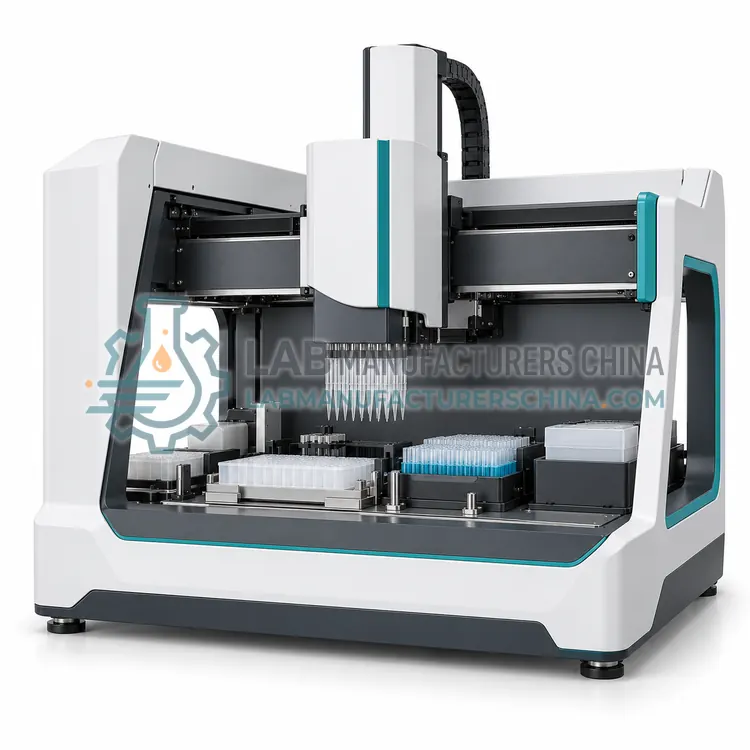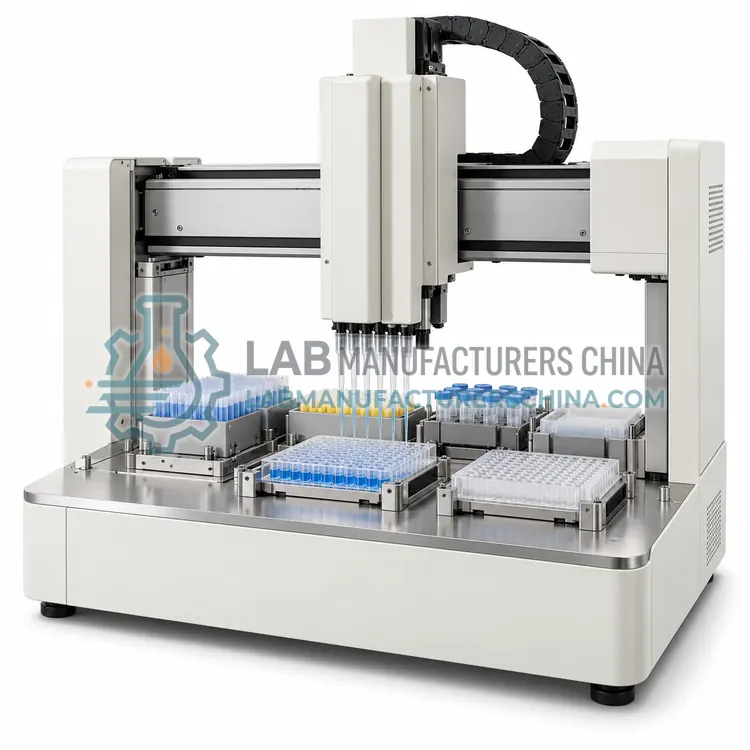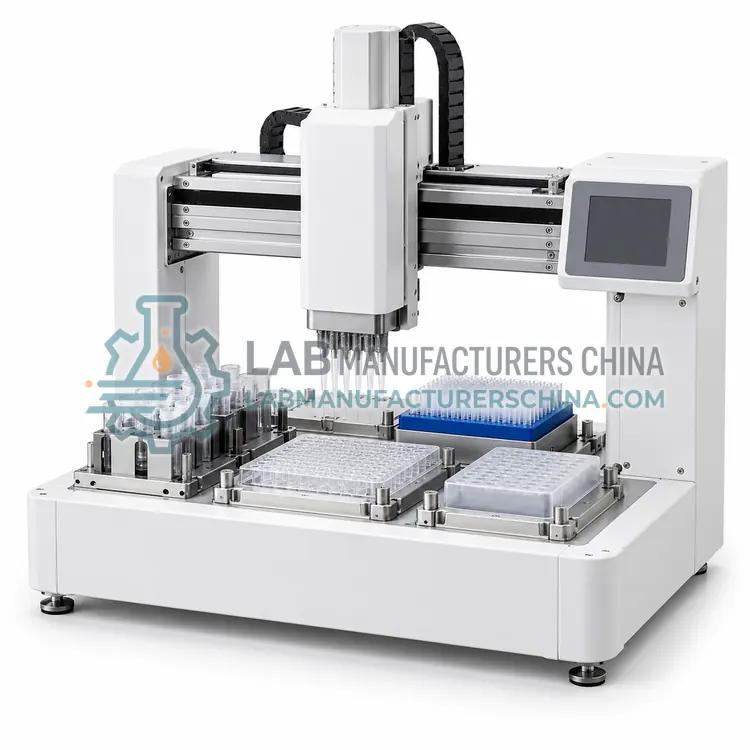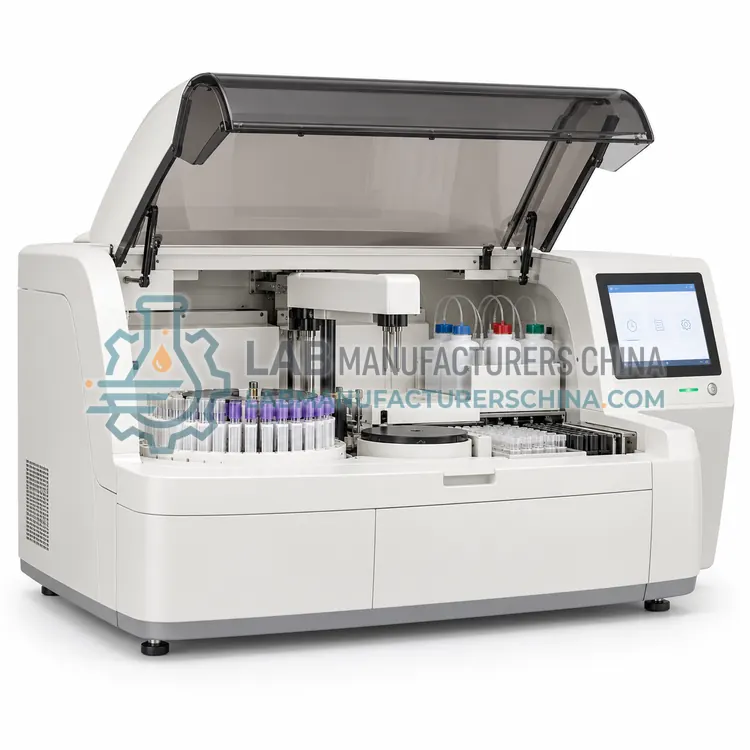
Automated Reagent Dispenser
自动试剂分液器
- SKU RLH-0005
- Robotic Liquid Handling
- CE (to be confirmed)
- ISO 9001 manufacturing (to be confirmed)
Price on request — FOB / CIF quoted per order
Prices depend on configuration, quantity and destination port.
Key specifications
| Type | Automated reagent dispenser |
|---|---|
| Pump | Peristaltic, syringe or valve |
| Volume range | 10 µL–10 mL |
| Accuracy | ± 2–5 % |
| Nozzles | 8, 12 or 16 |
| Channels | 1–4 reagents |
Request a quote Download brochure · to be provided
By Lab Manufacturers China Technical TeamLast reviewed Standards: ISO 8655 (piston-operated volumetric apparatus), ANSI/SLAS microplate standards, IEC 61010-1 (safety requirements for electrical equipment)
What is the Automated Reagent Dispenser?
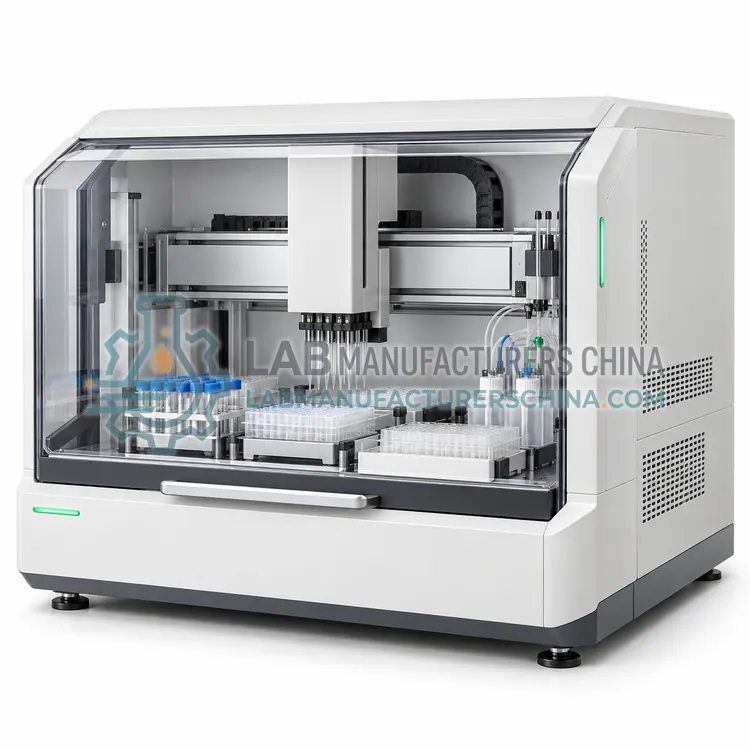
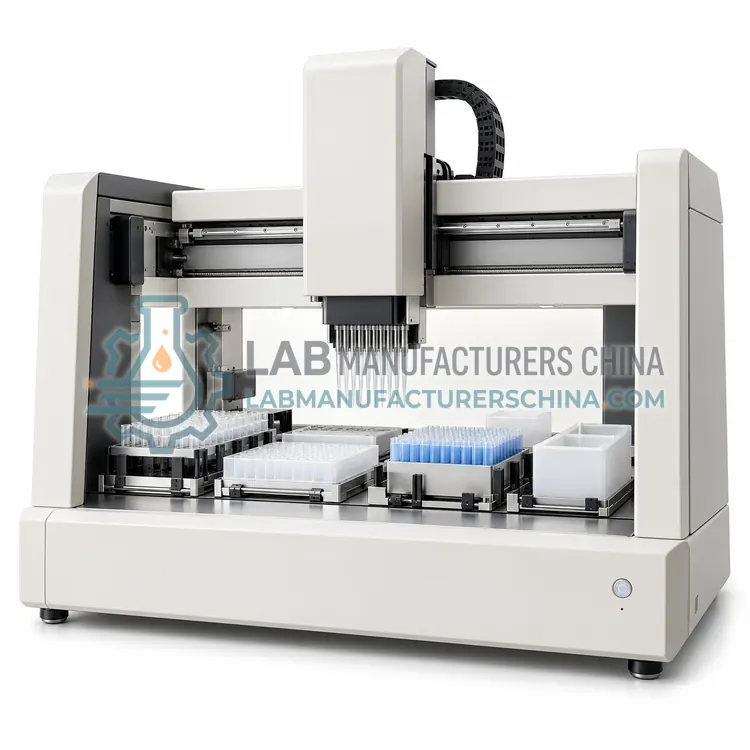
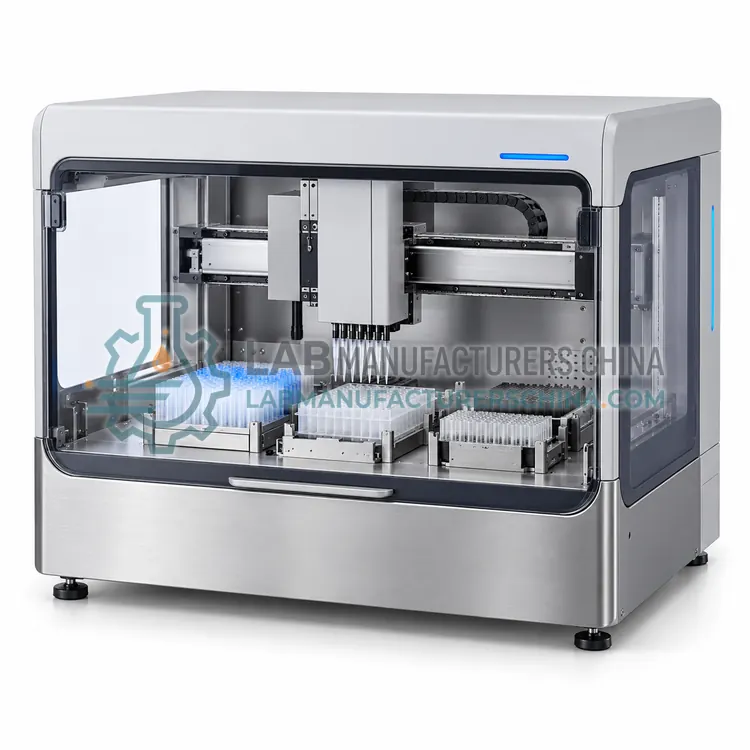
An automated reagent dispenser adds one or more reagents to plates, tubes or membranes in fixed or variable volumes. It is a lower-cost way to raise throughput for repetitive additions across many wells or strips.
What is the Automated Reagent Dispenser?
An automated reagent dispenser adds one or more reagents to plates, tubes or membranes in fixed or variable volumes. It is a lower-cost way to raise throughput for repetitive additions across many wells or strips.
Overview
The dispenser uses peristaltic, syringe or valve-based pumps to deliver reagent from a reservoir to multiple wells, tubes or membrane strips, often with a manifold of 8, 12 or 16 nozzles. Volumes range from about 10 µL to 10 mL, with accuracy of ± 2–5 % depending on the pump and tubing. Programs control fill volume, speed, number of cycles and priming, and a wash cycle between reagents prevents cross-contamination. Cassette or tubing sets are replaced on a schedule, and calibration is checked gravimetrically. The design is simpler and less expensive than a full liquid handler and is often used for blocking, washing and substrate addition in immunoassays, plate coating, and dispensing media or buffer, where a single reagent is added many times.
How does it work?
A liquid handler moves precise volumes of liquid by drawing them into a tip or probe and delivering them to a target vessel. In air displacement systems, a piston in the pipette or the robot moves an air column that pushes and pulls the liquid, which stays in a disposable tip. In positive displacement systems, the piston contacts the liquid directly inside a syringe, so volatile, viscous or detergent-like liquids and solvents are handled accurately. Multichannel heads aspirate 8, 96 or 384 tips at once for plate work, and nanolitre dispensers use solenoid valves, piezoelectric elements or capillary tips for very small volumes. Accuracy and precision depend on tip fit, liquid properties, temperature, wetting and aspiration speed, and are verified gravimetrically or photometrically under ISO 8655. Software defines volumes, order, mixing and wash steps, and records every action.
What are the key features?
- Peristaltic, syringe or valve pumps
- Nozzle manifolds of 8, 12 or 16
- Volumes 10 µL to 10 mL
- Programmable volume and speed
- Wash cycle between reagents
- Replacement tubing and cassettes
What are the technical specifications?
A typical automated reagent dispenser configuration offers type of Automated reagent dispenser, pump of Peristaltic, syringe or valve, volume range of 10 µL–10 mL, accuracy of ± 2–5 %, nozzles of 8, 12 or 16 and channels of 1–4 reagents. Values are indicative of the product class; the exact figures for each configuration are confirmed on the quotation and the calibration documents supplied with the instrument.
Which applications is it used for?
The Automated Reagent Dispenser is used in ELISA blocking and washing, plate coating, cell culture media dispensing and buffer addition. Across the wider Robotic Liquid Handling class, laboratories also deploy it for plate-based assay setup, compound screening and PCR and qPCR setup.
Which standards and certifications apply?
Relevant standards and methods include ISO 8655 (piston-operated volumetric apparatus), ANSI/SLAS microplate standards, IEC 61010-1 (safety requirements for electrical equipment), USP <1058> (analytical instrument qualification), 21 CFR Part 11 (electronic records and signatures) and ISO/IEC 17025 (testing and calibration laboratories). Certification candidates for this model are CE and ISO 9001 manufacturing; each is to be confirmed for the specific configuration before shipment, and certificates are supplied only where they have been issued.
Verify accuracy and precision on installation and at intervals defined by your quality system, using gravimetric checks with water and photometric tests for dye solutions. Control temperature and humidity, since evaporation and viscosity change small volumes. Use the specified tips and fit them correctly, because a poor seal causes volume errors. Clean the deck, wash station and probes on schedule, and inspect for bent or blocked tips. For regulated work, restrict software access by role, retain audit trails and back up methods and data. Define carry-over limits and test them for trace work. Train operators to recognise partial dispenses, bubbles and clogs, and record all calibration, maintenance and method changes.
How do I select the right Automated Reagent Dispenser?
Choose a dispenser for repetitive single-reagent additions where a full liquid handler is not justified. Confirm volume range, nozzle count and consumables. RFQ: reagents, volumes, targets, throughput and calibration needs. Provide the target format and reagent list.
How does it compare with other Robotic Liquid Handling variants?
Match the technology to the liquid and the volume. Air displacement suits aqueous solutions where the tip is changed or washed between samples. Positive displacement suits volatile solvents, viscous liquids, detergents and long runs without tip changes, because the piston touches the liquid. Choose multichannel heads for plate-based work at 8–384 wells, and nanolitre dispensers when reagents are expensive or volumes below a microlitre are needed. Confirm accuracy and precision at the working volumes, and check compatibility with the plates, tips, tubes and reservoirs you use. Consider tip format, deck capacity, mixing and heating options, and software for method editing, audit trails and LIMS exchange. Verify carry-over performance if you run trace analysis, and confirm the service and calibration support available.
Full specifications
| Type | Automated reagent dispenser |
|---|---|
| Pump | Peristaltic, syringe or valve |
| Volume range | 10 µL–10 mL |
| Accuracy | ± 2–5 % |
| Nozzles | 8, 12 or 16 |
| Channels | 1–4 reagents |
| Wash cycle | Between reagents |
| Consumables | Tubing or cassette sets |
| Targets | Plates, tubes, membranes |
| Calibration | Gravimetric check |
Indicative values for this product class. Final specifications are confirmed on the quotation and in the calibration documents supplied with the instrument.
Applications
- ELISA blocking and washing
- Plate coating
- Cell culture media dispensing
- Buffer addition
Key features
- Peristaltic, syringe or valve pumps
- Nozzle manifolds of 8, 12 or 16
- Volumes 10 µL to 10 mL
- Programmable volume and speed
- Wash cycle between reagents
- Replacement tubing and cassettes
Frequently asked questions about Automated Reagent Dispenser
When a single reagent is added many times at a relatively coarse tolerance, such as washing or media dispensing. It costs less and is simpler to operate, but cannot build complex methods from many liquids.
On a schedule set by the reagent and usage, because tubing stretches and affects volume. Pump tubing is usually replaced before accuracy drifts beyond the acceptance limit, and the change is recorded.
Some models have two to four channels and can add several reagents in sequence with a wash between them. Each channel is calibrated separately and checked with gravimetric tests.
Air displacement uses an air column and a disposable tip, suiting aqueous solutions. Positive displacement uses a piston in direct contact with the liquid, which suits volatile, viscous or detergent liquids and solvents accurately.
Gravimetrically with water at a controlled temperature, and photometrically with dye solutions, following ISO 8655. Tests are done at the working volumes and repeated on a schedule or after service.
When reagents are expensive or a large number of reactions must be run in a small area, for example in screening or qPCR. Nanolitre dispensers need careful calibration, controlled evaporation and compatible plate surfaces.
Related models