Automated Sample Preparation Workstation
自动样品制备工作站
- SKU ATM-0001
- Automated Sample Preparation
- CE (to be confirmed)
- ISO 9001 manufacturing (to be confirmed)
Price on request — FOB / CIF quoted per order
Prices depend on configuration, quantity and destination port.
Key specifications
| Type | Automated sample preparation workstation |
|---|---|
| Volume range | 1–1000 µL |
| Accuracy | ± 1 % at nominal |
| Precision | 1–3 % CV |
| Deck positions | 12–30 labware slots |
| Modules | Heating, shaking, barcode |
Request a quote Download brochure · to be provided
By Lab Manufacturers China Technical TeamLast reviewed Standards: IEC 61010-1 (safety requirements for electrical equipment), ISO 8655 (piston-operated volumetric apparatus), ISO/IEC 17025 (testing and calibration laboratories)
What is the Automated Sample Preparation Workstation?
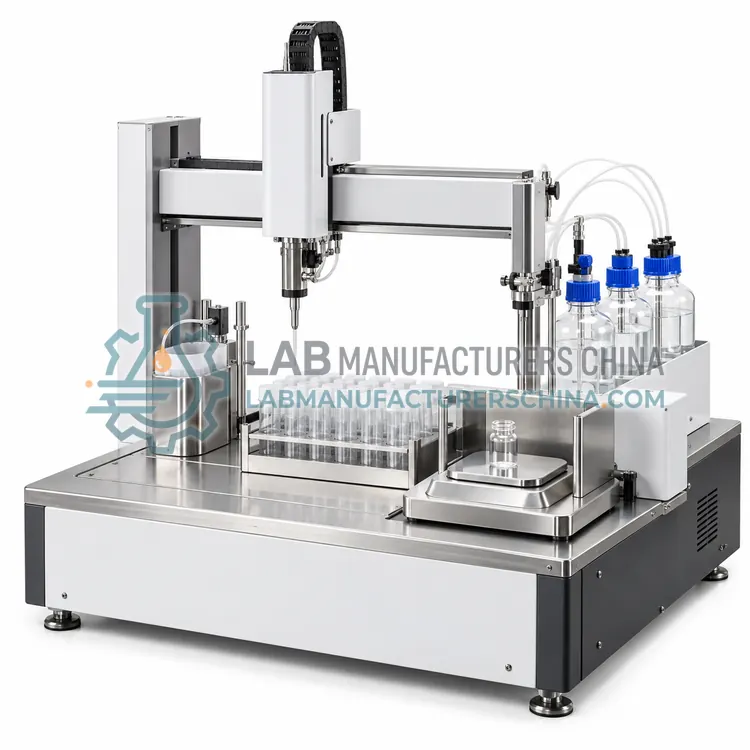
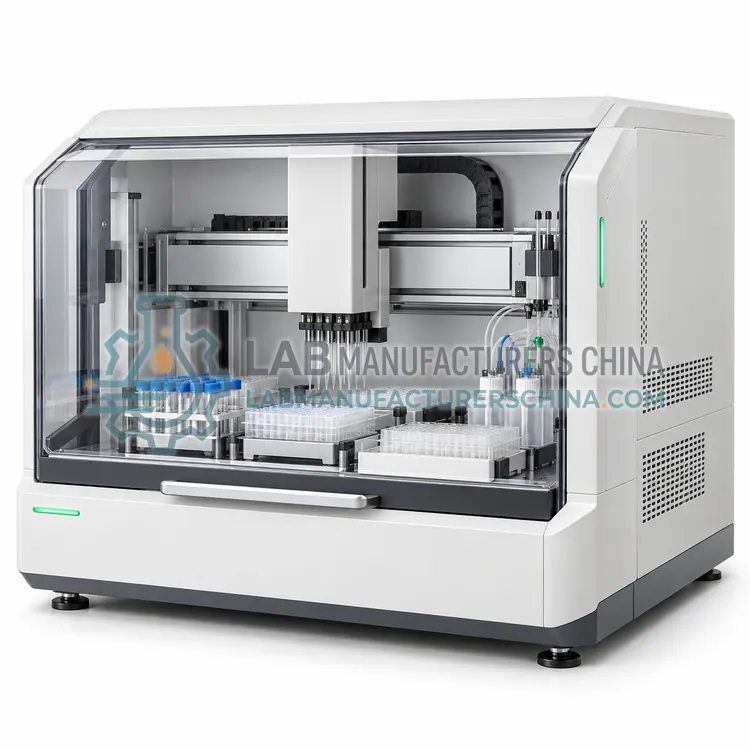
An automated sample preparation workstation performs pipetting, dilution and mixing of samples and standards under software control. It reduces manual steps before chromatographic or spectroscopic analysis and greatly improves consistency between runs.
What is the Automated Sample Preparation Workstation?
An automated sample preparation workstation performs pipetting, dilution and mixing of samples and standards under software control. It reduces manual steps before chromatographic or spectroscopic analysis and greatly improves consistency between runs.
Overview
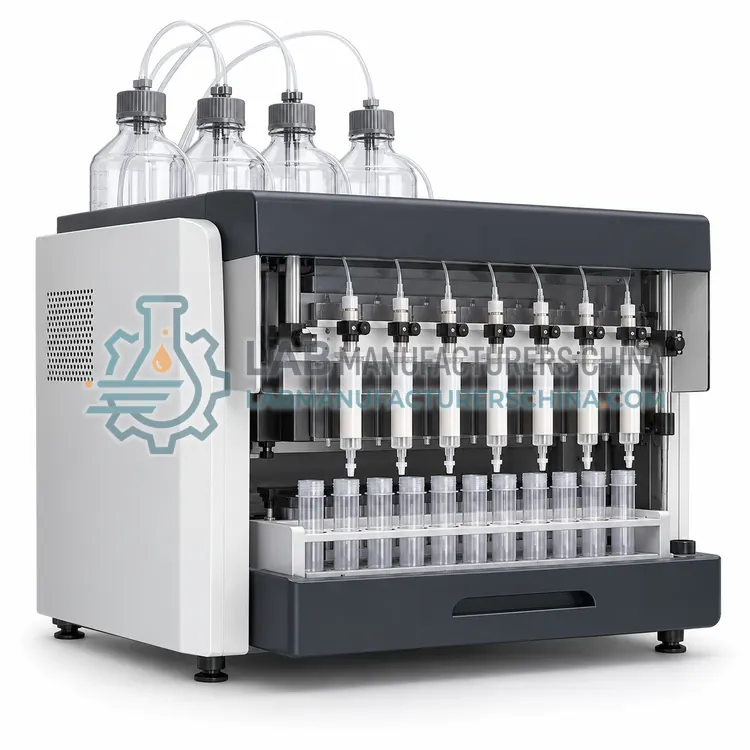
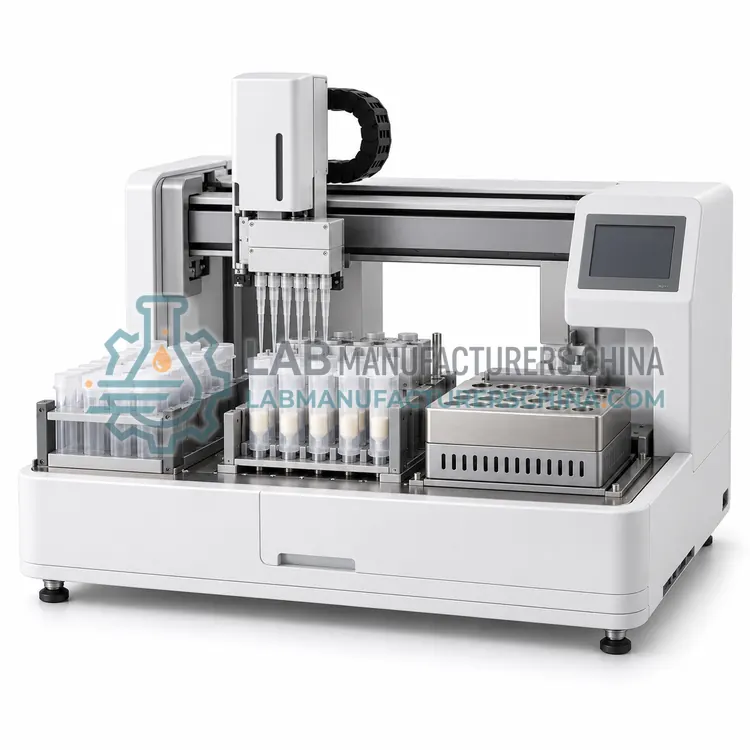
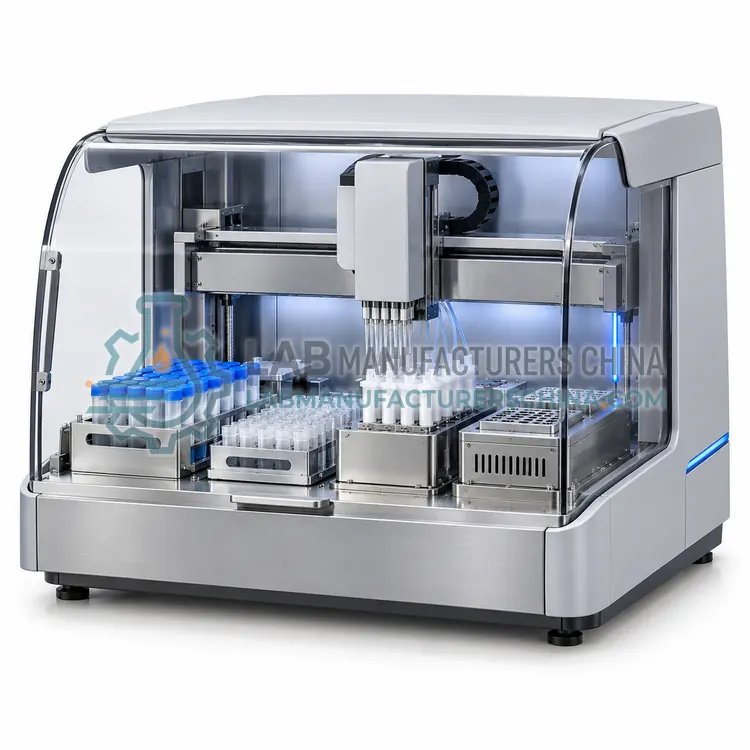
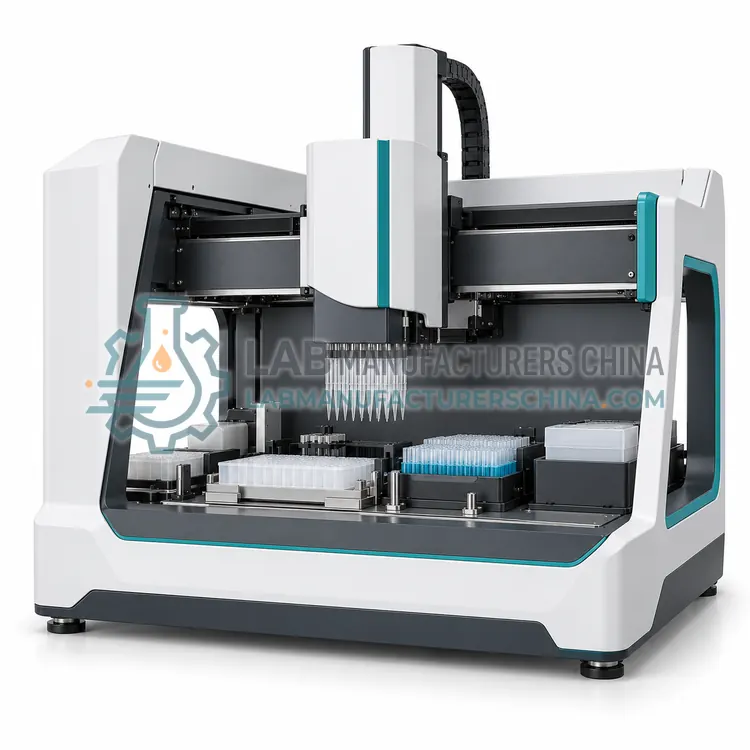
The workstation combines a robotic pipetting arm, a deck holding sample tubes, standard vials, solvent reservoirs and a microplate or vial rack, and software that runs a method step by step. It aspirates and dispenses 1–1000 µL with accuracy of about ± 1 % and precision of 1–3 % CV, using disposable tips or washable probes with a wash station. Barcode reading identifies samples, and gravimetric or photometric checks verify calibration. Heating, shaking and vortexing modules can be added, and the deck can be configured for different tube and plate formats. Methods are edited on a PC and stored with version control, and results and sample lists can be exchanged with a LIMS. The workstation suits medium-throughput laboratories that need consistency without a fully robotic line.
How does it work?
An automated sample preparation system performs the steps that normally precede analysis, using robotic motion, precise liquid handling and sensors under software control. A robotic arm or a moving bed picks a sample container, identifies it by barcode, and presents it to modules that weigh, add solvent, mix, heat, centrifuge, filter or extract. Liquid volumes are measured by syringe pump or positive displacement and verified by gravimetric checks, while temperature, time and agitation are controlled by the method. Solid-phase extraction modules condition cartridges, load sample, wash and elute under controlled flow. Digestion modules add acid and apply a heating program. Each step is recorded for traceability, and error handling detects missing containers, low liquid levels and clogs. The result is a prepared sample or extract delivered to a vial for analysis, with a documented chain of actions.
What are the key features?
- Robotic pipetting arm with 1–1000 µL range
- Accuracy about ± 1 %, precision 1–3 % CV
- Disposable tips or washable probes
- Configurable deck for tubes and plates
- Barcode sample identification
- Method editor with version control
What are the technical specifications?
A typical automated sample preparation workstation configuration offers type of Automated sample preparation workstation, volume range of 1–1000 µL, accuracy of ± 1 % at nominal, precision of 1–3 % CV, deck positions of 12–30 labware slots and modules of Heating, shaking, barcode. Values are indicative of the product class; the exact figures for each configuration are confirmed on the quotation and the calibration documents supplied with the instrument.
Which applications is it used for?
The Automated Sample Preparation Workstation is used in chromatography sample prep, dilution of standards, plate-based assays and QC release testing. Across the wider Automated Sample Preparation class, laboratories also deploy it for sample preparation for elemental analysis, dissolution sample handling and bioanalytical extraction.
Which standards and certifications apply?
Relevant standards and methods include IEC 61010-1 (safety requirements for electrical equipment), ISO 8655 (piston-operated volumetric apparatus), ISO/IEC 17025 (testing and calibration laboratories), USP <1058> (analytical instrument qualification), 21 CFR Part 11 (electronic records and signatures) and ANSI/SLAS microplate standards. Certification candidates for this model are CE and ISO 9001 manufacturing; each is to be confirmed for the specific configuration before shipment, and certificates are supplied only where they have been issued.
Validate the system for the intended methods, covering accuracy, precision, carry-over and robustness, and repeat validation after major changes. Keep an inventory of consumables, calibrants and check standards, and run system suitability checks before critical batches. Clean and calibrate weighing, liquid handling and heating modules on schedule, and verify tip and probe alignment to avoid partial transfers. Control environmental conditions, since temperature and humidity affect small volumes. Back up methods and data, restrict software access by role, and retain audit trails. Train operators on error messages and recovery, and define what the system may do unattended. Review performance data to detect drift before it affects results.
How do I select the right Automated Sample Preparation Workstation?
Choose a workstation for medium throughput where methods change often. Confirm volume range, deck formats and software controls. RFQ: samples per run, volume range, labware types, modules and LIMS integration. State the required throughput and labware.
How does it compare with other Automated Sample Preparation variants?
Define the preparation steps and the range of sample types first, then choose a system that covers them without custom work. Confirm compatibility with your tubes, plates and vials, because format changes force method rewriting. Check volumetric accuracy and precision at the working volumes, and verify that the weighing module meets the readability your method needs. Review heating, mixing and extraction capabilities against the standard methods you follow, and confirm the software supports method editing, audit trails and LIMS import of sample lists and export of results. Consider throughput, walk-away time and the number of samples per run. Ask about validation packages, carry-over testing and service response, since sample preparation errors propagate into every downstream result.
Full specifications
| Type | Automated sample preparation workstation |
|---|---|
| Volume range | 1–1000 µL |
| Accuracy | ± 1 % at nominal |
| Precision | 1–3 % CV |
| Deck positions | 12–30 labware slots |
| Modules | Heating, shaking, barcode |
| Tips | Disposable or washable |
| Software | Method editor, audit trail |
| LIMS interface | Sample list and results |
| Footprint | Benchtop, 1.0–1.6 m |
Indicative values for this product class. Final specifications are confirmed on the quotation and in the calibration documents supplied with the instrument.
Applications
- Chromatography sample prep
- Dilution of standards
- Plate-based assays
- QC release testing
Key features
- Robotic pipetting arm with 1–1000 µL range
- Accuracy about ± 1 %, precision 1–3 % CV
- Disposable tips or washable probes
- Configurable deck for tubes and plates
- Barcode sample identification
- Method editor with version control
Frequently asked questions about Automated Sample Preparation Workstation
Typically 24–96 depending on deck configuration and the steps in the method. Longer methods with heating or extraction reduce throughput, so match the deck and modules to your workload.
Not always. Disposable tips give the lowest carry-over, while washable probes with an efficient wash station reduce running cost but need carry-over testing during validation.
Methods are built in the software editor, usually from a written procedure, and stored with version control. Many systems support method import or a template library, but validation confirms the transfer is correct.
Weighing, dilution, mixing, heating, digestion, centrifugation, filtration, solid-phase extraction and transfer to vials. The selection depends on the sample type and the analysis that follows.
By gravimetric checks with water at known temperature and by photometric dye tests, following ISO 8655 principles. Accuracy and precision should be confirmed at the working volumes, not only at mid-range.
Residue from one sample can contaminate the next and bias results, especially in trace analysis. Wash cycles, disposable tips and dedicated probes reduce carry-over, and it should be tested during validation.
Related models