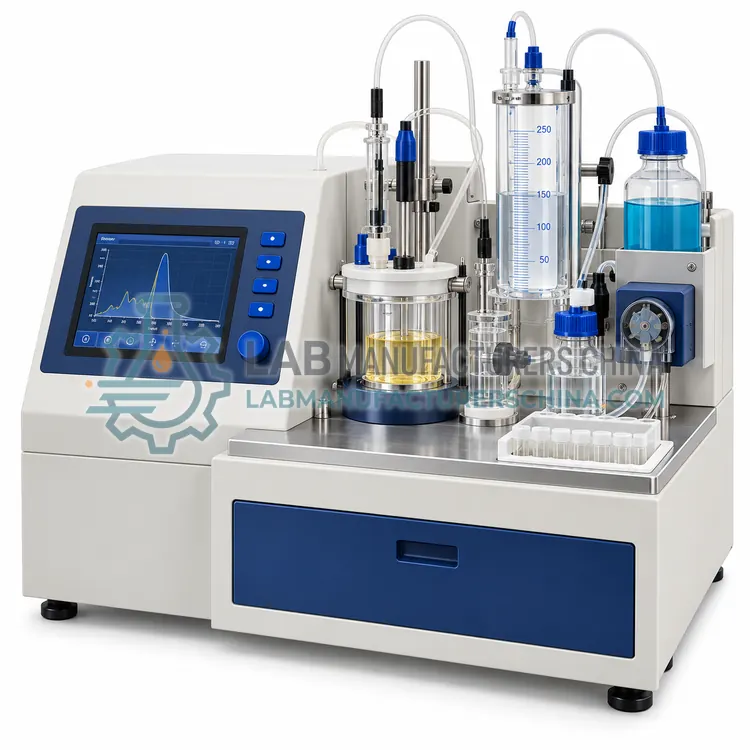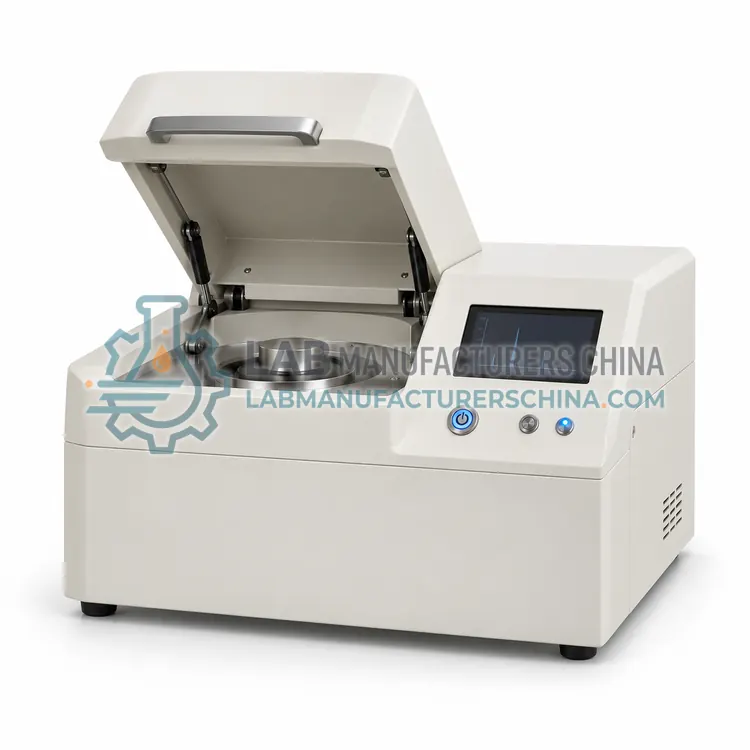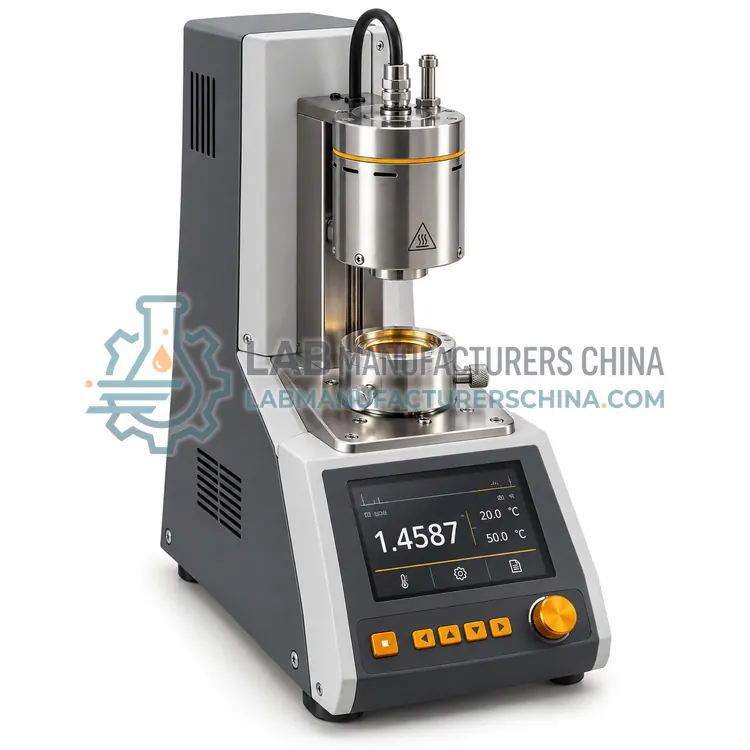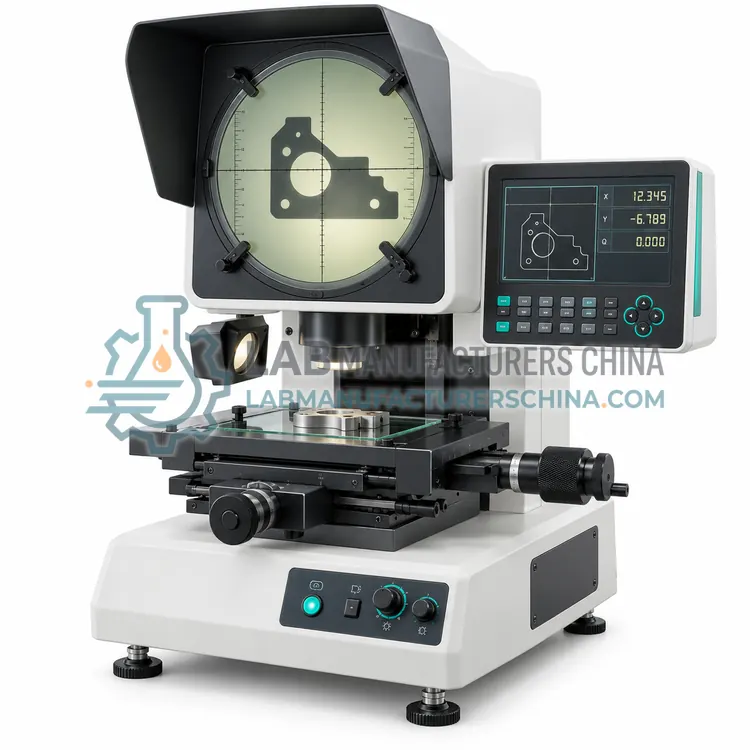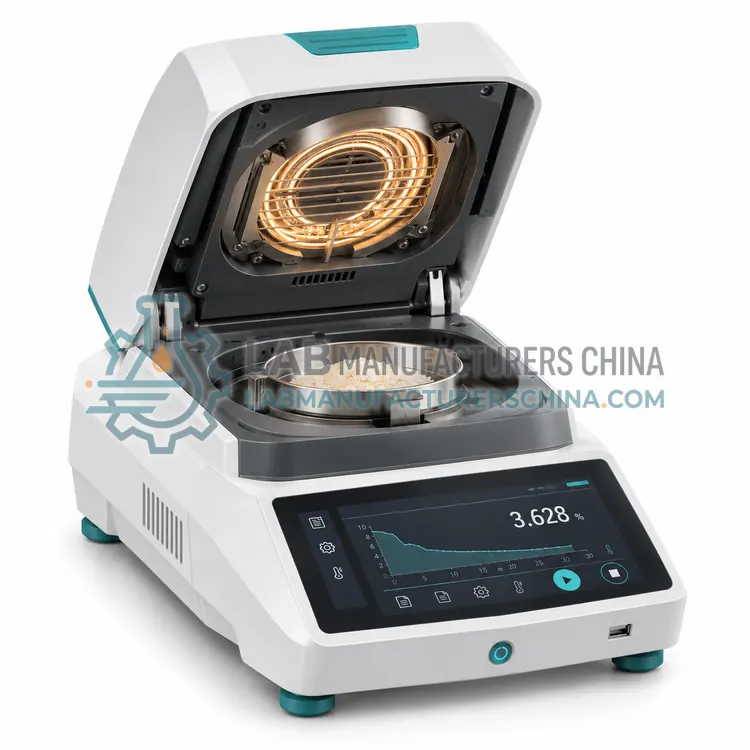
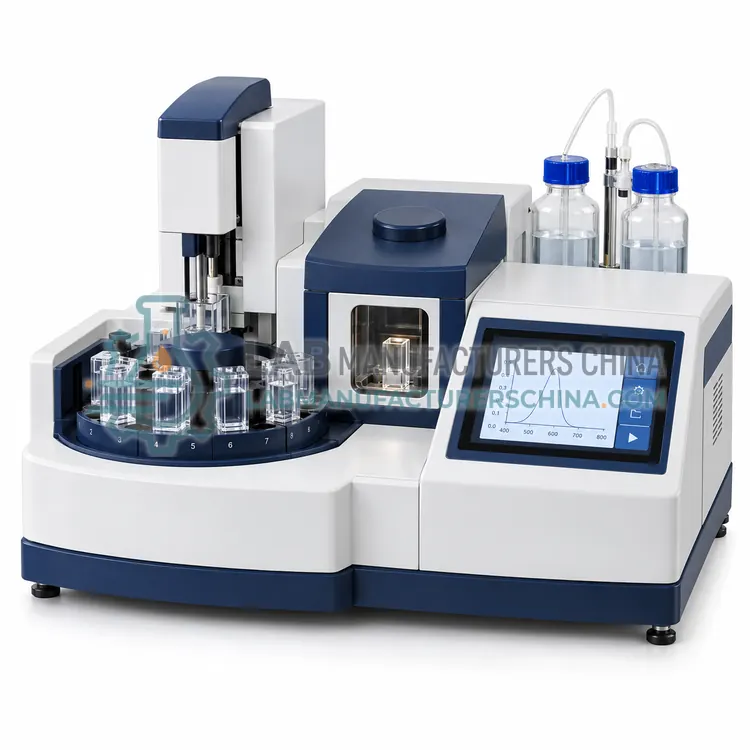
Laboratory Benchtop Turbidimeter
实验室台式浊度仪
- SKU QCA-0005
- QC Analyzers
- CE (to be confirmed)
- RoHS (to be confirmed)
- ISO 9001 manufacturing (to be confirmed)
Price on request — FOB / CIF quoted per order
Prices depend on configuration, quantity and destination port.
Key specifications
| Measuring range | 0–4000 NTU/FNU |
|---|---|
| Resolution | 0.001 NTU (0–10 NTU) |
| Accuracy | ±2 % of reading or ±0.01 NTU |
| Light source | 860 nm IR LED or tungsten lamp |
| Detection angle | 90° with ratio |
| Calibration standards | Formazin or stabilized polymer |
Request a quote Download brochure · to be provided
By Lab Manufacturers China Technical TeamLast reviewed Standards: ISO 9001, ISO 7027, ASTM E308
What is the Laboratory Benchtop Turbidimeter?
A benchtop nephelometer that measures the light scattered at 90 degrees by suspended particles and reports turbidity in NTU or FNU. It is the right choice for clarity control of water, beverages and process liquids under ISO 7027 or EPA 180.1 style methods.
What is the Laboratory Benchtop Turbidimeter?
A benchtop nephelometer that measures the light scattered at 90 degrees by suspended particles and reports turbidity in NTU or FNU. It is the right choice for clarity control of water, beverages and process liquids under ISO 7027 or EPA 180.1 style methods.
Overview
A benchtop turbidimeter shines a light beam through a cylindrical glass cuvette and measures scattered light at 90 degrees, with additional detectors for transmitted and forward-scattered light in ratio designs. ISO 7027 instruments use a near-infrared LED at 860 nm and report in formazin nephelometric units (FNU), while white-light instruments following EPA 180.1 use a tungsten lamp and report NTU. Ratio measurement corrects for color and lamp variation, extending linearity up to 4000 NTU and improving low-range stability, with resolution of 0.001 NTU below 10 NTU. Calibration uses formazin or stabilized polymer standards at 20, 100 and 800 NTU. Cuvette cleanliness and scratches are the main sources of error, so matched, indexed vials and silicone oil treatment are common practice.
How does it work?
QC analyzers are built around one dedicated measurement principle so that an operator can obtain a result in seconds to minutes with minimal training. Halogen moisture analyzers heat a sample and weigh the mass lost. Colorimeters illuminate a surface and measure reflected light through tristimulus filters or a spectrometer. X-ray fluorescence analyzers excite atoms with X-rays and read characteristic emission lines to identify elements. Refractometers measure the critical angle of light at a prism interface to determine refractive index. Turbidimeters detect light scattered at 90 degrees by suspended particles. Each instrument includes a stable source, a detector, temperature or geometry control, and firmware with pass and fail limits. Calibration with certified standards links results to recognized units and is checked regularly.
What are the key features?
- Ratio optics correct for sample color and lamp aging across the measuring range.
- Infrared LED option meets ISO 7027 for reporting in FNU.
- Resolution of 0.001 NTU at low range supports drinking water and filtered process control.
- Multi-point calibration with stable standards ensures linear response to 4000 NTU.
- Signal averaging and bubble rejection stabilize readings on difficult samples.
- Data logging with timestamps and operator ID supports traceable records.
What are the technical specifications?
A typical laboratory benchtop turbidimeter configuration offers measuring range of 0–4000 NTU/FNU, resolution of 0.001 NTU (0–10 NTU), accuracy of ±2 % of reading or ±0.01 NTU, light source of 860 nm IR LED or tungsten lamp, detection angle of 90° with ratio and calibration standards of Formazin or stabilized polymer. Values are indicative of the product class; the exact figures for each configuration are confirmed on the quotation and the calibration documents supplied with the instrument.
Which applications is it used for?
The Laboratory Benchtop Turbidimeter is used in drinking water turbidity, beer and juice clarity, filtration performance monitoring and pharmaceutical water and solution clarity. Across the wider QC Analyzers class, laboratories also deploy it for incoming raw material inspection, lot release testing and positive material identification.
Which standards and certifications apply?
Relevant standards and methods include ISO 9001, ISO 7027, ASTM E308, ISO 11664-4, ASTM E1476 and IEC 61010-1. Certification candidates for this model are CE, RoHS and ISO 9001 manufacturing; each is to be confirmed for the specific configuration before shipment, and certificates are supplied only where they have been issued.
Place QC analyzers on a stable bench away from drafts, vibration and direct sunlight, and allow warm-up time before calibration. Establish a daily verification routine with a check standard such as a certified moisture standard, white tile or turbidity standard, and record the result in a control chart. Keep optics, prisms and sample cells clean using the recommended solvents. Schedule annual calibration or verification by an accredited service. X-ray instruments require radiation safety training and local registration. Where regulated, configure user access levels and electronic records to match the quality system, and define acceptance limits in the method document rather than leaving them to operators.
How do I select the right Laboratory Benchtop Turbidimeter?
Choose an IR-LED ISO 7027 model for international water reporting in FNU, or a white-light model if the method specifies EPA 180.1 in NTU. Select a ratio design for colored samples and wide range. In an RFQ specify the standard to be followed, required range and resolution, calibration standards, sample volume and any need for data export.
How does it compare with other QC Analyzers variants?
Start with the attribute named in the specification and the tolerance that must be resolved. Moisture analyzers suit powders, granules and pastes where a few minutes of drying is acceptable. Colorimeters are chosen when appearance is a release criterion, and geometry such as d/8 or 45/0 must match the method. Handheld XRF is selected for positive material identification and incoming metal checks. Refractometers fit liquids where concentration correlates with refractive index, and turbidimeters fit clear liquids where particle content is controlled. Compare measuring range, repeatability, sample size, and temperature control, then check whether the software supports limits, user levels, audit trails and data export. Confirm the availability of reference standards and calibration service before purchase.
Full specifications
| Measuring range | 0–4000 NTU/FNU |
|---|---|
| Resolution | 0.001 NTU (0–10 NTU) |
| Accuracy | ±2 % of reading or ±0.01 NTU |
| Light source | 860 nm IR LED or tungsten lamp |
| Detection angle | 90° with ratio |
| Calibration standards | Formazin or stabilized polymer |
| Sample volume | 10–30 mL |
| Stray light | ≤0.01 NTU |
| Data storage | ≥1000 records |
| Interface | USB |
Indicative values for this product class. Final specifications are confirmed on the quotation and in the calibration documents supplied with the instrument.
Applications
- Drinking water turbidity
- Beer and juice clarity
- Filtration performance monitoring
- Pharmaceutical water and solution clarity
Key features
- Ratio optics correct for sample color and lamp aging across the measuring range.
- Infrared LED option meets ISO 7027 for reporting in FNU.
- Resolution of 0.001 NTU at low range supports drinking water and filtered process control.
- Multi-point calibration with stable standards ensures linear response to 4000 NTU.
- Signal averaging and bubble rejection stabilize readings on difficult samples.
- Data logging with timestamps and operator ID supports traceable records.
Frequently asked questions about Laboratory Benchtop Turbidimeter
Both describe scattered light at 90 degrees relative to formazin standards. NTU normally refers to white-light instruments following EPA 180.1, while FNU refers to 860 nm infrared instruments following ISO 7027. Readings can differ for colored or particulate-rich samples.
Scratches, fingerprints and variations in glass affect scattered light, especially below 1 NTU. Indexed, matched cuvettes kept clean and oiled give repeatable low-range results, and dirty cells are the most common cause of high baseline readings.
Calibrate with freshly prepared formazin or certified stabilized polymer standards at several points, often 20, 100 and 800 NTU, and verify with a secondary standard. Follow the manufacturer procedure and record calibration results in the quality log.
QC analyzers are dedicated instruments that measure one or a few quality attributes, such as moisture, color, composition, refractive index or turbidity, and report pass or fail against a specification. They are designed for speed, repeatability and simple operation.
QC analyzers prioritize throughput, robustness and operator simplicity with fixed methods and limits, while research instruments prioritize flexibility, sensitivity and open method development. A QC analyzer usually measures one attribute quickly rather than many attributes in depth.
Verify with a check standard at the start of each shift or day of use, and record results on a control chart. Full calibration by a qualified provider is commonly annual, but should be shortened if drift is observed or usage is heavy.
Related models