UV Dead-Air PCR Cabinet
紫外死空气 PCR 工作柜
- SKU PCW-0001
- PCR Workstations
- CE (to be confirmed)
- ISO 9001 manufacturing (to be confirmed)
Price on request — FOB / CIF quoted per order
Prices depend on configuration, quantity and destination port.
Key specifications
| Interior width | 600–900 mm |
|---|---|
| Work surface material | 304 stainless steel or acrylic |
| UV lamp | 254 nm, 15–30 W (1–2 lamps) |
| UV timer | 1–99 min, programmable |
| Airflow | none (dead air) |
| HEPA filtration | none |
Request a quote Download brochure · to be provided
By Lab Manufacturers China Technical TeamLast reviewed Standards: EN 12469, NSF/ANSI 49, ISO 14644-1
What is the UV Dead-Air PCR Cabinet?
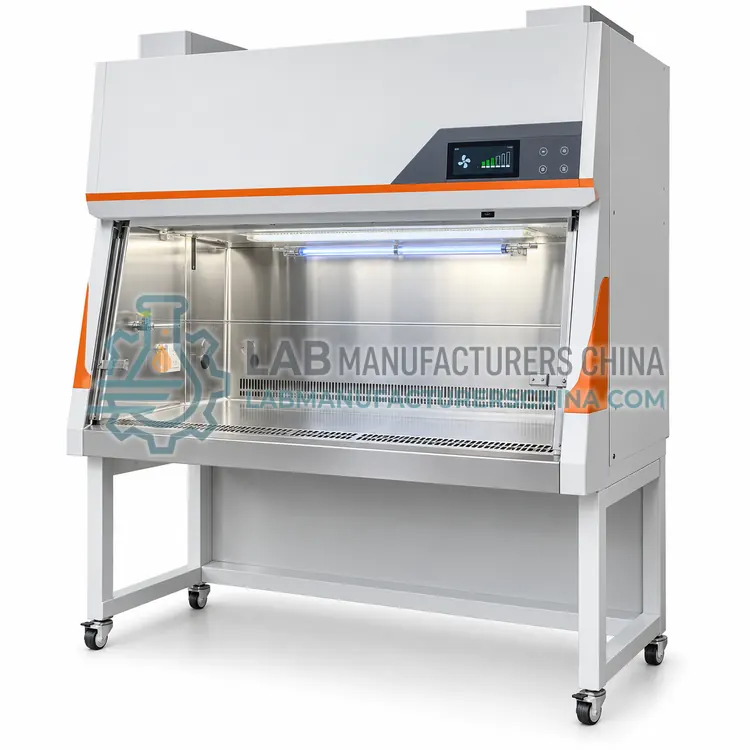
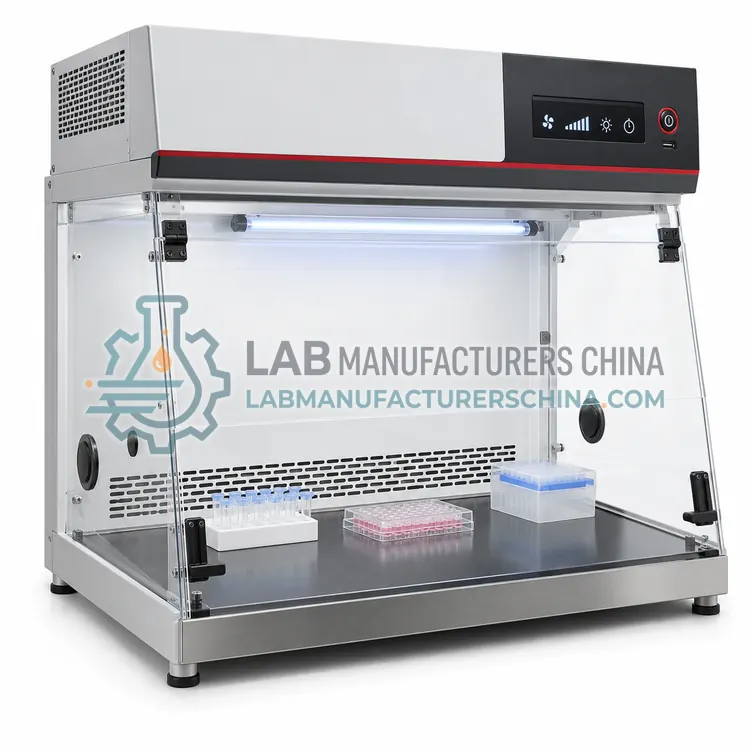
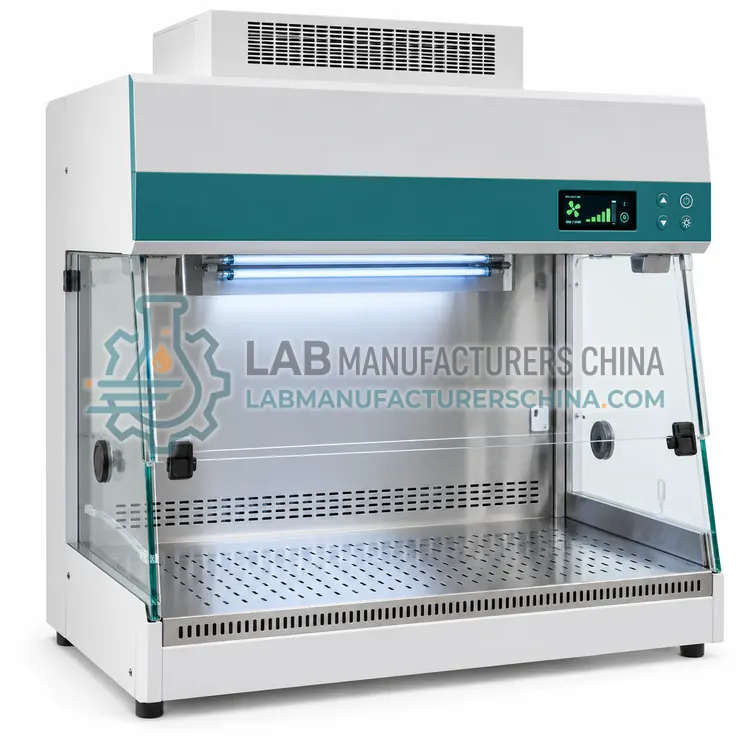
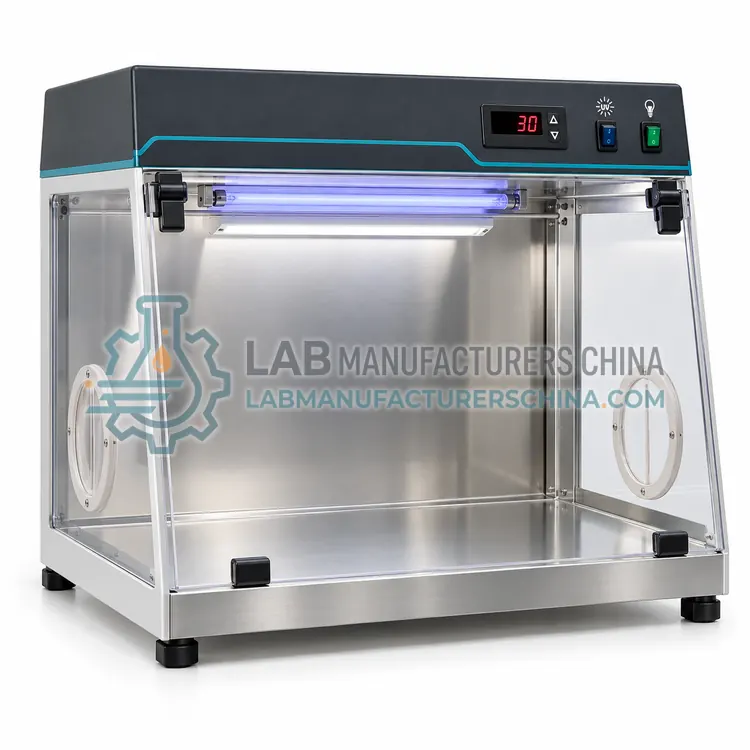
A UV dead-air PCR cabinet is an enclosed box with a front sash, a stainless or acrylic work surface and a germicidal UV lamp, with no airflow system. It is the right choice for low-cost reagent preparation and aliquoting where a still-air, decontaminated space is enough.
What is the UV Dead-Air PCR Cabinet?
A UV dead-air PCR cabinet is an enclosed box with a front sash, a stainless or acrylic work surface and a germicidal UV lamp, with no airflow system. It is the right choice for low-cost reagent preparation and aliquoting where a still-air, decontaminated space is enough.
Overview
The dead-air cabinet has a still-air interior that limits air turbulence so airborne particles settle, with front and sometimes side panels made of clear acrylic or polycarbonate. One or two 254 nm UV lamps, typically 15–30 W, sterilize interior surfaces and inner air. A timer sets automatic UV cycles and a door interlock turns the lamp off when the sash is lifted. Because there is no fan or HEPA filter, the cabinet is silent and inexpensive, with useable interiors of about 600–900 mm wide. It gives no laminar protection and is not a biosafety device. Its performance depends on the operator's technique and regular surface cleaning. It suits pre-PCR reagent mixing for lower-risk applications.
How does it work?
PCR contamination arises mainly from amplicons carried over from previous reactions and from ambient DNA. A PCR workstation reduces this risk with three mechanisms. First, an enclosed or laminar-flow workspace limits airborne particles: HEPA filters remove at least 99.99% of particles at 0.3 µm, and airflow passes in a controlled direction over the work surface. Second, ultraviolet light at 254 nm crosslinks DNA on surfaces and in air inside the cabinet, destroying residual template. Third, smooth stainless steel or epoxy surfaces allow chemical cleaning with bleach or DNA-decontaminating reagents. Some systems add a door interlock so UV cannot run when the sash is open, and timers for automatic UV cycles.
What are the key features?
- Still-air interior limits turbulence without fans
- 254 nm UV lamp with programmable timer
- Door interlock switches UV off when the sash opens
- Clear acrylic panels for visibility and easy cleaning
- Silent operation with no vibration
- Bench-top size with optional stand
What are the technical specifications?
A typical uv dead-air pcr cabinet configuration offers interior width of 600–900 mm, work surface material of 304 stainless steel or acrylic, UV lamp of 254 nm, 15–30 W (1–2 lamps), UV timer of 1–99 min, programmable, airflow of none (dead air) and HEPA filtration of none. Values are indicative of the product class; the exact figures for each configuration are confirmed on the quotation and the calibration documents supplied with the instrument.
Which applications is it used for?
The UV Dead-Air PCR Cabinet is used in reagent master-mix preparation, aliquoting primers and probes, teaching laboratories and low-risk pre-PCR set-up. Across the wider PCR Workstations class, laboratories also deploy it for pre-PCR reagent and sample set-up, forensic DNA analysis and molecular diagnostics.
Which standards and certifications apply?
Relevant standards and methods include EN 12469, NSF/ANSI 49, ISO 14644-1, EN 1822 (HEPA filters), IEC 61010-1, IEC 61010-2-101 and CLSI MM19. Certification candidates for this model are CE and ISO 9001 manufacturing; each is to be confirmed for the specific configuration before shipment, and certificates are supplied only where they have been issued.
Place the workstation in a low-traffic area of the pre-amplification room, away from doors and air vents. Clean surfaces before and after use with 10% bleach followed by water or 70% ethanol, and run the UV cycle, typically 15–30 minutes, before work. UV lamps lose output with age, so record hours and replace them at the manufacturer's interval, usually 6,000–9,000 hours. Test HEPA filter integrity and airflow velocity at installation and annually, or as required by the standard applied. Keep pipettes, tips and racks dedicated to the workstation, and never bring amplified product or post-PCR equipment into the pre-PCR area.
How do I select the right UV Dead-Air PCR Cabinet?
Select a dead-air cabinet for low-risk routine reagent work or teaching with a modest budget. It gives no laminar airflow or operator protection. For forensic, clinical or trace work, choose a HEPA laminar-flow hood. In an RFQ, specify interior size, UV lamp power and wavelength, timer, interlock, work surface material and voltage.
How does it compare with other PCR Workstations variants?
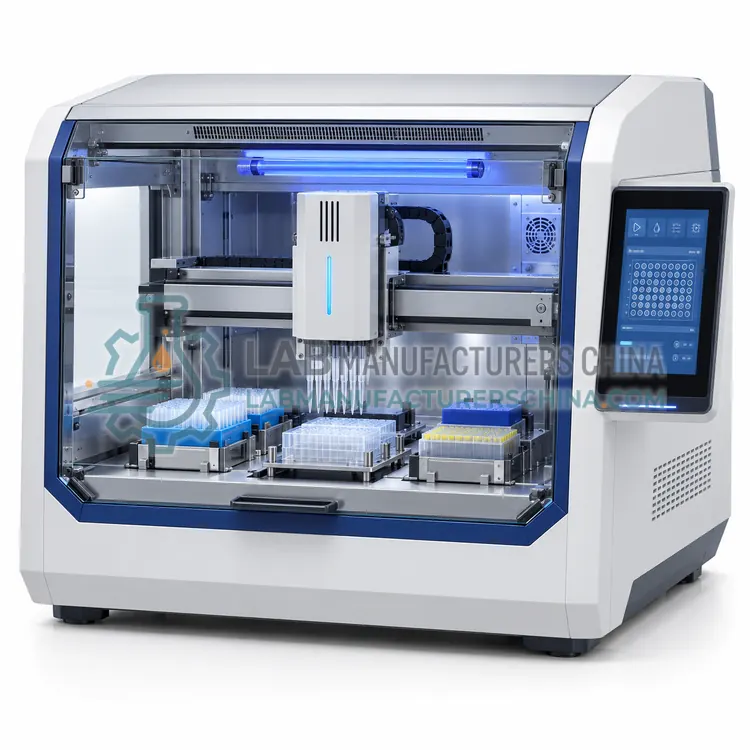
Select by the level of protection needed. A UV dead-air cabinet protects reagents at low cost, a laminar-flow hood adds HEPA airflow for cleaner preparation, and a Class II cabinet also protects the operator when handling infectious samples. Check interior size against the racks, pipettes and centrifuge you need inside, and confirm UV lamp wavelength, timer and door interlock. Ductless carbon-filter units suit post-PCR work with volatile reagents. Automated set-up stations reduce manual variability and suit high volumes. Consider noise, vibration and lighting, and whether the workstation must be certified to a biosafety standard such as EN 12469 or NSF/ANSI 49.
Full specifications
| Interior width | 600–900 mm |
|---|---|
| Work surface material | 304 stainless steel or acrylic |
| UV lamp | 254 nm, 15–30 W (1–2 lamps) |
| UV timer | 1–99 min, programmable |
| Airflow | none (dead air) |
| HEPA filtration | none |
| Lighting | LED, about 400 lux |
| Sash | Front, acrylic with UV interlock |
| Noise level | < 40 dB(A) |
| Power supply | 220 V AC, 50/60 Hz, about 80 W |
Indicative values for this product class. Final specifications are confirmed on the quotation and in the calibration documents supplied with the instrument.
Applications
- Reagent master-mix preparation
- Aliquoting primers and probes
- Teaching laboratories
- Low-risk pre-PCR set-up
Key features
- Still-air interior limits turbulence without fans
- 254 nm UV lamp with programmable timer
- Door interlock switches UV off when the sash opens
- Clear acrylic panels for visibility and easy cleaning
- Silent operation with no vibration
- Bench-top size with optional stand
Frequently asked questions about UV Dead-Air PCR Cabinet
Generally not for high-risk clinical work. Without HEPA filtration or directed airflow, it offers limited protection. Laboratories should follow their regulatory requirements and consider a HEPA laminar-flow hood or Class II cabinet.
Prolonged UV exposure can yellow and embrittle some plastics, including acrylic and pipette bodies. Remove sensitive items before the UV cycle and limit cycle length to what is needed.
Wipe surfaces with 10% bleach, then rinse with water or 70% ethanol, before and after each session. Run the UV cycle between sessions. Record each cleaning in the laboratory log.
A PCR workstation provides a clean, often UV-decontaminated space for preparing PCR reactions. It protects reagents and template from airborne DNA and amplicons, which reduces false-positive results in diagnostic, forensic and research amplification work.
It is not always required. A UV dead-air cabinet may suffice for routine work, but HEPA laminar flow gives a cleaner environment and is preferred for trace DNA, forensic and clinical diagnostics where contamination risk must be minimised.
Typical decontamination cycles are 15–30 minutes before work. Effectiveness depends on lamp age, distance to surfaces and shading, so follow supplier guidance and replace lamps at the recommended hour count.
Related models