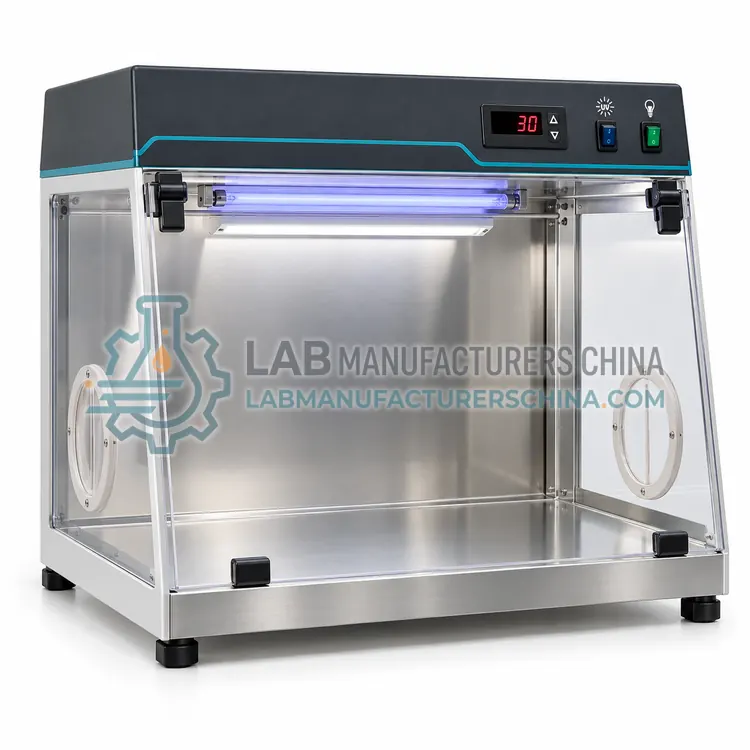
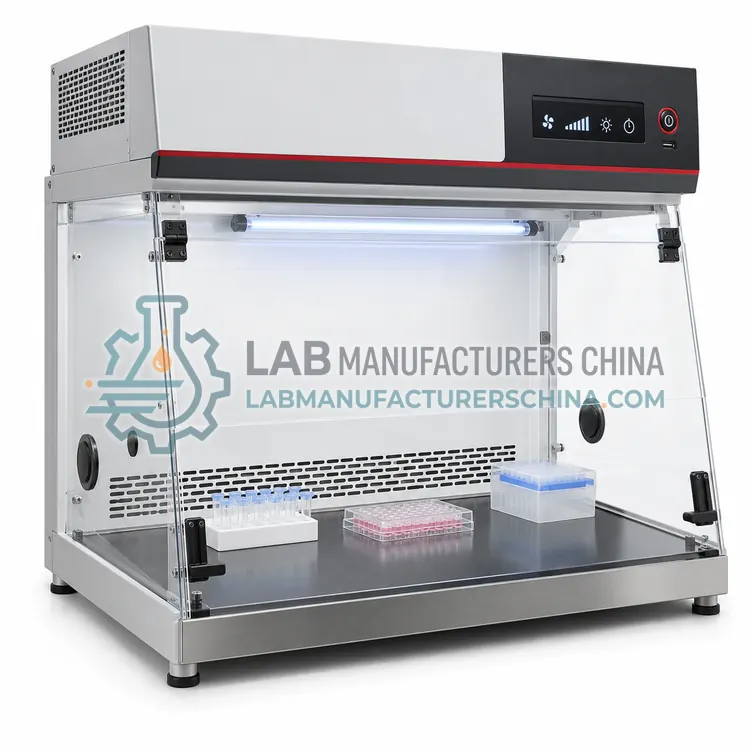
Ductless Carbon-Filtered Post-PCR Workstation
无管道活性炭过滤 PCR 后工作站
- SKU PCW-0005
- PCR Workstations
- CE (to be confirmed)
- ISO 9001 manufacturing (to be confirmed)
Price on request — FOB / CIF quoted per order
Prices depend on configuration, quantity and destination port.
Key specifications
| Airflow direction | Inward at front, filtered return to room |
|---|---|
| Face velocity | 0.4–0.5 m/s |
| HEPA filter grade | H13 or H14 (EN 1822) |
| Carbon filter | Activated carbon, organic vapor grade |
| Interior width | 600–1200 mm |
| Filter alarm | Airflow and filter-life indicator |
Request a quote Download brochure · to be provided
By Lab Manufacturers China Technical TeamLast reviewed Standards: EN 12469, NSF/ANSI 49, ISO 14644-1
What is the Ductless Carbon-Filtered Post-PCR Workstation?
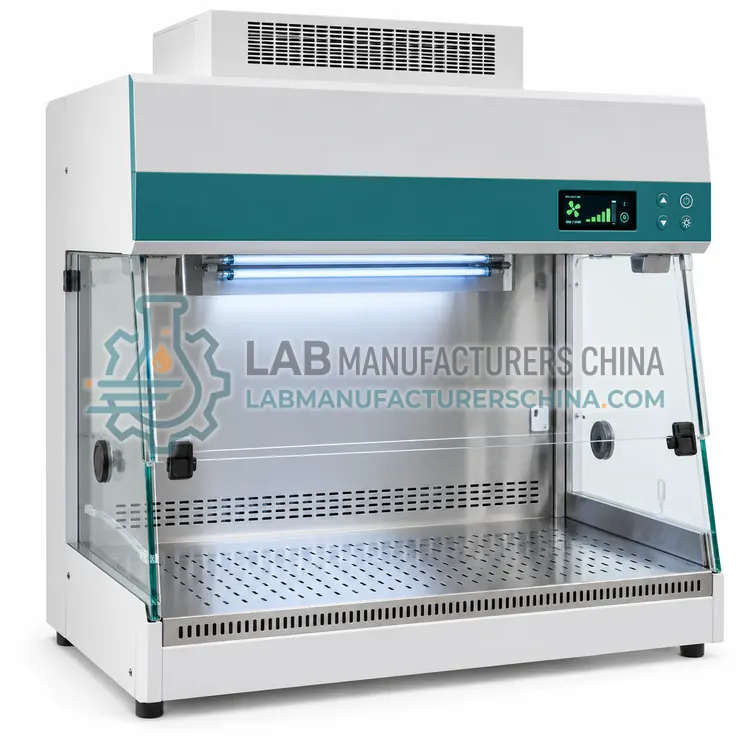
A ductless carbon-filtered post-PCR workstation is an exhaust enclosure that captures vapors and aerosols from post-amplification work, for example opening amplified tubes and loading gels, through HEPA and activated-carbon filters. It is the right choice for the post-PCR room when dyes or solvents are used and no exhaust duct is available.
What is the Ductless Carbon-Filtered Post-PCR Workstation?
A ductless carbon-filtered post-PCR workstation is an exhaust enclosure that captures vapors and aerosols from post-amplification work, for example opening amplified tubes and loading gels, through HEPA and activated-carbon filters. It is the right choice for the post-PCR room when dyes or solvents are used and no exhaust duct is available.
Overview
In a ductless enclosure, a fan draws air inward through the front opening at 0.4–0.5 m/s, pulling it past the work area and through a prefilter, a HEPA filter and a bed of activated carbon before returning it to the room. The HEPA filter captures amplicon-laden aerosols, while activated carbon adsorbs organic vapors such as ethidium bromide alternatives, acetic acid and formaldehyde, depending on the carbon type. The work surface is sealed and easy to decontaminate, and a UV lamp can be fitted. Because nothing is ducted, installation is simple, but carbon filters saturate and must be replaced on a monitored schedule, often with a gas sensor or timer. This unit protects the operator and room from post-PCR products, not the sample.
How does it work?
PCR contamination arises mainly from amplicons carried over from previous reactions and from ambient DNA. A PCR workstation reduces this risk with three mechanisms. First, an enclosed or laminar-flow workspace limits airborne particles: HEPA filters remove at least 99.99% of particles at 0.3 µm, and airflow passes in a controlled direction over the work surface. Second, ultraviolet light at 254 nm crosslinks DNA on surfaces and in air inside the cabinet, destroying residual template. Third, smooth stainless steel or epoxy surfaces allow chemical cleaning with bleach or DNA-decontaminating reagents. Some systems add a door interlock so UV cannot run when the sash is open, and timers for automatic UV cycles.
What are the key features?
- HEPA plus activated-carbon filtration of exhaust air
- No exhaust duct needed, so installation is flexible
- Front inflow of 0.4–0.5 m/s contains aerosols
- Filter saturation alarm or gas sensor option
- Sealed, chemically resistant work surface
- Optional UV lamp for surface decontamination
What are the technical specifications?
A typical ductless carbon-filtered post-pcr workstation configuration offers airflow direction of Inward at front, filtered return to room, face velocity of 0.4–0.5 m/s, HEPA filter grade of H13 or H14 (EN 1822), carbon filter of Activated carbon, organic vapor grade, interior width of 600–1200 mm and filter alarm of Airflow and filter-life indicator. Values are indicative of the product class; the exact figures for each configuration are confirmed on the quotation and the calibration documents supplied with the instrument.
Which applications is it used for?
The Ductless Carbon-Filtered Post-PCR Workstation is used in post-PCR amplicon handling, gel loading and staining, amplicon purification steps and use of organic dyes and solvents. Across the wider PCR Workstations class, laboratories also deploy it for pre-PCR reagent and sample set-up, forensic DNA analysis and molecular diagnostics.
Which standards and certifications apply?
Relevant standards and methods include EN 12469, NSF/ANSI 49, ISO 14644-1, EN 1822 (HEPA filters), IEC 61010-1, IEC 61010-2-101 and CLSI MM19. Certification candidates for this model are CE and ISO 9001 manufacturing; each is to be confirmed for the specific configuration before shipment, and certificates are supplied only where they have been issued.
Place the workstation in a low-traffic area of the pre-amplification room, away from doors and air vents. Clean surfaces before and after use with 10% bleach followed by water or 70% ethanol, and run the UV cycle, typically 15–30 minutes, before work. UV lamps lose output with age, so record hours and replace them at the manufacturer's interval, usually 6,000–9,000 hours. Test HEPA filter integrity and airflow velocity at installation and annually, or as required by the standard applied. Keep pipettes, tips and racks dedicated to the workstation, and never bring amplified product or post-PCR equipment into the pre-PCR area.
How do I select the right Ductless Carbon-Filtered Post-PCR Workstation?
Select a ductless post-PCR workstation for the amplification-product area when vapors, aerosols or dyes must be filtered and no duct is available. It is not for pre-PCR sample protection. In an RFQ, specify carbon type for your chemicals, filter life and alarm, face velocity, size, and lifetime cost of replacement filters.
How does it compare with other PCR Workstations variants?
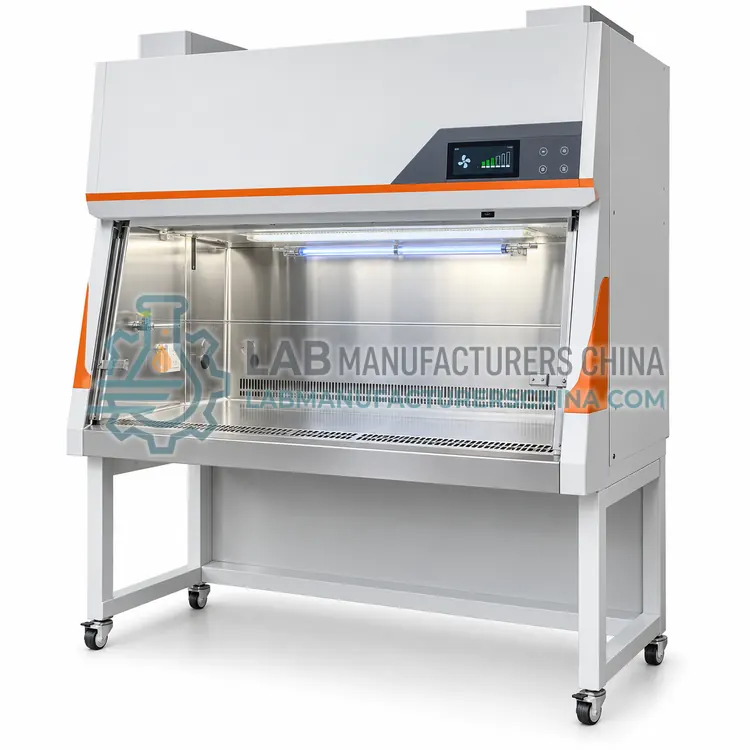
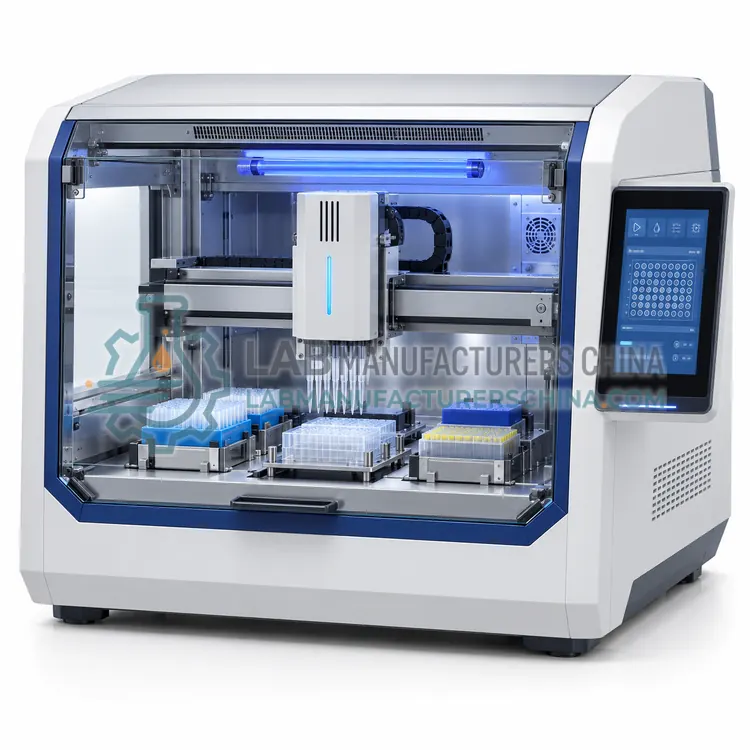
Select by the level of protection needed. A UV dead-air cabinet protects reagents at low cost, a laminar-flow hood adds HEPA airflow for cleaner preparation, and a Class II cabinet also protects the operator when handling infectious samples. Check interior size against the racks, pipettes and centrifuge you need inside, and confirm UV lamp wavelength, timer and door interlock. Ductless carbon-filter units suit post-PCR work with volatile reagents. Automated set-up stations reduce manual variability and suit high volumes. Consider noise, vibration and lighting, and whether the workstation must be certified to a biosafety standard such as EN 12469 or NSF/ANSI 49.
Full specifications
| Airflow direction | Inward at front, filtered return to room |
|---|---|
| Face velocity | 0.4–0.5 m/s |
| HEPA filter grade | H13 or H14 (EN 1822) |
| Carbon filter | Activated carbon, organic vapor grade |
| Interior width | 600–1200 mm |
| Filter alarm | Airflow and filter-life indicator |
| UV lamp | Optional, 254 nm |
| Noise level | ≤ 58 dB(A) |
| Work surface | Epoxy or stainless steel |
| Power supply | 220 V AC, 50/60 Hz, about 300 W |
Indicative values for this product class. Final specifications are confirmed on the quotation and in the calibration documents supplied with the instrument.
Applications
- Post-PCR amplicon handling
- Gel loading and staining
- Amplicon purification steps
- Use of organic dyes and solvents
Key features
- HEPA plus activated-carbon filtration of exhaust air
- No exhaust duct needed, so installation is flexible
- Front inflow of 0.4–0.5 m/s contains aerosols
- Filter saturation alarm or gas sensor option
- Sealed, chemically resistant work surface
- Optional UV lamp for surface decontamination
Frequently asked questions about Ductless Carbon-Filtered Post-PCR Workstation
Post-PCR work handles billions of amplicon copies that can contaminate later reactions. A dedicated enclosure, located in a separate room from pre-PCR set-up, contains aerosols and supports unidirectional workflow.
It depends on chemical load and use, typically every 6–12 months. Use an alarm or vapor sensor when available, and record filter-change dates since saturated carbon gives no protection.
No. It protects the operator from outgoing vapors but does not provide clean, particle-free air over the sample. Keep pre-PCR set-up in a separate HEPA hood or cabinet.
A PCR workstation provides a clean, often UV-decontaminated space for preparing PCR reactions. It protects reagents and template from airborne DNA and amplicons, which reduces false-positive results in diagnostic, forensic and research amplification work.
It is not always required. A UV dead-air cabinet may suffice for routine work, but HEPA laminar flow gives a cleaner environment and is preferred for trace DNA, forensic and clinical diagnostics where contamination risk must be minimised.
Typical decontamination cycles are 15–30 minutes before work. Effectiveness depends on lamp age, distance to surfaces and shading, so follow supplier guidance and replace lamps at the recommended hour count.
Related models