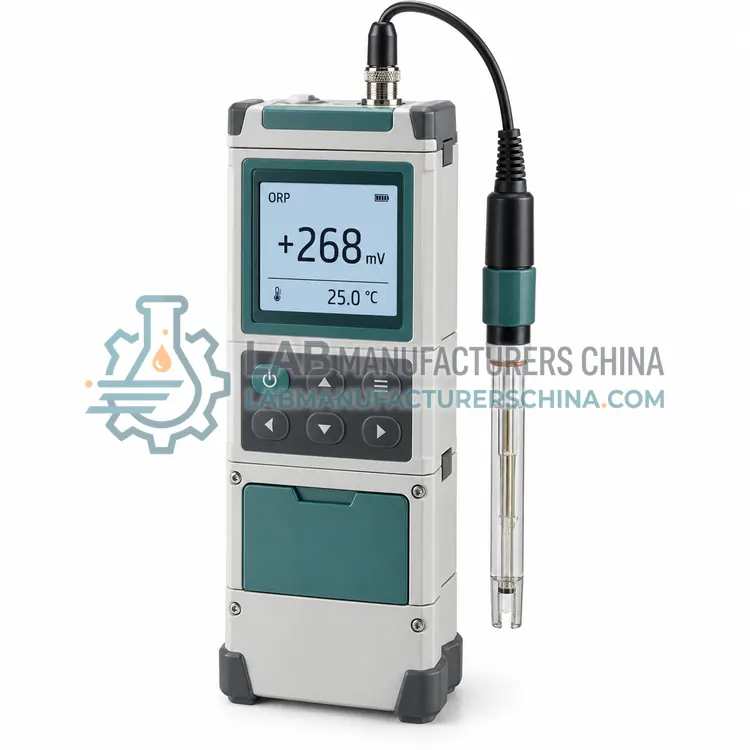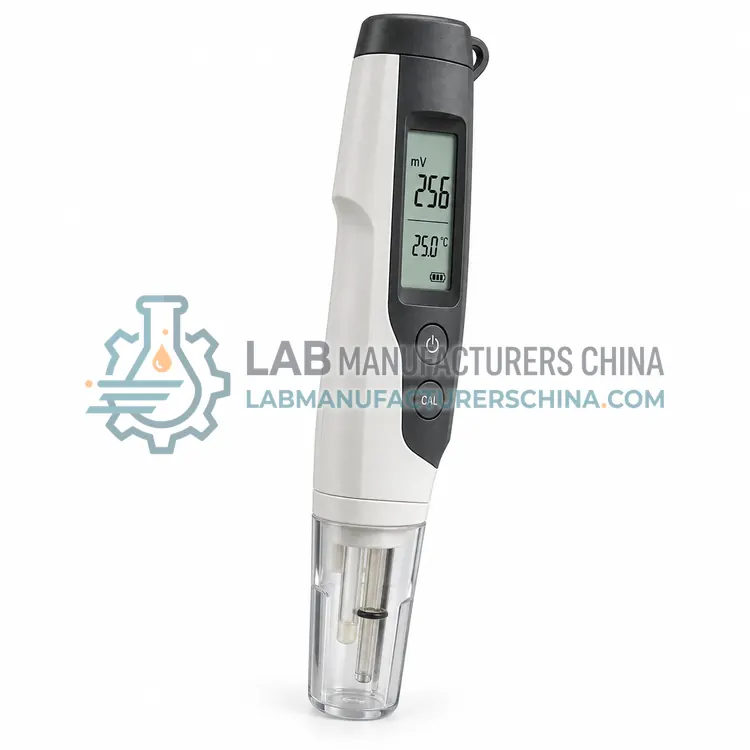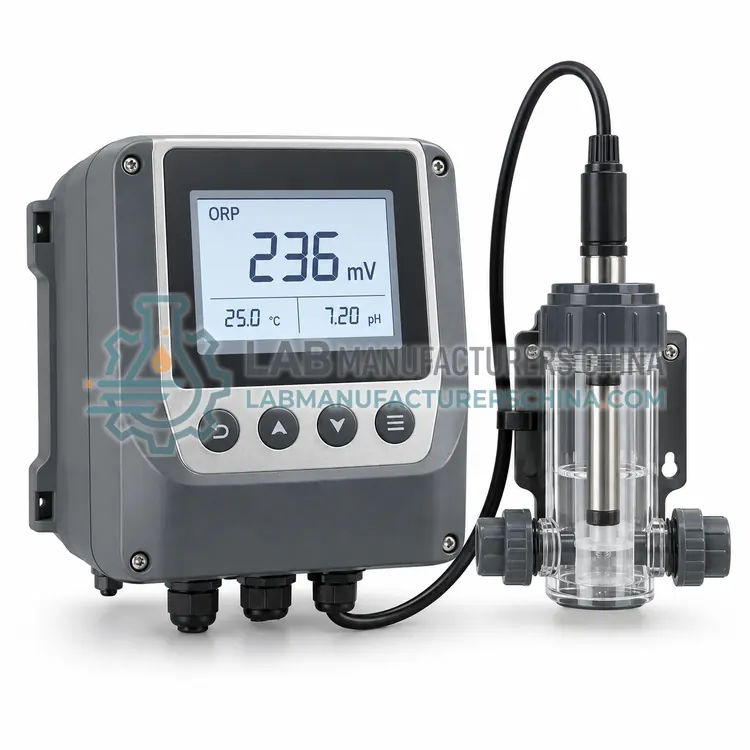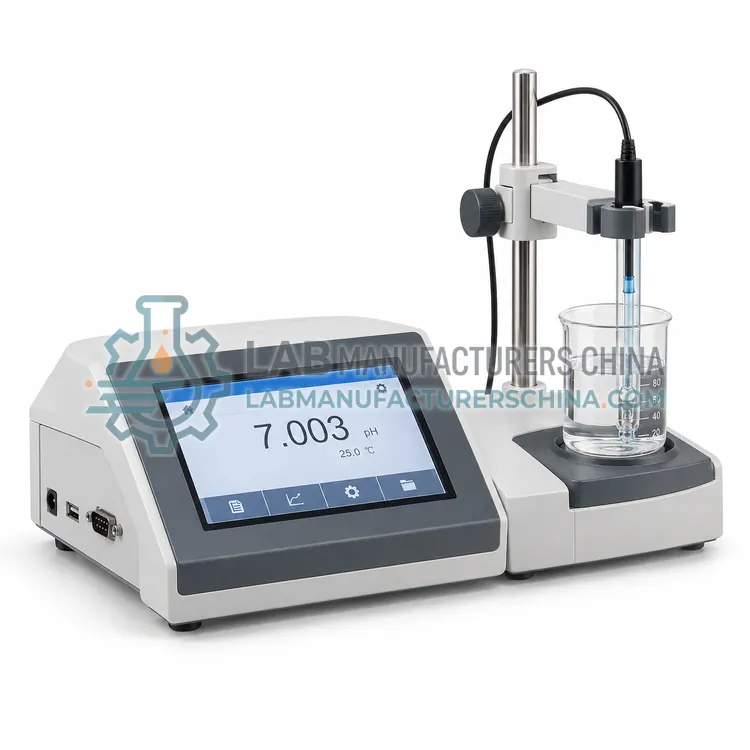
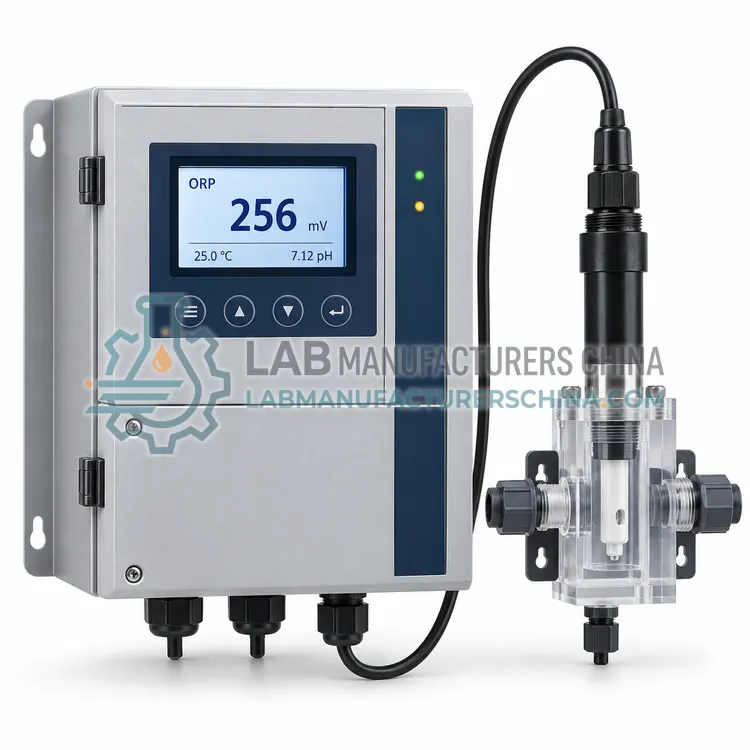
Online ORP Analyzer for Wastewater Redox Treatment
废水氧化还原处理用在线 ORP 分析仪
- SKU ORM-0005
- ORP Meters
- CE (to be confirmed)
- IEC 61010-1 safety (to be confirmed)
- ISO 9001 manufacturing (to be confirmed)
Price on request — FOB / CIF quoted per order
Prices depend on configuration, quantity and destination port.
Key specifications
| ORP range | −1500 to +1500 mV |
|---|---|
| Resolution | 1 mV |
| Accuracy | ±2 mV |
| Electrode metal | Platinum or gold |
| Reference system | Double-junction, gel or polymer |
| Process temperature | 0–80 °C |
Request a quote Download brochure · to be provided
By Lab Manufacturers China Technical TeamLast reviewed Standards: ASTM D1498, ISO 11271, DIN 38404-6
What is the Online ORP Analyzer for Wastewater Redox Treatment?
An online ORP analyzer for wastewater redox treatment monitors reaction endpoints such as cyanide oxidation and hexavalent chromium reduction. It uses a robust gold or platinum sensor with a double-junction reference and relay control of reagent dosing.
What is the Online ORP Analyzer for Wastewater Redox Treatment?
An online ORP analyzer for wastewater redox treatment monitors reaction endpoints such as cyanide oxidation and hexavalent chromium reduction. It uses a robust gold or platinum sensor with a double-junction reference and relay control of reagent dosing.
Overview
Industrial wastewater treatment uses redox reactions to destroy or convert toxic species, and ORP is the standard process signal for their endpoints. In chromium reduction with sulfite or bisulfite at pH 2 to 3, ORP falls to about 250 mV when hexavalent chromium is reduced. In alkaline chlorination of cyanide, ORP rises to around 600 to 650 mV at pH 10 and above, which indicates complete oxidation to cyanate or beyond. The analyzer uses a gold or platinum electrode with a double-junction, gel or polymer reference to resist poisoning by sulfides and heavy metals, and a robust PVDF or PEEK body. The transmitter provides relay control, PID dosing, 4–20 mA outputs, alarms and fault diagnostics. Installation uses a sample loop with flow and optional automatic cleaning. Setpoints must be determined and validated for each process, since they depend on pH and wastewater composition.
How does it work?
An ORP electrode has an inert metal surface, usually platinum or gold, that does not take part in a reaction but exchanges electrons with redox species in solution. The potential established at the surface reflects the ratio of oxidized to reduced species and is described by the Nernst equation. It is measured against a reference electrode such as silver/silver chloride in potassium chloride and reported in millivolts, either versus the reference or converted to the standard hydrogen electrode scale by adding a temperature-dependent offset of about 200 to 210 mV for Ag/AgCl with 3 mol/L KCl. The meter is a high-impedance millivolt meter, essentially a pH meter in mV mode. ORP is a mixed potential, so it is not specific to a single species and depends on pH, temperature and electrode condition. Typical readings range from minus 500 to plus 1000 mV, with 650 to 750 mV commonly used for disinfected water.
What are the key features?
- Gold or platinum sensor with double-junction reference resistant to sulfide and heavy metal poisoning
- PVDF or PEEK sensor body tolerant of acidic, alkaline and oxidizing effluents
- PID and on/off reagent dosing control with relay and 4–20 mA outputs
- Optional automatic sensor cleaning for coating-prone wastewater
- Two-channel pH and ORP monitoring for reaction endpoint control
- Diagnostics for electrode impedance, drift and reference condition
What are the technical specifications?
A typical online orp analyzer for wastewater redox treatment configuration offers ORP range of −1500 to +1500 mV, resolution of 1 mV, accuracy of ±2 mV, electrode metal of Platinum or gold, reference system of Double-junction, gel or polymer and process temperature of 0–80 °C. Values are indicative of the product class; the exact figures for each configuration are confirmed on the quotation and the calibration documents supplied with the instrument.
Which applications is it used for?
The Online ORP Analyzer for Wastewater Redox Treatment is used in hexavalent chromium reduction, cyanide destruction in plating effluent, bleach scrubber control, sulfite dechlorination monitoring and industrial wastewater neutralization trains. Across the wider ORP Meters class, laboratories also deploy it for swimming pool and spa disinfection control, wastewater redox treatment and aquaculture and aquarium monitoring.
Which standards and certifications apply?
Relevant standards and methods include ASTM D1498, ISO 11271, DIN 38404-6, GB/T 6920, IEC 60746-2 and APHA 2580. Certification candidates for this model are CE, IEC 61010-1 safety and ISO 9001 manufacturing; each is to be confirmed for the specific configuration before shipment, and certificates are supplied only where they have been issued.
ORP electrodes cannot be calibrated like pH electrodes. Verify them against a redox standard such as Zobell's solution (about 228 mV at 25 degrees Celsius versus Ag/AgCl) or a saturated quinhydrone solution, and clean or re-polish the metal surface if readings drift. Platinum surfaces can be cleaned with dilute nitric acid or a mild abrasive. Keep the reference junction filled and free of blockage, and rinse between samples. Readings take longer to stabilize than pH, often one to several minutes, and are sensitive to oxygen, flow rate and temperature. Record pH and temperature with each reading. Replace electrodes when verification fails or response is sluggish. Handle oxidizing and reducing standards with suitable protective equipment and dispose of used solutions according to local rules.
How do I select the right Online ORP Analyzer for Wastewater Redox Treatment?
Choose this variant when ORP endpoints control toxic species in industrial wastewater and the sensor faces sulfides, metals or coatings. A pool controller is not designed for such media. In an RFQ specify the reaction chemistry, pH range, temperature, sensor metal, cleaning requirement and control outputs.
How does it compare with other ORP Meters variants?
The decisive choices are the measurement format, the electrode metal and the required stability. Benchtop meters suit laboratory work and method development, portable meters suit field surveys and pool or aquaculture checks, and online analyzers provide continuous measurement with control outputs. Platinum electrodes serve most applications, while gold electrodes are preferred in cyanide-containing samples or where platinum may catalyze unwanted reactions. Select a reference system appropriate for the medium: double-junction references resist poisoning in wastewater. Check that the meter supports mV display with 0.1 mV resolution, relative mV mode and calibration verification with a redox standard such as Zobell or quinhydrone solutions. Because ORP depends on pH, consider a combined pH/ORP instrument. For regulated uses, confirm the requirements of the governing standard or plant procedure.
Full specifications
| ORP range | −1500 to +1500 mV |
|---|---|
| Resolution | 1 mV |
| Accuracy | ±2 mV |
| Electrode metal | Platinum or gold |
| Reference system | Double-junction, gel or polymer |
| Process temperature | 0–80 °C |
| Process pressure | up to 6 bar |
| Control outputs | 2–4 relays, PID |
| Analog output | 4–20 mA (1–2 channels) |
| Wetted materials | PVDF, PEEK, titanium |
Indicative values for this product class. Final specifications are confirmed on the quotation and in the calibration documents supplied with the instrument.
Applications
- Hexavalent chromium reduction
- Cyanide destruction in plating effluent
- Bleach scrubber control
- Sulfite dechlorination monitoring
- Industrial wastewater neutralization trains
Key features
- Gold or platinum sensor with double-junction reference resistant to sulfide and heavy metal poisoning
- PVDF or PEEK sensor body tolerant of acidic, alkaline and oxidizing effluents
- PID and on/off reagent dosing control with relay and 4–20 mA outputs
- Optional automatic sensor cleaning for coating-prone wastewater
- Two-channel pH and ORP monitoring for reaction endpoint control
- Diagnostics for electrode impedance, drift and reference condition
Frequently asked questions about Online ORP Analyzer for Wastewater Redox Treatment
In reduction with bisulfite at pH 2 to 3, completion is usually indicated by an ORP around 250 mV, though the exact endpoint must be verified by testing for hexavalent chromium. Setpoints depend on pH and effluent composition.
Platinum can catalyze side reactions in some cyanide solutions and respond sluggishly, whereas gold gives a stable redox response in cyanide-containing samples. Material selection should follow the supplier's application guidance and be checked during commissioning.
Use a double-junction reference with a polymer or gel electrolyte, keep flow steady, clean the sensor on a schedule and replace it when the reference becomes contaminated. Sulfides and heavy metals are the main causes of reference poisoning.
It measures oxidation-reduction potential in millivolts, which indicates how strongly a solution tends to oxidize or reduce other substances. Higher positive values indicate oxidizing conditions, for example chlorinated water, while negative values indicate reducing conditions.
No. ORP responds to the combined effect of all redox species and is affected by pH, temperature and stabilizers, so it is not a direct concentration measurement. It is used as a control signal and cross-check, while chlorine is measured by DPD or amperometric methods.
Immerse it in a redox standard such as Zobell's solution or a quinhydrone solution of known pH and compare the reading with the tabulated value at the temperature. A deviation above about 10 to 20 mV, or slow response, means cleaning or replacement is needed.
Related models