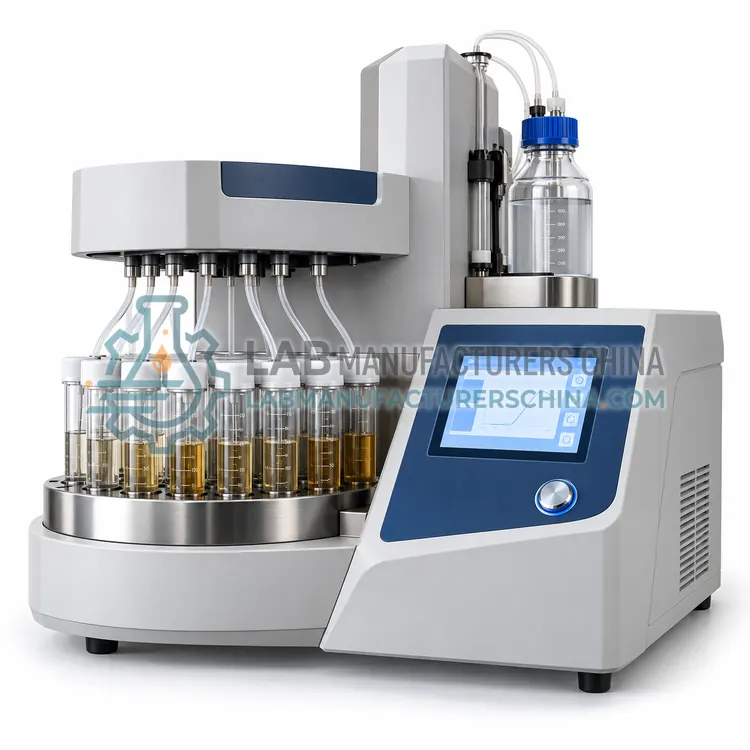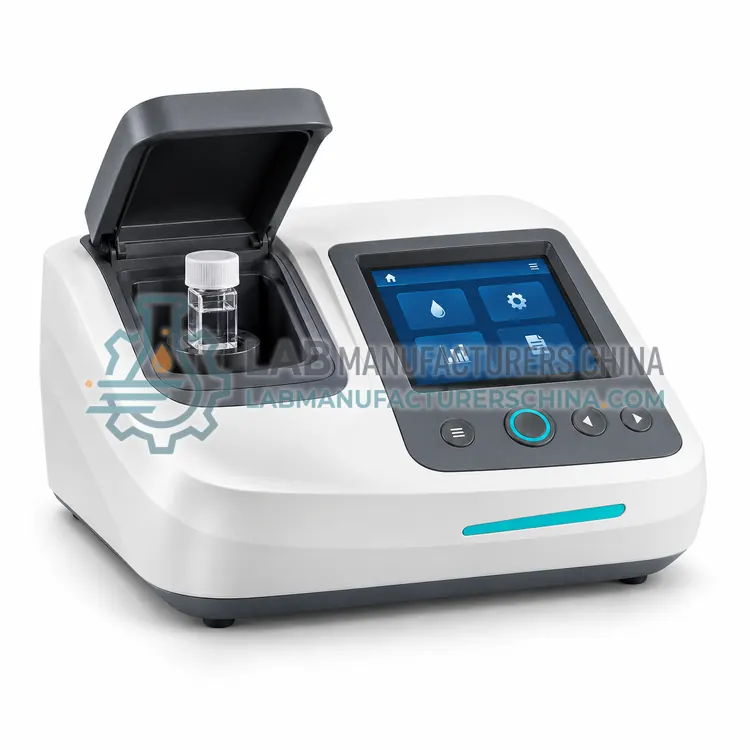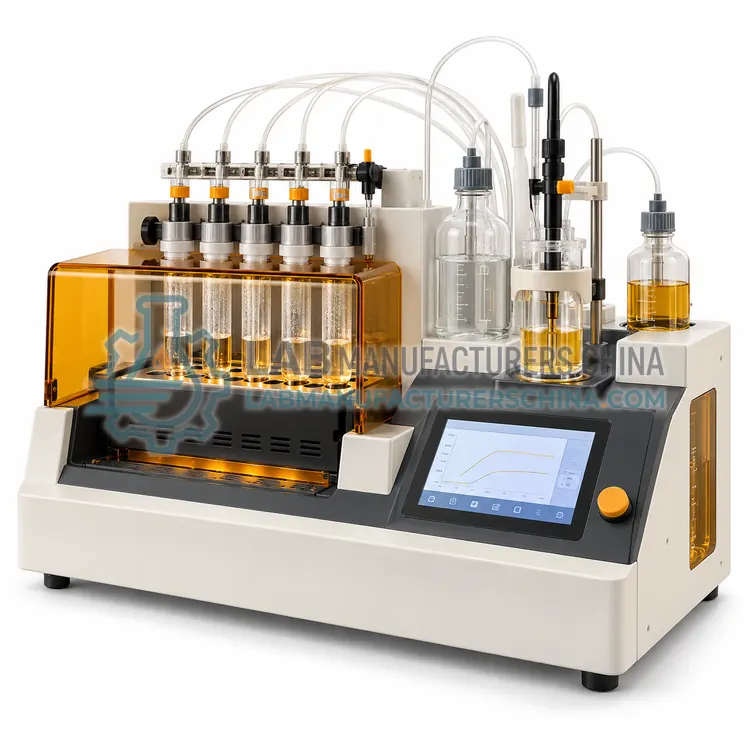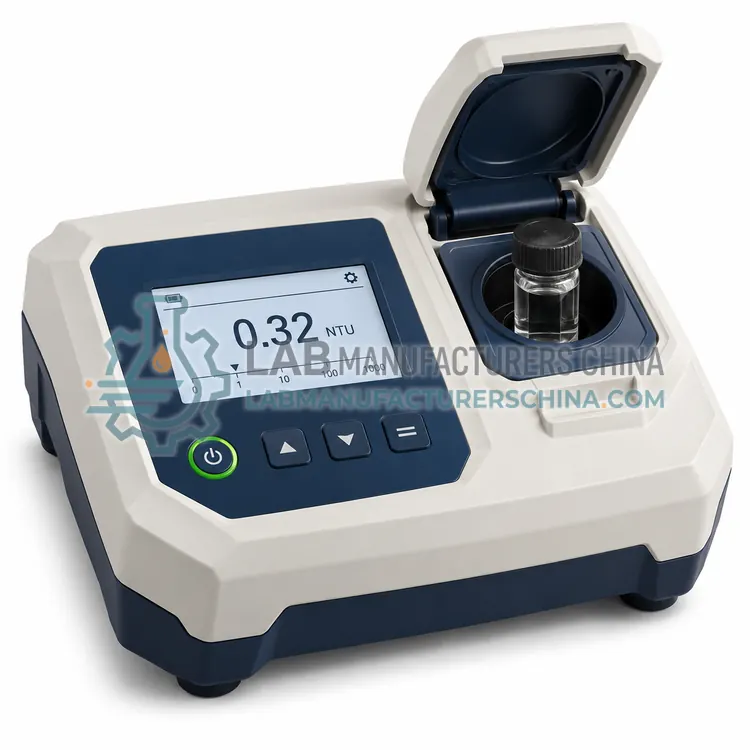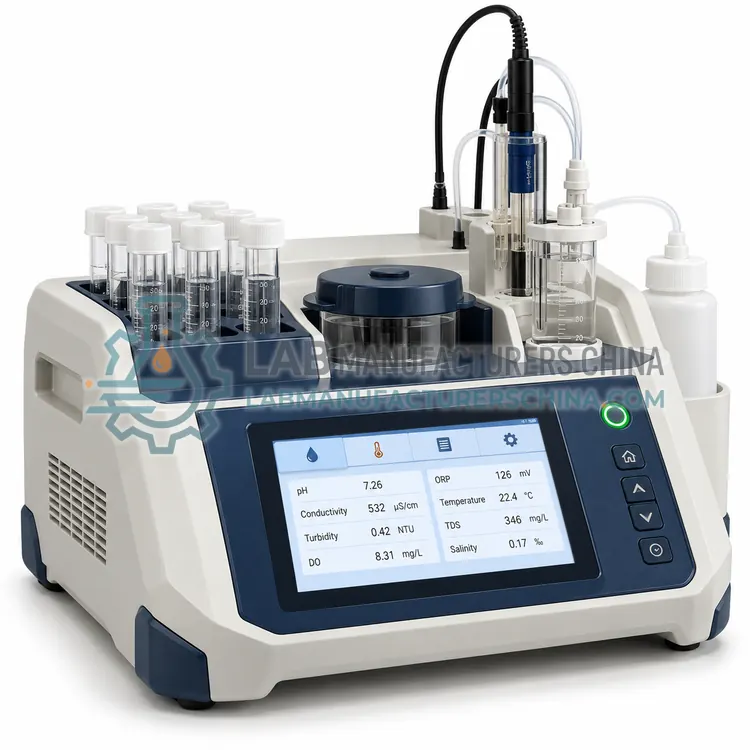
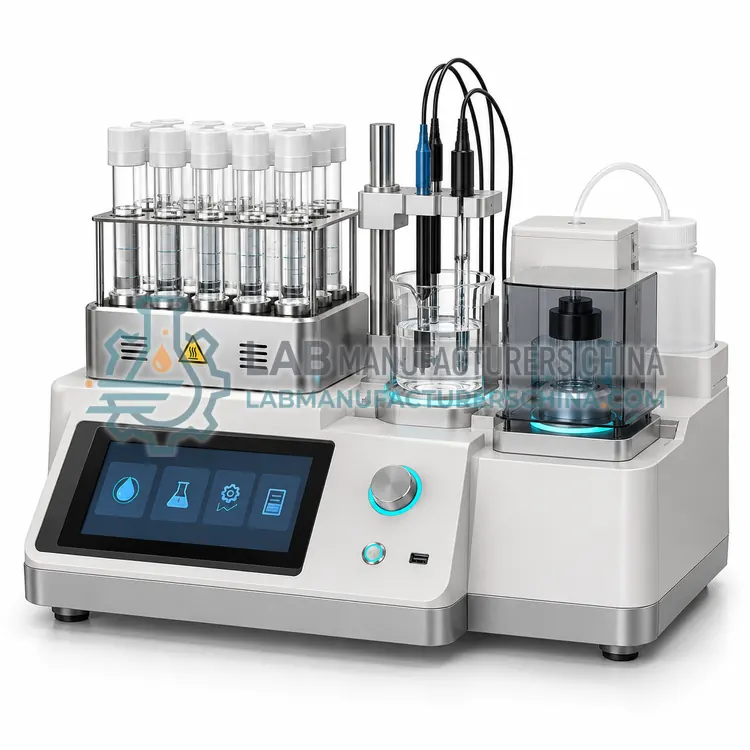
Portable Multiparameter Water Quality Meter
便携式多参数水质检测仪
- SKU MUM-0001
- Multiparameter Meters
- CE (to be confirmed)
- ISO 9001 manufacturing (to be confirmed)
Price on request — FOB / CIF quoted per order
Prices depend on configuration, quantity and destination port.
Key specifications
| Parameters | pH, conductivity, DO, turbidity, temperature |
|---|---|
| pH range and accuracy | 0–14, ±0.01 |
| Conductivity range | 0–200 mS/cm |
| Dissolved oxygen range | 0–20 mg/L |
| Temperature range | 0–50 °C, ±0.1 °C |
| Turbidity range | 0–1000 NTU |
Request a quote Download brochure · to be provided
By Lab Manufacturers China Technical TeamLast reviewed Standards: ISO 10523, ISO 7888, ISO 5814
What is the Portable Multiparameter Water Quality Meter?
A portable multiparameter meter is a handheld controller with interchangeable digital sensors for pH, conductivity, dissolved oxygen and turbidity. It brings laboratory-grade measurement directly to rivers, wells and treatment plant sampling points.
What is the Portable Multiparameter Water Quality Meter?
A portable multiparameter meter is a handheld controller with interchangeable digital sensors for pH, conductivity, dissolved oxygen and turbidity. It brings laboratory-grade measurement directly to rivers, wells and treatment plant sampling points.
Overview
The meter accepts digital electrodes that store their own calibration and identification, so sensors can be swapped without recalibrating the whole instrument. A backlit display shows one or several parameters at once, and readings can be held, logged with time and location, and exported to a computer. Typical specifications include pH resolution of 0.01 with accuracy of ±0.01, conductivity to 200 mS/cm, dissolved oxygen to 20 mg/L and temperature compensation across 0 to 50 °C. Rugged housings meet IP67 water resistance, and battery life supports a full working day. Some models include GPS for survey work and barometric sensors for automatic oxygen pressure correction.
How does it work?
A multiparameter meter combines sensors of different operating principles on one controller. Glass or ISFET electrodes measure pH and other ion activities through a potential that varies with concentration. Conductivity cells apply an alternating current between electrodes and measure the resulting current, which depends on dissolved ions. Dissolved oxygen is measured by a polarographic or galvanic membrane electrode or, in newer instruments, by luminescence quenching of a sensor spot that responds to oxygen. Turbidity is measured optically by scattered light. Temperature is recorded by a thermistor and used to compensate the other readings, because pH, conductivity and oxygen solubility all change with heat. Sensors are calibrated with buffer solutions, standard conductivity solutions and barometric correction before each session.
What are the key features?
- Interchangeable digital sensors with stored calibration
- Simultaneous display of several parameters
- IP67 water-resistant housing for field use
- Data logging with time, location and sample ID
- Automatic temperature and barometric compensation
- USB or Bluetooth export to computer
What are the technical specifications?
A typical portable multiparameter water quality meter configuration offers parameters of pH, conductivity, DO, turbidity, temperature, pH range and accuracy of 0–14, ±0.01, conductivity range of 0–200 mS/cm, dissolved oxygen range of 0–20 mg/L, temperature range of 0–50 °C, ±0.1 °C and turbidity range of 0–1000 NTU. Values are indicative of the product class; the exact figures for each configuration are confirmed on the quotation and the calibration documents supplied with the instrument.
Which applications is it used for?
The Portable Multiparameter Water Quality Meter is used in river and lake water quality surveys, wastewater plant sampling rounds, well and borehole monitoring and emergency water quality assessment. Across the wider Multiparameter Meters class, laboratories also deploy it for drinking water quality compliance monitoring, wastewater treatment process control and river, lake and groundwater field surveys.
Which standards and certifications apply?
Relevant standards and methods include ISO 10523, ISO 7888, ISO 5814, ISO 7027-1 and ISO/IEC 17025. Certification candidates for this model are CE and ISO 9001 manufacturing; each is to be confirmed for the specific configuration before shipment, and certificates are supplied only where they have been issued.
Sensor care dominates performance. pH electrodes need storage in buffer or potassium chloride solution and periodic refilling, conductivity cells need cleaning of fouling and bubbles, and optical oxygen sensors need replacement of the sensing cap. Calibration must follow the method: at least two pH buffers bracketing the expected value, standard conductivity solutions near the measuring range and temperature equilibrium of sample and standard. Barometric pressure affects oxygen readings and should be entered or automatically measured. Records of calibration slope, drift and buffer identity are expected for accredited work, and portable meters should be checked against laboratory results periodically to detect sensor ageing.
How do I select the right Portable Multiparameter Water Quality Meter?
Select a portable meter when measurements are taken at multiple field locations and you need reliable readings without fixed installations. Confirm the parameter set and accuracies required by your methods, and check sensor availability and IP protection for the site conditions you work in.
How does it compare with other Multiparameter Meters variants?
Decide first whether you need field or laboratory measurements and which parameters you must report. Portable meters with interchangeable digital sensors suit river, well and effluent surveys because calibration data travel with the sensor. Benchtop analysers give steadier readings, easier stirring and better documentation for compliance laboratories. Sondes are used where a single probe must be lowered or deployed for long-term profiling of temperature and oxygen stratification. Online analysers provide continuous data for treatment control and alarm functions rather than spot checks. For very low-level work such as ultrapure water, choose a meter with flow-through cells and temperature compensation to 0.1 °C, and confirm the resolution needed for each parameter.
Full specifications
| Parameters | pH, conductivity, DO, turbidity, temperature |
|---|---|
| pH range and accuracy | 0–14, ±0.01 |
| Conductivity range | 0–200 mS/cm |
| Dissolved oxygen range | 0–20 mg/L |
| Temperature range | 0–50 °C, ±0.1 °C |
| Turbidity range | 0–1000 NTU |
| Temperature compensation | Automatic, 0–50 °C |
| Data storage | Up to 5000 records with GPS option |
| Protection | IP67 |
| Power | Rechargeable battery or AA cells |
Indicative values for this product class. Final specifications are confirmed on the quotation and in the calibration documents supplied with the instrument.
Applications
- River and lake water quality surveys
- Wastewater plant sampling rounds
- Well and borehole monitoring
- Emergency water quality assessment
Key features
- Interchangeable digital sensors with stored calibration
- Simultaneous display of several parameters
- IP67 water-resistant housing for field use
- Data logging with time, location and sample ID
- Automatic temperature and barometric compensation
- USB or Bluetooth export to computer
Frequently asked questions about Portable Multiparameter Water Quality Meter
Most instruments provide 40 to 100 hours of use, or a full working week, depending on logging frequency and backlight use. Models with interchangeable AA cells are convenient where recharging is impractical.
Each digital sensor stores its own calibration, so you can calibrate it separately and connect it to any compatible meter without repeating the procedure. Calibration data and history remain with the sensor.
Optical turbidity sensors on portable meters are suitable for screening and field trend work, but reference nephelometers in the laboratory should be used for compliance reporting because field optics are more sensitive to fouling and bubbles.
Common parameters are pH, temperature, conductivity, total dissolved solids, dissolved oxygen and turbidity. Some meters add oxidation-reduction potential, ammonium, nitrate, chloride or fluoride through ion-selective electrodes or optical sensors.
pH, conductivity and oxygen solubility all change with temperature, so a reading without compensation would vary with the sample temperature rather than its composition. The meter uses the measured temperature to correct the value to a reference temperature.
A portable meter is a handheld controller with a sensor on a cable for spot readings, while a sonde is a self-contained cylindrical probe that can be lowered for depth profiles or deployed for continuous logging in lakes and rivers.
Related models