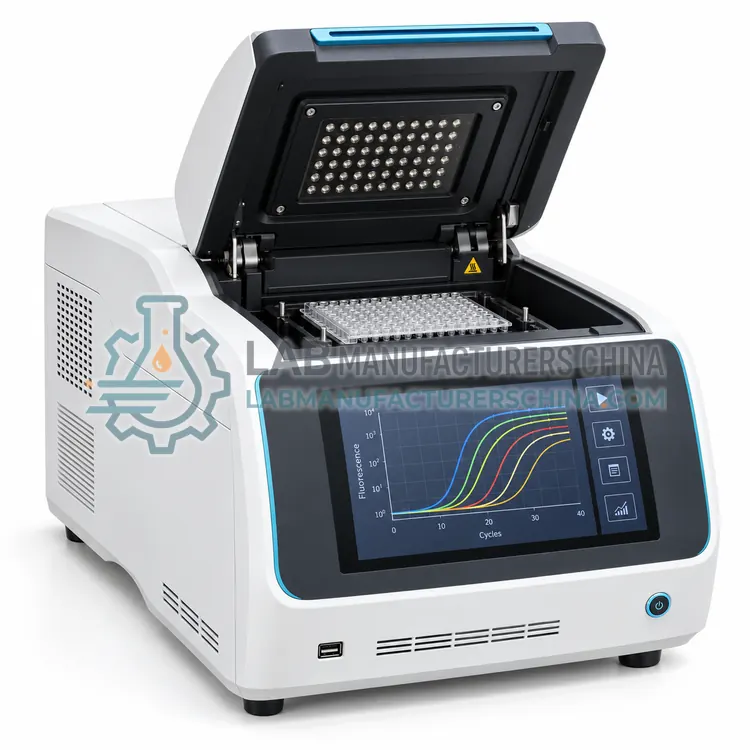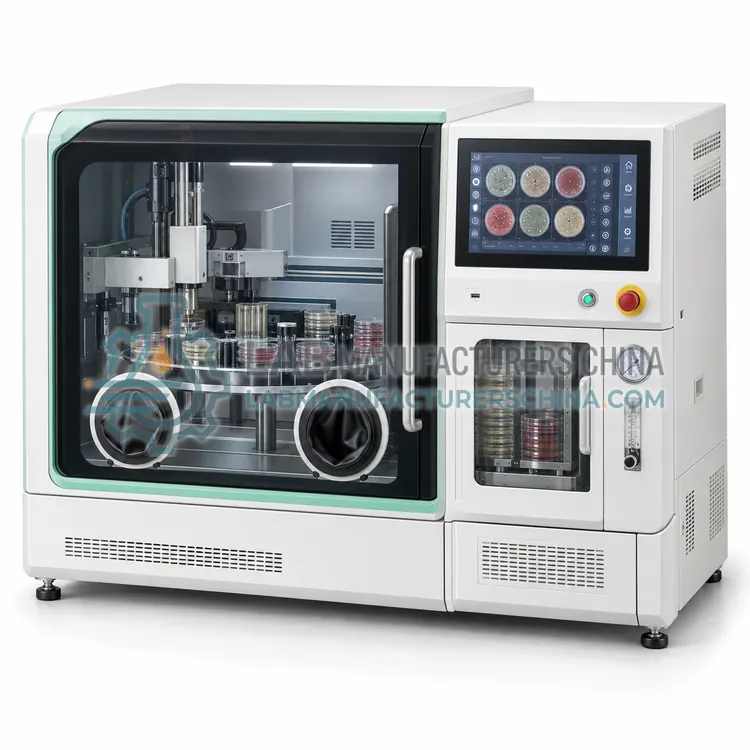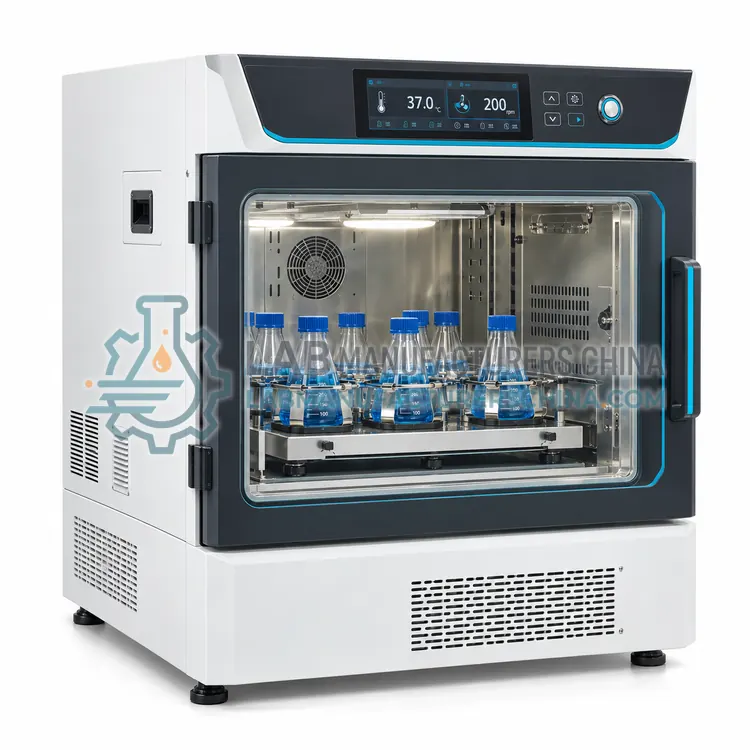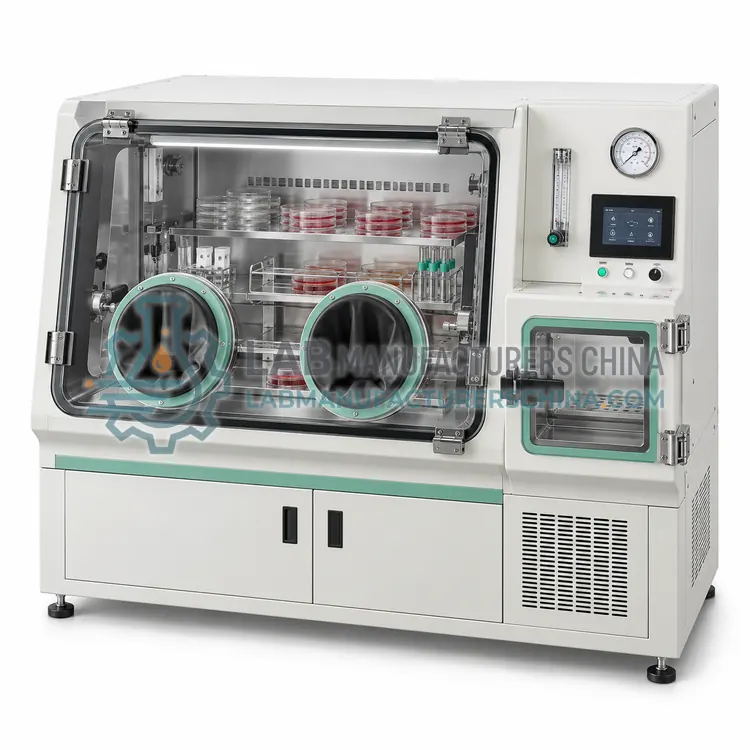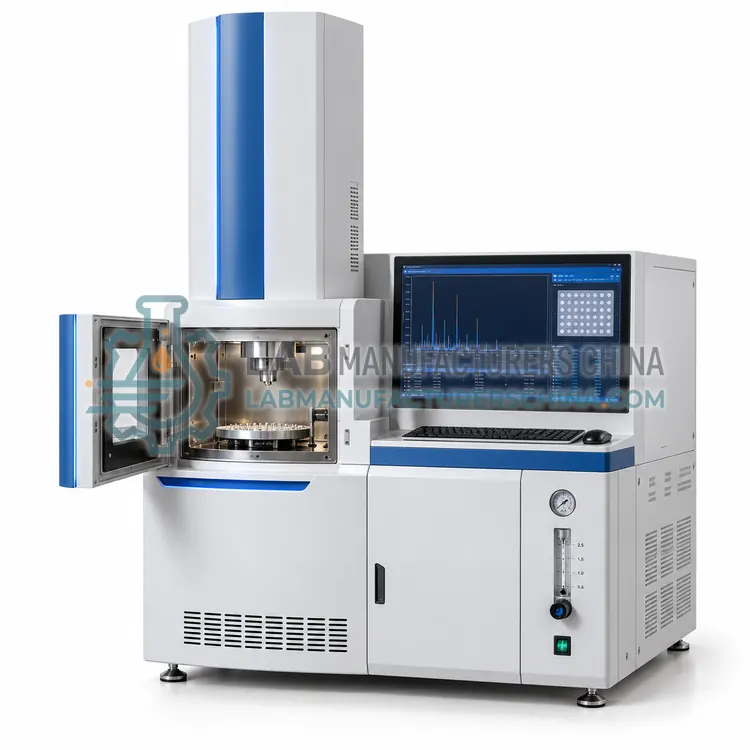
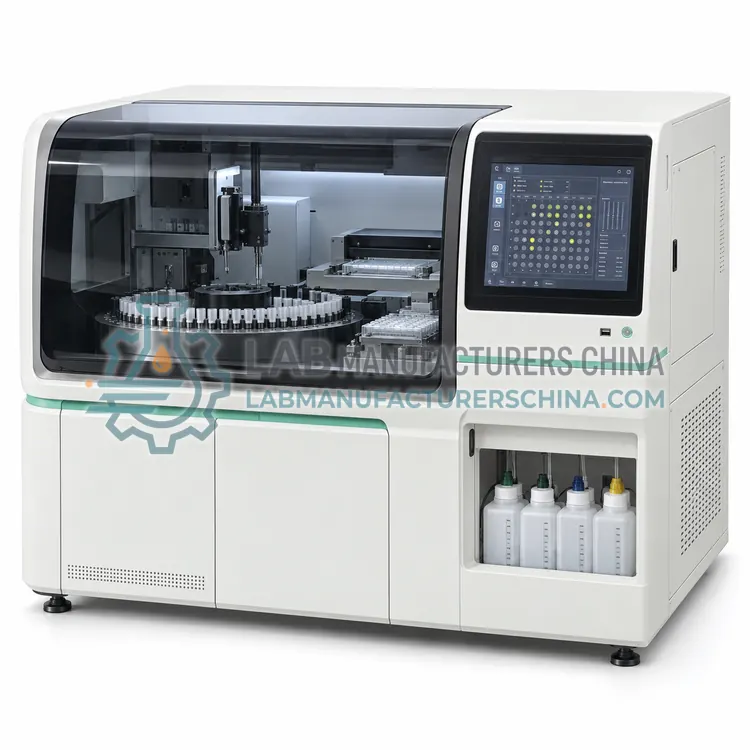
Automated Biochemical Identification System
自动生化微生物鉴定系统
- SKU MIO-0001
- Microbial Identification Systems
- CE-IVD (to be confirmed)
- ISO 13485 manufacturing (to be confirmed)
- IEC 61010-1 compliance (to be confirmed)
Price on request — FOB / CIF quoted per order
Prices depend on configuration, quantity and destination port.
Key specifications
| Identification principle | Miniaturized biochemical substrate panel |
|---|---|
| Throughput | Up to 60–120 cards per hour |
| Time to result | 4–18 h depending on organism |
| Organism coverage | Several hundred taxa in database |
| Reading method | Automated optics, kinetic and endpoint |
| Incubation temperature | 35–37 °C (configurable) |
Request a quote Download brochure · to be provided
By Lab Manufacturers China Technical TeamLast reviewed Standards: CLSI M35, CLSI M45, USP <1113>
What is the Automated Biochemical Identification System?
An automated biochemical identification system inoculates miniaturized cards or wells with an isolate and reads substrate reactions to name the organism. It is a mainstay of routine clinical and food microbiology, often combined with susceptibility testing.
What is the Automated Biochemical Identification System?
An automated biochemical identification system inoculates miniaturized cards or wells with an isolate and reads substrate reactions to name the organism. It is a mainstay of routine clinical and food microbiology, often combined with susceptibility testing.
Overview
An automated biochemical identification system uses a disposable card or panel containing dozens of dried substrates, such as sugars, amino acids, enzyme substrates and chromogenic compounds, together with growth and inhibition controls. A standardized suspension of the pure isolate is inoculated into the panel and incubated in the instrument. Optical readers measure color or turbidity changes at intervals, and software compares the pattern with a stored database of species profiles, reporting a probability and a confidence level. Some systems also run antimicrobial susceptibility panels on the same isolate, so identification and susceptibility results arrive together. Because results depend on inoculum density and pure culture, standard suspension preparation and subculture quality control are essential. Databases are periodically updated as taxonomy changes and new species are described.
How does it work?
Microbial identification systems match an unknown isolate to a reference database by measuring properties that are characteristic of a species. Biochemical systems inoculate miniaturized wells or cards with substrates such as sugars, amino acids and chromogenic compounds, and compare the resulting color or turbidity pattern with stored profiles. MALDI-TOF instruments ionize ribosomal proteins with a laser and align the mass spectrum with reference spectra. Molecular systems amplify conserved genes such as 16S rRNA, 23S rRNA or ITS regions with real-time PCR and compare melting profiles or sequences with databases. Immunological systems detect species-specific antigens with latex particles or labeled antibodies. Each method needs a current database, quality control strains and, for regulated use, documented validation.
What are the key features?
- Disposable cards with dozens of dried biochemical substrates
- Automated optical reading at timed intervals
- Probability-based identification with confidence levels
- Optional integrated antimicrobial susceptibility panels
- Database updated as taxonomy changes
What are the technical specifications?
A typical automated biochemical identification system configuration offers identification principle of Miniaturized biochemical substrate panel, throughput of Up to 60–120 cards per hour, time to result of 4–18 h depending on organism, organism coverage of Several hundred taxa in database, reading method of Automated optics, kinetic and endpoint and incubation temperature of 35–37 °C (configurable). Values are indicative of the product class; the exact figures for each configuration are confirmed on the quotation and the calibration documents supplied with the instrument.
Which applications is it used for?
The Automated Biochemical Identification System is used in clinical microbiology diagnostics, food and beverage microbiological testing, veterinary diagnostics and pharmaceutical environmental monitoring. Across the wider Microbial Identification Systems class, laboratories also deploy it for clinical microbiology diagnostics, food and beverage microbiological testing and pharmaceutical environmental monitoring.
Which standards and certifications apply?
Relevant standards and methods include CLSI M35, CLSI M45, USP <1113>, ISO 7218, ISO 11133 and IEC 61010-1. Certification candidates for this model are CE-IVD, ISO 13485 manufacturing and IEC 61010-1 compliance; each is to be confirmed for the specific configuration before shipment, and certificates are supplied only where they have been issued.
Keep the reference database current, because outdated entries cause misidentification of emerging or renamed species. Run quality control strains on a defined schedule and record results. Follow the manufacturer's calibration for mass spectrometers and check tolerance with a standard. Handle cultures at the appropriate biosafety level, decontaminate instrument surfaces and manage waste. Validate new assays against a reference method before reporting, and define how conflicts between methods are resolved. For regulated laboratories, control software and database updates through change control and confirm audit-trail behaviour. Electrical safety follows IEC 61010-1 and laser instruments IEC 60825-1.
How do I select the right Automated Biochemical Identification System?
Choose an automated biochemical system for routine identification with high organism coverage and, usually, integrated susceptibility testing. In an RFQ specify panel types and organism coverage, throughput, time to result, LIS interface, database update policy and the validation support provided for clinical or pharmaceutical use.
How does it compare with other Microbial Identification Systems variants?
Start with the organisms you identify and the level of discrimination you need. Biochemical panels are economical for routine clinical and food isolates and give species identification with additional susceptibility testing. MALDI-TOF offers fast, low reagent cost per sample but needs a substantial instrument and a well-maintained spectral database. Molecular methods are essential when organisms cannot be cultured, when identification must be rapid or when species-level discrimination of closely related taxa is required. Immunological systems are quick for confirming a suspected species. Consider throughput, turnaround time, database size and update policy, cost per test, training, biosafety level, and whether results must feed a laboratory information system with audit trails.
Full specifications
| Identification principle | Miniaturized biochemical substrate panel |
|---|---|
| Throughput | Up to 60–120 cards per hour |
| Time to result | 4–18 h depending on organism |
| Organism coverage | Several hundred taxa in database |
| Reading method | Automated optics, kinetic and endpoint |
| Incubation temperature | 35–37 °C (configurable) |
| Susceptibility option | MIC panels available |
| Data output | LIS interface, worklist, audit trail |
| Power supply | 100–240 V, 50/60 Hz |
Indicative values for this product class. Final specifications are confirmed on the quotation and in the calibration documents supplied with the instrument.
Applications
- Clinical microbiology diagnostics
- Food and beverage microbiological testing
- Veterinary diagnostics
- Pharmaceutical environmental monitoring
Key features
- Disposable cards with dozens of dried biochemical substrates
- Automated optical reading at timed intervals
- Probability-based identification with confidence levels
- Optional integrated antimicrobial susceptibility panels
- Database updated as taxonomy changes
Frequently asked questions about Automated Biochemical Identification System
Substrate reactions reflect the metabolism of the organism present, so a mixed culture produces a blended pattern that the database cannot resolve reliably. Laboratories therefore subculture to a pure, single-colony isolate and prepare a standardized suspension before inoculation.
Most results are available within about 4 to 18 hours, depending on the organism and whether the system reads endpoints only or uses kinetic readings. Slow-growing or fastidious organisms take longer, and some require extended incubation before a confident result.
Yes, many automated systems offer both identification cards and antimicrobial susceptibility panels and report the two together. This reduces handling steps and turnaround time, but the laboratory must still follow recognized susceptibility standards when interpreting and reporting results.
It identifies the genus and species of bacteria, yeasts or fungi from a pure culture or, with molecular methods, directly from a sample. Laboratories use it in clinical diagnostics, food and water safety testing, pharmaceutical environmental monitoring and bioprocess control.
For many cultivated bacteria and yeasts MALDI-TOF reaches species-level accuracy comparable to or better than biochemical panels, but performance depends on database coverage and on good quality spectra. Poor samples, mixed cultures or species absent from the database give low-confidence or incorrect results.
Molecular identification is preferred when an organism is difficult or slow to culture, when rapid results are needed, or when closely related species must be distinguished. Real-time PCR gives quick targeting of known pathogens, while 16S rRNA sequencing identifies unexpected organisms without prior assumptions.