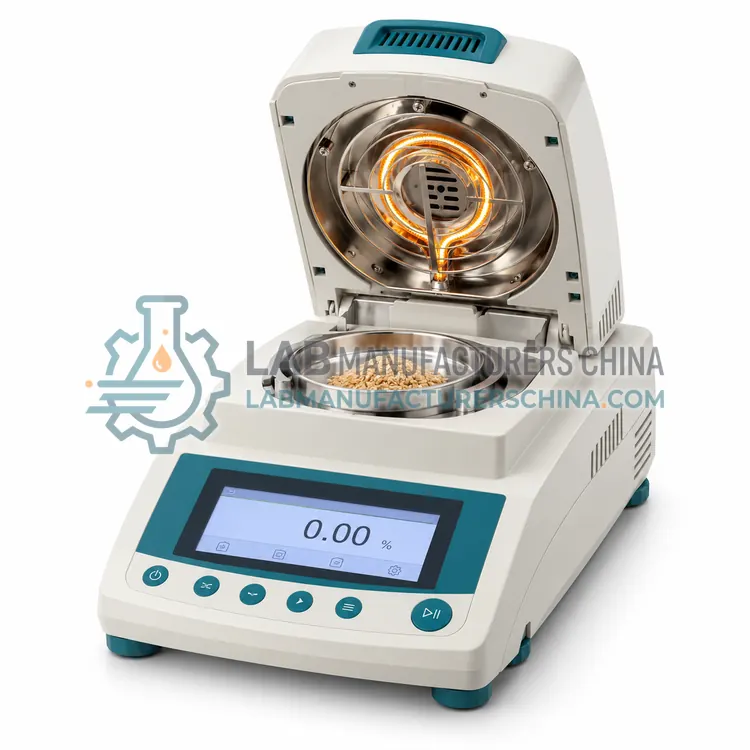
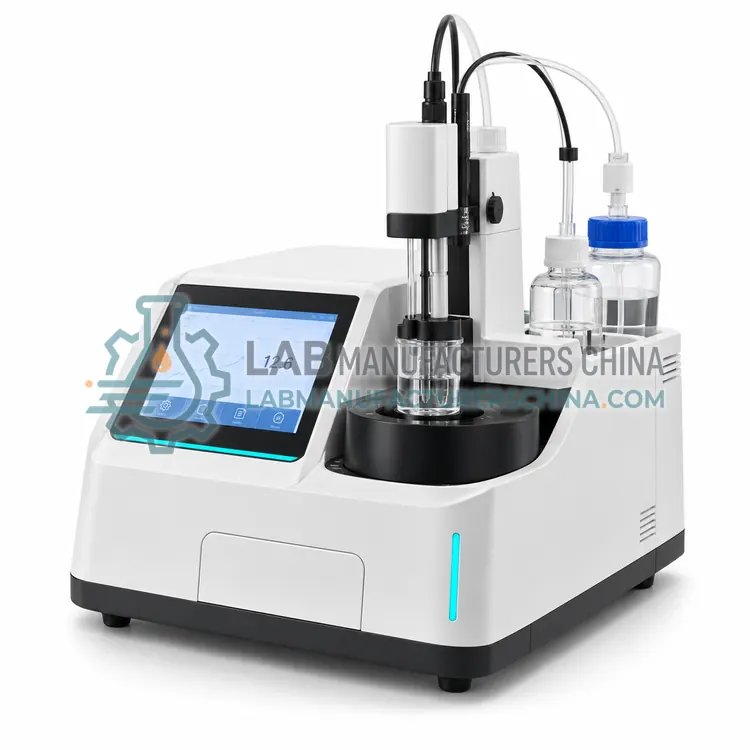
Capacitance Grain Moisture Meter
电容式谷物水分测定仪
- SKU MAN-0004
- Moisture Analyzers
- CE (to be confirmed)
- ISO 9001 manufacturing (to be confirmed)
Price on request — FOB / CIF quoted per order
Prices depend on configuration, quantity and destination port.
Key specifications
| Measurement principle | Capacitance of packed grain |
|---|---|
| Moisture range (cereals) | 8–40 percent |
| Moisture range (oilseeds) | 5–30 percent |
| Resolution | 0.1 percent |
| Repeatability | ±0.2–0.5 percent |
| Measurement time | Under 10 s |
Request a quote Download brochure · to be provided
By Lab Manufacturers China Technical TeamLast reviewed Standards: ISO 712, ISO 6496, AOAC 925.10
What is the Capacitance Grain Moisture Meter?
A capacitance grain moisture meter estimates moisture from the dielectric properties of a packed grain sample in seconds. It is the standard field and intake instrument for wheat, maize, rice, barley and oilseeds.
What is the Capacitance Grain Moisture Meter?
A capacitance grain moisture meter estimates moisture from the dielectric properties of a packed grain sample in seconds. It is the standard field and intake instrument for wheat, maize, rice, barley and oilseeds.
Overview
The sample is poured into a cell of fixed volume and compressed to a set density, and the instrument measures the capacitance of the grain, which rises with water content because water has a much higher dielectric constant than dry matter. Stored calibrations convert the reading into moisture percentage for each crop and variety group. Modern meters are handheld or benchtop, give results in seconds, and include automatic temperature compensation because dielectric properties change with heat. Typical measurement ranges are 8–40 percent for cereals and 5–30 percent for oilseeds, with repeatability around 0.2–0.5 percent. Because calibrations are empirical, accuracy is best within the covered crop and moisture range, and periodic verification against oven drying is good practice.
How does it work?
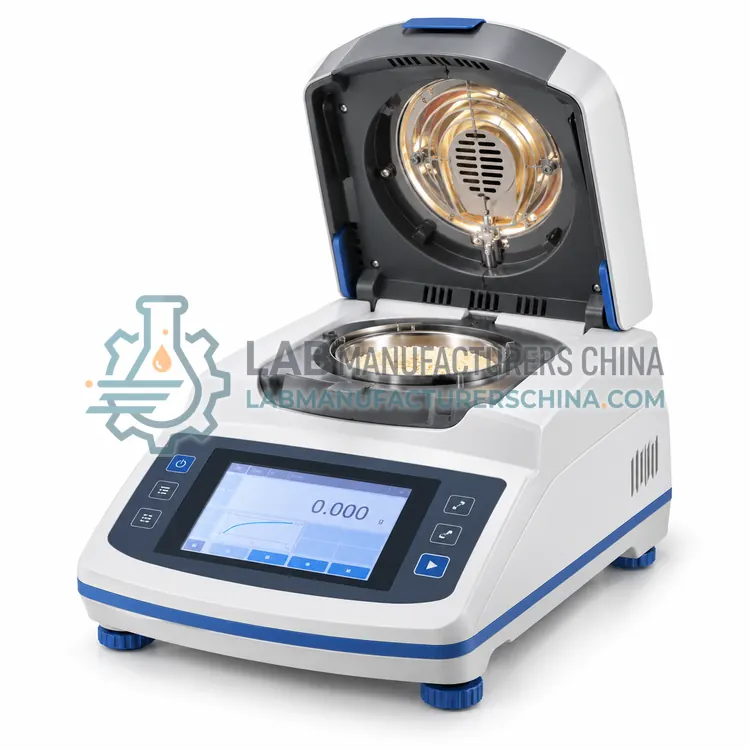
Loss-on-drying instruments weigh a sample, heat it with an infrared or halogen lamp, and track mass until it stabilises; the mass loss is reported as moisture. Halogen lamps reach the drying temperature faster and distribute heat more evenly than infrared. Microwave drying drives water out from within the sample, which suits bulky or dense products. Capacitance meters in grain-moisture devices correlate the dielectric constant of a packed sample with water content using stored calibrations. Karl Fischer titration measures water chemically, by the iodine-sulfur dioxide reaction, and is the reference for low-moisture foods, oils and powders where volatiles would bias loss-on-drying. Vacuum oven drying remains the gravimetric reference method for many commodities.
What are the key features?
- Capacitance measurement in a fixed-volume compressed cell
- Stored crop and variety calibrations
- Automatic temperature compensation
- Results within seconds with 0.1 percent display
- Handheld and benchtop configurations
- Memory for batch averages and record export
What are the technical specifications?
A typical capacitance grain moisture meter configuration offers measurement principle of Capacitance of packed grain, moisture range (cereals) of 8–40 percent, moisture range (oilseeds) of 5–30 percent, resolution of 0.1 percent, repeatability of ±0.2–0.5 percent and measurement time of Under 10 s. Values are indicative of the product class; the exact figures for each configuration are confirmed on the quotation and the calibration documents supplied with the instrument.
Which applications is it used for?
The Capacitance Grain Moisture Meter is used in grain intake grading and price adjustment, safe storage and drying decisions, field checks before harvest and oilseed and pulse moisture screening. Across the wider Moisture Analyzers class, laboratories also deploy it for grain intake moisture and safe storage decisions, nutrition labelling and dry-basis calculations and in-process control of drying and blending.
Which standards and certifications apply?
Relevant standards and methods include ISO 712, ISO 6496, AOAC 925.10, ISO 760, ASTM E203 and ISO/IEC 17025. Certification candidates for this model are CE and ISO 9001 manufacturing; each is to be confirmed for the specific configuration before shipment, and certificates are supplied only where they have been issued.
Moisture results depend on sample handling, so grinding, portion size, spreading and cooling time must follow the method. Loss-on-drying instruments need periodic verification with reference materials or a drying oven comparison, and the balance inside them should be checked with traceable weights. Karl Fischer reagents are moisture-sensitive and need fresh solvent, correct titration parameters and regular drift checks. Capacitance meters must be set to the right crop calibration and corrected for temperature. Keep records of reference-method comparisons and store instruments away from draughts, direct sunlight and heat sources.
How do I select the right Capacitance Grain Moisture Meter?
Choose a capacitance meter for fast intake and field moisture checks on the crops you handle. Confirm that calibrations are supplied for those crops and that the cell volume and packing method match your sampling routine. Check temperature compensation and compare readings with oven drying several times a year.
How does it compare with other Moisture Analyzers variants?
Match the method to the product and to the accuracy you must report. Loss-on-drying analysers are fast and simple and are ideal for routine control of powders, pastes and liquids, but volatile components other than water can cause a positive bias. Halogen models heat faster and suit high sample numbers, while microwave models handle dense or bulky products better. Capacitance meters are convenient for grain at intake but depend on crop-specific calibrations and are affected by temperature. Karl Fischer titration is required for oils, low-moisture powders and any product where the reference method specifies it. Confirm repeatability, sample size and the ability to store and export results.
Full specifications
| Measurement principle | Capacitance of packed grain |
|---|---|
| Moisture range (cereals) | 8–40 percent |
| Moisture range (oilseeds) | 5–30 percent |
| Resolution | 0.1 percent |
| Repeatability | ±0.2–0.5 percent |
| Measurement time | Under 10 s |
| Temperature compensation | Automatic, 0–50 °C |
| Cell volume | Fixed, about 250 mL |
| Calibrations | Preloaded for major crops |
| Power | Battery or mains |
Indicative values for this product class. Final specifications are confirmed on the quotation and in the calibration documents supplied with the instrument.
Applications
- Grain intake grading and price adjustment
- Safe storage and drying decisions
- Field checks before harvest
- Oilseed and pulse moisture screening
Key features
- Capacitance measurement in a fixed-volume compressed cell
- Stored crop and variety calibrations
- Automatic temperature compensation
- Results within seconds with 0.1 percent display
- Handheld and benchtop configurations
- Memory for batch averages and record export
Frequently asked questions about Capacitance Grain Moisture Meter
Within its calibrated crop and moisture range, accuracy is typically about 0.5 percent moisture, with repeatability of 0.2 to 0.5 percent. Readings drift for unlisted crops, very wet grain or extreme temperatures, so oven checks are recommended.
Capacitance depends on how much water and dry matter lie between the electrodes, so packing density changes the signal. Meters use fixed-volume cells and controlled filling or compression to keep density consistent between measurements.
Yes, if the manufacturer supplies calibrations for each crop, and some meters accept user-specific calibrations. Accuracy is always best within the tested crop and moisture range, so new crops should be verified against the oven method.
Loss-on-drying measures any mass lost when the sample is heated, so volatile components such as alcohol or essential oils inflate the result. Karl Fischer titration measures water specifically through a chemical reaction and is preferred for oils and low-moisture products.
Halogen lamps heat rapidly and distribute energy evenly across the sample surface, shortening drying time and improving repeatability. They also allow the temperature to be controlled closely, which matters when a method specifies a drying temperature.
They are accurate for the crop and moisture range covered by their calibration, typically within about 0.5 percent. Accuracy falls for other crops, for very wet or very dry grain and at extreme temperatures, so reference oven drying should be used periodically.
Related models