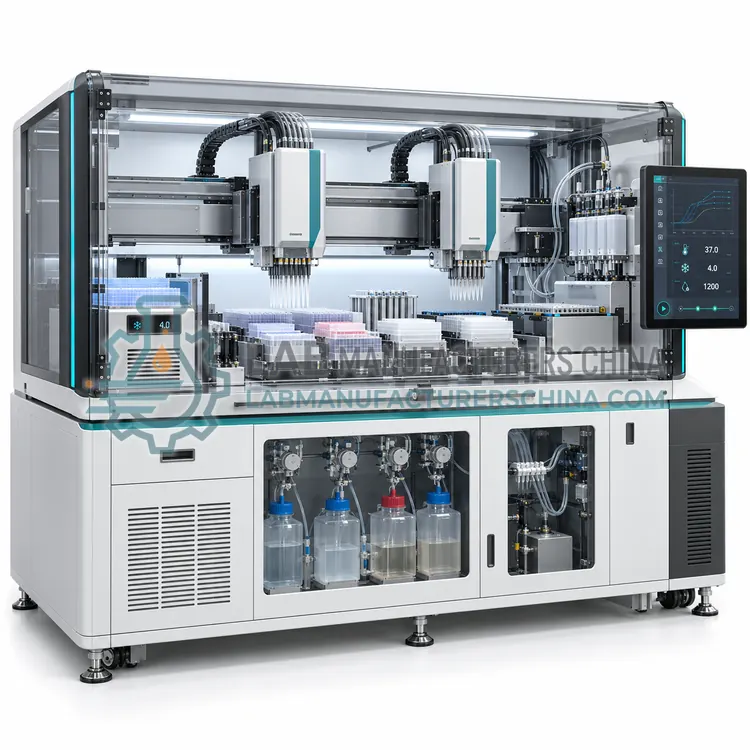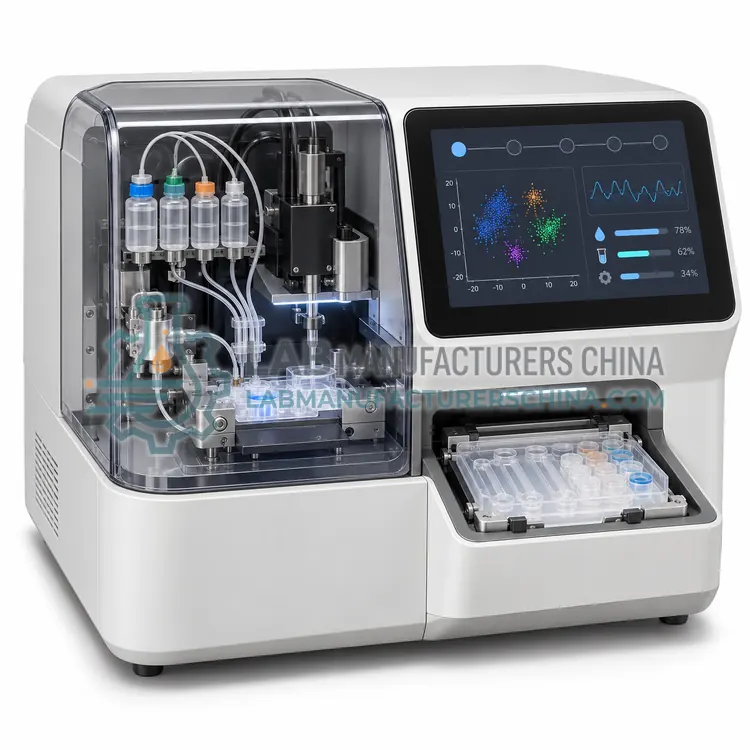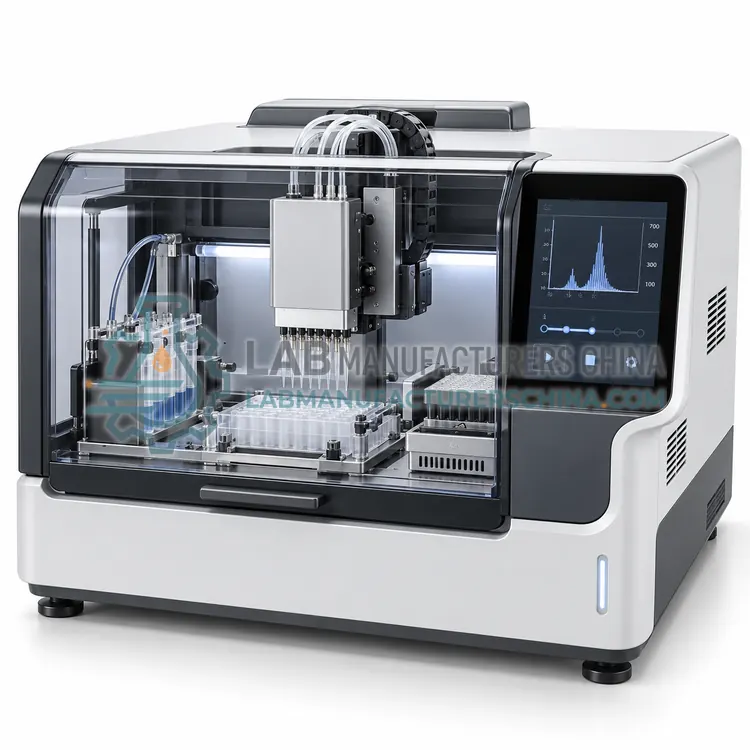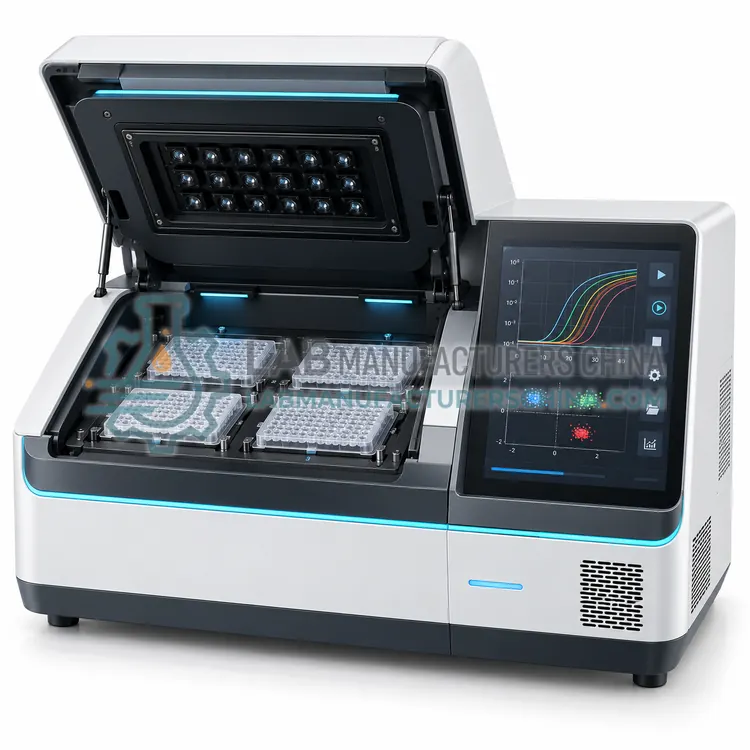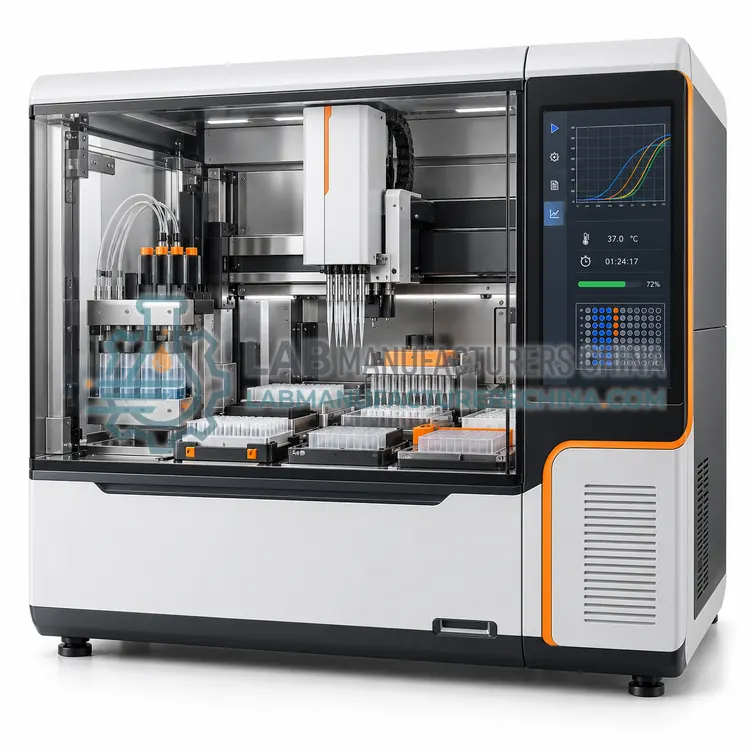
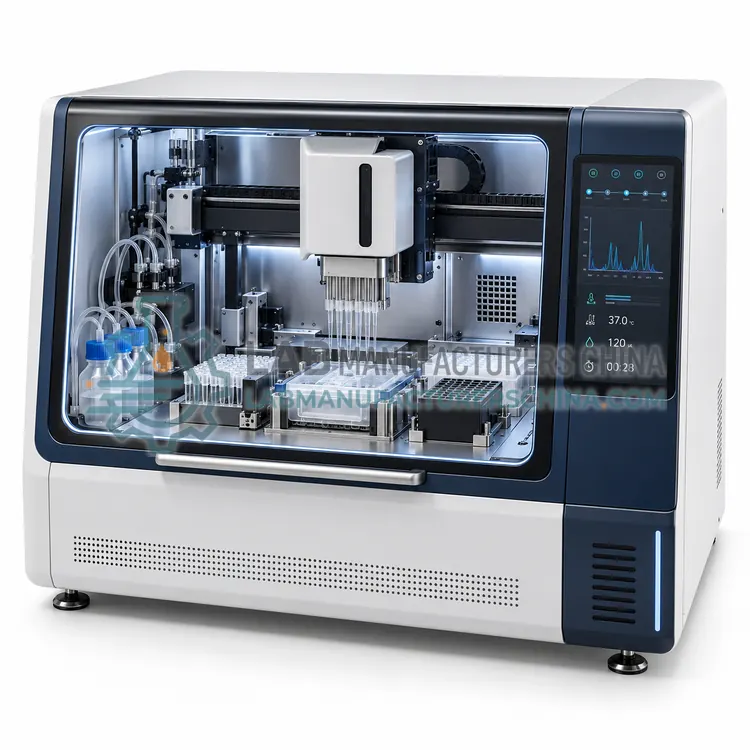
Long-Read Library Preparation System
长读长文库制备系统
- SKU LPS-0005
- Library Preparation Systems
- CE (to be confirmed)
- ISO 9001 manufacturing (to be confirmed)
- IEC 61010-1 safety (to be confirmed)
Price on request — FOB / CIF quoted per order
Prices depend on configuration, quantity and destination port.
Key specifications
| Input DNA | 100 ng–1 µg high molecular weight |
|---|---|
| Input fragment size | over 50 kb recommended |
| Resulting read length | 10 kb–100 kb typical |
| Protocol time | approx. 10–60 min (rapid kit) or 2–4 h (ligation kit) |
| PCR required | No for native workflows |
| Barcoding | Up to 24 samples per run with barcoding kits |
Request a quote Download brochure · to be provided
By Lab Manufacturers China Technical TeamLast reviewed Standards: ISO 20395, ISO 15189, CLSI MM09
What is the Long-Read Library Preparation System?
A long-read library preparation system converts high molecular weight DNA into libraries with minimal fragmentation and PCR, preserving reads of tens to hundreds of kilobases for nanopore or single-molecule sequencing platforms. It is chosen when read length is the critical parameter.
What is the Long-Read Library Preparation System?
A long-read library preparation system converts high molecular weight DNA into libraries with minimal fragmentation and PCR, preserving reads of tens to hundreds of kilobases for nanopore or single-molecule sequencing platforms. It is chosen when read length is the critical parameter.
Overview
Long-read library preparation avoids the mechanical shearing and short-amplicon PCR used by short-read workflows. High molecular weight DNA is cleaned to remove short fragments, then end-repaired and ligated to adapters that carry motor proteins or sequencing primers. Rapid kits combine lysis, cleanup and adapter attachment in about 10–60 minutes with minimal pipetting, whereas ligation kits give higher yield at the cost of more steps. Optional barcoding allows several samples per flow cell. Critical variables are DNA length, purity and the number of pipetting steps, because each transfer breaks long molecules. Nuclei or whole-cell input is used for ultra-long protocols. Quality control uses pulsed-field or capillary electrophoresis to confirm that most fragments exceed 50 kb before library construction begins.
How does it work?
A sequencing library is a pool of DNA fragments flanked by known adapter sequences that the sequencer recognises. Preparation starts with fragmentation by enzymatic digestion, tagmentation or sonication, which produces a defined size distribution. End repair and 3' adenylation make the ends ligatable, and adapters carrying sample indexes are attached by ligation or added during tagmentation. Size selection with magnetic beads or gel-free methods removes fragments outside the target window, and limited-cycle PCR enriches the library and completes the index sequences. Each step is separated by a magnetic bead cleanup that removes enzymes, salts and short fragments. For RNA libraries, reverse transcription and strand-specific second-strand synthesis precede the same workflow. Quality control after preparation measures concentration by fluorometry and fragment size distribution by capillary electrophoresis.
What are the key features?
- Minimal fragmentation preserves reads above 100 kb
- Rapid kits combine cleanup and adapter attachment in under an hour
- Ligation kits offer higher yield for demanding applications
- Optional barcoding enables multiple samples per flow cell
- Ultra-long protocols accept nuclei or whole cells
- Wide-bore tips and gentle mixing limit DNA breakage
What are the technical specifications?
A typical long-read library preparation system configuration offers input DNA of 100 ng–1 µg high molecular weight, input fragment size of over 50 kb recommended, resulting read length of 10 kb–100 kb typical, protocol time of approx. 10–60 min (rapid kit) or 2–4 h (ligation kit), PCR required of No for native workflows and barcoding of Up to 24 samples per run with barcoding kits. Values are indicative of the product class; the exact figures for each configuration are confirmed on the quotation and the calibration documents supplied with the instrument.
Which applications is it used for?
The Long-Read Library Preparation System is used in whole-genome assembly of complex genomes, structural variant detection from human samples, full-length transcript sequencing and metagenome and environmental sample sequencing. Across the wider Library Preparation Systems class, laboratories also deploy it for whole-genome and exome library construction, RNA sequencing library preparation and single-cell and low-input library workflows.
Which standards and certifications apply?
Relevant standards and methods include ISO 20395, ISO 15189, CLSI MM09, IEC 61010-1 and ISO 17025. Certification candidates for this model are CE, ISO 9001 manufacturing and IEC 61010-1 safety; each is to be confirmed for the specific configuration before shipment, and certificates are supplied only where they have been issued.
Set up library preparation in a pre-PCR room separated from post-PCR and sequencing areas, and use dedicated pipettes, racks and reagents that never leave the room. Contamination from previous libraries shows up as unexpected index combinations, so include a no-template control in every batch and monitor index hopping between runs. Reagents are sensitive to freeze-thaw cycles, so aliquot enzymes and record lot numbers. Validate each new kit or automation script against a reference sample, checking yield, insert size and library complexity before routine use. Because library yield determines sequencing data quality, keep documentation that links each library to its sample, index, kit lot and operator so results can be traced during audits.
How do I select the right Long-Read Library Preparation System?
Select a long-read library preparation system when the sequencing platform requires native DNA and read length is decisive. Specify input amount and fragment size, kit chemistry, barcoding capacity, whether automation is available, and the quality control method used to confirm high molecular weight DNA before starting.
How does it compare with other Library Preparation Systems variants?
Begin with the sequencing platform and the input material. Short-read instruments need libraries with adapters matched to their flow cell chemistry, while long-read instruments need high molecular weight input and minimal PCR. Estimate the input amount per sample, because low-input and single-cell workflows require specialised chemistries. Then choose between manual kits for occasional use, magnetic bead automation for 8–96 samples per batch with walk-away operation, and full liquid-handling platforms for hundreds of samples with integrated normalisation and pooling. Check fragmentation method, index type and multiplexing level, size selection method, required equipment such as magnet racks or thermo mixers, and whether the supplier provides validated protocols for your sample type. Manual library preparation is a common source of batch effects, so automation usually pays back where sample numbers are high.
Full specifications
| Input DNA | 100 ng–1 µg high molecular weight |
|---|---|
| Input fragment size | over 50 kb recommended |
| Resulting read length | 10 kb–100 kb typical |
| Protocol time | approx. 10–60 min (rapid kit) or 2–4 h (ligation kit) |
| PCR required | No for native workflows |
| Barcoding | Up to 24 samples per run with barcoding kits |
| Sample type | Cells, nuclei, blood, tissue, plant material |
| Cleanup method | Magnetic bead or silica column, wide-bore handling |
| Quality control | Pulsed-field or capillary electrophoresis sizing |
| Dimensions (W x D x H) | approx. 350 x 400 x 300 mm (automated variant) |
Indicative values for this product class. Final specifications are confirmed on the quotation and in the calibration documents supplied with the instrument.
Applications
- Whole-genome assembly of complex genomes
- Structural variant detection from human samples
- Full-length transcript sequencing
- Metagenome and environmental sample sequencing
Key features
- Minimal fragmentation preserves reads above 100 kb
- Rapid kits combine cleanup and adapter attachment in under an hour
- Ligation kits offer higher yield for demanding applications
- Optional barcoding enables multiple samples per flow cell
- Ultra-long protocols accept nuclei or whole cells
- Wide-bore tips and gentle mixing limit DNA breakage
Frequently asked questions about Long-Read Library Preparation System
Most protocols recommend fragments above 50 kb, and ultra-long workflows aim for 100 kb or more. Fragment length in the library cannot exceed the input, so extraction and handling must avoid shearing through vortexing, narrow tips or repeated freeze-thaw.
Yes. Native workflows attach adapters directly to the DNA ends and skip amplification, which preserves base modifications and avoids GC bias. PCR-based kits are used when input is very low or the DNA is heavily damaged.
Run pulsed-field gel electrophoresis or a capillary system with a long-read kit and check that the main band is above 50 kb with little low molecular weight smearing. Fluorometric quantification follows, since absorbance overestimates concentration in viscous high molecular weight preparations.
It converts nucleic acid into sequencer-ready fragments by fragmenting the DNA, repairing and adenylating ends, ligating indexed adapters, selecting a fragment size range and amplifying briefly. Each step is separated by a bead cleanup that removes enzymes and short fragments.
Standard libraries use 100 ng to 1 µg, tagmentation workflows accept 10–50 ng, and dedicated low-input or single-cell kits work from 1–10 ng or even picogram quantities. Lower input reduces library complexity and increases duplicate rates and PCR bias.
Insert size determines which reads map efficiently and how much of each fragment is sequenced. Selection removes adapter dimers and very short or very long fragments, improving alignment rates, reducing wasted reads and keeping library size distributions consistent between batches.
Related models