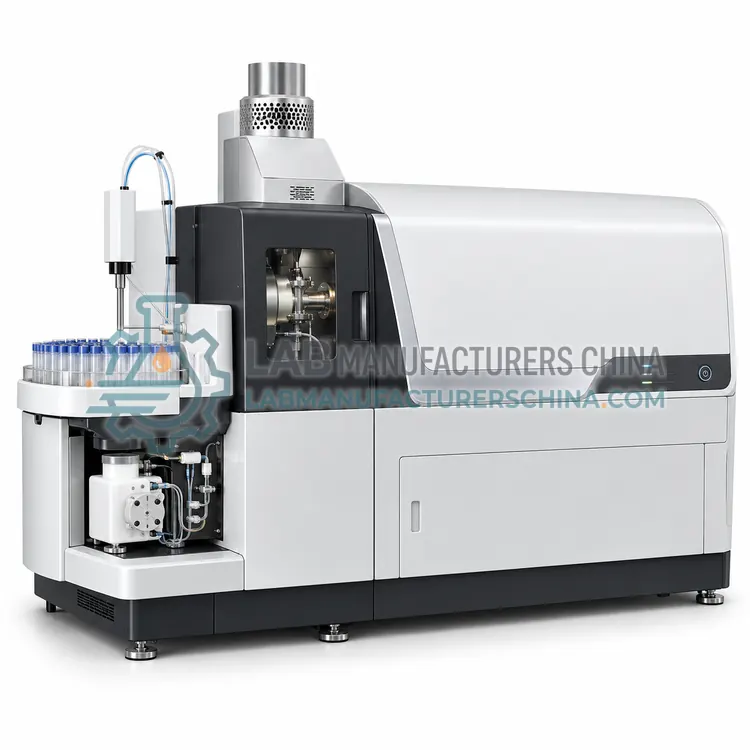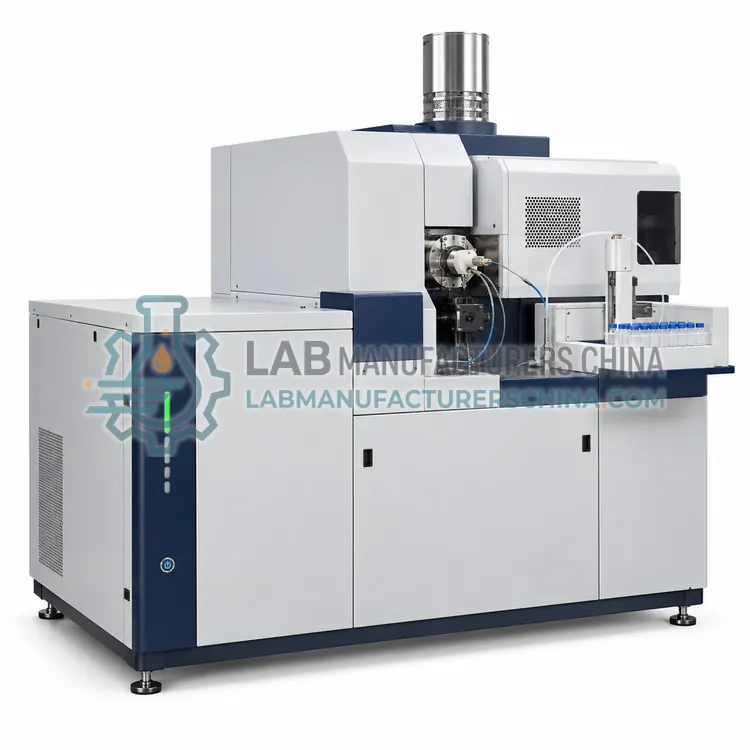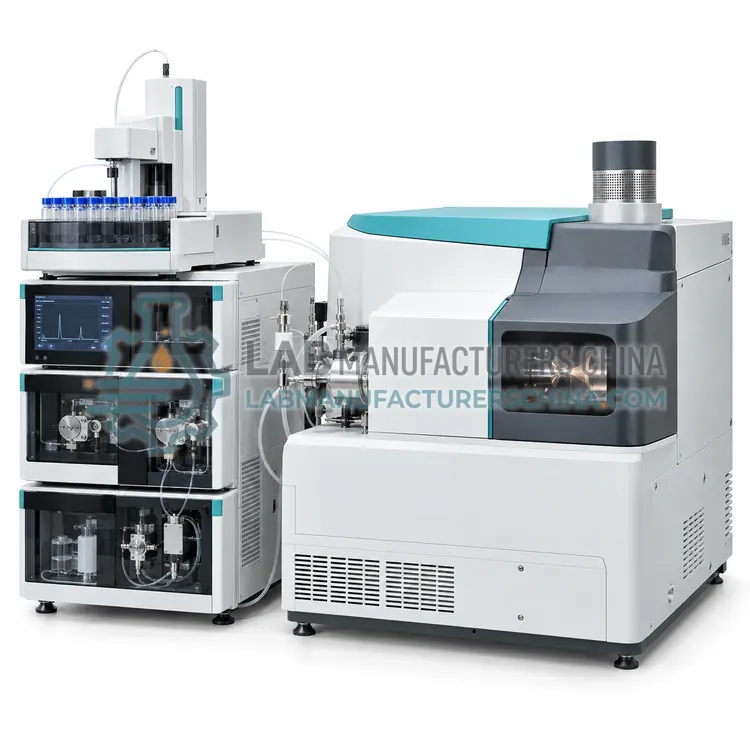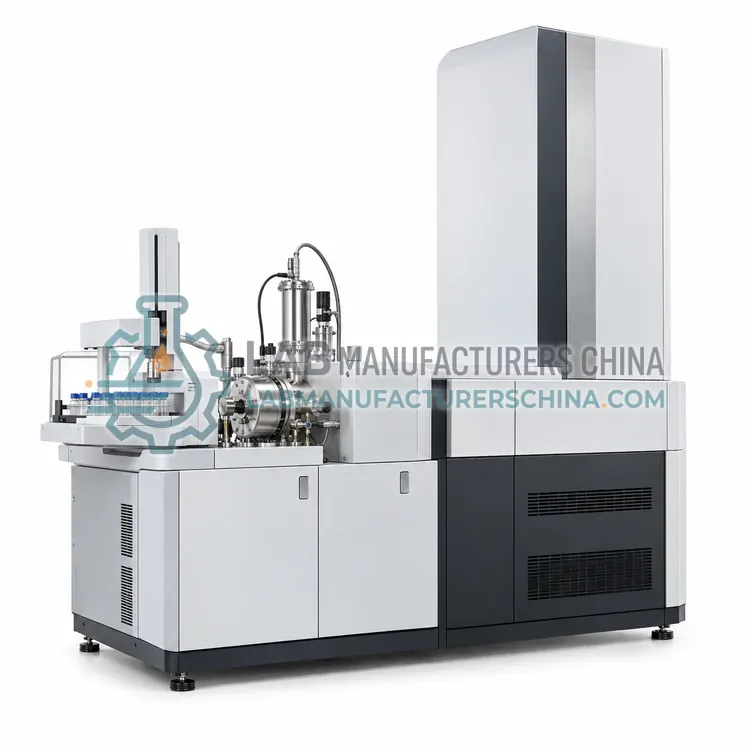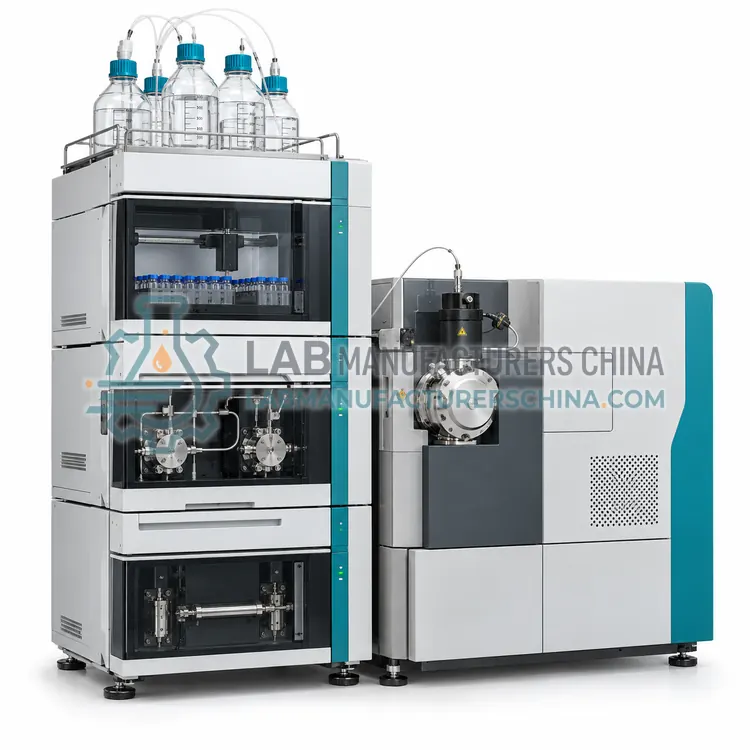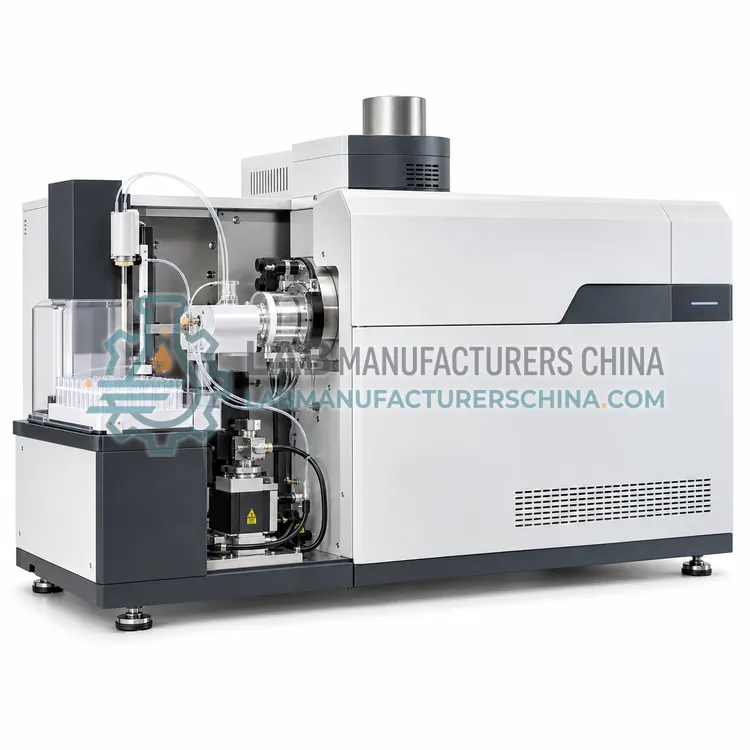
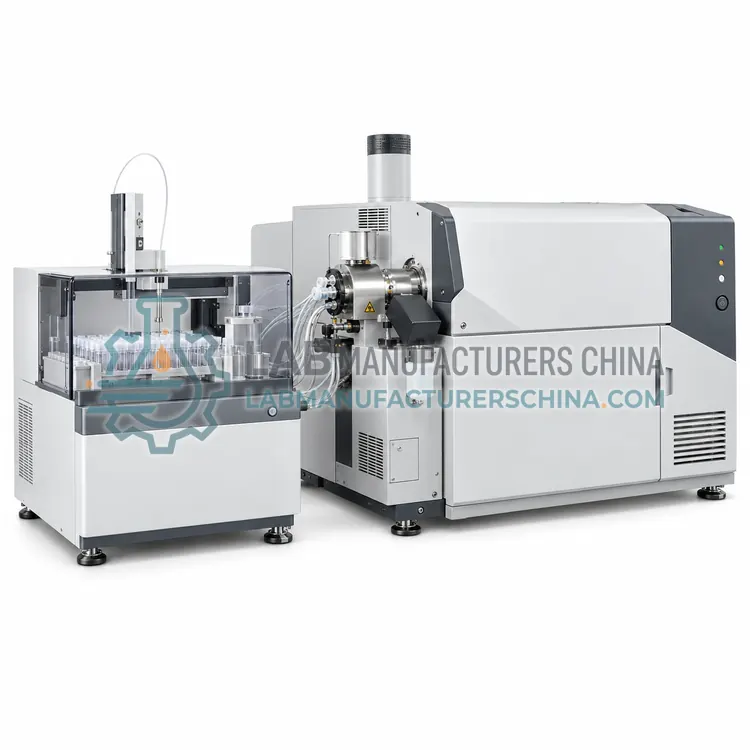
ICP-TOF-MS System
电感耦合等离子体飞行时间质谱仪(ICP-TOF-MS)
- SKU IMS-0004
- ICP-MS
- CE (to be confirmed)
- ISO 9001 manufacturing (to be confirmed)
- IEC 61010-1 safety (to be confirmed)
Price on request — FOB / CIF quoted per order
Prices depend on configuration, quantity and destination port.
Key specifications
| Mass range | m/z 14–275 (simultaneous) |
|---|---|
| Mass resolution | ~1000–6000 FWHM |
| Acquisition rate | ~20–30 kHz extraction |
| Sensitivity (In 115) | ≥ 1×10^7 cps/ppm |
| Detection limit (typical elements) | 0.1–10 ppt |
| Dynamic range | 5–6 orders of magnitude |
Request a quote Download brochure · to be provided
By Lab Manufacturers China Technical TeamLast reviewed Standards: USP <233> Elemental Impurities Procedures, ICH Q3D Elemental Impurities, EPA Method 200.8
What is the ICP-TOF-MS System?
An ICP-TOF-MS records the complete elemental mass spectrum simultaneously from each plasma pulse, without scanning. It suits fast transient signals from single nanoparticles, laser ablation imaging, chromatography and other applications that need many isotopes measured together within milliseconds.
What is the ICP-TOF-MS System?
An ICP-TOF-MS records the complete elemental mass spectrum simultaneously from each plasma pulse, without scanning. It suits fast transient signals from single nanoparticles, laser ablation imaging, chromatography and other applications that need many isotopes measured together within milliseconds.
Overview
An ICP-TOF-MS extracts ion packets from the plasma in pulses, typically 20 to 30 kHz, and accelerates them orthogonally into a flight tube. Ions of different mass arrive at the detector at different times, so all isotopes in the packet are recorded together. There is no quadrupole scanning, so temporal skew between elements is eliminated, and rapid events such as a single nanoparticle of 20 to 30 nm or a laser ablation shot of 100 to 500 ms can be characterized for dozens of elements at once. Mass resolution is about 1000 to 6000. A notch filter or quadrupole pre-filter often removes Ar+ and major matrix ions to protect the detector. Compared with quadrupole ICP-MS, detection limits for individual elements are somewhat higher, and dynamic range is about five to six orders, but data sets are comprehensive.
How does it work?
In ICP-MS, a liquid sample is nebulized into a fine aerosol, passes through a spray chamber, and is carried by argon into a plasma torch. A radio-frequency coil at 27 or 40 MHz sustains a plasma at about 6000 to 10000 K, which desolvates, atomizes and ionizes the analytes, mostly as singly charged ions. Ions are extracted through sampler and skimmer cones into a high-vacuum region, focused by ion lenses, and separated by a mass analyzer, most commonly a quadrupole. A collision or reaction cell removes polyatomic interferences such as 40Ar16O on 56Fe, using helium kinetic energy discrimination or reactive gases. An electron multiplier in pulse and analog modes counts ions across up to nine orders of magnitude.
What are the key features?
- Simultaneous full-mass-range acquisition from each plasma pulse with no scanning skew
- Acquisition rates of 20 to 30 kHz supporting sub-millisecond transient events
- Notch filter or quadrupole pre-filter removing Ar+ and dominant matrix ions before detection
- Single-particle mode quantifying many elements per nanoparticle in one event
- Coupling with laser ablation for multi-element tissue and mineral imaging
- Retrospective data mining since all isotopes are stored for every acquisition
What are the technical specifications?
A typical icp-tof-ms system configuration offers mass range of m/z 14–275 (simultaneous), mass resolution of ~1000–6000 FWHM, acquisition rate of ~20–30 kHz extraction, sensitivity (In 115) of ≥ 1×10^7 cps/ppm, detection limit (typical elements) of 0.1–10 ppt and dynamic range of 5–6 orders of magnitude. Values are indicative of the product class; the exact figures for each configuration are confirmed on the quotation and the calibration documents supplied with the instrument.
Which applications is it used for?
The ICP-TOF-MS System is used in single-particle analysis of nanomaterials, laser ablation imaging of tissue and minerals, fast chromatography and flow injection transients, isotope tracing and multi-element fingerprinting and environmental particle and colloid characterization. Across the wider ICP-MS class, laboratories also deploy it for heavy metals in drinking water and wastewater, elemental impurities in pharmaceuticals and toxic elements in food and beverages.
Which standards and certifications apply?
Relevant standards and methods include USP <233> Elemental Impurities Procedures, ICH Q3D Elemental Impurities, EPA Method 200.8, EPA Method 6020B, ISO 17294-2, ASTM D5673, EN 15763, GB 5009.268, ISO/IEC 17025 and IEC 61010-1. Certification candidates for this model are CE, ISO 9001 manufacturing and IEC 61010-1 safety; each is to be confirmed for the specific configuration before shipment, and certificates are supplied only where they have been issued.
ICP-MS requires high-purity argon, typically 99.996 percent or better, with consumption around 15 to 20 L per minute, plus cooling water or a recirculating chiller, dedicated exhaust ventilation and stable power. Use trace-metal-grade acids, low-blank labware such as PFA or FEP, and ultrapure water at 18.2 MΩ·cm. Tune daily for sensitivity, oxide ratio (CeO/Ce below 2 percent) and doubly charged ratio (Ce++/Ce below 3 percent). Clean or replace cones, torch and nebulizer according to matrix load, and check the peristaltic pump tubing regularly. Use internal standards to correct drift. For pharmaceutical and regulated work, require software with audit trails and follow USP <233> and ICH Q3D method validation.
How do I select the right ICP-TOF-MS System?
Select an ICP-TOF-MS when signals last under a few milliseconds or when many elements must be measured from the same event, as in single-particle or imaging work. For bulk solutions, a quadrupole system offers lower detection limits. In an RFQ, specify acquisition rate, resolution, notch filter options and laser ablation compatibility.
How does it compare with other ICP-MS variants?
Choose the ICP-MS class by interference severity, detection limit and budget. A single quadrupole with a collision cell handles most water, food and clinical work at low cost. Triple quadrupole ICP-MS/MS adds mass-shift reaction chemistry for difficult interferences such as sulfur, phosphorus, arsenic in chloride and rare earth oxides. Sector-field instruments offer high resolution and the lowest background for semiconductor and geochemical work, and TOF systems capture the full mass spectrum for fast transient signals. Check matrix tolerance, for example total dissolved solids up to 0.2 percent or aerosol dilution options for higher levels, argon consumption, sample introduction kits, autosampler and software compliance features. Verify the detection limits and background equivalent concentrations in your own matrix rather than relying on deionized water values.
Full specifications
| Mass range | m/z 14–275 (simultaneous) |
|---|---|
| Mass resolution | ~1000–6000 FWHM |
| Acquisition rate | ~20–30 kHz extraction |
| Sensitivity (In 115) | ≥ 1×10^7 cps/ppm |
| Detection limit (typical elements) | 0.1–10 ppt |
| Dynamic range | 5–6 orders of magnitude |
| Minimum detectable nanoparticle (Au) | ~10–15 nm |
| Notch filter range | Selectable m/z windows |
| Laser ablation coupling | Supported (low-dispersion cell) |
| Argon consumption | ~15–18 L/min |
Indicative values for this product class. Final specifications are confirmed on the quotation and in the calibration documents supplied with the instrument.
Applications
- Single-particle analysis of nanomaterials
- Laser ablation imaging of tissue and minerals
- Fast chromatography and flow injection transients
- Isotope tracing and multi-element fingerprinting
- Environmental particle and colloid characterization
Key features
- Simultaneous full-mass-range acquisition from each plasma pulse with no scanning skew
- Acquisition rates of 20 to 30 kHz supporting sub-millisecond transient events
- Notch filter or quadrupole pre-filter removing Ar+ and dominant matrix ions before detection
- Single-particle mode quantifying many elements per nanoparticle in one event
- Coupling with laser ablation for multi-element tissue and mineral imaging
- Retrospective data mining since all isotopes are stored for every acquisition
Frequently asked questions about ICP-TOF-MS System
A nanoparticle produces an ion burst lasting only 300 to 500 microseconds. A scanning quadrupole can miss most elements in that burst, while a TOF records all isotopes from each pulse, giving composition of individual particles and enabling analysis of multi-element or core-shell particles.
For bulk solutions, detection limits are typically somewhat higher because only a fraction of pulses are converted to counts and dynamic range is limited. For transient events, however, simultaneous measurement often gives better overall information per unit of sample consumed.
Many ICP-TOF-MS systems include a collision or reaction cell with helium or hydrogen to reduce argon-based interferences, though mass resolution of 1000 to 6000 cannot resolve most polyatomic overlaps. Cell options vary by model and should be checked in the specifications.
ICP-MS typically reaches low parts-per-trillion (ng/L) detection limits for most elements in clean aqueous solutions, and sub-ppt for some heavy elements. Real-world limits are higher because of sample dilution, blank contamination and matrix effects, so they must be established by method validation.
ICP-OES measures light emitted by excited atoms and ions, reaching ppb detection limits over a wide linear range and high matrix tolerance. ICP-MS measures ions by mass, reaching ppt limits, and provides isotope information, but it tolerates fewer dissolved solids and costs more to operate.
In helium kinetic energy discrimination mode, larger polyatomic ions collide more often with helium and lose more energy than analyte ions, so a bias voltage blocks them. Reactive gases such as oxygen or ammonia can instead convert the analyte or the interference to a different mass.
Related models