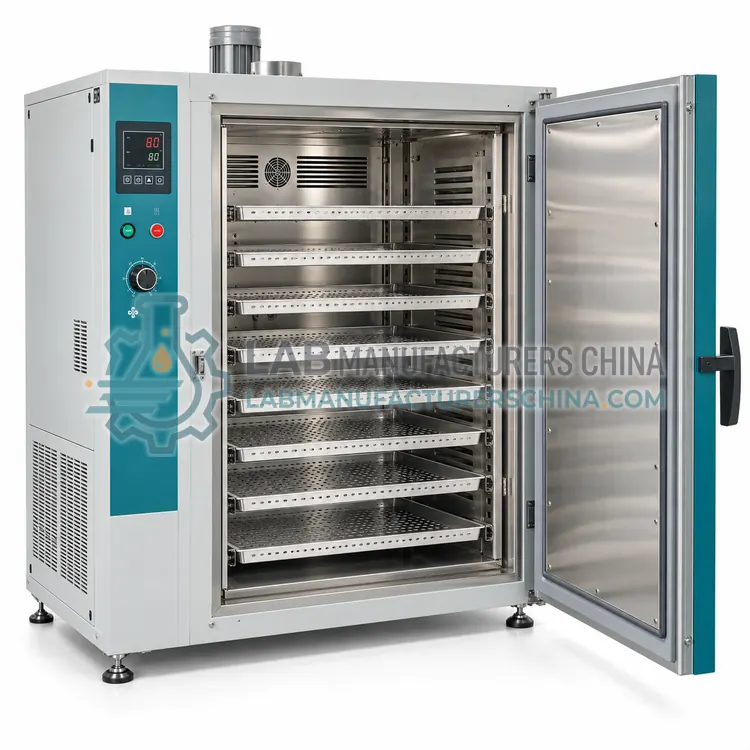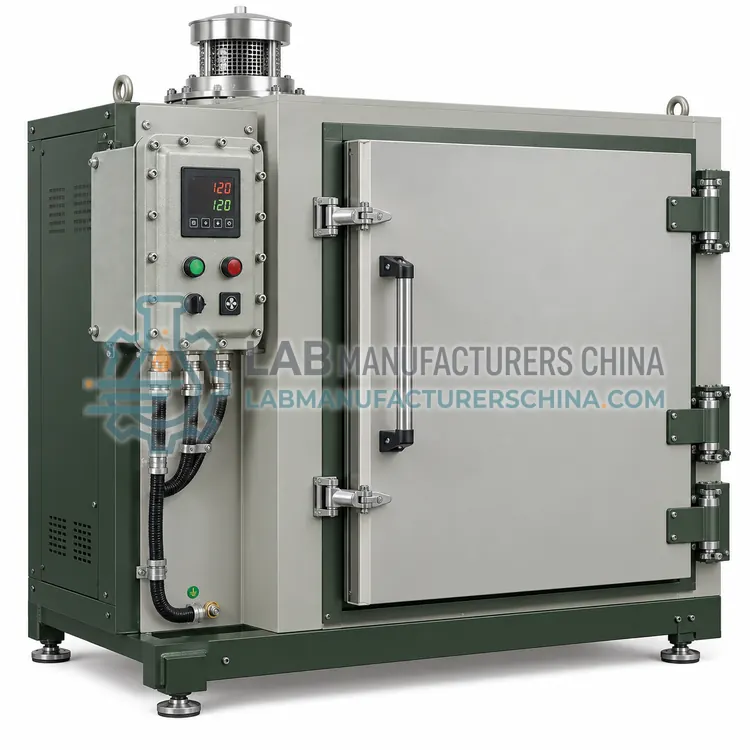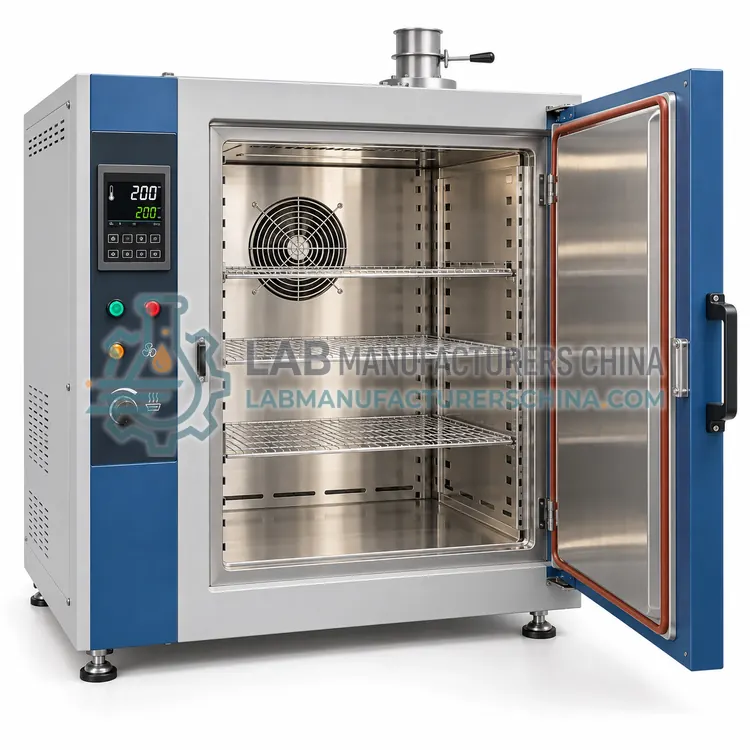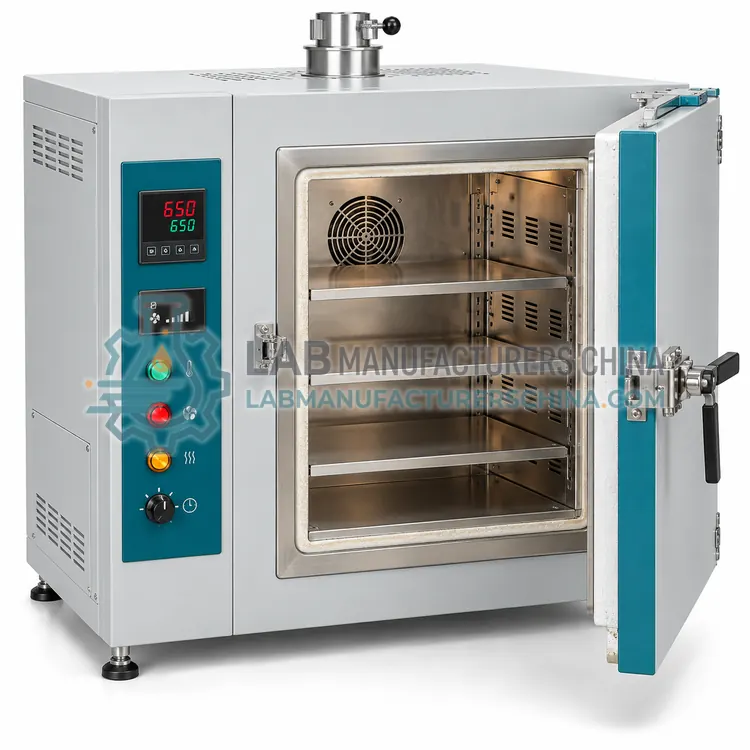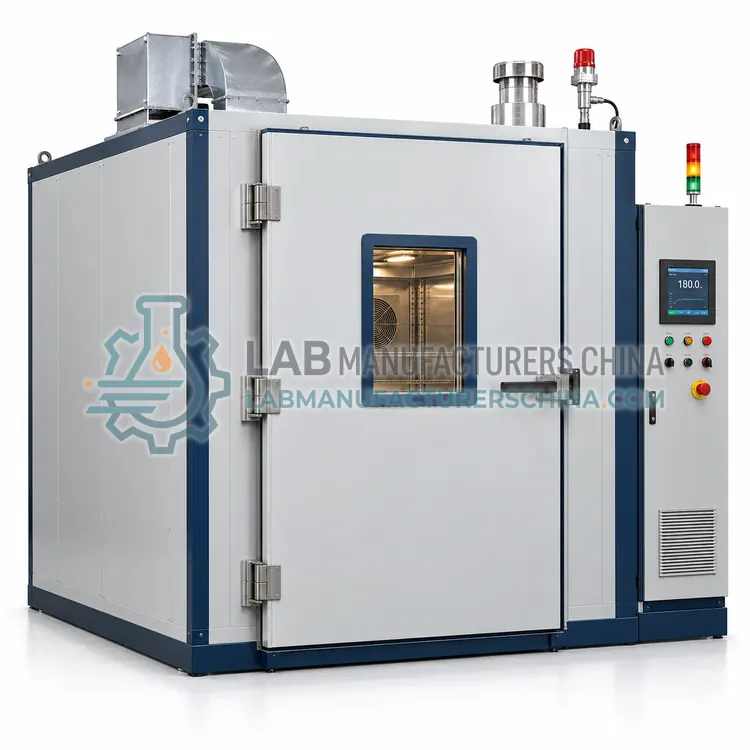
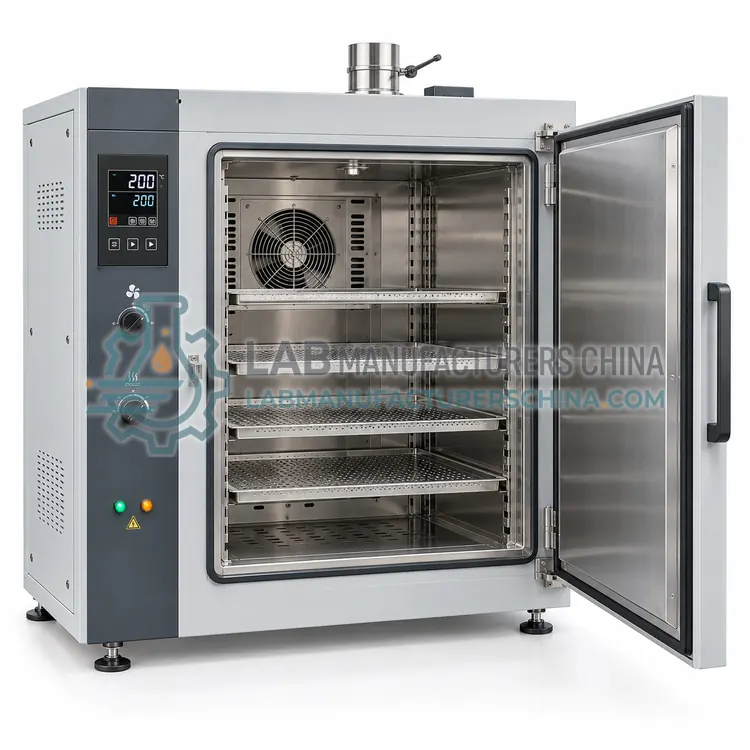
Industrial Forced Convection Oven
工业强制对流烘箱
- SKU ILO-0001
- Industrial Laboratory Ovens
- CE (to be confirmed)
- ISO 9001 manufacturing (to be confirmed)
- RoHS (to be confirmed)
Price on request — FOB / CIF quoted per order
Prices depend on configuration, quantity and destination port.
Key specifications
| Chamber volume | 300–1500 L |
|---|---|
| Temperature range | RT+10 to 300 C |
| Temperature uniformity | ±2–5 C |
| Air circulation | Ducted forced convection |
| Number of shelves | 6–15 |
| Heating power | 6–30 kW |
Request a quote Download brochure · to be provided
By Lab Manufacturers China Technical TeamLast reviewed Standards: IEC 61010-1, IEC 61010-2-010, DIN 12880
What is the Industrial Forced Convection Oven?
An industrial forced convection oven is a heavy-duty fan-circulated chamber of several hundred liters, built for continuous drying, curing and preheating. It is chosen for production support where throughput and durability matter most.
What is the Industrial Forced Convection Oven?
An industrial forced convection oven is a heavy-duty fan-circulated chamber of several hundred liters, built for continuous drying, curing and preheating. It is chosen for production support where throughput and durability matter most.
Overview
This oven scales forced convection to heavy duty, with volumes from about 300 to 1500 liters, thick insulation and high-capacity element banks controlled in one or more zones. Large fans and ducted air paths keep gradients within a few degrees across full loads. Structural frames, heavy doors and multiple shelves handle repeated loading of dense parts. Temperature reaches 300 C or, in upgraded builds, 500 C, and heating power runs from 6 to 30 kW on three-phase supply. Controls are PID-based with timer, alarms and optional data logging. Extraction ports and make-up air inlets remove moisture and fumes. It suits metalworking, automotive, electronics and general manufacturing laboratories that dry or cure parts in production quantities.
How does it work?
Industrial laboratory ovens use the same convection principles as smaller units but are engineered for continuous heavy duty. Large centrifugal or axial fans circulate air through ducts to keep temperature even across big loads, and heating is supplied by high-capacity element banks, often controlled in zones with separate sensors. Structural frames, reinforced doors and trolley or conveyor access handle weight and repeated loading. Insulation is thicker to limit heat loss and skin temperature, and exterior panels may be water-cooled or air-cooled. Controllers range from simple PID units to programmable systems with data logging and alarm outputs. Extraction and make-up air arrangements remove moisture, solvent vapour or combustion products, which is often the limiting factor in selecting a model.
What are the key features?
- Heavy-duty chamber of 300 to 1500 liters
- Large fan with ducted air distribution
- Multi-zone element control with separate sensors
- Reinforced frame, heavy door and multiple shelves
- Extraction ports and make-up air inlet
- PID control with timer, alarms and optional logging
What are the technical specifications?
A typical industrial forced convection oven configuration offers chamber volume of 300–1500 L, temperature range of RT+10 to 300 C, temperature uniformity of ±2–5 C, air circulation of Ducted forced convection, number of shelves of 6–15 and heating power of 6–30 kW. Values are indicative of the product class; the exact figures for each configuration are confirmed on the quotation and the calibration documents supplied with the instrument.
Which applications is it used for?
The Industrial Forced Convection Oven is used in production part drying, coating and plating cure, mold and tool preheating, bulk powder drying and component stress relief. Across the wider Industrial Laboratory Ovens class, laboratories also deploy it for bulk powder and component drying, preheating of molds and tools and industrial batch curing.
Which standards and certifications apply?
Relevant standards and methods include IEC 61010-1, IEC 61010-2-010, DIN 12880, IEC 60519-1, ISO 9001 and GB/T 30435. Certification candidates for this model are CE, ISO 9001 manufacturing and RoHS; each is to be confirmed for the specific configuration before shipment, and certificates are supplied only where they have been issued.
Industrial ovens usually need dedicated floor space, a prepared foundation and utility connections for power, extraction and sometimes compressed air or cooling water. Verify floor loading and door or trolley access before delivery. Establish a maintenance schedule covering fans, belts, elements, seals, sensors and safety interlocks, since a failure mid-batch can spoil a large load. Calibrate temperature and map uniformity after installation, after major service and at defined intervals. Provide operator training for loading limits, solvent restrictions and emergency shutdown, and keep validation, calibration and service records for the life of the unit.
How do I select the right Industrial Forced Convection Oven?
Select the industrial forced convection oven for routine bulk drying and curing with moderate temperature needs. Walk-in or explosion-proof builds are chosen for large loads or volatiles. In the RFQ, specify volume, load mass, temperature, uniformity, extraction, power supply and control features.
How does it compare with other Industrial Laboratory Ovens variants?
Start with the load: mass, dimensions and whether items arrive on trays, racks or trolleys. This largely determines volume, access and floor loading. Then set the process temperature and atmosphere, and decide whether the oven is batch, conveyor or walk-in. Check the available floor space, power supply, since three and higher power ratings need three-phase, and ventilation, because extraction capacity often limits how much solvent or moisture the oven can handle. Specify uniformity at the working setpoint, controller and records, safety interlocks and corrosion protection. Finally confirm service access, spare parts and calibration support, which matter more on heavy-duty units.
Full specifications
| Chamber volume | 300–1500 L |
|---|---|
| Temperature range | RT+10 to 300 C |
| Temperature uniformity | ±2–5 C |
| Air circulation | Ducted forced convection |
| Number of shelves | 6–15 |
| Heating power | 6–30 kW |
| Heat-up time to 150 C | 20–40 min |
| Extraction | Adjustable, ducted |
| Interior material | 304 stainless steel or aluminized steel |
| Power supply | 380 V, 3-phase, 50/60 Hz |
Indicative values for this product class. Final specifications are confirmed on the quotation and in the calibration documents supplied with the instrument.
Applications
- Production part drying
- Coating and plating cure
- Mold and tool preheating
- Bulk powder drying
- Component stress relief
Key features
- Heavy-duty chamber of 300 to 1500 liters
- Large fan with ducted air distribution
- Multi-zone element control with separate sensors
- Reinforced frame, heavy door and multiple shelves
- Extraction ports and make-up air inlet
- PID control with timer, alarms and optional logging
Frequently asked questions about Industrial Forced Convection Oven
Ducted forced convection, multi-zone heating and correct shelf spacing do most of the work. Dense metal loads shield lower shelves, so parts are arranged to leave air channels, and uniformity is verified by mapping with the actual load in place.
Yes, when specified for continuous duty. Industrial builds use motors, bearings and elements rated for long operation and often run three shifts. Confirm the duty cycle in the quotation, since general-purpose ovens may only be rated for intermittent use.
Common causes are insufficient extraction or make-up air, overloaded shelves blocking airflow, a failed fan or belt, or wet loads exceeding the moisture removal capacity. Checking airflow and vent settings first usually identifies the problem.
It dries, cures, preheats and heat-treats bulk loads, coated parts, molds and components in production support and analytical laboratories. Industrial ovens handle hundreds to thousands of liters, tray or trolley loading and continuous operation, unlike bench-top units limited to small batches.
Choose a walk-in oven when the load is too large for a shelf oven, arrives on a trolley, or must be prepared and unloaded without lifting. It gives operator access, big batches in one cycle and easier handling, at the cost of floor space and higher power.
Estimate the moisture, solvent or fume load released per hour and match it to extraction and make-up air capacity. Extraction is often the limiting factor, and under-sizing it causes slow drying, vapour build-up and safety risk. Local rules may set minimum ventilation rates.
Related models