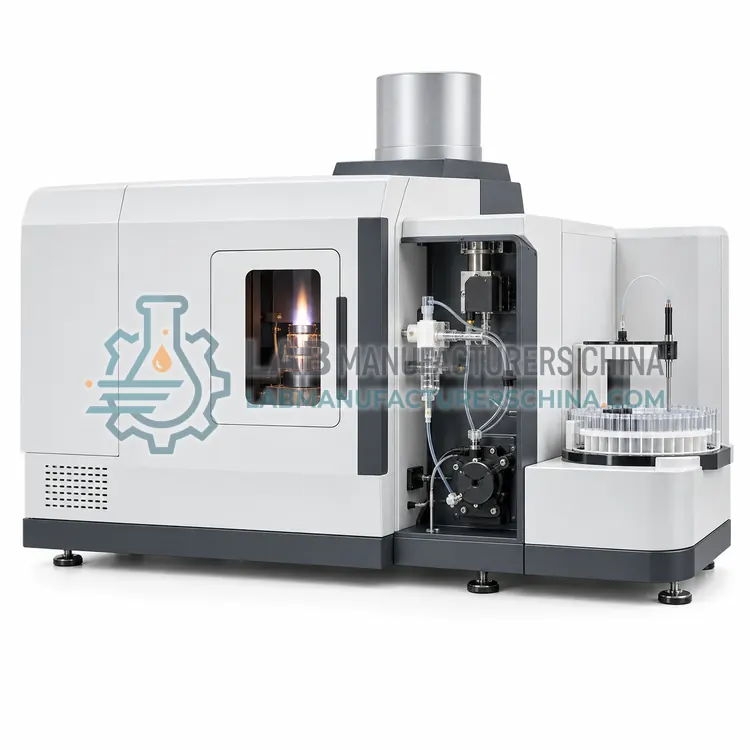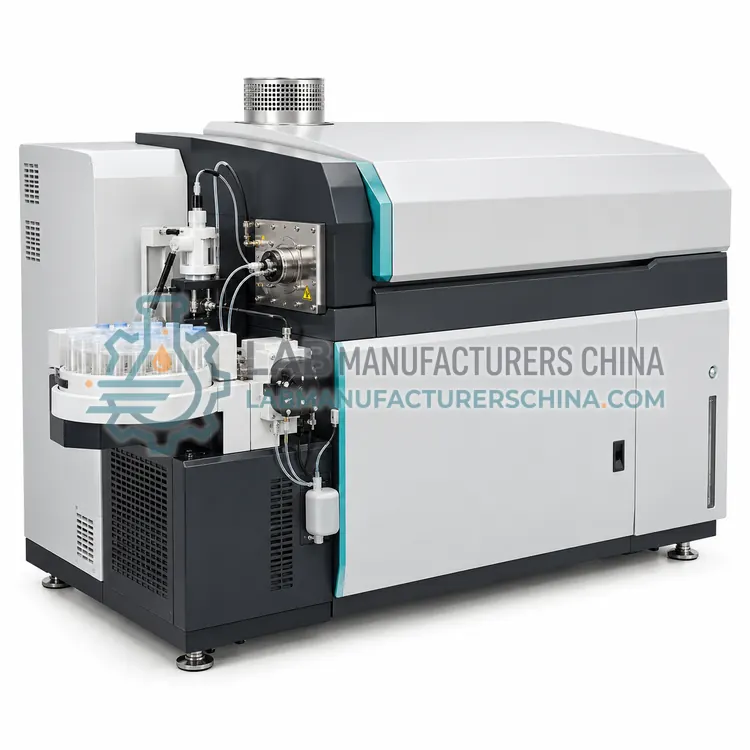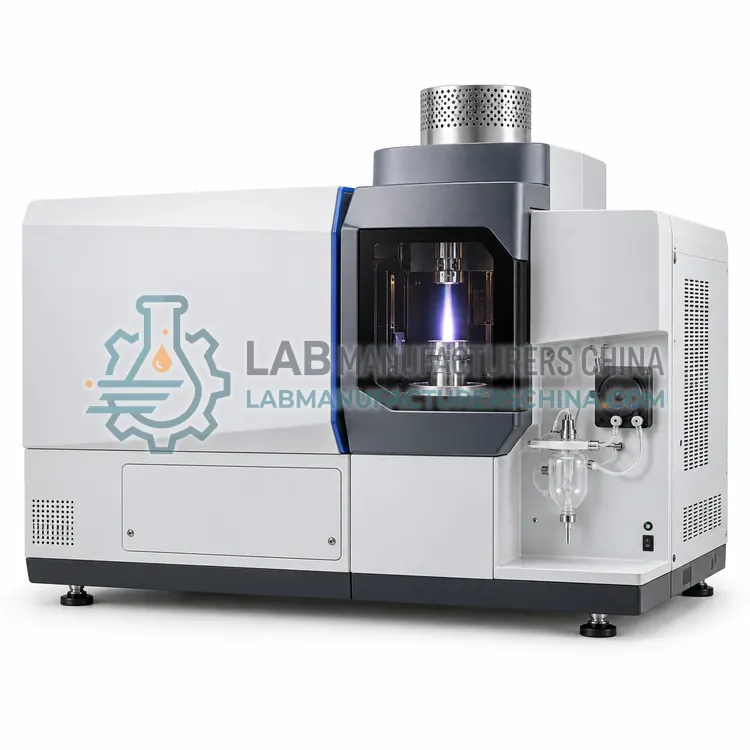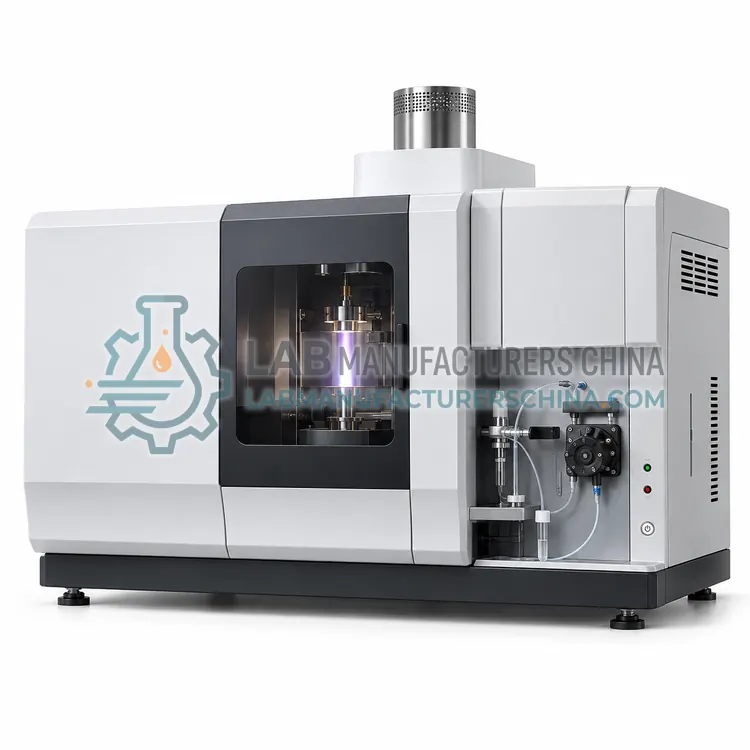
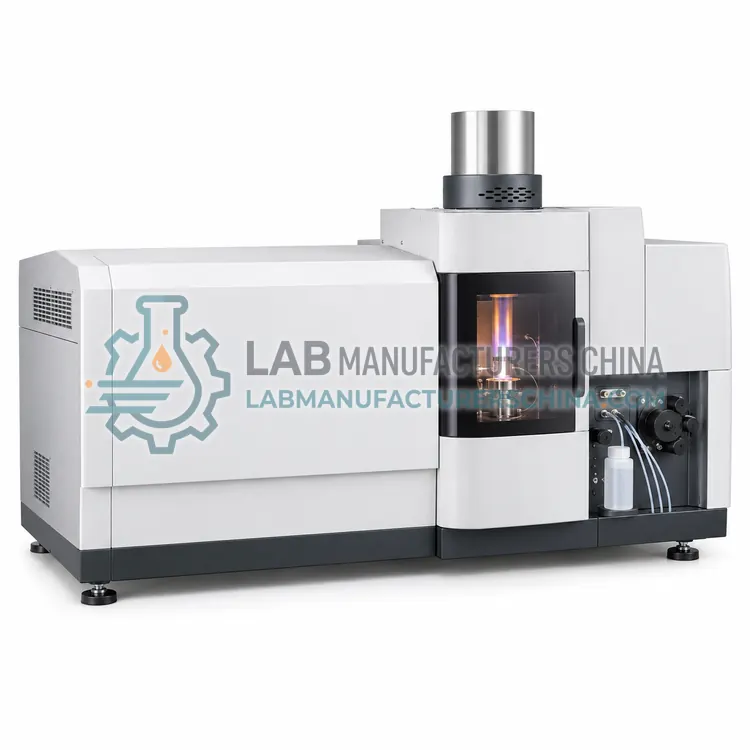
Sequential ICP Atomic Emission Spectrometer
顺序型电感耦合等离子体原子发射光谱仪
- SKU ICA-0002
- ICP-AES
- CE (to be confirmed)
- ISO 9001 manufacturing (to be confirmed)
- IEC 61010-1 safety compliance (to be confirmed)
Price on request — FOB / CIF quoted per order
Prices depend on configuration, quantity and destination port.
Key specifications
| Wavelength range | 160–900 nm |
|---|---|
| Monochromator | scanning grating |
| Optical resolution | ≤ 0.01 nm at 200 nm |
| Detection limit | 1–20 µg/L typical |
| Analysis time | 30–180 s per sample |
| Detector | photomultiplier |
Request a quote Download brochure · to be provided
By Lab Manufacturers China Technical TeamLast reviewed Standards: USP <730> Plasma Spectrochemistry, ISO 11885 Water quality — ICP-OES determination of elements, US EPA Method 200.7
What is the Sequential ICP Atomic Emission Spectrometer?
A sequential ICP atomic emission spectrometer measures one wavelength at a time with a scanning monochromator. It is chosen for flexible, economical analysis where element lists change and throughput demands are moderate.
What is the Sequential ICP Atomic Emission Spectrometer?
A sequential ICP atomic emission spectrometer measures one wavelength at a time with a scanning monochromator. It is chosen for flexible, economical analysis where element lists change and throughput demands are moderate.
Overview
In this design a scanning monochromator or movable optics selects each wavelength in turn, and a photomultiplier measures the line intensity. Because the wavelength can be programmed freely, the analyst can examine alternative lines, check peak shapes and investigate interferences, which is valuable during method development. Very wide wavelength coverage, including far-ultraviolet lines for non-metals, is often available. Analysis time is longer than for simultaneous instruments, typically 30 to 180 seconds per sample depending on the element list, and precision is slightly lower. Sequential systems are often smaller and less expensive, and they suit research laboratories, universities and small industrial laboratories where flexibility outweighs throughput. Internal standards and background correction are standard, and autosamplers are available.
How does it work?
An argon plasma at 6000 to 10000 K, sustained by a radio-frequency coil around a quartz torch, excites atoms and ions in the sample to higher energy states. As they return to lower states they emit light at element characteristic wavelengths. The emission is directed to a spectrometer that separates the wavelengths and measures their intensity, which is proportional to concentration over a wide range. Sample introduction converts the liquid into an aerosol through a nebulizer and spray chamber; organic solvents may need additional oxygen or a cooled interface. Because many lines are available, analysts select lines free from overlap and within the working range. Internal standards correct for drift and matrix effects, and background correction removes continuum and stray light. Plasma conditions are set by power, gas flows and observation position, and are optimized per method.
What are the key features?
- Scanning monochromator with movable optics
- Free wavelength programming for any line
- Wide coverage including far-ultraviolet lines
- Peak profile and interference investigation
- Lower cost and smaller footprint
- Photomultiplier detection with internal standard correction
What are the technical specifications?
A typical sequential icp atomic emission spectrometer configuration offers wavelength range of 160–900 nm, monochromator of scanning grating, optical resolution of ≤ 0.01 nm at 200 nm, detection limit of 1–20 µg/L typical, analysis time of 30–180 s per sample and detector of photomultiplier. Values are indicative of the product class; the exact figures for each configuration are confirmed on the quotation and the calibration documents supplied with the instrument.
Which applications is it used for?
The Sequential ICP Atomic Emission Spectrometer is used in method development and research, university and small laboratory analysis, changing element lists and one-off methods and interference and line selection studies. Across the wider ICP-AES class, laboratories also deploy it for routine metals in water and wastewater, alloy, steel and metallurgical quality control and food and beverage multi-element analysis.
Which standards and certifications apply?
Relevant standards and methods include USP <730> Plasma Spectrochemistry, ISO 11885 Water quality — ICP-OES determination of elements, US EPA Method 200.7, ASTM D5185, EN 15763 Foodstuffs — Determination of trace elements and ISO/IEC 17025. Certification candidates for this model are CE, ISO 9001 manufacturing and IEC 61010-1 safety compliance; each is to be confirmed for the specific configuration before shipment, and certificates are supplied only where they have been issued.
Install ICP-AES systems with high-purity argon, adequate exhaust and stable power, and keep the room temperature controlled to protect optics and detectors. Organic solvent methods require additional safety measures because solvent vapor can extinguish the plasma or ignite, so oxygen addition and solvent-resistant tubing are used. Torches and injectors degrade through salt deposition and thermal stress and need scheduled inspection. Sample digestion in ultrapure acid avoids contamination and keeps dissolved solids low. Run daily wavelength calibration, a check standard and QC samples, and record torch, nebulizer and pump tubing usage. Argon consumption and chiller performance should be monitored because they affect cost and stability.
How do I select the right Sequential ICP Atomic Emission Spectrometer?
Select a sequential instrument when flexibility, low cost and access to many lines matter more than throughput, and when element lists change often. Specify the elements and expected sample numbers. Confirm the wavelength range covers any non-metal lines you need, and plan run times for the largest panels you expect.
How does it compare with other ICP-AES variants?
Select an ICP-AES system by the sample type, the elements to be measured and the required throughput. Simultaneous instruments record many lines at once for large panels and high sample numbers, while sequential instruments offer flexibility and lower cost. Viewing configuration determines the balance between detection limits and matrix tolerance. Organic solvent analysis needs a torch, nebulizer and interface designed for volatile carbon loads and often an oxygen addition line. Inert sample paths are required for hydrofluoric acid digests and for high-purity semiconductor materials. Process and online systems add rugged enclosures and control interfaces. Confirm wavelength coverage, resolution, argon consumption and the software features your laboratory needs, including interference correction and audit trails.
Full specifications
| Wavelength range | 160–900 nm |
|---|---|
| Monochromator | scanning grating |
| Optical resolution | ≤ 0.01 nm at 200 nm |
| Detection limit | 1–20 µg/L typical |
| Analysis time | 30–180 s per sample |
| Detector | photomultiplier |
| Simultaneous elements | sequential |
| Viewing mode | radial or axial |
| RF power | 1000–1400 W |
| Argon consumption | 12–18 L/min |
Indicative values for this product class. Final specifications are confirmed on the quotation and in the calibration documents supplied with the instrument.
Applications
- Method development and research
- University and small laboratory analysis
- Changing element lists and one-off methods
- Interference and line selection studies
Key features
- Scanning monochromator with movable optics
- Free wavelength programming for any line
- Wide coverage including far-ultraviolet lines
- Peak profile and interference investigation
- Lower cost and smaller footprint
- Photomultiplier detection with internal standard correction
Frequently asked questions about Sequential ICP Atomic Emission Spectrometer
The monochromator can be programmed to any wavelength within its range, so the analyst can choose between strong and weak lines for different concentrations and inspect adjacent wavelengths for background. This flexibility is useful for method development but adds time to each measurement.
Throughput depends on the number of elements and integration time, commonly 30 to 180 seconds per sample, so a few elements can be measured quickly while large panels take minutes. For high sample numbers, a simultaneous instrument is more productive.
Yes, when the method is validated and the instrument is qualified with documented calibration, QC and audit trails. Some regulated methods were written for simultaneous instruments and reference specific lines and corrections, so confirm that the sequential system can reproduce the required performance before adopting it.
They describe the same measurement principle: atomic emission from an inductively coupled plasma. The older term ICP-AES emphasises atomic emission, and ICP-OES emphasises optical emission spectrometry. Instrument designs and wavelengths are equivalent, and method performance depends on the specific configuration rather than the acronym.
Organic solvents increase the carbon load and can extinguish the plasma or cause carbon deposition on the torch. Oxygen is often added to the aerosol gas to burn the carbon, a cooled interface protects the injector, and a solvent-resistant pump tubing and nebulizer are used. Method development establishes suitable power and oxygen flow.
An inert path with a platinum or ceramic injector and a polypropylene or PFA spray chamber is needed for hydrofluoric acid digests, which attack quartz, and for high-purity materials where silicon or boron contamination must be avoided. It is also useful for samples that corrode glass components.
Related models
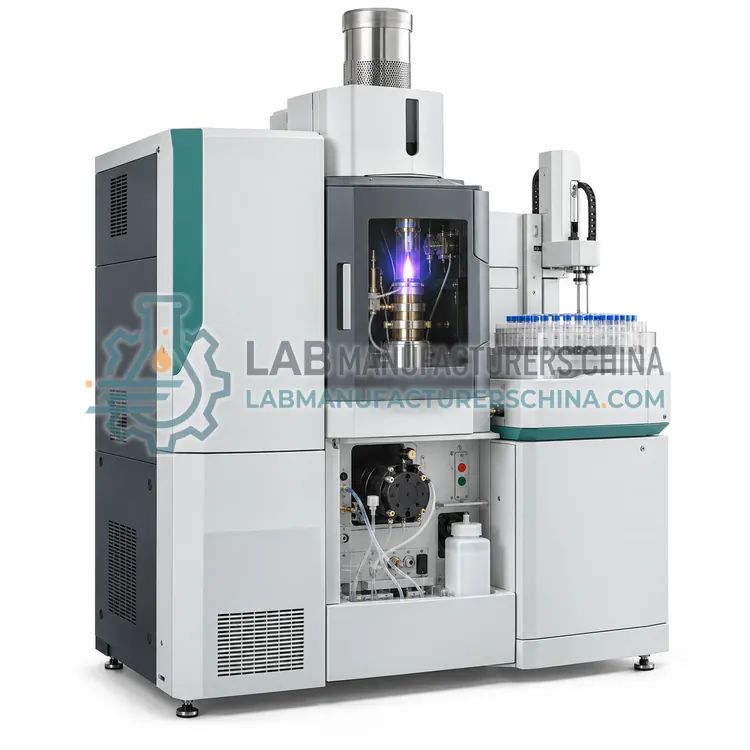
ICP Atomic Emission Spectrometer for Organic Solvent Analysis
有机溶剂分析用电感耦合等离子体原子发射光谱仪
- CE (to be confirmed)
- +2