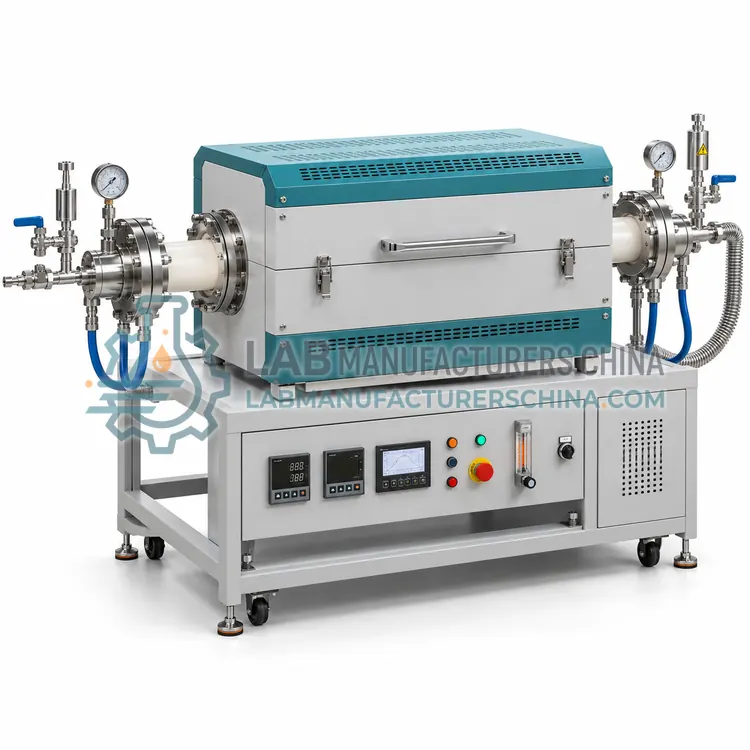
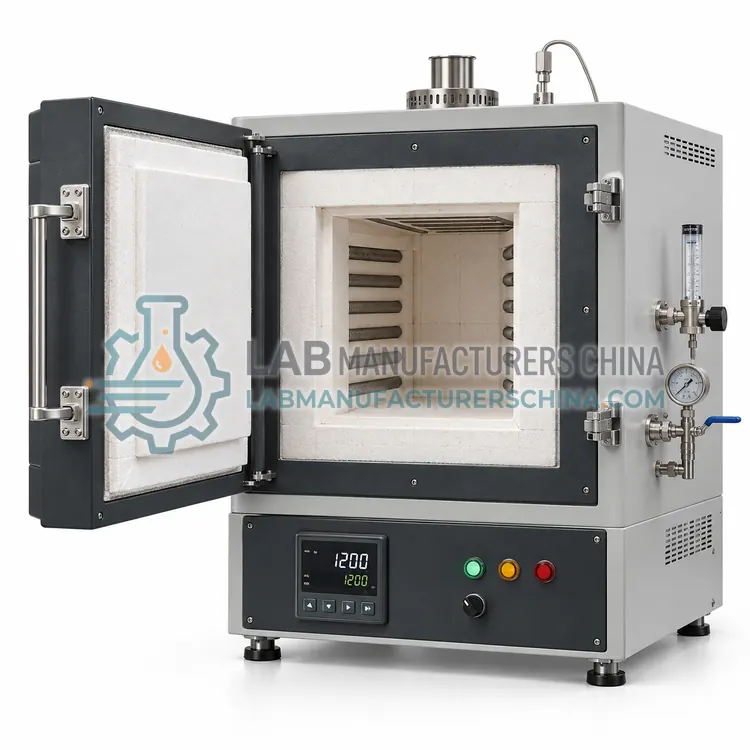
High-Temperature Box Furnace
高温箱式炉
- SKU HTF-0001
- High Temperature Furnaces
- CE (to be confirmed)
- ISO 9001 manufacturing (to be confirmed)
- RoHS (to be confirmed)
Price on request — FOB / CIF quoted per order
Prices depend on configuration, quantity and destination port.
Key specifications
| Chamber volume | 5–30 L |
|---|---|
| Temperature range | RT to 1700 C |
| Temperature uniformity | ±8–15 C |
| Heating element | Molybdenum disilicide or SiC |
| Thermocouple type | Type S or B |
| Insulation | Dense alumina fiber or brick |
Request a quote Download brochure · to be provided
By Lab Manufacturers China Technical TeamLast reviewed Standards: IEC 61010-1, IEC 61010-2-010, IEC 60519-1
What is the High-Temperature Box Furnace?
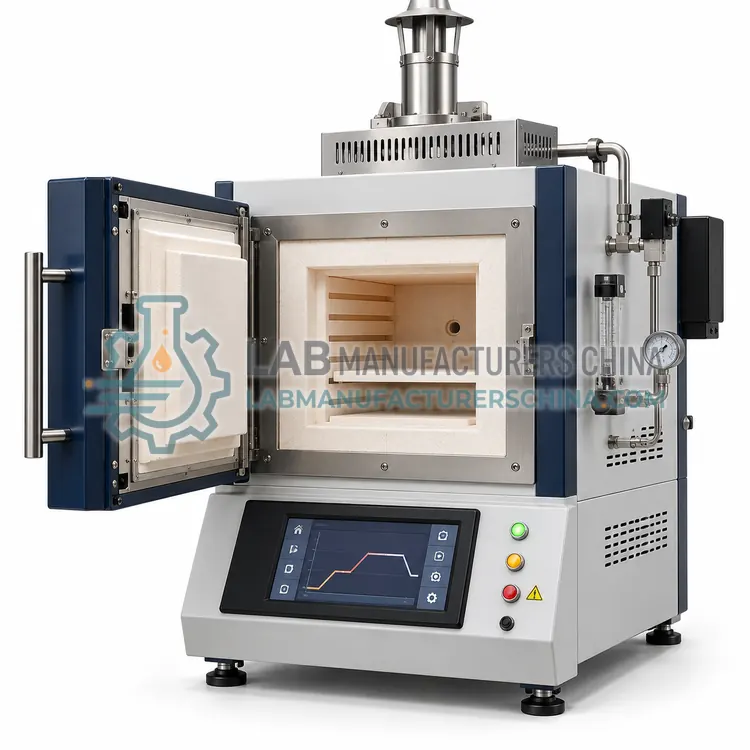
A high-temperature box furnace heats crucibles and trays in a box chamber to 1400 to 1700 C. It is chosen for advanced ceramic sintering, refractory testing and heat treatment that exceed standard muffle furnace limits.
What is the High-Temperature Box Furnace?
A high-temperature box furnace heats crucibles and trays in a box chamber to 1400 to 1700 C. It is chosen for advanced ceramic sintering, refractory testing and heat treatment that exceed standard muffle furnace limits.
Overview
The high-temperature box furnace applies molybdenum disilicide or high-grade silicon carbide elements to a rectangular chamber insulated with dense alumina fiber or brick. Working temperature reaches 1400 to 1700 C, and the chamber is smaller than a standard box furnace, typically 5 to 30 liters, because insulation thickness grows with temperature. Uniformity of plus or minus 8 to 15 C is typical, and a type S or B thermocouple with a programmable controller manages the cycle. Elements are usually mounted in the roof or side grooves and replaced as matched sets. Chamber atmospheres are normally air or an optional inert-gas purge. It serves ceramics, glass, refractory and metallurgical laboratories that need clean high-temperature processing.
How does it work?
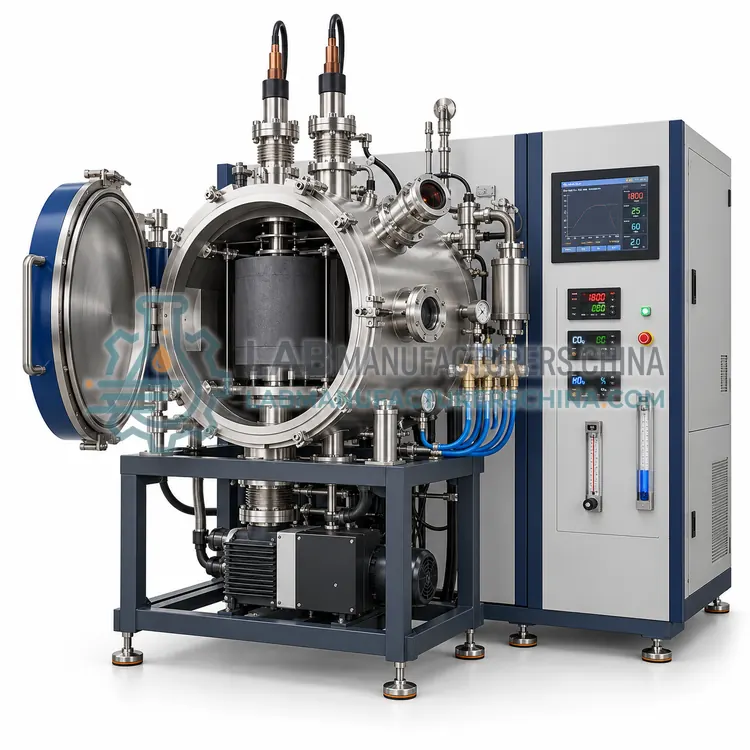
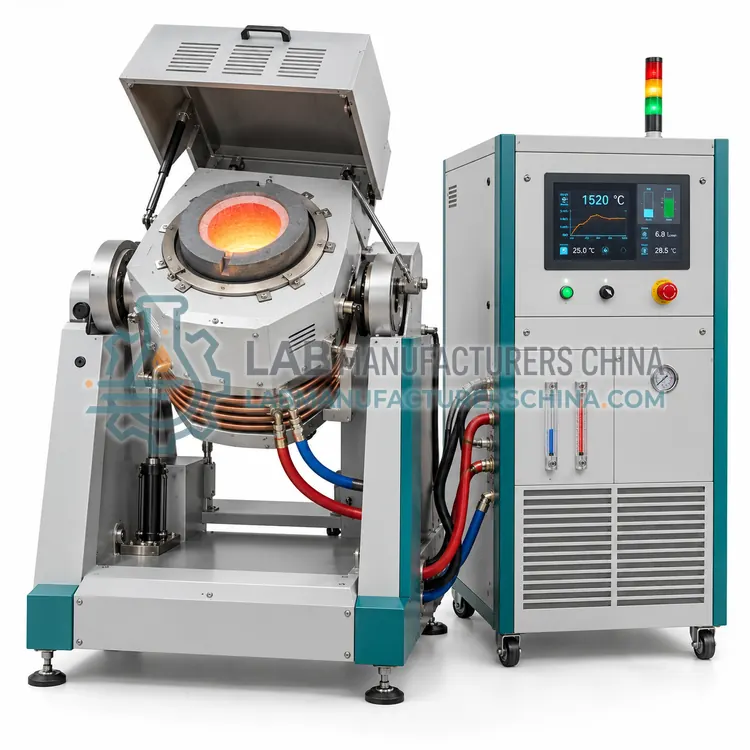
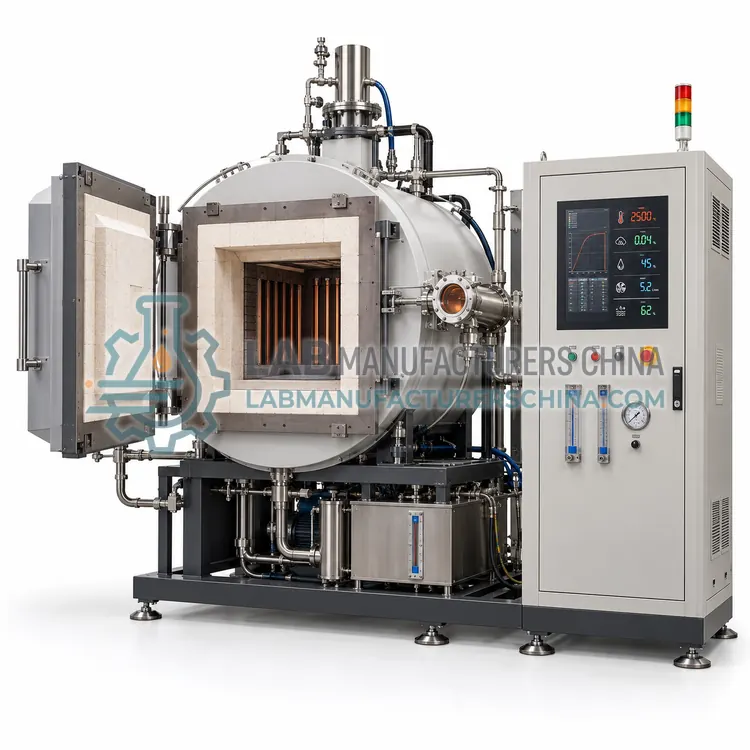
High-temperature furnaces concentrate heat in a densely insulated hot zone using elements that remain stable at extreme temperature. Silicon carbide and molybdenum disilicide resist oxidation in air to about 1600 to 1800 C, while graphite and tungsten elements work beyond 2000 C under vacuum or inert gas because they oxidize in air. Induction furnaces instead use an alternating magnetic field to induce currents in a conductive crucible or susceptor, heating the charge directly. Dense alumina, zirconia or graphite insulation limits heat loss, and water-cooled shells protect the structure. Type B or C thermocouples, optical pyrometers and radiation sensors cover the range, and programmable controllers follow slow ramp profiles that avoid thermal shock. Atmosphere control is often essential to prevent oxidation, evaporation or contamination of the sample.
What are the key features?
- Molybdenum disilicide or high-grade silicon carbide elements
- Dense alumina fiber or brick insulation
- Working range 1400 to 1700 C
- Type S or B thermocouple with programmable control
- Roof or side-groove element mounting
- Optional inert-gas purge
What are the technical specifications?
A typical high-temperature box furnace configuration offers chamber volume of 5–30 L, temperature range of RT to 1700 C, temperature uniformity of ±8–15 C, heating element of Molybdenum disilicide or SiC, thermocouple type of Type S or B and insulation of Dense alumina fiber or brick. Values are indicative of the product class; the exact figures for each configuration are confirmed on the quotation and the calibration documents supplied with the instrument.
Which applications is it used for?
The High-Temperature Box Furnace is used in advanced ceramic sintering, refractory material testing, glass and frit melting studies and high-temperature heat treatment. Across the wider High Temperature Furnaces class, laboratories also deploy it for advanced ceramic sintering, refractory material testing and glass and frit melting.
Which standards and certifications apply?
Relevant standards and methods include IEC 61010-1, IEC 61010-2-010, IEC 60519-1, DIN 17052-1, ISO 9001 and ISO 17025. Certification candidates for this model are CE, ISO 9001 manufacturing and RoHS; each is to be confirmed for the specific configuration before shipment, and certificates are supplied only where they have been issued.
High-temperature furnaces need rigid foundations, generous clearances and, for water-cooled types, reliable cooling with flow and temperature interlocks. Install gas and vacuum lines with proper purging and leak checking, and never heat a graphite or refractory-metal element in air. Warm up and cool slowly according to the schedule to protect dense refractories and elements from thermal shock. Replace elements and thermocouples as matched sets and on condition. Verify temperature with a reference instrument and profile the hot zone periodically, keep records, and train operators on atmosphere, water and emergency shutdown procedures.
How do I select the right High-Temperature Box Furnace?
Select the high-temperature box furnace when crucibles and trays must reach 1400 to 1700 C in air or a lightly controlled atmosphere. Tube or graphite furnaces suit gas flow and higher temperatures. In the RFQ, specify top temperature, volume, element type, atmosphere and ramp requirements.
How does it compare with other High Temperature Furnaces variants?
Choose a high-temperature furnace only when the process genuinely needs 1400 C or above, since cost, element life and atmosphere requirements rise steeply with temperature. Decide the atmosphere first: air, inert gas, vacuum or reducing, because elements and insulation depend on it. Then set the maximum temperature and hot zone size from the sample and crucible, and select the heating method, with resistance for clean work and induction for melting conductive charges. Confirm the temperature measurement method for the range, since thermocouples need type B or C and optical pyrometers are used above about 1800 C. Specify ramping capability, cooling, water supply and safety protection.
Full specifications
| Chamber volume | 5–30 L |
|---|---|
| Temperature range | RT to 1700 C |
| Temperature uniformity | ±8–15 C |
| Heating element | Molybdenum disilicide or SiC |
| Thermocouple type | Type S or B |
| Insulation | Dense alumina fiber or brick |
| Heat-up time to 1500 C | 60–120 min |
| Atmosphere | Air or optional inert gas |
| Heating power | 4–15 kW |
| Power supply | 380 V, 3-phase, 50/60 Hz |
Indicative values for this product class. Final specifications are confirmed on the quotation and in the calibration documents supplied with the instrument.
Applications
- Advanced ceramic sintering
- Refractory material testing
- Glass and frit melting studies
- High-temperature heat treatment
Key features
- Molybdenum disilicide or high-grade silicon carbide elements
- Dense alumina fiber or brick insulation
- Working range 1400 to 1700 C
- Type S or B thermocouple with programmable control
- Roof or side-groove element mounting
- Optional inert-gas purge
Frequently asked questions about High-Temperature Box Furnace
High-temperature box furnaces reach 1400 to 1700 C with molybdenum disilicide or high-grade silicon carbide elements. Standard box furnaces stop near 1200 to 1400 C, so the element and insulation grade set the practical limit.
Insulation thickness increases sharply with temperature to control heat loss and exterior temperature, so a given outer shell yields less usable volume. A 1700 C furnace therefore offers fewer liters than a 1200 C furnace of similar size.
Some models offer a purge port and improved sealing for a light inert-gas flow, but the box door is not a perfect seal. For oxygen-free work, a tube or vacuum furnace is normally used instead.
Standard high-temperature furnaces reach 1400 to 1800 C with silicon carbide or molybdenum disilicide elements. Graphite or tungsten hot zones under vacuum or inert gas extend the range to 2200 to 3000 C, but they cannot operate in air.
Graphite oxidizes rapidly in air above about 500 C, losing mass and contaminating the sample. Under vacuum or inert gas such as argon, graphite elements and insulation remain stable to well above 2000 C, which is why they dominate ultra-high-temperature work.
Induction heating suits melting conductive charges and heating a susceptor rapidly, because energy couples directly into the material or crucible. Resistance heating gives more uniform, controllable heating of a chamber and is preferred for sintering and heat treatment.
Related models