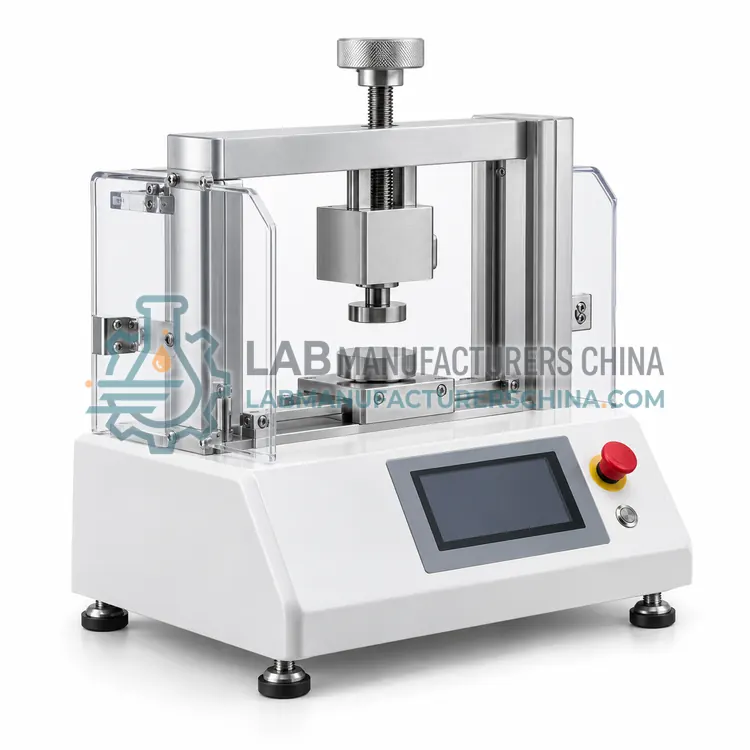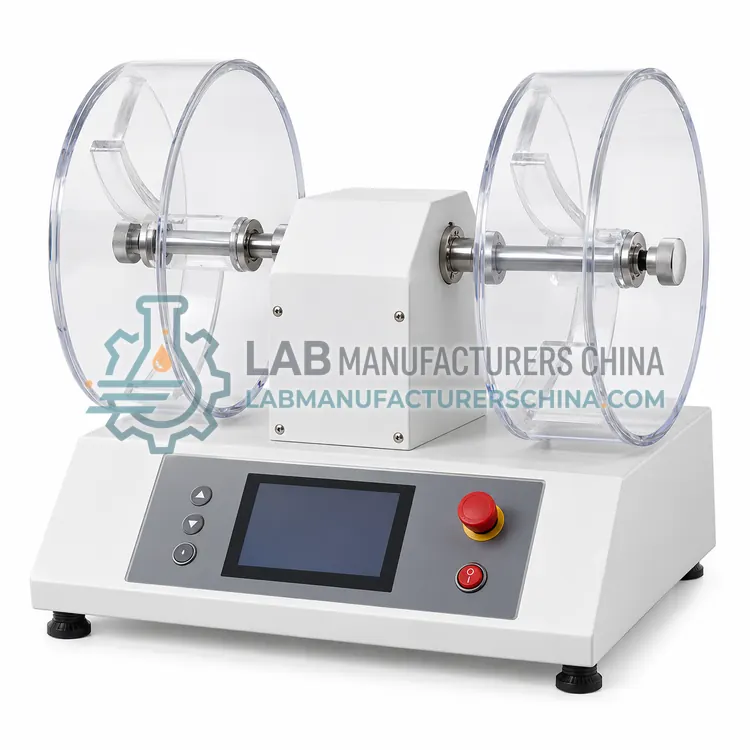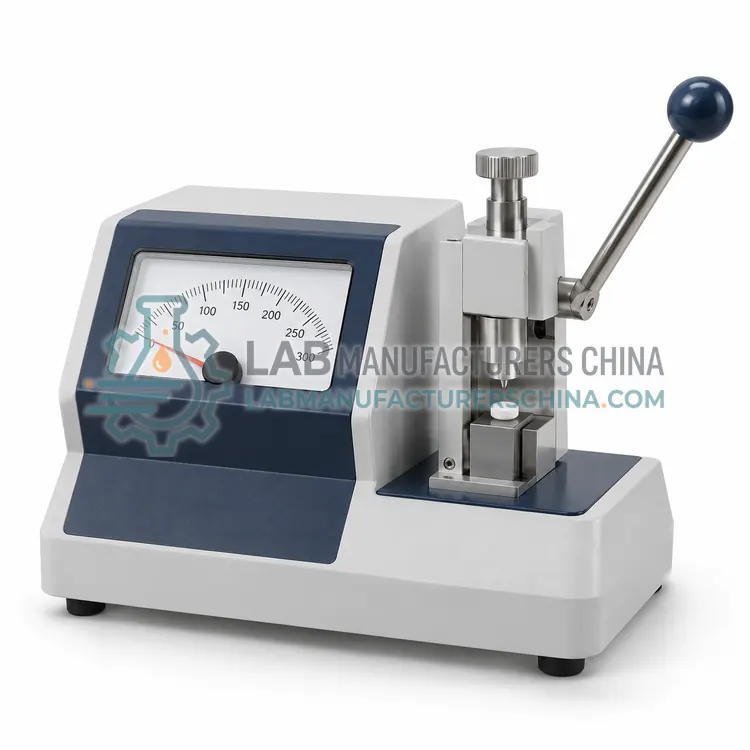
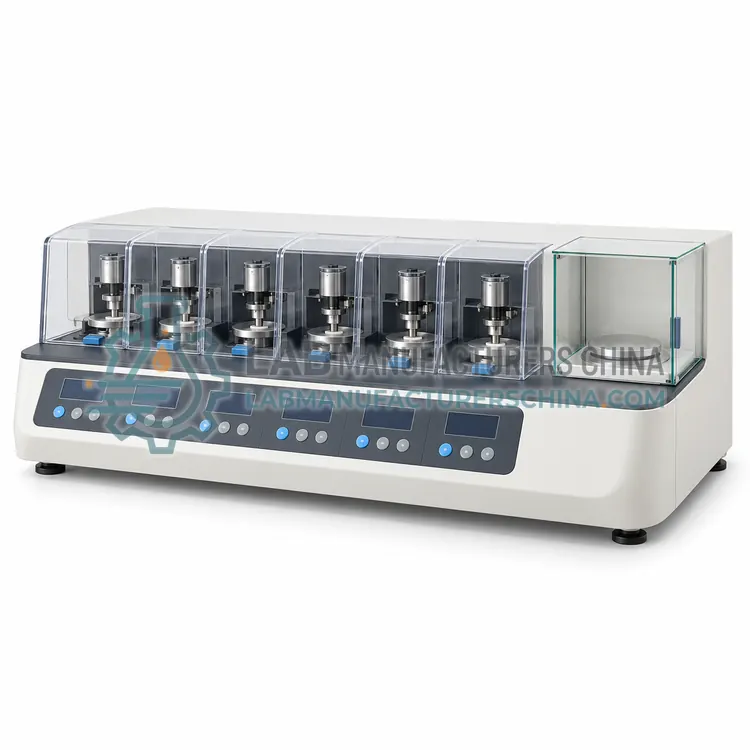
Automated Tablet Testing System with Balance
带天平的全自动片剂测试系统
- SKU HAT-0004
- Hardness Testers
- CE (to be confirmed)
- ISO 9001 manufacturing (to be confirmed)
Price on request — FOB / CIF quoted per order
Prices depend on configuration, quantity and destination port.
Key specifications
| Weight range | 0–220 g, 0.1 mg readability |
|---|---|
| Hardness range | 0–500 N |
| Hardness resolution | 0.1 N |
| Thickness range | 0–25 mm |
| Thickness resolution | 0.01 mm |
| Diameter range | 2–30 mm |
Request a quote Download brochure · to be provided
By Lab Manufacturers China Technical TeamLast reviewed Standards: USP <1217>, Ph. Eur. 2.9.8, USP <1216>
What is the Automated Tablet Testing System with Balance?
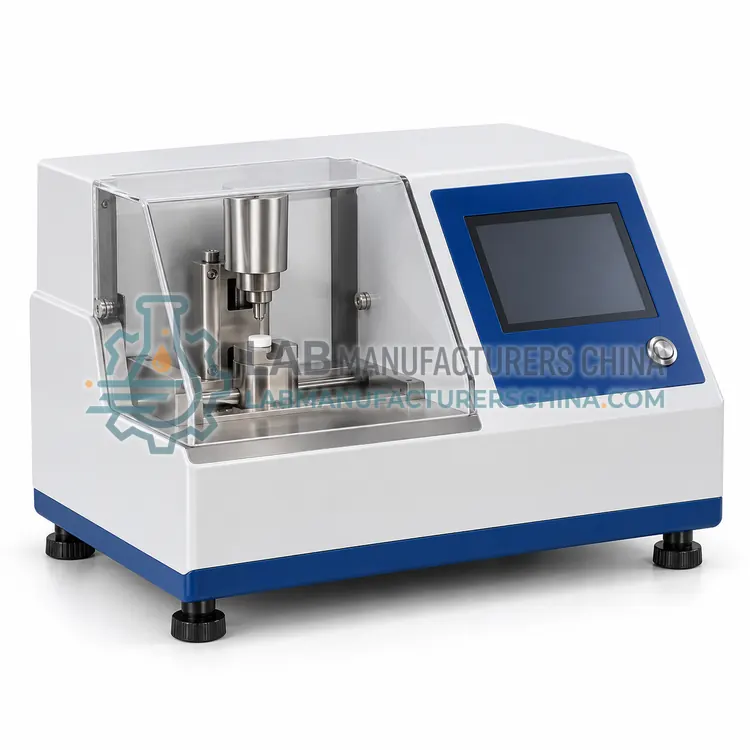
An automated tablet testing system feeds tablets from a hopper or tray through weighing, thickness, diameter and hardness stations without operator handling. It is used in high-volume QC laboratories and at-line tablet press monitoring to cut testing time and variation.
What is the Automated Tablet Testing System with Balance?
An automated tablet testing system feeds tablets from a hopper or tray through weighing, thickness, diameter and hardness stations without operator handling. It is used in high-volume QC laboratories and at-line tablet press monitoring to cut testing time and variation.
Overview
The automated system integrates a feeder, transfer mechanism, analytical balance, dimension and hardness module into one cabinet. The operator loads a batch, selects a method and the system processes each tablet in turn, typically 4–10 tablets per minute, discarding crushed tablets to a waste bin. Weight is read to 0.1 mg or 1 mg, thickness to 0.01 mm, and hardness to 0.1 N. Some systems also include an at-line link to the tablet press so that weight and hardness feed back control limits. Software stores results, calculates statistics, control charts and compliance against limits such as the USP <905> weight uniformity requirement, and supports 21 CFR Part 11 with audit trail and e-signatures. Automated handling improves repeatability, removes operator fatigue in large sample sizes and supports unattended sampling during long compression runs, though the capital cost and footprint are higher than manual testers.
How does it work?
A hardness tester compresses a tablet diametrically between a stationary anvil and a moving jaw while a load cell records force. Force rises until the tablet fractures, and the peak value is reported as breaking force in newtons (or kgf, SCU). Manual designs use a spring or screw; motorized testers drive the jaw at a constant rate of typically 0.5–3 mm/s for operator-independent results. Multi-parameter testers add a displacement sensor to measure thickness and diameter, and some add a balance for weight. Tensile strength for flat round tablets equals 2F/(πDH), which normalizes hardness for size. Hardness depends on compression force, binder, moisture content and tablet geometry. The load cell is calibrated against traceable force standards per ISO 7500-1, and the loading rate and tablet orientation must be fixed in the method to ensure comparability.
What are the key features?
- Automatic feeding and sequential testing of tablets
- Integrated balance, thickness, diameter and hardness stations
- Throughput of 4–10 tablets per minute
- Control charts and limit checks against USP <905>
- Audit trail and e-signature for 21 CFR Part 11
- Optional link to tablet press for feedback control
What are the technical specifications?
A typical automated tablet testing system with balance configuration offers weight range of 0–220 g, 0.1 mg readability, hardness range of 0–500 N, hardness resolution of 0.1 N, thickness range of 0–25 mm, thickness resolution of 0.01 mm and diameter range of 2–30 mm. Values are indicative of the product class; the exact figures for each configuration are confirmed on the quotation and the calibration documents supplied with the instrument.
Which applications is it used for?
The Automated Tablet Testing System with Balance is used in high-volume QC testing, at-line tablet press monitoring, unattended overnight runs and regulated GMP laboratories. Across the wider Hardness Testers class, laboratories also deploy it for tablet compression control, QC release testing and formulation development.
Which standards and certifications apply?
Relevant standards and methods include USP <1217>, Ph. Eur. 2.9.8, USP <1216>, ISO 7500-1, ASTM E4, ChP 0931 and USP <905>. Certification candidates for this model are CE and ISO 9001 manufacturing; each is to be confirmed for the specific configuration before shipment, and certificates are supplied only where they have been issued.
Install the tester on a stable bench away from vibration. Verify force with traceable weights or a reference load cell at installation and at least annually, plus after overload events. Clean anvils and jaws to remove powder that can affect contact, and inspect them for wear. Use consistent tablet orientation and loading speed, test at least ten tablets, and allow tablets to equilibrate to room temperature and humidity. Record units clearly, because kgf and N are both used. For regulated laboratories, include the tester in IQ/OQ and calibration schedules and maintain audit-trail records for electronic data.
How do I select the right Automated Tablet Testing System with Balance?
Choose this when daily tablet volume is high, sample sizes are 20 or more, or integration with the press and data-integrity compliance is required. Specify the parameters to be measured, sample capacity, balance readability, footprint and software requirements. For smaller volumes, a multi-parameter bench tester is more economical.
How does it compare with other Hardness Testers variants?
Decide first whether you need manual spot checks or repeatable QC data. Manual testers suit press set-up and teaching; motorized digital testers suit release and validation work with constant loading speed and records. Choose a multi-parameter tester when thickness, diameter, weight and tensile strength are also required, and an automated system for high sample volume or press integration. For boluses and large tablets specify a 1000 N or greater capacity. Key parameters are force range, resolution (0.1 N for small tablets), accuracy, loading speed, tablet diameter range, statistics, data output and compatibility with 21 CFR Part 11 if regulated. Verify that the supplier provides force calibration certificates traceable to national standards.
Full specifications
| Weight range | 0–220 g, 0.1 mg readability |
|---|---|
| Hardness range | 0–500 N |
| Hardness resolution | 0.1 N |
| Thickness range | 0–25 mm |
| Thickness resolution | 0.01 mm |
| Diameter range | 2–30 mm |
| Throughput | 4–10 tablets/min |
| Sample capacity | up to 100 tablets per run |
| Data integrity | audit trail, e-signature, user levels |
| Power supply | 220 V AC, 50/60 Hz, 300 W |
Indicative values for this product class. Final specifications are confirmed on the quotation and in the calibration documents supplied with the instrument.
Applications
- High-volume QC testing
- At-line tablet press monitoring
- Unattended overnight runs
- Regulated GMP laboratories
Key features
- Automatic feeding and sequential testing of tablets
- Integrated balance, thickness, diameter and hardness stations
- Throughput of 4–10 tablets per minute
- Control charts and limit checks against USP <905>
- Audit trail and e-signature for 21 CFR Part 11
- Optional link to tablet press for feedback control
Frequently asked questions about Automated Tablet Testing System with Balance
Typical throughput is 4 to 10 tablets per minute depending on the parameters and tablet size. Weight, thickness, diameter and hardness are measured in one pass.
Some systems provide an at-line data link so hardness and weight results can guide press settings. Confirm the interface protocol with the press manufacturer before purchase.
Audit trail, user access levels, electronic signatures and protected records support 21 CFR Part 11 and ALCOA+ principles. Validation documentation should be requested from the supplier.
It measures the force needed to fracture a tablet across its diameter, reported as breaking force in newtons. The value indicates mechanical strength for packaging, coating and handling.
It depends on the product. Uncoated immediate-release tablets often range from 40 to 100 N, while larger or extended-release tablets may exceed 150 N. Limits are set during development.
Testing ten tablets per sample is common practice, reporting mean, standard deviation and range. Validation studies may use 20 or more tablets.
Related models
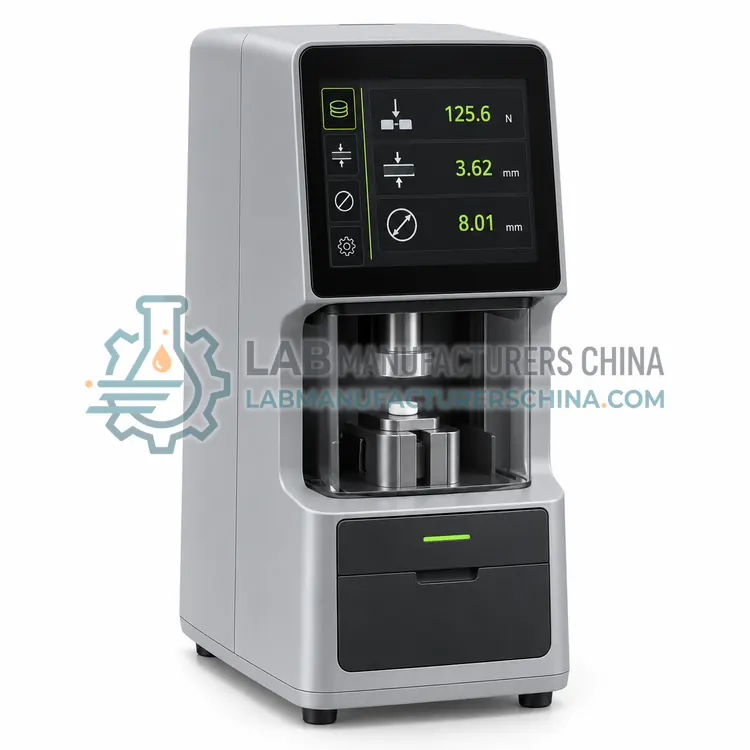
Multi-Parameter Tablet Tester (Hardness, Thickness, Diameter)
多参数片剂测试仪(硬度、厚度、直径)
- CE (to be confirmed)
- +1