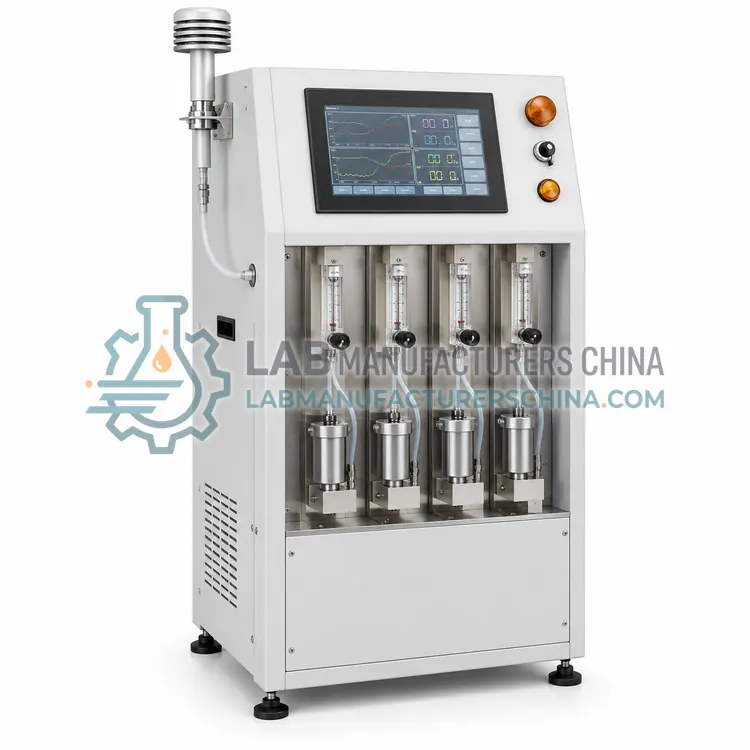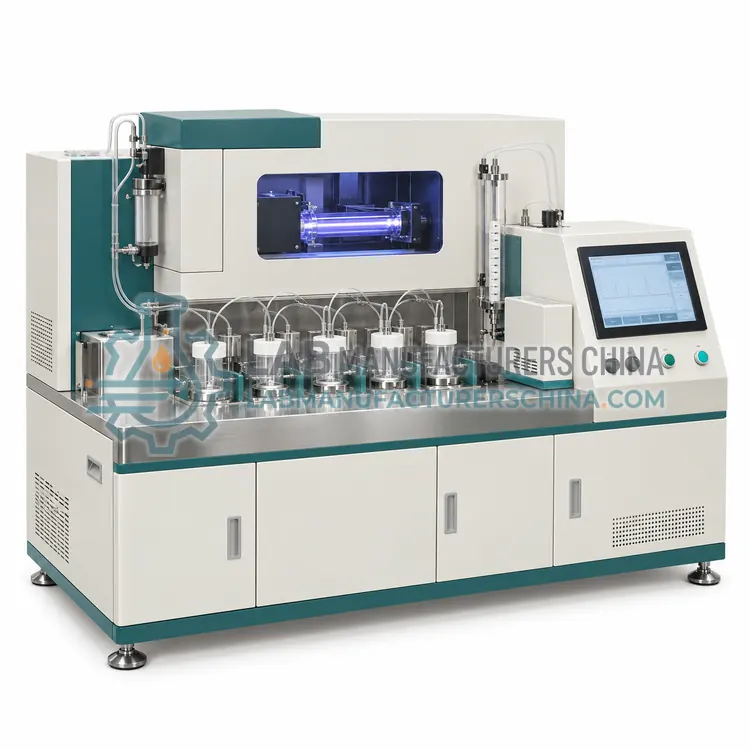
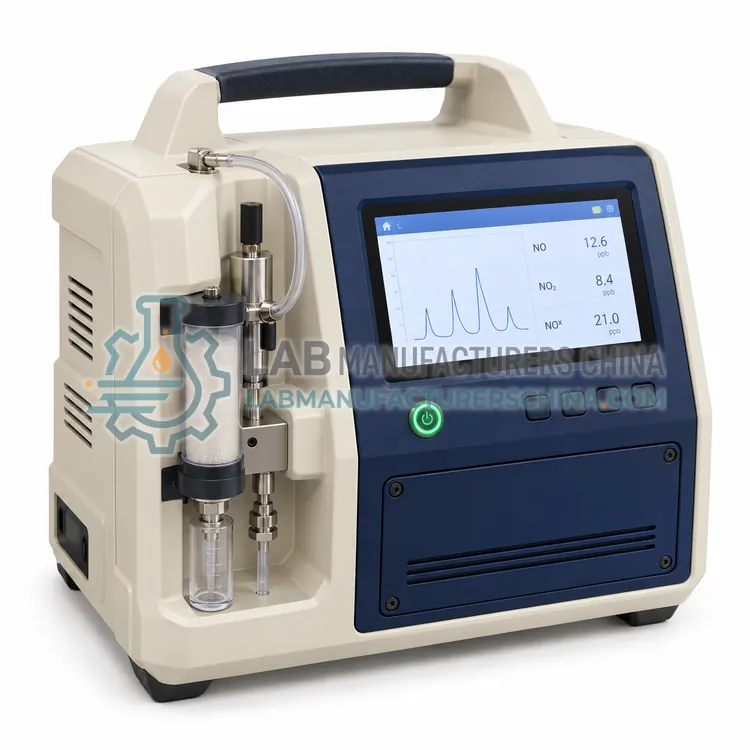
Chemiluminescence NOx Analyzer
化学发光氮氧化物分析仪
- SKU GAA-0002
- Gas Analyzers
- CE (to be confirmed)
- China environmental monitoring instrument certification (to be confirmed)
- ISO 9001 manufacturing (to be confirmed)
Price on request — FOB / CIF quoted per order
Prices depend on configuration, quantity and destination port.
Key specifications
| Measurement principle | Chemiluminescence with ozone |
|---|---|
| Measured species | NO, NO2, NOx |
| Measurement range | 0–500 ppb, 0–2000 ppb selectable |
| Lower detection limit | 0.4 ppb (2σ) |
| Response time | ≤ 60 s to 95% |
| NO2 converter | Molybdenum, heated, or photolytic |
Request a quote Download brochure · to be provided
By Lab Manufacturers China Technical TeamLast reviewed Standards: EN 14212 (SO2), EN 14211 (NOx), EN 14626 (CO)
What is the Chemiluminescence NOx Analyzer?
A reference-grade analyzer that measures nitric oxide, nitrogen dioxide and total nitrogen oxides in ambient air by chemiluminescence. It is the standard instrument for regulatory NOx monitoring in urban, roadside and industrial monitoring networks.
What is the Chemiluminescence NOx Analyzer?
A reference-grade analyzer that measures nitric oxide, nitrogen dioxide and total nitrogen oxides in ambient air by chemiluminescence. It is the standard instrument for regulatory NOx monitoring in urban, roadside and industrial monitoring networks.
Overview
In this analyzer, sample air is mixed with ozone generated internally, and nitric oxide reacts with ozone to produce excited nitrogen dioxide that emits light measured by a photomultiplier. To measure total NOx, the sample is routed through a heated molybdenum or photolytic converter that reduces nitrogen dioxide to nitric oxide, and the difference between the two readings gives NO2. The measurement cycles every few seconds, alternating between the NO and NOx channels, so the instrument reports NO, NO2 and NOx continuously. Ranges of 0 to 500 ppb and up to 0 to 2000 ppb are common, with detection limits near 0.4 ppb. A converter efficiency check with gas-phase titration is part of routine quality assurance, and molybdenum converters are replaced when efficiency falls. Temperature control of the reaction chamber and ozone generator keeps the response stable.
How does it work?
Ambient gas analyzers use a selective physical or chemical reaction to convert a gas concentration into an electrical signal. Sulfur dioxide is measured by ultraviolet fluorescence, where SO2 molecules excited at 214 nm emit light whose intensity is proportional to concentration. Nitrogen oxides are determined by chemiluminescence, reacting nitric oxide with ozone to produce light, with a molybdenum converter reducing NO2 to NO for the total. Carbon monoxide is measured by non-dispersive infrared absorption, often with gas filter correlation to reject interference. Ozone is determined by ultraviolet absorption at 254 nm in a dual-cell or single-cell design that alternates sample and scrubbed air. Sample conditioning removes particles and moisture, and internal computers apply zero and span corrections for temperature and pressure.
What are the key features?
- Chemiluminescent reaction gives high selectivity for nitric oxide.
- Alternating NO and NOx channels report NO2 by difference every few seconds.
- Molybdenum or photolytic converter for total NOx measurement.
- Low detection limit near 0.4 ppb supports background station use.
- Automatic zero and span with stored drift history.
- Converter efficiency check via gas-phase titration is straightforward.
What are the technical specifications?
A typical chemiluminescence nox analyzer configuration offers measurement principle of Chemiluminescence with ozone, measured species of NO, NO2, NOx, measurement range of 0–500 ppb, 0–2000 ppb selectable, lower detection limit of 0.4 ppb (2σ), response time of ≤ 60 s to 95% and NO2 converter of Molybdenum, heated, or photolytic. Values are indicative of the product class; the exact figures for each configuration are confirmed on the quotation and the calibration documents supplied with the instrument.
Which applications is it used for?
The Chemiluminescence NOx Analyzer is used in urban NOx compliance monitoring, power plant and industrial perimeter networks, roadside and tunnel air quality studies and background and remote station measurements. Across the wider Gas Analyzers class, laboratories also deploy it for urban air quality monitoring networks, industrial fence-line and plant perimeter monitoring and roadside and traffic-related pollution studies.
Which standards and certifications apply?
Relevant standards and methods include EN 14212 (SO2), EN 14211 (NOx), EN 14626 (CO), ISO 13964 (ozone), US EPA 40 CFR Part 50 Appendix A and HJ 654. Certification candidates for this model are CE, China environmental monitoring instrument certification and ISO 9001 manufacturing; each is to be confirmed for the specific configuration before shipment, and certificates are supplied only where they have been issued.
Install analyzers in a temperature-controlled shelter or rack with clean, dry sample lines and a manifold that provides stable flow. Calibrate with certified gas standards and a dynamic dilution system, performing zero and span checks on the schedule required by the method, and keep records of converter efficiency for NOx instruments. Replace particulate filters, dryers and pump diaphragms regularly, and verify sample flow and pressure. Protect optical components from dust and condensation, and allow warm-up and stabilization before reporting data. For regulatory networks, follow quality assurance and quality control procedures such as US EPA 40 CFR Part 58 Appendix A and retain raw data for audit.
How do I select the right Chemiluminescence NOx Analyzer?
Select this analyzer when separate NO and NO2 data of reference quality are required, which chemiluminescence provides more reliably than most sensors. For total NOx only, a chemiluminescence or NDIR instrument may be sufficient. In an RFQ, state the range, method requirement, converter type and the availability of gas-phase titration equipment.
How does it compare with other Gas Analyzers variants?
Choose the analyzer by the gas, the required measurement range and whether the data must satisfy a regulatory method. Reference-grade instruments follow EN or US EPA methods and provide the stability, detection limit and averaging time that monitoring networks require. Range should bracket the local concentrations and include the limit value, for example 0–500 ppb for SO2 and NOx in urban air or 0–50 ppm for CO near traffic. Consider interference rejection, response time, zero and span drift specifications and the calibration gas requirements. For indoor or occupational checks, portable or electrochemical analyzers with lower ranges and simpler calibration often suffice. Confirm output protocols, data logging and the availability of a multipoint calibration system.
Full specifications
| Measurement principle | Chemiluminescence with ozone |
|---|---|
| Measured species | NO, NO2, NOx |
| Measurement range | 0–500 ppb, 0–2000 ppb selectable |
| Lower detection limit | 0.4 ppb (2σ) |
| Response time | ≤ 60 s to 95% |
| NO2 converter | Molybdenum, heated, or photolytic |
| Converter efficiency | ≥ 96% required |
| Sample flow rate | 0.5–1.0 L/min |
| Outputs | 4–20 mA, RS-232/RS-485, Ethernet |
| Power supply | 220 VAC, 50 Hz |
| Operating temperature | 5–40 °C |
Indicative values for this product class. Final specifications are confirmed on the quotation and in the calibration documents supplied with the instrument.
Applications
- Urban NOx compliance monitoring
- Power plant and industrial perimeter networks
- Roadside and tunnel air quality studies
- Background and remote station measurements
Key features
- Chemiluminescent reaction gives high selectivity for nitric oxide.
- Alternating NO and NOx channels report NO2 by difference every few seconds.
- Molybdenum or photolytic converter for total NOx measurement.
- Low detection limit near 0.4 ppb supports background station use.
- Automatic zero and span with stored drift history.
- Converter efficiency check via gas-phase titration is straightforward.
Frequently asked questions about Chemiluminescence NOx Analyzer
It reduces nitrogen dioxide to nitric oxide at about 315 °C so the chemiluminescent detector, which responds only to NO, can measure total NOx. The difference between the NOx and NO readings gives NO2, so converter efficiency directly affects accuracy.
A photolytic converter uses ultraviolet light to convert NO2 and is more selective, so it avoids oxidation of other nitrogen species such as peroxyacetyl nitrate that can inflate molybdenum converter readings. It needs a lamp and more maintenance but improves NO2 accuracy.
Certified nitric oxide is mixed with ozone in a titration unit to generate a known amount of NO2, and the analyzer's NOx and NO channels are observed. The measured NO2 compared with the expected value gives converter efficiency and validates the NO2 channel.
Most networks measure sulfur dioxide, nitrogen oxides, carbon monoxide, ozone and particulate matter, with some adding ammonia, hydrogen sulfide and volatile organic compounds. The exact set is defined by the national or regional air quality standard and the local emission sources.
A gas-phase titration unit with certified nitric oxide and ozone, or a certified NO2 standard, is used to compare the analyzer response before and after the converter. Efficiency of 96 to 102 percent is normally required by reference methods, and low values indicate a depleted or fouled converter.
Zero and span checks are usually performed daily or weekly, with a full multipoint calibration every one to six months depending on the method and network requirements. Drift specifications and data-validity rules in the applicable quality assurance plan set the exact intervals.
Related models