Extractive Hot-Wet CEMS for Multi-Gas Stack Monitoring
抽取式高温湿法多气体烟气连续排放监测系统
- SKU EMM-0001
- Emission Monitoring
- CE (to be confirmed)
- China CEMS certification (to be confirmed)
- EN 15267 QAL1 (to be confirmed)
Price on request — FOB / CIF quoted per order
Prices depend on configuration, quantity and destination port.
Key specifications
| Measured components | SO2, NO, NO2, CO, CO2, O2, H2O |
|---|---|
| SO2 range | 0–500 / 0–5000 mg/m³ |
| NOx range | 0–300 / 0–2000 mg/m³ |
| CO range | 0–200 / 0–5000 mg/m³ |
| O2 range | 0–25 vol% |
| Linearity | ≤ ±2% of range |
Request a quote Download brochure · to be provided
By Lab Manufacturers China Technical TeamLast reviewed Standards: EN 14181, EN 15267-3, EN 15259
What is the Extractive Hot-Wet CEMS for Multi-Gas Stack Monitoring?
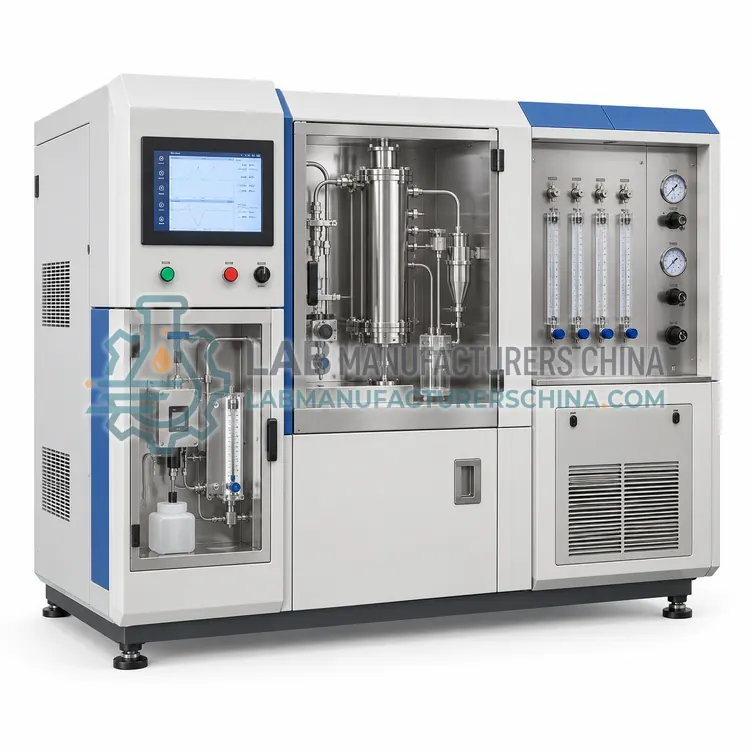
A system that extracts flue gas through a heated probe and line to a cabinet where SO2, NOx, CO, CO2 and O2 are measured without drying the sample. It is the right choice for plants with high moisture or soluble gases that would be lost in a chiller.
What is the Extractive Hot-Wet CEMS for Multi-Gas Stack Monitoring?
A system that extracts flue gas through a heated probe and line to a cabinet where SO2, NOx, CO, CO2 and O2 are measured without drying the sample. It is the right choice for plants with high moisture or soluble gases that would be lost in a chiller.
Overview
In the hot-wet configuration, the sample is filtered at the probe and carried in a heated line at 180 to 190 °C to a heated analyzer module, so that water vapor stays in the gas stream and soluble components such as SO2, NO2, NH3 and HCl are retained. A heated multi-gas NDIR or FTIR analyzer determines the species on a wet basis, with moisture measured to convert to dry values. Because no cooler is used, there is no condensate handling and response is faster than in cold-dry systems. The design needs careful temperature control of all wetted parts and periodic maintenance of heated filters and pumps. Zero and span checks with certified gases are made automatically and the system reports to the data acquisition unit.
How does it work?
Emission monitors determine pollutants in hot, wet and dusty flue gas. Extractive systems withdraw a sample through a heated probe and line at 180 °C, remove particles with a filter, and either keep the gas hot for analysis or dry it in a chiller before measurement. Analyzers use non-dispersive infrared for CO, CO2 and SO2, chemiluminescence or UV for NOx, paramagnetic or zirconia cells for O2, and FTIR for multi-component measurement. In-situ systems measure across the stack using tunable diode laser absorption or UV. Particulate monitors use light scattering, transmissometry for opacity, or triboelectric signals, and flow is measured by differential pressure pitot tubes or ultrasonic transit time. A data acquisition system normalizes values to reference oxygen, dry basis and standard conditions, applies calibration and reports averages.
What are the key features?
- Heated sample path at 180 to 190 °C prevents condensation and loss of soluble gases.
- No cooler or condensate pump removes a common maintenance and error source.
- Multi-gas analyzer reports SO2, NOx, CO, CO2, O2 and H2O from a single sample.
- Automatic zero and span checks with certified gases support EN 14181 QAL3.
- Backflushed probe filter reduces blockage in dusty stacks.
- Heated cabinet design tolerates cold climates and protects electronics.
What are the technical specifications?
A typical extractive hot-wet cems for multi-gas stack monitoring configuration offers measured components of SO2, NO, NO2, CO, CO2, O2, H2O, SO2 range of 0–500 / 0–5000 mg/m³, NOx range of 0–300 / 0–2000 mg/m³, CO range of 0–200 / 0–5000 mg/m³, O2 range of 0–25 vol% and linearity of ≤ ±2% of range. Values are indicative of the product class; the exact figures for each configuration are confirmed on the quotation and the calibration documents supplied with the instrument.
Which applications is it used for?
The Extractive Hot-Wet CEMS for Multi-Gas Stack Monitoring is used in wet scrubber outlet stacks, waste incinerators, coal-fired boilers and chemical process vents. Across the wider Emission Monitoring class, laboratories also deploy it for coal and gas power plant stacks, cement and lime kiln emissions and waste incineration monitoring.
Which standards and certifications apply?
Relevant standards and methods include EN 14181, EN 15267-3, EN 15259, ISO 12039, US EPA 40 CFR Part 60, US EPA 40 CFR Part 75, HJ 75 and HJ 76. Certification candidates for this model are CE, China CEMS certification and EN 15267 QAL1; each is to be confirmed for the specific configuration before shipment, and certificates are supplied only where they have been issued.
Choose sampling locations that meet EN 15259 or HJ/T 397 requirements for straight duct length and port access, because flow profile affects representativeness. Keep heated lines above the acid dew point to prevent condensation and corrosion, and replace probe filters and pump heads regularly. Perform daily automatic zero and span checks, quarterly or annual linearity checks, and an annual surveillance test against a standard reference method under EN 14181 QAL3 and AST. Protect cabinets from dust and temperature extremes, and provide calibration gas cylinders with certified uncertainties. Keep records of maintenance, calibration and data substitution, since regulators audit these, and train operators in safe work on platforms.
How do I select the right Extractive Hot-Wet CEMS for Multi-Gas Stack Monitoring?
Select hot-wet extractive where moisture is high, soluble gases such as HCl or NH3 are regulated, or where condensate handling is undesirable. Cold-dry systems are lower cost for SO2, NOx and CO only. In an RFQ, specify components and limits, stack temperature and moisture, cabinet climate, and certification needs.
How does it compare with other Emission Monitoring variants?
Start with the regulated pollutants, emission limits and the standard your permit cites, such as EN 14181 or HJ 75. Decide between extractive and in-situ systems according to stack temperature, moisture, acid gas content and the number of species: extractive suits multi-component and low-level measurements, while in-situ suits single gases and fast response. Check that measurement ranges are suitable for the limits, with limits in the lower third of the range where possible. Consider reporting requirements for averaging, data validation and certified instrument status under schemes such as EN 15267 or China CEMS certification. Include sample conditioning maintenance, calibration gas logistics, shelter size and the ability to cope with wet scrubber stacks.
Full specifications
| Measured components | SO2, NO, NO2, CO, CO2, O2, H2O |
|---|---|
| SO2 range | 0–500 / 0–5000 mg/m³ |
| NOx range | 0–300 / 0–2000 mg/m³ |
| CO range | 0–200 / 0–5000 mg/m³ |
| O2 range | 0–25 vol% |
| Linearity | ≤ ±2% of range |
| Probe and line temperature | 180–190 °C |
| Response time (T90) | ≤ 120 s |
| Zero and span drift | ≤ ±2% of range per week |
| Power supply | 220 VAC, 50 Hz, about 3 kW |
Indicative values for this product class. Final specifications are confirmed on the quotation and in the calibration documents supplied with the instrument.
Applications
- Wet scrubber outlet stacks
- Waste incinerators
- Coal-fired boilers
- Chemical process vents
Key features
- Heated sample path at 180 to 190 °C prevents condensation and loss of soluble gases.
- No cooler or condensate pump removes a common maintenance and error source.
- Multi-gas analyzer reports SO2, NOx, CO, CO2, O2 and H2O from a single sample.
- Automatic zero and span checks with certified gases support EN 14181 QAL3.
- Backflushed probe filter reduces blockage in dusty stacks.
- Heated cabinet design tolerates cold climates and protects electronics.
Frequently asked questions about Extractive Hot-Wet CEMS for Multi-Gas Stack Monitoring
Yes, when equipped with a heated FTIR or heated gas-filter correlation analyzer and an inert heated sample path. HCl dissolves in condensate, so the entire path must stay above the dew point to avoid losses that cause low readings.
Analyzers measure on a wet basis and report H2O by a dedicated sensor. The data system converts concentrations to dry basis and to reference oxygen using the measured values, as required by the regulation, so results can be compared with emission limits.
Probe filters are inspected monthly and replaced every one to three months depending on dust load, with automatic backflush reducing clogging. Heated line sections, pump heads and seals are inspected on the same schedule to prevent leaks and cold spots.
A CEMS is an installed system that continuously measures pollutant concentrations and flow in stack gas, normalizes the results to reference conditions and records them for regulatory reporting. It typically includes a sampling system, gas analyzers, dust monitor, flow meter and data acquisition software.
Flue gas contains water vapor and acid gases such as SO2 and HCl that dissolve in condensate. Heating the probe and line to about 180 °C keeps the gas above the dew point, preventing loss of soluble species and corrosion before the sample reaches the analyzer.
Under EN 14181, QAL3 is ongoing quality assurance by the plant operator, using control charts of zero and span drift to show the measuring system remains within its uncertainty. It is complemented by QAL1 suitability testing, QAL2 calibration and annual surveillance tests.