
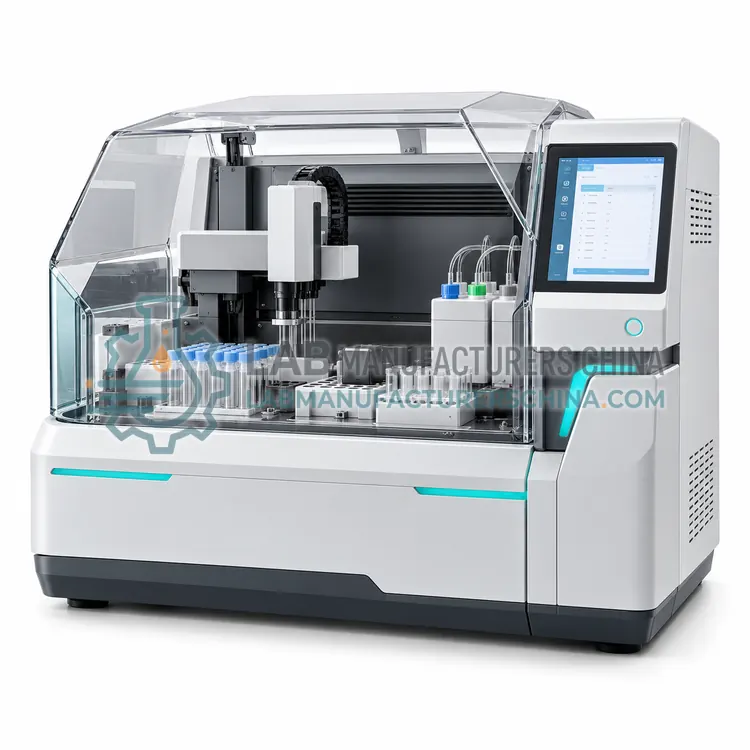
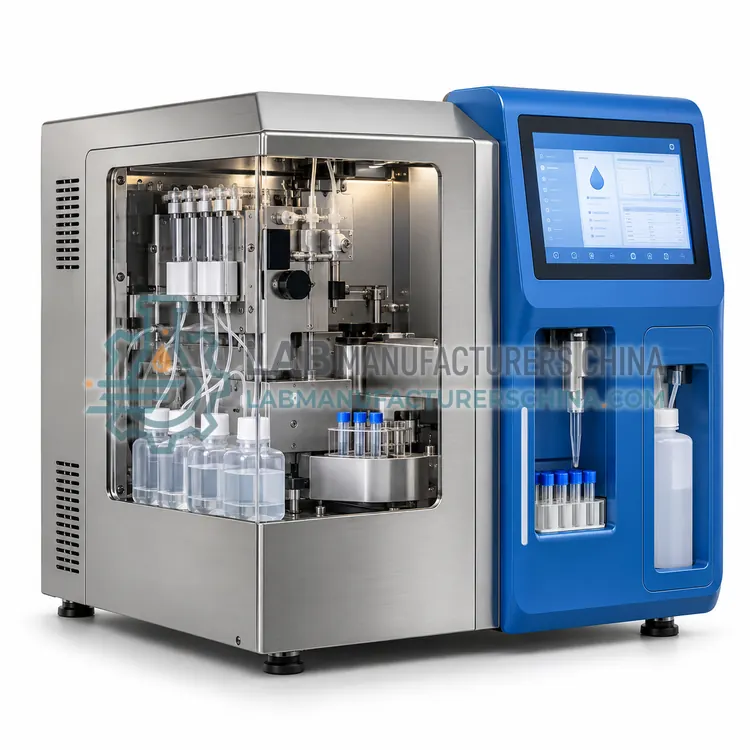
Blood Gas and Electrolyte Analyzer
血气电解质分析仪
- SKU EAN-0003
- Electrolyte Analyzers
- CE (to be confirmed)
- ISO 13485 manufacturing (to be confirmed)
- NMPA class II registration (to be confirmed)
Price on request — FOB / CIF quoted per order
Prices depend on configuration, quantity and destination port.
Key specifications
| Measured parameters | pH, pCO2, pO2, Na+, K+, Ca2+, Hct |
|---|---|
| Calculated parameters | HCO3-, base excess, SO2, anion gap |
| Sample volume | 95–150 µL whole blood |
| Measurement time | About 60–120 s |
| Sample types | Heparinised whole blood, capillary, control ampoules |
| Calibration | Automatic one-point every 30 min, two-point every 4–8 h |
Request a quote Download brochure · to be provided
By Lab Manufacturers China Technical TeamLast reviewed Standards: ISO 15189, CLSI EP05, CLSI EP15
What is the Blood Gas and Electrolyte Analyzer?
A blood gas and electrolyte analyzer measures pH, partial pressures of oxygen and carbon dioxide, and electrolytes such as sodium, potassium and ionised calcium from a single whole blood sample. It is the standard instrument for critical care, anesthesia and emergency respiratory assessment.
What is the Blood Gas and Electrolyte Analyzer?
A blood gas and electrolyte analyzer measures pH, partial pressures of oxygen and carbon dioxide, and electrolytes such as sodium, potassium and ionised calcium from a single whole blood sample. It is the standard instrument for critical care, anesthesia and emergency respiratory assessment.
Overview
The instrument combines electrochemical sensors in a single cartridge or cassette: a pH electrode, a carbon dioxide electrode based on the Severinghaus design, an oxygen electrode based on the Clark design, and ion-selective electrodes for electrolytes. The sample is introduced from a heparinised syringe, capillary tube or ampoule, and the analyzer reports pH, pCO2, pO2, sodium, potassium, ionised calcium, hematocrit and calculated values such as bicarbonate, base excess and oxygen saturation. Because ionised calcium depends on pH, the analyzer uses the measured pH for correction. Sensor cartridges have a defined life measured in days or tests and are replaced as a unit, so routine maintenance is largely limited to cleaning the sample path and running the automatic calibration and quality control procedures.
How does it work?
An ion-selective electrode consists of a membrane that responds selectively to one ion, an internal filling solution and a reference electrode. When the sample contacts the membrane, a potential develops across it that follows the Nernst equation, changing by about 59 millivolts for a tenfold change in ion activity at 25 degrees Celsius. The analyzer measures this potential against the reference electrode, corrects for temperature, and calculates concentration from a two-point calibration with standard solutions of known activity. Direct measurement presents undiluted whole blood, plasma, serum or urine to the electrode, which is preferred for whole blood samples and for patients with abnormal protein or lipid content. Indirect measurement dilutes the sample with a reagent before the electrode, which suits diluted samples and automated high-throughput operation. Sodium, potassium, chloride, calcium, lithium and magnesium electrodes differ in membrane composition.
What are the key features?
- pH, pCO2 and pO2 sensors with ion-selective electrolyte electrodes
- Ionised calcium corrected for the measured pH
- Calculated bicarbonate, base excess and oxygen saturation
- Sample introduction from syringe, capillary or ampoule
- Single cartridge design replaced as one unit
- Automatic one and two-point calibration with quality control
What are the technical specifications?
A typical blood gas and electrolyte analyzer configuration offers measured parameters of pH, pCO2, pO2, Na+, K+, Ca2+, Hct, calculated parameters of HCO3-, base excess, SO2, anion gap, sample volume of 95–150 µL whole blood, measurement time of About 60–120 s, sample types of Heparinised whole blood, capillary, control ampoules and calibration of Automatic one-point every 30 min, two-point every 4–8 h. Values are indicative of the product class; the exact figures for each configuration are confirmed on the quotation and the calibration documents supplied with the instrument.
Which applications is it used for?
The Blood Gas and Electrolyte Analyzer is used in intensive care and anesthesia monitoring, emergency department respiratory assessment, neonatal and pediatric critical care and operating theatre and recovery units. Across the wider Electrolyte Analyzers class, laboratories also deploy it for critical care and emergency electrolyte testing, dialysis and renal unit monitoring and surgical and perioperative assessment.
Which standards and certifications apply?
Relevant standards and methods include ISO 15189, CLSI EP05, CLSI EP15, CLSI C29, IEC 61010-1 and IEC 61010-2-101. Certification candidates for this model are CE, ISO 13485 manufacturing and NMPA class II registration; each is to be confirmed for the specific configuration before shipment, and certificates are supplied only where they have been issued.
Install the analyzer on a level bench away from direct sunlight and heat sources, with a grounded power supply and enough space for reagent and waste containers. Verify performance at installation with aqueous standards and with split serum samples compared against another method, and check the slope of each electrode, which should fall within the expected Nernstian range. Daily tasks include calibration with the supplied standards, measurement of normal and abnormal control material, and inspection of the sample path for air bubbles, clots or protein deposits. Electrodes and tubing are replaced when slope, response time or precision deteriorates. Treat all blood samples as infectious, dispose of waste according to local rules, and record every maintenance action for accreditation.
How do I select the right Blood Gas and Electrolyte Analyzer?
Select this variant when arterial blood gases and electrolytes are needed together in critical care settings, since one sample and one instrument reduce delay. In the RFQ confirm which parameters are measured rather than calculated, the sample volume for neonatal use, cartridge life in days and tests, and the automatic calibration interval, because these determine reagent cost per report.
How does it compare with other Electrolyte Analyzers variants?
Choose an electrolyte analyzer when the electrolyte request volume justifies a dedicated instrument, typically more than thirty tests per day, or when whole blood electrolytes must be available within minutes. Decide first between direct and indirect measurement, since they give different reference intervals and cannot be combined in one report. Then check whether you need whole blood capability, urine mode, or additional analytes such as ionised calcium, lithium or magnesium. Compare calibration frequency and electrode life, because these drive running cost, and the sample volume, which matters for pediatric and neonatal work. Confirm that the instrument reports temperature-corrected results, that it has a clot detection or blockage alarm, and that results can be transmitted to the laboratory information system.
Full specifications
| Measured parameters | pH, pCO2, pO2, Na+, K+, Ca2+, Hct |
|---|---|
| Calculated parameters | HCO3-, base excess, SO2, anion gap |
| Sample volume | 95–150 µL whole blood |
| Measurement time | About 60–120 s |
| Sample types | Heparinised whole blood, capillary, control ampoules |
| Calibration | Automatic one-point every 30 min, two-point every 4–8 h |
| Cartridge life | 30–60 days or a stated number of samples |
| Temperature correction | Patient temperature input from 25 to 43 °C |
| Interfaces | LAN with HL7, USB, RS-232 |
Indicative values for this product class. Final specifications are confirmed on the quotation and in the calibration documents supplied with the instrument.
Applications
- Intensive care and anesthesia monitoring
- Emergency department respiratory assessment
- Neonatal and pediatric critical care
- Operating theatre and recovery units
Key features
- pH, pCO2 and pO2 sensors with ion-selective electrolyte electrodes
- Ionised calcium corrected for the measured pH
- Calculated bicarbonate, base excess and oxygen saturation
- Sample introduction from syringe, capillary or ampoule
- Single cartridge design replaced as one unit
- Automatic one and two-point calibration with quality control
Frequently asked questions about Blood Gas and Electrolyte Analyzer
pH, carbon dioxide and oxygen partial pressures, electrolytes, ionised calcium and hematocrit are measured directly, while bicarbonate, base excess, oxygen saturation and anion gap are calculated from those values. Calculated parameters depend on instrument algorithms, so reference ranges differ between models.
Analyze arterial blood within fifteen to thirty minutes of collection, because oxygen consumption by blood cells lowers pO2 over time. Plastic syringes allow some oxygen diffusion, so samples should be mixed and measured promptly; if delay is unavoidable, use an ice slurry for selected parameters and document the delay.
Run at least one level of ampouled quality control every eight hours, three levels per day, and after cartridge or tubing changes. Blood gas controls are aqueous or buffered with fluorocarbon, and the laboratory should also take part in an external quality assessment scheme for blood gas parameters.
Direct measurement applies undiluted sample to the electrode, so results reflect ion activity in plasma water. Indirect measurement dilutes the sample first, so in patients with abnormal protein or lipid content the two methods differ. Laboratories must choose one method and use matching reference intervals throughout.
Typical life is three to twelve months, or a stated number of measurements, depending on analyte, workload and sample matrix. Replace an electrode when the calibration slope leaves the acceptable range, when response time lengthens or when precision degrades, and always recalibrate after replacement.
Many instruments include a urine mode with its own calibration and dilution protocol, which is needed because urine concentrations are much wider in range. The laboratory should validate linearity, recovery and carryover for urine and report results using urine-specific reference intervals rather than serum ones.
Related models
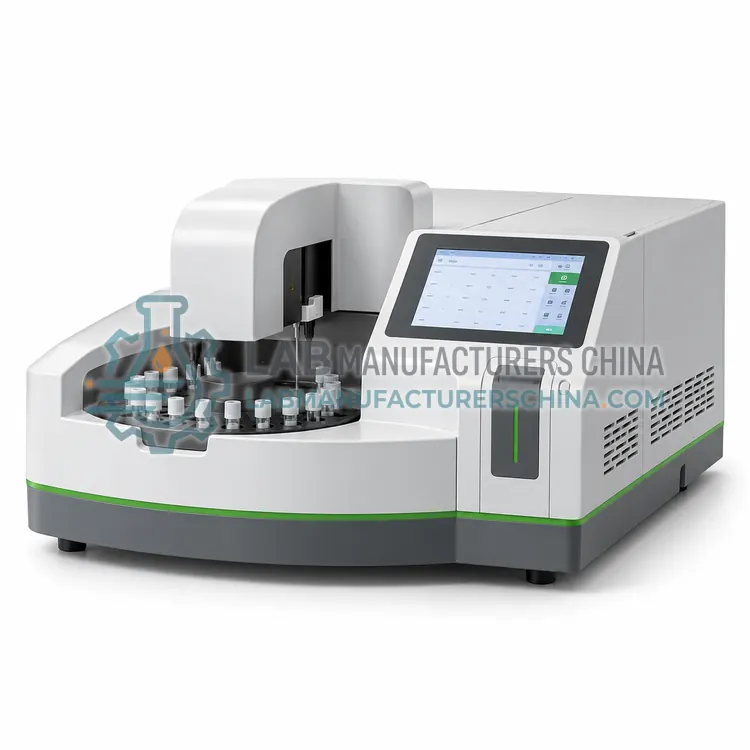


Fully Automatic Chemistry Analyzer with Integrated ISE Module
带集成离子选择电极模块的全自动生化分析仪
- CE (to be confirmed)
- +2