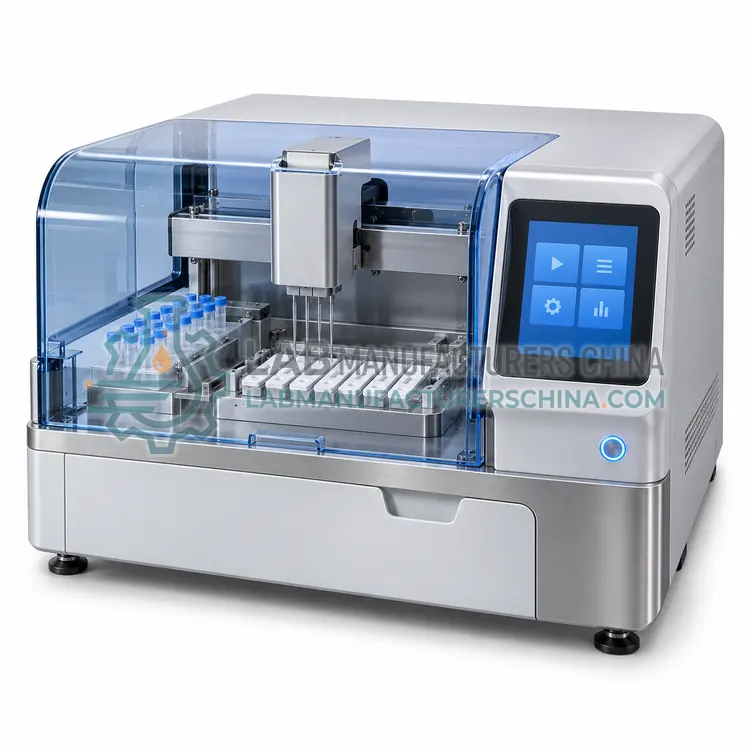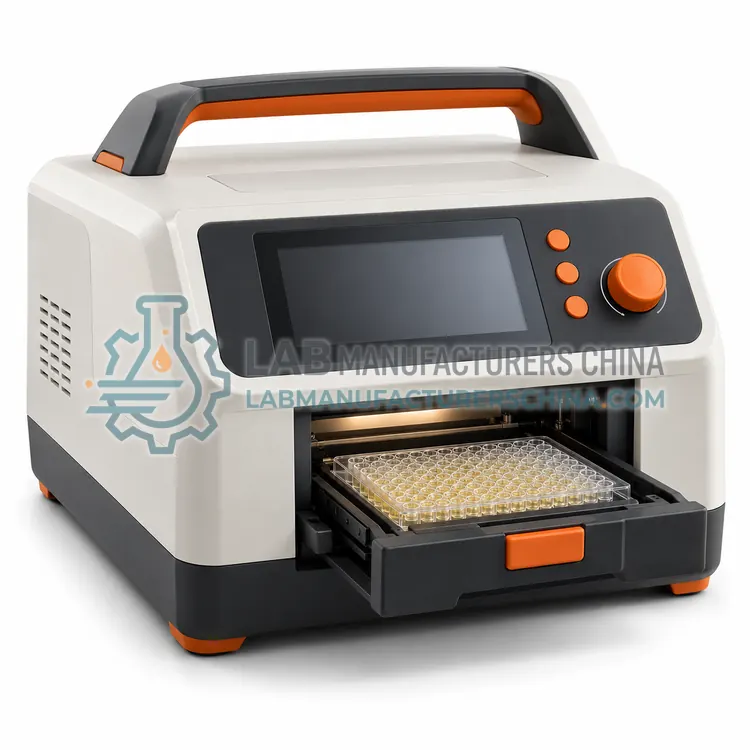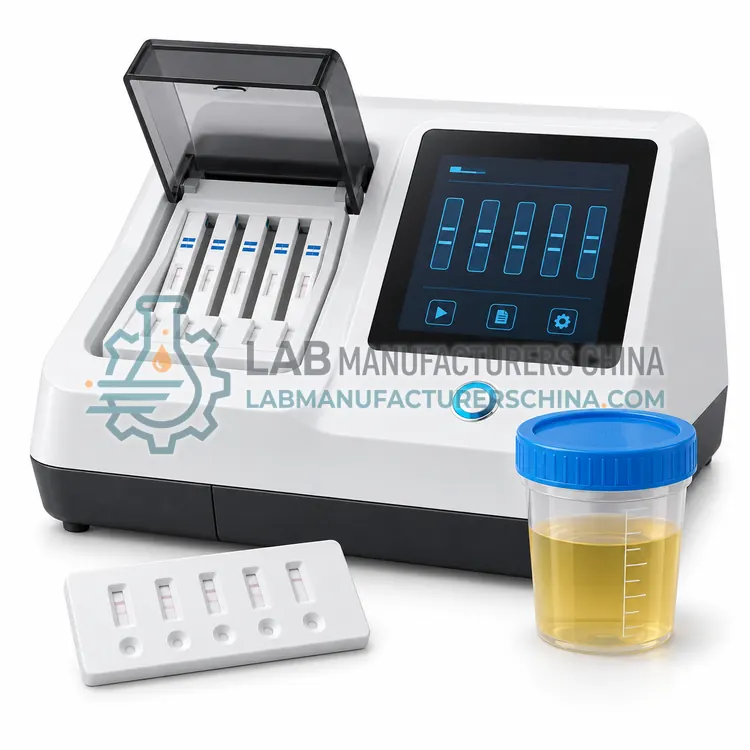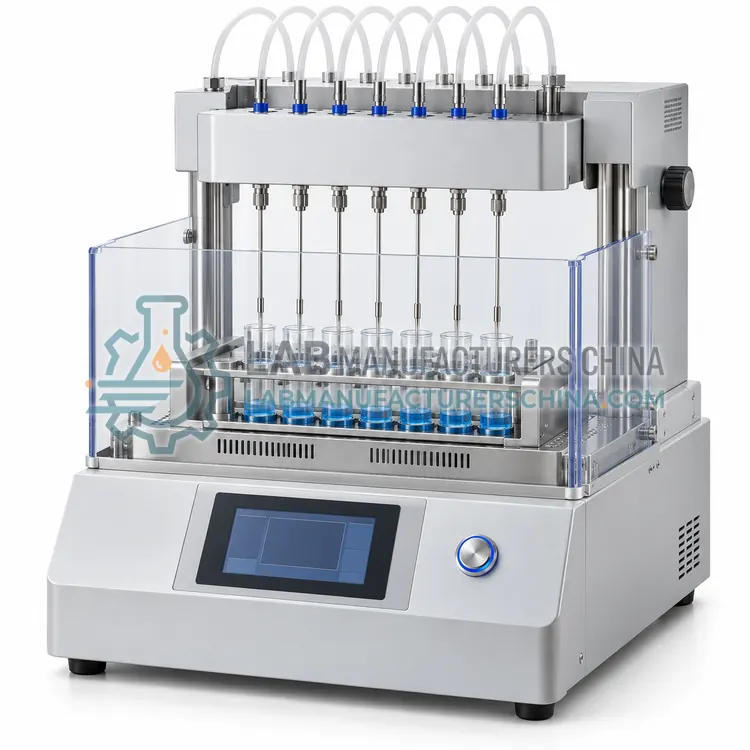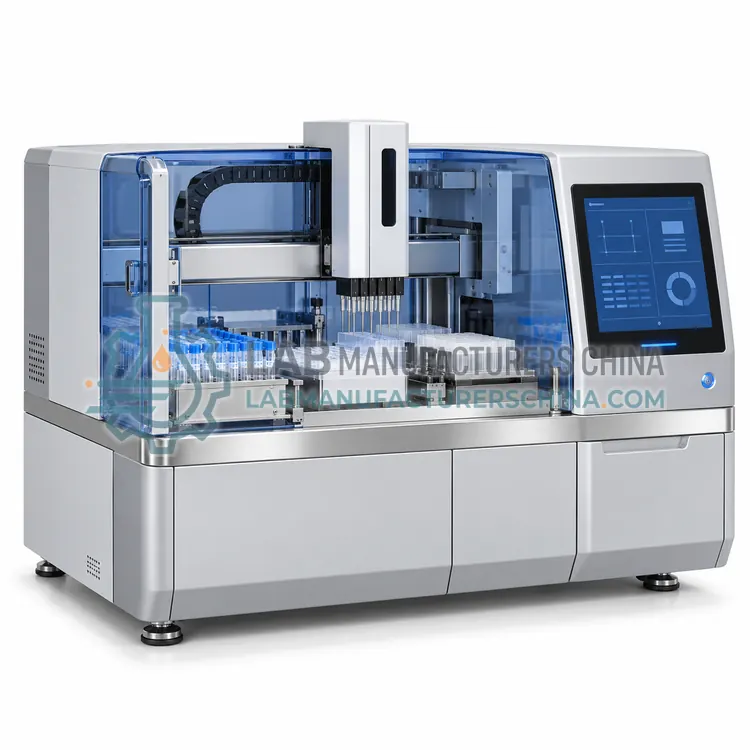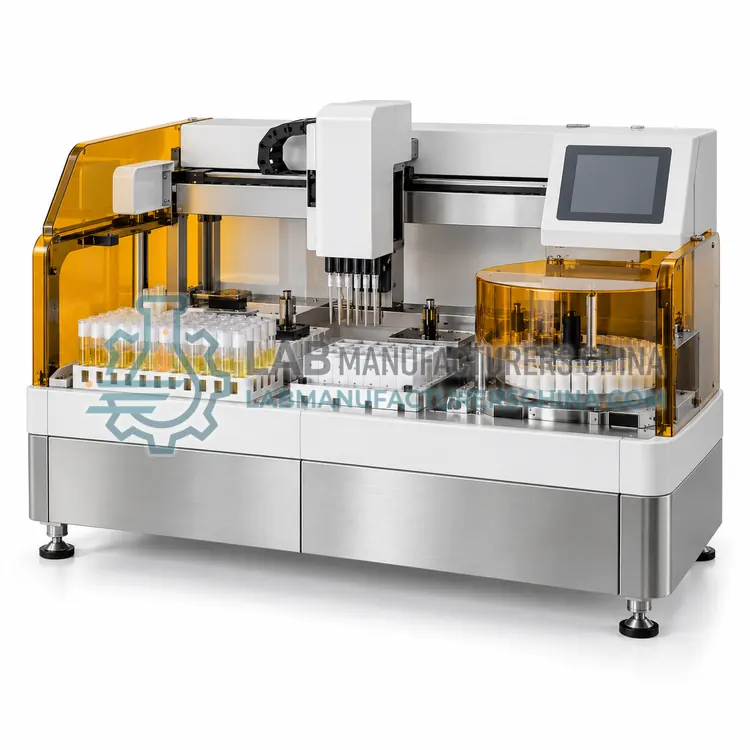
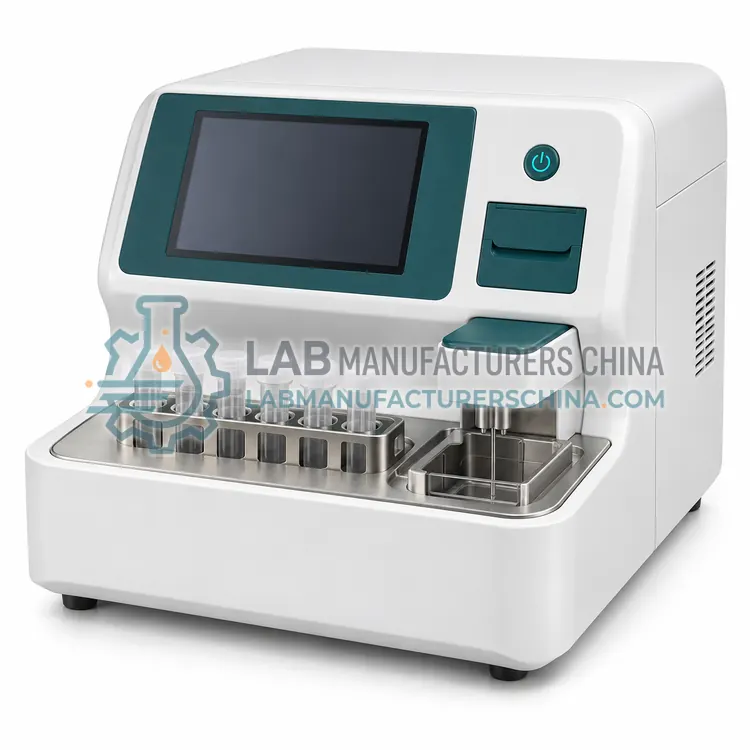
Point-of-Care Oral Fluid Drug Screening System
即时口腔液毒品筛查系统
- SKU DSS-0002
- Drug Screening Systems
- CE (to be confirmed)
- ISO 9001 manufacturing (to be confirmed)
Price on request — FOB / CIF quoted per order
Prices depend on configuration, quantity and destination port.
Key specifications
| Specimen | Oral fluid |
|---|---|
| Read time | 5–10 min |
| Drug panel | 5–7 drug classes |
| Detection window | approx. 24–48 h |
| Sample volume | approx. 0.5–1 mL |
| Operating temperature | 4–40 °C |
Request a quote Download brochure · to be provided
By Lab Manufacturers China Technical TeamLast reviewed Standards: ISO 15189, CLSI EP12, ISO 18113-1
What is the Point-of-Care Oral Fluid Drug Screening System?
A point-of-care oral fluid drug screening system collects saliva with a swab or collector and reads a cartridge in a portable analyzer within minutes. It is used for roadside, workplace and event testing where observed collection matters.
What is the Point-of-Care Oral Fluid Drug Screening System?
A point-of-care oral fluid drug screening system collects saliva with a swab or collector and reads a cartridge in a portable analyzer within minutes. It is used for roadside, workplace and event testing where observed collection matters.
Overview
A collector absorbs a defined volume of oral fluid, often with an indicator that confirms sufficient sample, and the fluid is delivered to a lateral flow cartridge with multiple lines for different drugs. A portable analyzer reads the cartridge with optical sensors and reports positive or negative results for each drug after 5 to 10 minutes, with results stored and printed. Oral fluid reflects recent use, typically within 24 to 48 hours, which fits impairment-related testing. Observed collection reduces adulteration. THC detection depends on parent drug in the mouth and cutoffs are lower than urine, so sensitivity and cross-reactivity vary. Devices are battery powered, have temperature compensation and an internal control line. Positive results need laboratory confirmation, often using a second oral fluid sample collected at the same time.
How does it work?
Most drug screening relies on competitive immunoassay. A labeled drug or drug-conjugate competes with drug in the sample for a limited number of antibody binding sites, so the signal is inversely related to the drug concentration. In lateral flow cassettes, the sample migrates along a nitrocellulose membrane and a colored line appears in the test region when drug is absent or below the cutoff. Readers use a camera or photodiode to interpret line intensity and remove visual subjectivity. Instrument immunoassays use enzyme-labeled or particle-enhanced reactions measured photometrically, and ELISA plates measure enzyme-generated color in wells with a microplate reader. Each assay is set to a cutoff concentration, for example 300 or 50 ng/mL depending on the drug, and results are presumptive until confirmed by GC-MS or LC-MS/MS.
What are the key features?
- Observed oral fluid collection with sample adequacy indicator
- Portable analyzer reading cartridges in 5 to 10 minutes
- Multi-drug panel including THC, cocaine and amphetamines
- Battery operation with stored and printed results
- Internal control line for each cartridge
What are the technical specifications?
A typical point-of-care oral fluid drug screening system configuration offers specimen of Oral fluid, read time of 5–10 min, drug panel of 5–7 drug classes, detection window of approx. 24–48 h, sample volume of approx. 0.5–1 mL and operating temperature of 4–40 °C. Values are indicative of the product class; the exact figures for each configuration are confirmed on the quotation and the calibration documents supplied with the instrument.
Which applications is it used for?
The Point-of-Care Oral Fluid Drug Screening System is used in roadside driver testing, workplace for-cause testing, event and festival screening and probation monitoring. Across the wider Drug Screening Systems class, laboratories also deploy it for workplace drug testing programs, clinical and emergency department screening and drug treatment and probation monitoring.
Which standards and certifications apply?
Relevant standards and methods include ISO 15189, CLSI EP12, ISO 18113-1, IEC 61010-2-101 and SAMHSA Mandatory Guidelines for Federal Workplace Drug Testing Programs. Certification candidates for this model are CE and ISO 9001 manufacturing; each is to be confirmed for the specific configuration before shipment, and certificates are supplied only where they have been issued.
Follow the manufacturer instructions for specimen collection, volume and read time, because reading outside the window can change the result. Store reagents and cassettes within the labeled temperature range and do not use them after expiry. Run positive and negative controls at defined intervals and record lot numbers. Maintain chain-of-custody and specimen integrity checks such as temperature, creatinine and adulterant testing for urine. Clean readers and optical windows, and verify calibration as specified. Because results are presumptive, define a confirmation pathway with a qualified laboratory and communicate cross-reactivity limits to reviewers. Keep personal data secure according to privacy rules applicable to testing programs.
How do I select the right Point-of-Care Oral Fluid Drug Screening System?
Choose oral fluid screening when recent use, observed collection or testing outside a laboratory matters. For long detection windows, use urine or hair. In an RFQ, specify drug panel, cutoffs, read time, operating temperature range and printing or data export needs.
How does it compare with other Drug Screening Systems variants?
Choose according to testing volume, setting and required evidence. Low-volume sites such as clinics and clubs often use instant cassettes or cups with a reader, while a central laboratory screening hundreds of samples a day needs an automated immunoassay analyzer. Oral fluid systems suit roadside and workplace testing where observed collection matters, and hair testing offers a long detection window. Check the drug panel, cutoff values, specimen types and cross-reactivity data. A reader reduces subjectivity and supports record-keeping, which is important for workplace programs. Consider connectivity with LIS or case management software, the cost of consumables, reagent stability and storage conditions. Programs following regulated guidelines must confirm that cutoffs and procedures match the required scheme.
Full specifications
| Specimen | Oral fluid |
|---|---|
| Read time | 5–10 min |
| Drug panel | 5–7 drug classes |
| Detection window | approx. 24–48 h |
| Sample volume | approx. 0.5–1 mL |
| Operating temperature | 4–40 °C |
| Power | Rechargeable battery |
| Data storage | ≥ 500 results |
| Output | Printer / USB |
| Weight | approx. 0.6 kg |
Indicative values for this product class. Final specifications are confirmed on the quotation and in the calibration documents supplied with the instrument.
Applications
- Roadside driver testing
- Workplace for-cause testing
- Event and festival screening
- Probation monitoring
Key features
- Observed oral fluid collection with sample adequacy indicator
- Portable analyzer reading cartridges in 5 to 10 minutes
- Multi-drug panel including THC, cocaine and amphetamines
- Battery operation with stored and printed results
- Internal control line for each cartridge
Frequently asked questions about Point-of-Care Oral Fluid Drug Screening System
Most drugs are detectable in oral fluid within minutes to hours after use and for about 24 to 48 hours, which is shorter than urine. THC is typically detectable for a few hours to about a day.
Yes. Food, drink and smoking can dilute the sample or leave residue, so most procedures require a waiting period of about 10 minutes before collection and observed collection.
Usually not. A presumptive result generally needs laboratory confirmation by mass spectrometry, and the legal requirement depends on jurisdiction and program rules.
A drug screening system is a set of instruments and tests that quickly detect drugs of abuse in specimens such as urine or oral fluid. Most use immunoassay at defined cutoffs and give presumptive results that need laboratory confirmation.
Accuracy is high for the target drug at its cutoff but not absolute. Cross-reactivity can cause false positives and low concentrations near the cutoff can give false negatives, so confirmation by GC-MS or LC-MS/MS is standard.
A cutoff is the concentration at or above which a test reports positive. It is set by regulation or program design and differs by drug and specimen, for example 50 ng/mL for some opiates in urine.