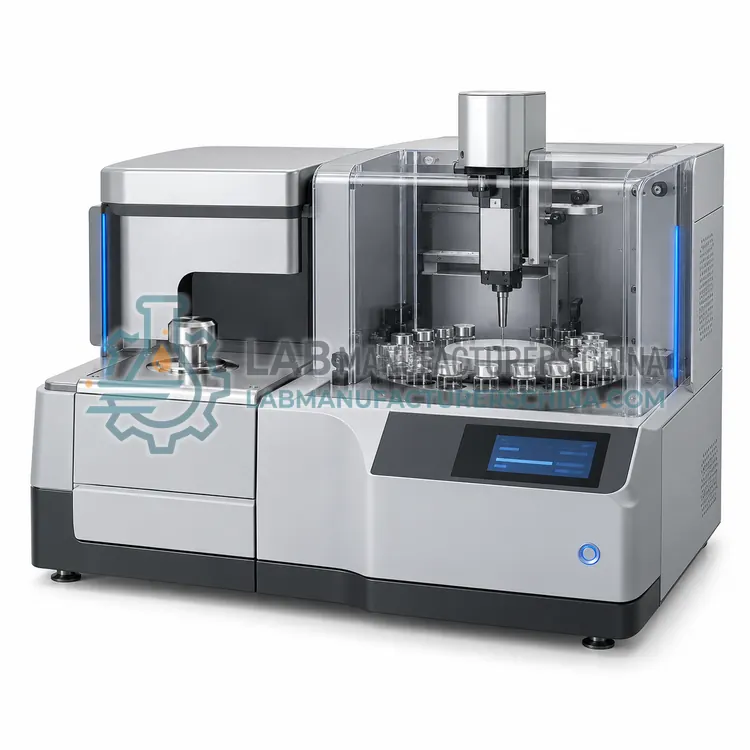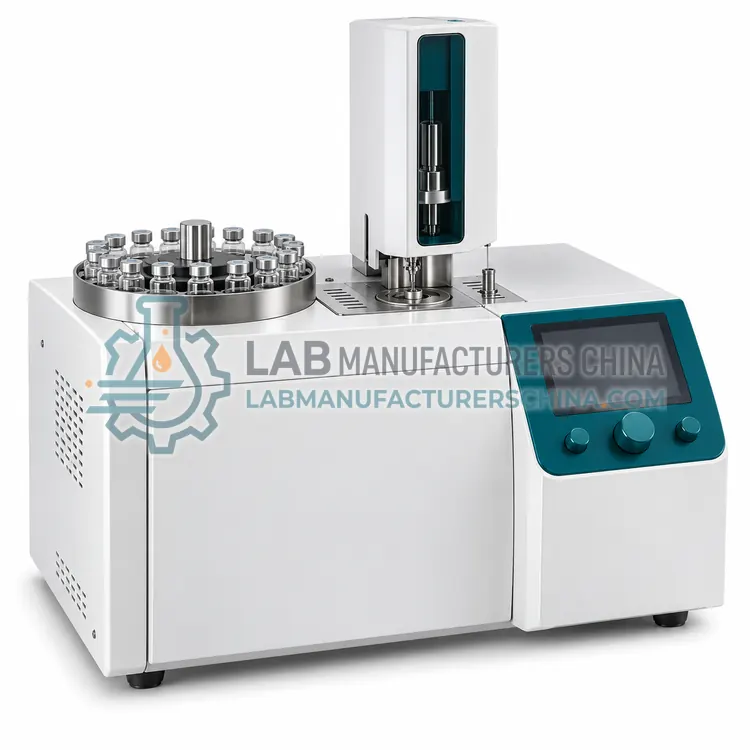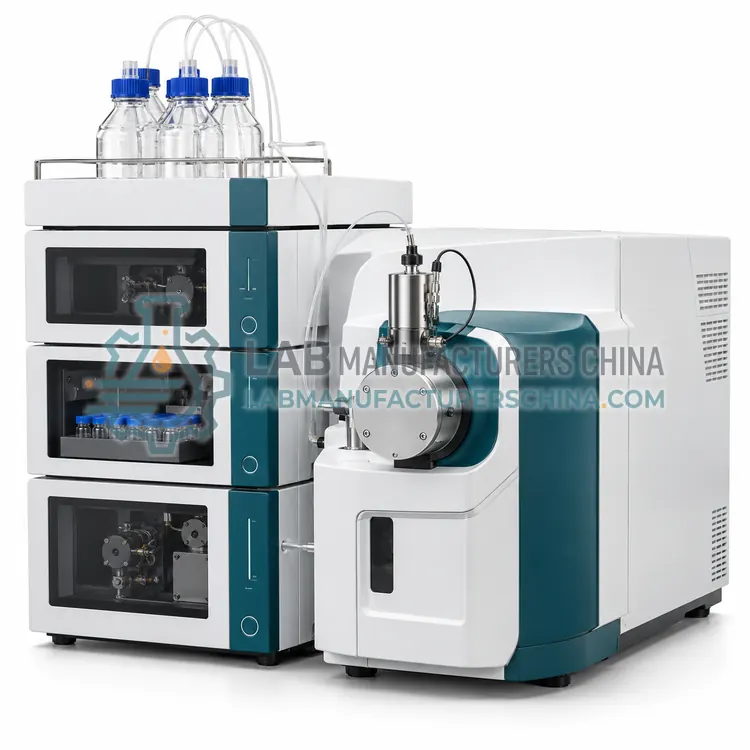
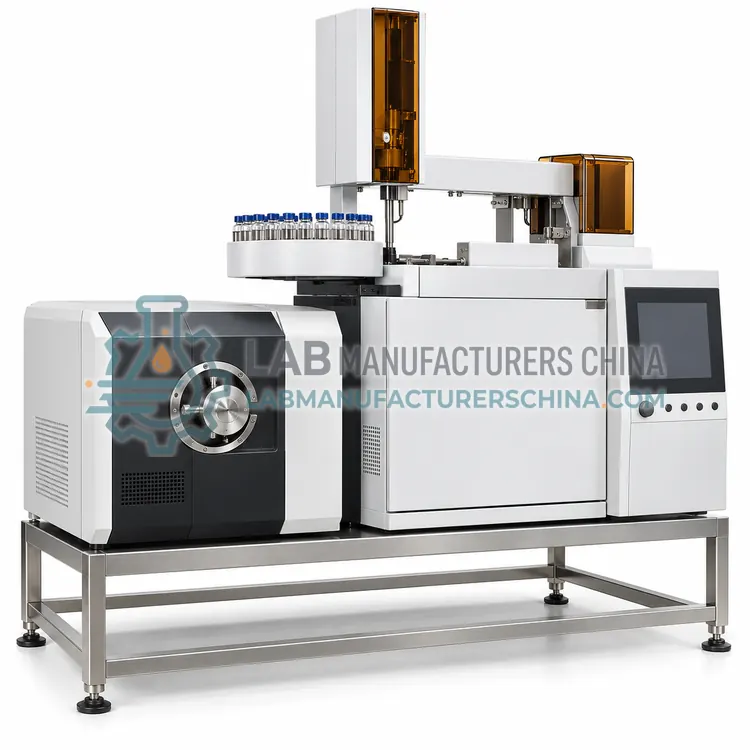
GC-MS System for Seized Drug Analysis
缴获毒品分析用 GC-MS 系统
- SKU DAS-0001
- Drug Analysis Systems
- CE (to be confirmed)
- ISO 9001 manufacturing (to be confirmed)
Price on request — FOB / CIF quoted per order
Prices depend on configuration, quantity and destination port.
Key specifications
| Mass range | 1.2–1050 u |
|---|---|
| Ionization | EI, 70 eV |
| Mass analyzer | Single quadrupole |
| Scan speed | up to 10,000 u/s |
| Oven temperature range | Ambient +4 to 450 °C |
| Autosampler capacity | ≥ 100 vials |
Request a quote Download brochure · to be provided
By Lab Manufacturers China Technical TeamLast reviewed Standards: ASTM E2329, ISO/IEC 17025, ISO 21043
What is the GC-MS System for Seized Drug Analysis?
A GC-MS system for seized drug analysis separates volatile and semi-volatile components by gas chromatography and identifies them by electron ionization mass spectra. It is the standard confirmatory technique in most forensic drug laboratories.
What is the GC-MS System for Seized Drug Analysis?
A GC-MS system for seized drug analysis separates volatile and semi-volatile components by gas chromatography and identifies them by electron ionization mass spectra. It is the standard confirmatory technique in most forensic drug laboratories.
Overview
The system couples a capillary gas chromatograph with a single quadrupole mass spectrometer using 70 eV electron ionization, which produces reproducible spectra that match commercial and custom libraries. An autosampler with 100 or more positions supports unattended sequences. A typical seized drug method uses a 30 m, 5 percent phenyl column, a temperature program up to about 300 °C and a mass scan from 40 to 550 m/z. Split injection limits overloading from high-purity samples, and blanks between samples control carryover. Software supports library search with match scores, retention time comparison, and quantitation with internal standards. GC-MS is limited to compounds that are volatile or can be derivatized, so thermally labile substances may degrade in the inlet. Routine tuning and inlet maintenance are essential for consistent identification.
How does it work?
Drug analysis relies on orthogonal techniques to reach a confident identification. Gas chromatography and liquid chromatography separate components, and mass spectrometry measures mass-to-charge ratio and fragmentation patterns that are matched to reference libraries. Fourier transform infrared spectroscopy measures molecular vibrations and produces a fingerprint spectrum of the bulk material, often with an attenuated total reflectance crystal that needs no sample preparation. Raman spectroscopy uses laser scattering and can analyze through glass or plastic packaging. Ion mobility spectrometry separates ionized molecules by drift time in an electric field, offering rapid trace detection. Quantitation requires calibration with certified reference materials and internal standards. Software compares spectra with libraries, reports match scores and stores results with chain-of-custody information.
What are the key features?
- Electron ionization at 70 eV for library-searchable spectra
- Autosampler with 100 or more vials for unattended runs
- Split and splitless injection with programmable inlet
- Library search with match scores and retention indices
- Automatic tune report for system suitability records
What are the technical specifications?
A typical gc-ms system for seized drug analysis configuration offers mass range of 1.2–1050 u, ionization of EI, 70 eV, mass analyzer of Single quadrupole, scan speed of up to 10,000 u/s, oven temperature range of Ambient +4 to 450 °C and autosampler capacity of ≥ 100 vials. Values are indicative of the product class; the exact figures for each configuration are confirmed on the quotation and the calibration documents supplied with the instrument.
Which applications is it used for?
The GC-MS System for Seized Drug Analysis is used in confirmatory drug identification, drug purity and cutting agent profiling, clandestine laboratory casework and pharmaceutical impurity checks. Across the wider Drug Analysis Systems class, laboratories also deploy it for seized drug identification, forensic laboratory casework and customs and border screening.
Which standards and certifications apply?
Relevant standards and methods include ASTM E2329, ISO/IEC 17025, ISO 21043, UNODC Recommended Methods for Drug Identification and IEC 61010-1. Certification candidates for this model are CE and ISO 9001 manufacturing; each is to be confirmed for the specific configuration before shipment, and certificates are supplied only where they have been issued.
Use certified reference materials for calibration and identification, and run blanks to detect carryover, because potent drugs can contaminate subsequent samples. Establish system suitability and tuning checks for mass spectrometers and verify library matching against known standards. Safety is important, since samples may include highly potent opioids, so use fume hoods, appropriate personal protective equipment and waste handling procedures. Keep stable power, carrier gas purity and temperature control in the room. Maintain chain-of-custody and data security, and validate methods under ISO/IEC 17025 with measurement uncertainty where quantitation is reported. Schedule preventive maintenance for ion sources, liners, columns and optical components.
How do I select the right GC-MS System for Seized Drug Analysis?
Select GC-MS for routine confirmation of volatile drugs and cutting agents in a forensic laboratory. Choose LC-MS/MS for polar or labile compounds. In an RFQ, specify mass range, autosampler capacity, library format, carrier gas, inlet type and the calibration and tuning documentation required.
How does it compare with other Drug Analysis Systems variants?
Select by sample type and the confidence level your laboratory must report. Seized drug laboratories typically pair a screening technique with a confirmatory one, for example FTIR or color test with GC-MS. LC-MS/MS suits thermally labile, polar or low-dose compounds, including new psychoactive substances and pharmaceuticals in complex matrices. Portable Raman or FTIR suits field identification by customs and police, while ion mobility suits trace detection on surfaces. Check the availability and size of spectral libraries, the ability to add custom entries and the quality of software reporting. Consider throughput and autosampler capacity, consumables cost, and the skill level of operators. Accredited laboratories should confirm that instrument performance checks, such as tuning for GC-MS, are supported and documented.
Full specifications
| Mass range | 1.2–1050 u |
|---|---|
| Ionization | EI, 70 eV |
| Mass analyzer | Single quadrupole |
| Scan speed | up to 10,000 u/s |
| Oven temperature range | Ambient +4 to 450 °C |
| Autosampler capacity | ≥ 100 vials |
| Sensitivity (OFN, 1 pg) | S/N ≥ 1000:1 (scan) |
| Library | NIST-format compatible |
| Carrier gas | Helium or hydrogen |
| Power supply | 220 V, 50/60 Hz |
Indicative values for this product class. Final specifications are confirmed on the quotation and in the calibration documents supplied with the instrument.
Applications
- Confirmatory drug identification
- Drug purity and cutting agent profiling
- Clandestine laboratory casework
- Pharmaceutical impurity checks
Key features
- Electron ionization at 70 eV for library-searchable spectra
- Autosampler with 100 or more vials for unattended runs
- Split and splitless injection with programmable inlet
- Library search with match scores and retention indices
- Automatic tune report for system suitability records
Frequently asked questions about GC-MS System for Seized Drug Analysis
No. It works for volatile or derivatizable compounds such as amphetamines, cannabinoids and cocaine. Thermally labile, highly polar or large molecules may degrade or not elute, and need LC-MS/MS.
Run solvent blanks after high-concentration samples, use split injection, replace liners regularly and order samples by expected concentration where possible. Blanks are reviewed before results are reported.
Tuning is typically performed daily or before each sequence, with a report retained as evidence of system suitability. Additional checks follow maintenance such as source cleaning or column replacement.
A drug analysis system is a laboratory or field instrument platform that identifies and sometimes quantifies controlled substances in seized or pharmaceutical samples. It typically uses mass spectrometry, infrared, Raman or ion mobility techniques with reference spectral libraries.
Forensic practice calls for orthogonal techniques so that one result confirms another. A screening method such as FTIR or a color test is combined with a method of higher discriminating power such as GC-MS to reduce the risk of false identification.
Handheld Raman and FTIR devices identify many common drugs and cutting agents in seconds, often through packaging. They are screening tools, and mixtures, low concentrations or fluorescent materials may require laboratory confirmation.