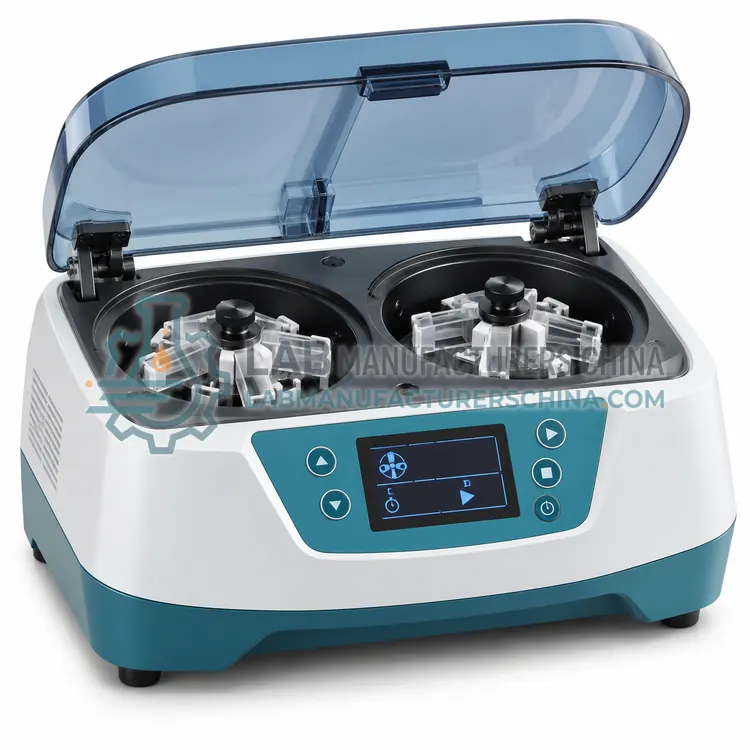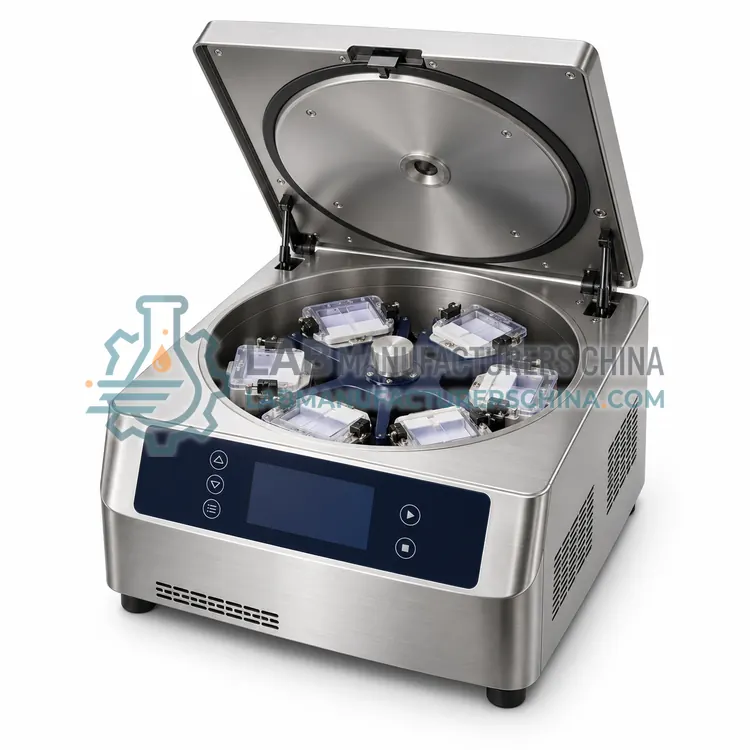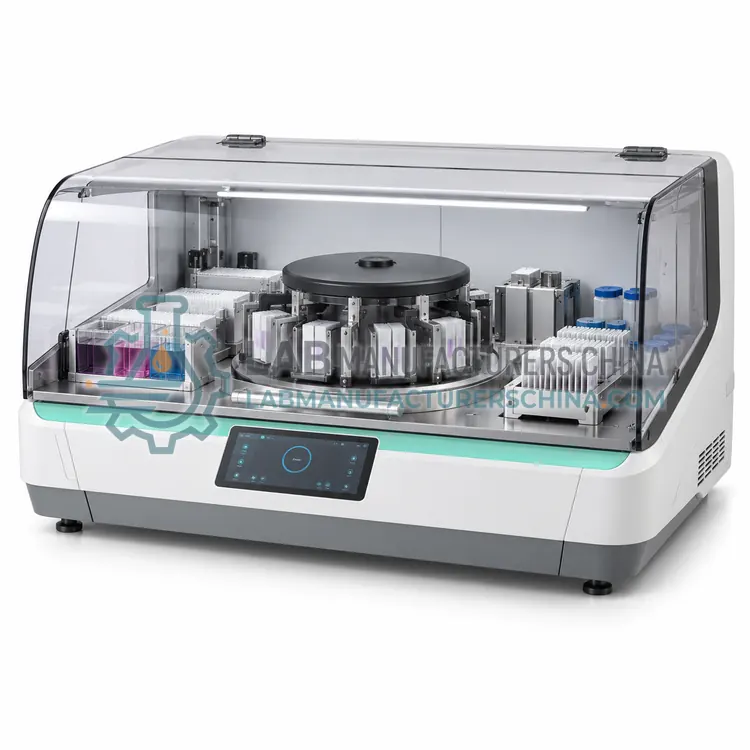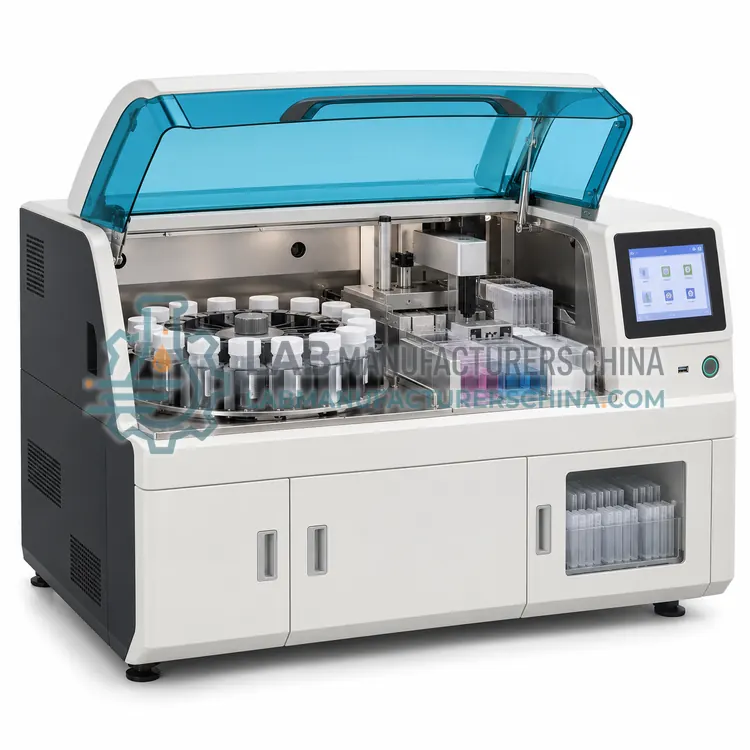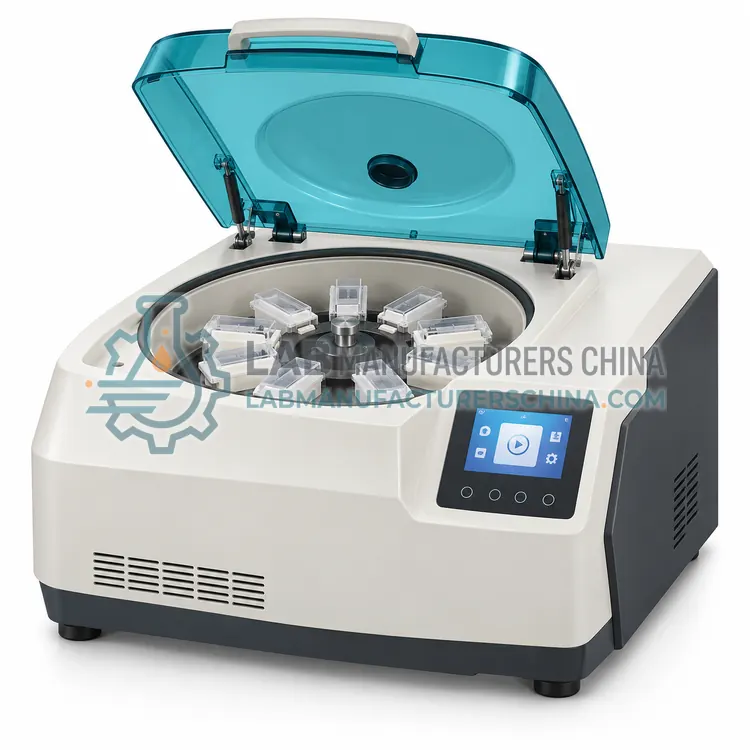
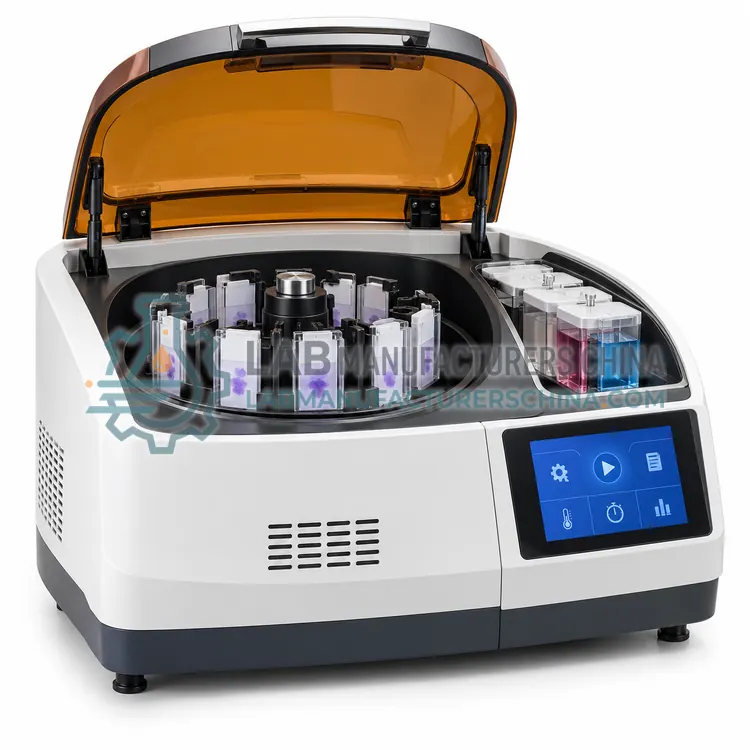
Micro-Volume Cytocentrifuge
微量离心甩片机
- SKU CYT-0005
- Cytocentrifuges
- CE (to be confirmed)
- IEC 61010-1 compliance (to be confirmed)
- IEC 61010-2-020 compliance (to be confirmed)
Price on request — FOB / CIF quoted per order
Prices depend on configuration, quantity and destination port.
Key specifications
| Number of chambers | 1–2 |
|---|---|
| Minimum sample volume | about 50–100 µL |
| Spin speed | 200–1500 rpm |
| Timer range | 1–30 min |
| Spot diameter | about 5–8 mm |
| Slide format | 25 × 75 mm standard |
Request a quote Download brochure · to be provided
By Lab Manufacturers China Technical TeamLast reviewed Standards: IEC 61010-1, IEC 61010-2-020, IEC 61326-1
What is the Micro-Volume Cytocentrifuge?
A micro-volume cytocentrifuge is designed for very small samples such as paediatric cerebrospinal fluid, where cell numbers are low. It gives a concentrated preparation from a minimal sample volume while limiting cell loss.
What is the Micro-Volume Cytocentrifuge?
A micro-volume cytocentrifuge is designed for very small samples such as paediatric cerebrospinal fluid, where cell numbers are low. It gives a concentrated preparation from a minimal sample volume while limiting cell loss.
Overview
Some samples arrive in volumes of a few hundred microlitres or less, and losing cells during preparation is unacceptable. A micro-volume cytocentrifuge uses a small chamber and a narrow spot so the entire sample is concentrated into a compact area, maximising the number of cells available for examination. Gentle spin settings reduce cell loss and damage, and absorbent cards are sized to match the small volume. These instruments are used for paediatric CSF, vitreous and aqueous humour, fine-needle aspirate rinses and rare research samples. Because so few cells are present, preparation quality strongly affects diagnostic yield, so chamber cleanliness, correct card fit and careful disassembly are critical. Some models can also run standard volumes with a larger chamber.
How does it work?
A cytocentrifuge is a low-speed centrifuge fitted with sample chambers that hold a microscope slide against a card or gasket. The fluid sample is placed in the chamber and centrifuged, so cells move out of suspension and settle onto the slide within a defined circle of typically 6 to 13 mm. Absorbent card or filter paper beside the slide wicks away the supernatant, leaving cells concentrated in a monolayer with minimal protein background. Spin speed and time, usually 500 to 1500 rpm for 3 to 10 minutes, control cell density and flattening. Faster spins pack more cells but flatten them and increase background; slower spins preserve nuclear detail. Some instruments add a cytology funnel, a slide clip and a disassembly system that protects the operator from aerosols.
What are the key features?
- Small chamber for volumes of a few hundred microlitres
- Narrow spot concentrating scarce cells
- Gentle spin settings limit cell loss
- Matched small absorbent cards
- Suitable for paediatric and ocular fluids
- Standard-volume chamber available on some models
What are the technical specifications?
A typical micro-volume cytocentrifuge configuration offers number of chambers of 1–2, minimum sample volume of about 50–100 µL, spin speed of 200–1500 rpm, timer range of 1–30 min, spot diameter of about 5–8 mm and slide format of 25 × 75 mm standard. Values are indicative of the product class; the exact figures for each configuration are confirmed on the quotation and the calibration documents supplied with the instrument.
Which applications is it used for?
The Micro-Volume Cytocentrifuge is used in paediatric cerebrospinal fluid, ocular fluids, fine-needle aspirate rinses and rare research samples. Across the wider Cytocentrifuges class, laboratories also deploy it for cerebrospinal fluid cytology, body fluid cell counts and urine cytology.
Which standards and certifications apply?
Relevant standards and methods include IEC 61010-1, IEC 61010-2-020, IEC 61326-1 and ISO 15189. Certification candidates for this model are CE, IEC 61010-1 compliance and IEC 61010-2-020 compliance; each is to be confirmed for the specific configuration before shipment, and certificates are supplied only where they have been issued.
Place the cytocentrifuge on a level bench and balance the rotor or chamber loads exactly as specified, because imbalance causes vibration and poor cell distribution. Use the recommended absorbent cards or filters and replace them for every sample to prevent carryover. Disassemble and clean chambers after use, and disinfect according to the laboratory biosafety policy, since samples may be infectious. Verify the timer and speed at defined intervals with a tachometer or service check. Record spin conditions for each sample, keep maintenance records and train staff in safe handling of aerosols and sharps from broken slides.
How do I select the right Micro-Volume Cytocentrifuge?
Choose a micro-volume model when sample volume is a few hundred microlitres or less and every cell matters. Confirm the minimum volume, spot size, chamber compatibility and available card types. If the laboratory also handles normal volumes, check that a standard chamber fits the same instrument.
How does it compare with other Cytocentrifuges variants?
Choose a cytocentrifuge by sample type, daily volume and the number of chambers needed. Single-chamber models are economical and suit low volumes or occasional body-fluid work. Double and multi-chamber instruments process several samples in one run and reduce turnaround, which matters in busy haematology laboratories. A programmable unit lets you store spin protocols for different fluids, so fragile cells are not over-packed. Micro-volume models are designed for small samples such as paediatric CSF. Compare chamber design, spot size, spin speed range, timer resolution, aerosol containment, ease of disassembly and cleaning, and whether cytology funnels and slides are standard items. Check how the instrument handles blood-contaminated fluids, since red cell carryover affects interpretation.
Full specifications
| Number of chambers | 1–2 |
|---|---|
| Minimum sample volume | about 50–100 µL |
| Spin speed | 200–1500 rpm |
| Timer range | 1–30 min |
| Spot diameter | about 5–8 mm |
| Slide format | 25 × 75 mm standard |
| Aerosol control | Sealed lid with clip |
| Power supply | 220 V, 50 Hz, about 0.2 kW |
Indicative values for this product class. Final specifications are confirmed on the quotation and in the calibration documents supplied with the instrument.
Applications
- Paediatric cerebrospinal fluid
- Ocular fluids
- Fine-needle aspirate rinses
- Rare research samples
Key features
- Small chamber for volumes of a few hundred microlitres
- Narrow spot concentrating scarce cells
- Gentle spin settings limit cell loss
- Matched small absorbent cards
- Suitable for paediatric and ocular fluids
- Standard-volume chamber available on some models
Frequently asked questions about Micro-Volume Cytocentrifuge
Typically about 50 to 100 microlitres, depending on chamber design and how much fluid the absorbent card can take. Below that, cells may be too few to give a reliable preparation, and the result should be interpreted with care.
A narrow spot concentrates the few available cells into a small, dense area so the microscopist can find them quickly. It also reduces the chance that cells spread so thinly that they are missed during screening.
Some models accept a standard chamber as well, so the same instrument handles both routine and micro-volume work. Check chamber availability, and fit the matching card, because using the wrong card leads to incomplete fluid removal.
It concentrates cells from body fluids onto a small, defined area of a glass slide. Typical uses are cerebrospinal fluid, urine, pleural and peritoneal fluids, and other samples with few cells that need a concentrated preparation for microscopy.
A regular centrifuge pellets cells in a tube, while a cytocentrifuge deposits them directly onto a slide in a defined circle. The sample chamber, absorbent card and low-speed protocol are designed to give a monolayer rather than a tube pellet.
Speed determines cell density and morphology. Lower speeds preserve fine nuclear detail but risk losing cells, while higher speeds recover more cells but flatten them and increase background. Most body fluids are spun at about 500 to 1500 rpm for 3 to 10 minutes.
Related models