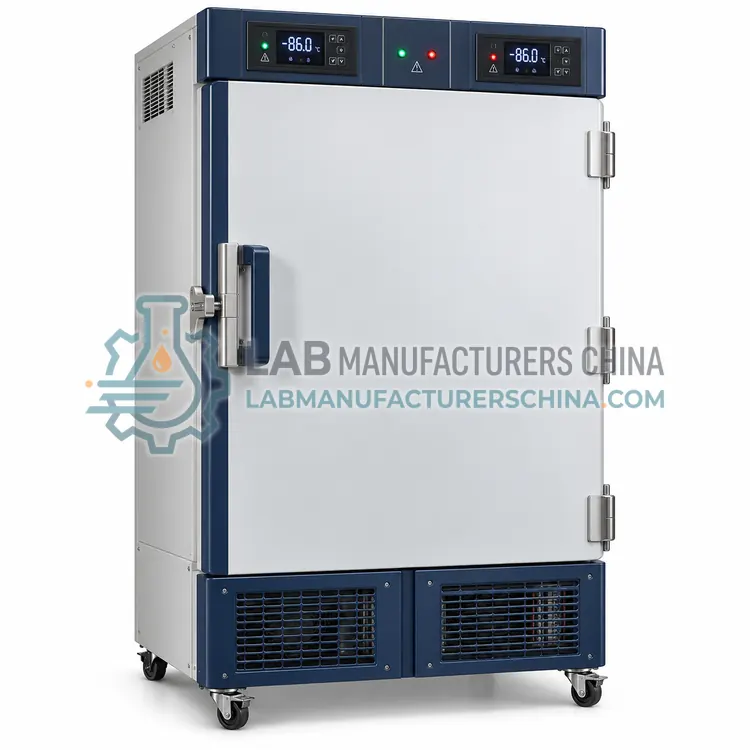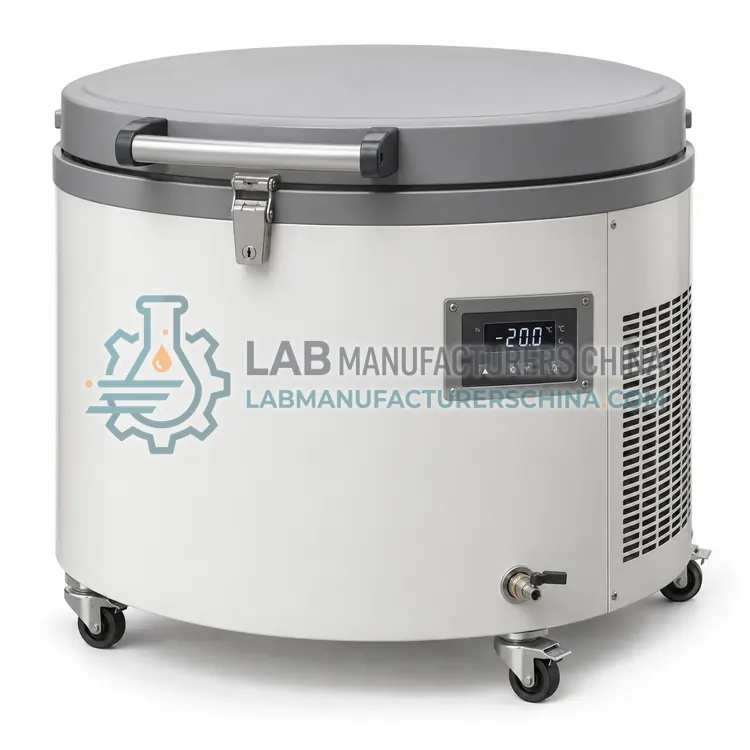
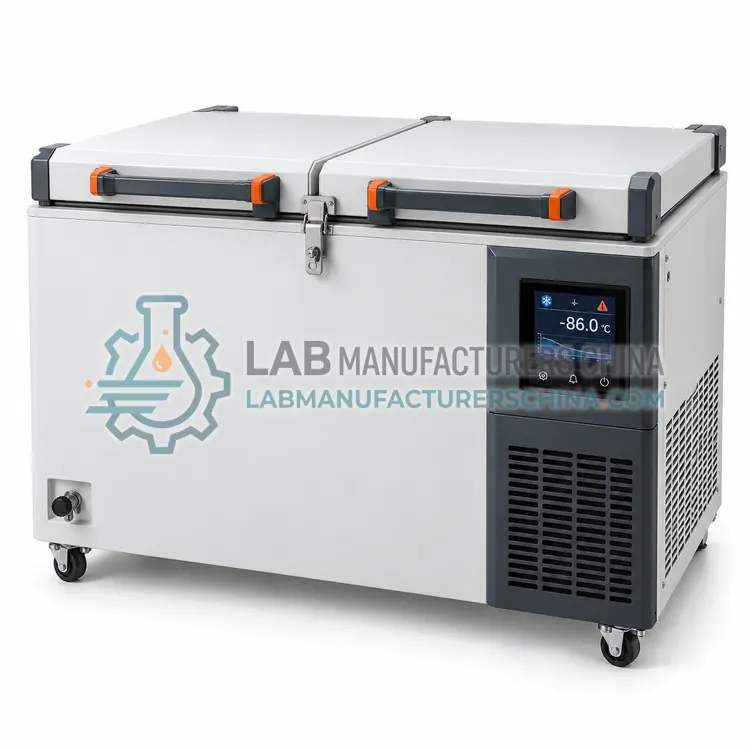
Chest -86 °C Ultra-Low Temperature Freezer
卧式 -86 °C 超低温冷冻箱
- SKU CHF-0003
- Chest Freezers
- CE (to be confirmed)
- ISO 9001 manufacturing (to be confirmed)
- IEC 61010-2-011 test report (to be confirmed)
Price on request — FOB / CIF quoted per order
Prices depend on configuration, quantity and destination port.
Key specifications
| Temperature range | -50 to -86 °C |
|---|---|
| Net capacity | 100-500 L |
| Refrigeration system | Cascade or mixed refrigerant |
| Insulation thickness | 120-150 mm |
| Ambient rating | 10-32 °C |
| Pull-down time | 5-8 h from 25 °C to -80 °C, empty |
Request a quote Download brochure · to be provided
By Lab Manufacturers China Technical TeamLast reviewed Standards: IEC 61010-2-011, IEC 60335-2-89, ISO 23953
What is the Chest -86 °C Ultra-Low Temperature Freezer?
A top-opening ultra-low freezer with net volumes of 100 to 500 L and -86 °C capability. It is used for long-term archives of nucleic acids, cells and tissue where energy efficiency and temperature stability matter more than quick access.
What is the Chest -86 °C Ultra-Low Temperature Freezer?
A top-opening ultra-low freezer with net volumes of 100 to 500 L and -86 °C capability. It is used for long-term archives of nucleic acids, cells and tissue where energy efficiency and temperature stability matter more than quick access.
Overview
The chest ultra-low freezer uses a cascade or mixed-refrigerant system with thick, often vacuum-assisted insulation of 120 to 150 mm. The lid design keeps cold air in the well, so temperature rise during access is smaller than in an upright freezer and the compressors run less, with daily consumption commonly 6 to 12 kWh. Racks or baskets stack boxes in layers, and a map of positions is needed to locate items efficiently. A pressure-equalization valve prevents lid lock-up after closing. Controllers provide alarms, network outputs and optional CO2 or LN2 backup ports. Chest -86 °C freezers are chosen for biobank archives, backup capacity and long-term stores where access is infrequent, and are often paired with upright units for working stocks.
How does it work?
A chest freezer uses the same vapor-compression cycle as other laboratory freezers, but its geometry changes heat exchange. The cabinet opens from the top, and because cold air is denser than warm air it sits in the well when the lid is lifted, so little warm air enters and temperature recovers quickly. Evaporator tubes are usually bonded to the inner walls, which provides direct cooling without fans, reducing energy use and air movement over samples. The lid and walls are filled with polyurethane foam of 70 to 150 mm, and a magnetic or compression gasket seals the rim. Models for -20 to -40 °C use a single compressor, while models for -60 to -86 °C use cascade or mixed-refrigerant systems. Controllers monitor temperature, alarm on deviation and door ajar, and many include lid locks, drain ports and a pressure-equalization valve.
What are the key features?
- Cascade or mixed-refrigerant system reaches -86 °C.
- Thick insulation of 120 to 150 mm limits heat gain through walls and lid.
- Cold air stays in the well during access, reducing temperature swings.
- Daily energy consumption is commonly 6 to 12 kWh.
- Pressure-equalization valve prevents lid lock-up.
- Optional CO2 or LN2 backup port and network monitoring outputs.
What are the technical specifications?
A typical chest -86 °c ultra-low temperature freezer configuration offers temperature range of -50 to -86 °C, net capacity of 100-500 L, refrigeration system of Cascade or mixed refrigerant, insulation thickness of 120-150 mm, ambient rating of 10-32 °C and pull-down time of 5-8 h from 25 °C to -80 °C, empty. Values are indicative of the product class; the exact figures for each configuration are confirmed on the quotation and the calibration documents supplied with the instrument.
Which applications is it used for?
The Chest -86 °C Ultra-Low Temperature Freezer is used in biobank long-term archives, backup ultra-low capacity, cell and tissue archives and low-access genomic collections. Across the wider Chest Freezers class, laboratories also deploy it for bulk plasma and tissue storage, long-term biobank archives and food and environmental retained samples.
Which standards and certifications apply?
Relevant standards and methods include IEC 61010-2-011, IEC 60335-2-89, ISO 23953, ENERGY STAR Laboratory Grade Freezers, EN 15713 and GB/T 21151. Certification candidates for this model are CE, ISO 9001 manufacturing and IEC 61010-2-011 test report; each is to be confirmed for the specific configuration before shipment, and certificates are supplied only where they have been issued.
Place the freezer on a level floor with 100 to 200 mm of clearance around the cabinet and enough headroom for the lid to open fully. Keep room temperature below the rated ambient, usually 32 °C, and avoid direct sunlight or nearby heat sources. Use a dedicated circuit with surge protection. Organize contents with baskets and a location map so that the lid is open as briefly as possible. Direct-cooling models accumulate frost on the walls, so schedule defrosting when the layer reaches 5 to 10 mm, transferring contents to a backup unit. Clean the condenser every one to three months, check the gasket seal and calibrate the temperature display at least annually. Test the alarm and lid lock regularly.
How do I select the right Chest -86 °C Ultra-Low Temperature Freezer?
Select the chest -86 °C model for infrequently accessed archives where energy cost and stability dominate. Choose an upright ultra-low freezer for frequent retrieval. Specify net volume, rack layout, backup port, monitoring interface, ambient range and floor space with lid clearance.
How does it compare with other Chest Freezers variants?
Choose a chest freezer when samples are stored in bulk, accessed infrequently and held for long periods. Start with the temperature class, from -20 °C for reagents to -86 °C for long-term archives. Then size the capacity from the inventory, remembering that usable volume depends on baskets and that items at the bottom are harder to reach. Compare daily energy consumption, since chest models are usually more efficient than upright units of the same volume. Consider the footprint and lid clearance, because a chest freezer needs free space above it when open. Look for features that matter to your quality system, including alarms, lid lock, data logging, backup ports and temperature uniformity. For frequent access or strong organization needs, an upright unit may be more practical.
Full specifications
| Temperature range | -50 to -86 °C |
|---|---|
| Net capacity | 100-500 L |
| Refrigeration system | Cascade or mixed refrigerant |
| Insulation thickness | 120-150 mm |
| Ambient rating | 10-32 °C |
| Pull-down time | 5-8 h from 25 °C to -80 °C, empty |
| Baskets or racks | 3-6 |
| Lid lock | Key lock |
| Backup port | CO2 or LN2, optional |
| Power consumption | About 6-12 kWh/day |
Indicative values for this product class. Final specifications are confirmed on the quotation and in the calibration documents supplied with the instrument.
Applications
- Biobank long-term archives
- Backup ultra-low capacity
- Cell and tissue archives
- Low-access genomic collections
Key features
- Cascade or mixed-refrigerant system reaches -86 °C.
- Thick insulation of 120 to 150 mm limits heat gain through walls and lid.
- Cold air stays in the well during access, reducing temperature swings.
- Daily energy consumption is commonly 6 to 12 kWh.
- Pressure-equalization valve prevents lid lock-up.
- Optional CO2 or LN2 backup port and network monitoring outputs.
Frequently asked questions about Chest -86 °C Ultra-Low Temperature Freezer
At similar volume, chest models commonly consume 20 to 40 percent less than upright units, because cold air stays in the well and the compressors run less. Compare measured values under the same test method.
Keep a digital inventory with rack, layer and position, use labeled baskets and plan retrievals in batches. This limits lid-open time and temperature excursions.
Yes, many chest ultra-low models offer a backup port or factory option. Confirm compatibility and the required cylinder arrangement before purchase.
It stores reagents, plasma, tissue, samples and archives in bulk, at temperatures from -20 °C to -86 °C. The top-opening design holds temperature well, so it suits material that is accessed only occasionally.
It is better for energy use, temperature stability and bulk storage, while an upright is better for organization and quick access. The right choice depends on how often samples are retrieved.
Use stackable baskets or dividers, label them by lot and date, and keep a digital map of positions. Put frequently needed items on top so that the lid is open for as short a time as possible.
Related models
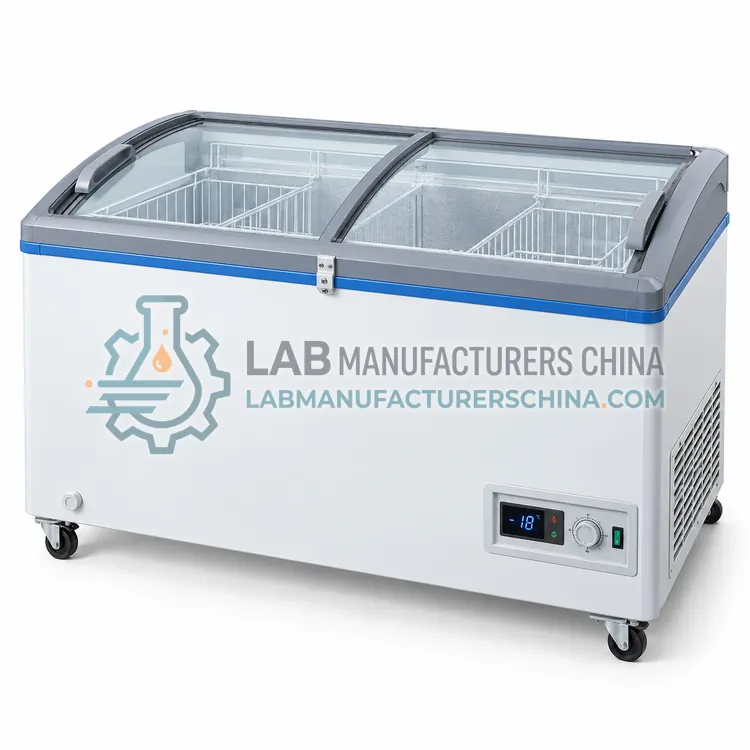
Chest Freezer with Sliding or Glass Lid for Retail-Style Display Storage
带推拉盖或玻璃盖的展示型卧式冷冻箱
- CE (to be confirmed)
- +2
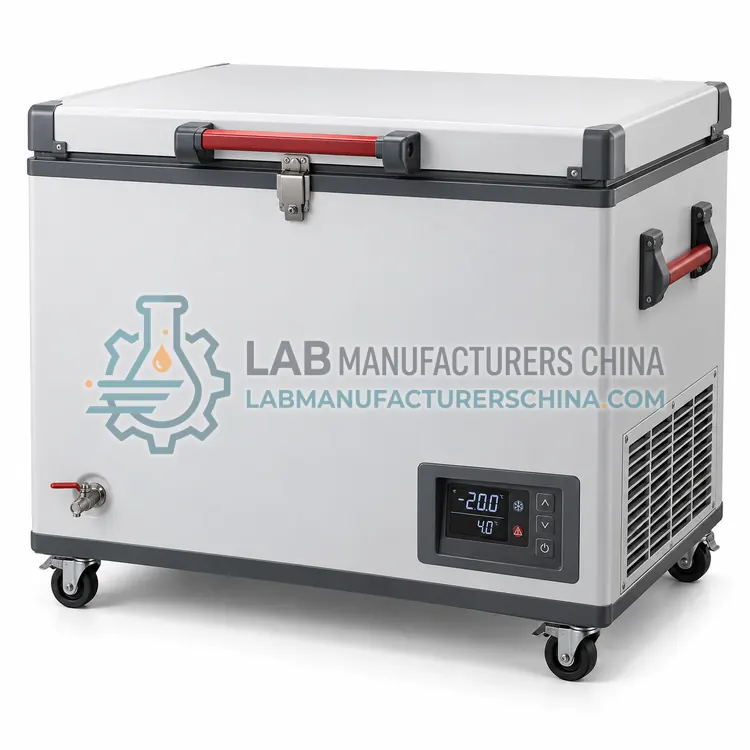
Convertible Chest Freezer-Refrigerator with Selectable Temperature
可切换温度的卧式冷冻冷藏两用箱
- CE (to be confirmed)
- +2