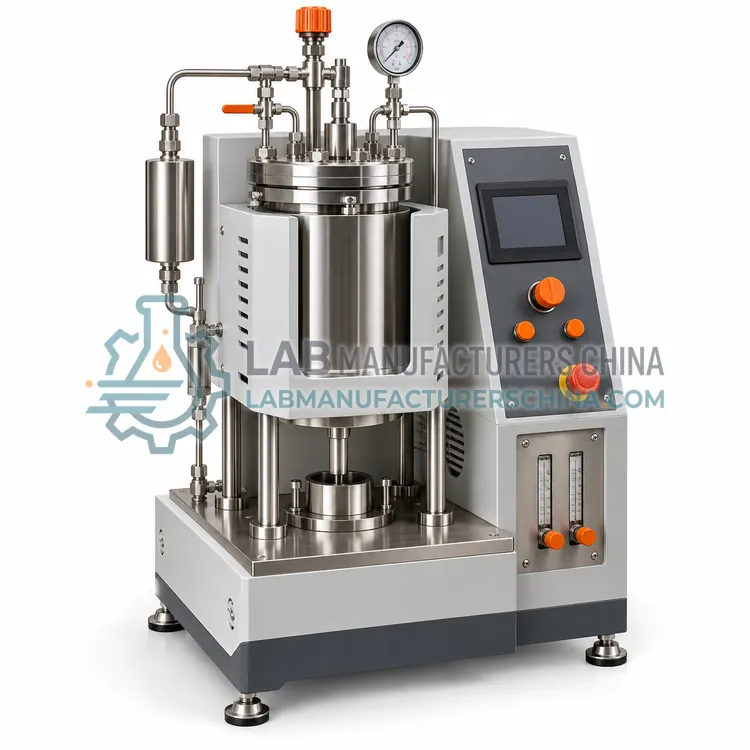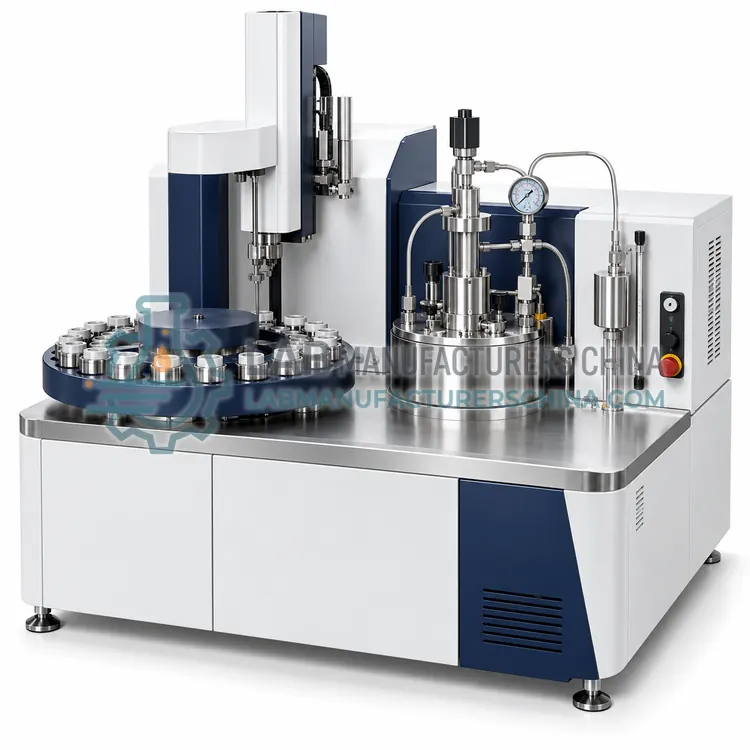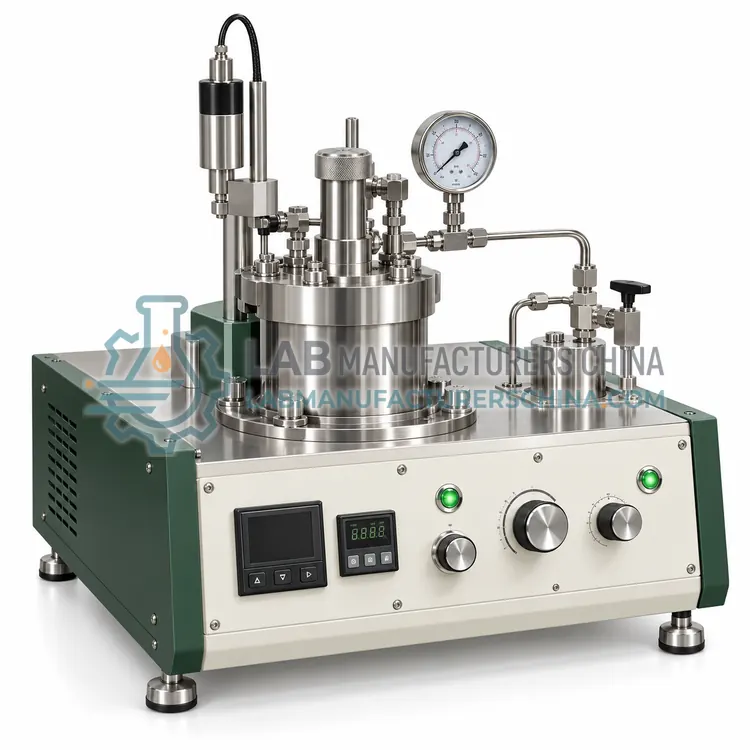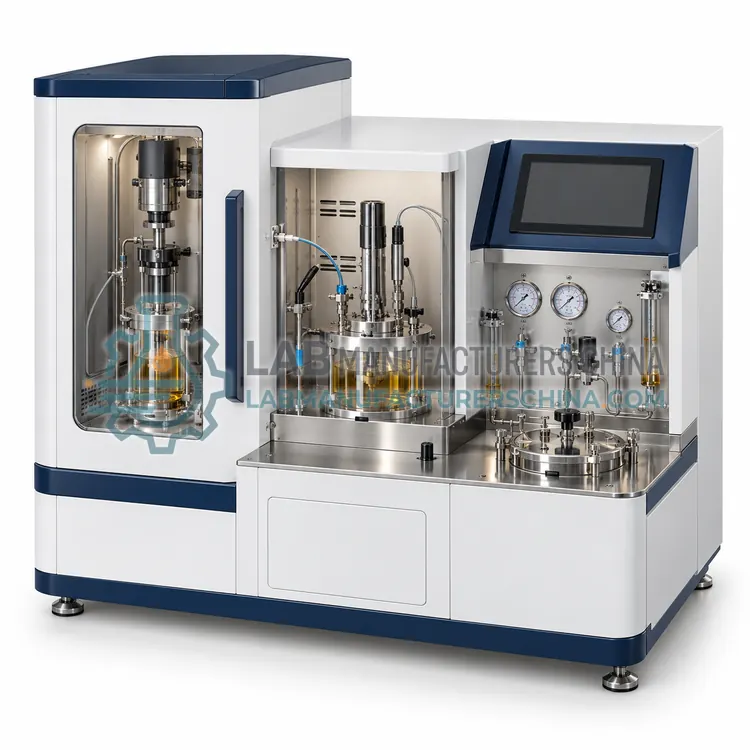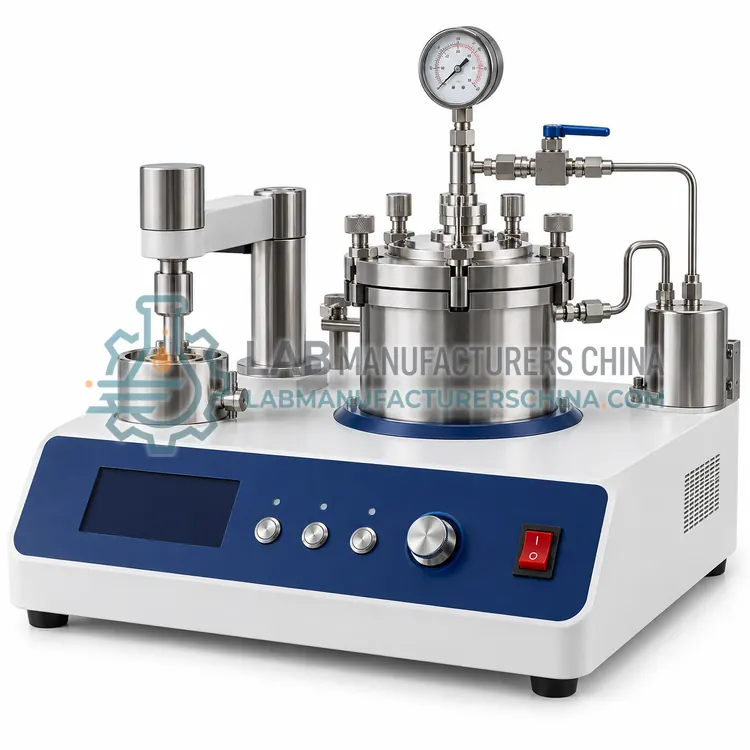
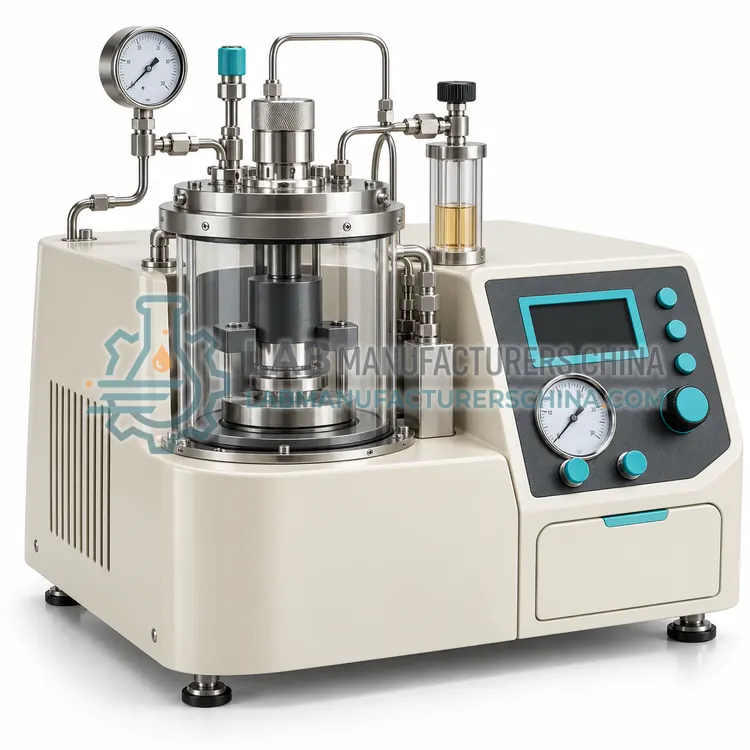
Adiabatic Bomb Calorimeter
绝热式氧弹量热仪
- SKU CAL-0003
- Calorimeters
- CE (to be confirmed)
- ISO 9001 manufacturing (to be confirmed)
Price on request — FOB / CIF quoted per order
Prices depend on configuration, quantity and destination port.
Key specifications
| Repeatability | ≤ 0.05–0.1 % RSD |
|---|---|
| Test duration | 15–20 min per sample |
| Jacket following rate | Within ± 0.02 °C |
| Temperature resolution | 0.0001 °C |
| Calorific value range | 5–35 MJ/kg |
| Oxygen charging pressure | 30 bar automatic |
Request a quote Download brochure · to be provided
By Lab Manufacturers China Technical TeamLast reviewed Standards: ASTM D5865, ISO 1928, GB/T 213
What is the Adiabatic Bomb Calorimeter?
An adiabatic bomb calorimeter keeps the jacket temperature equal to the bomb temperature throughout the test, so almost no heat is exchanged with the surroundings. It delivers the highest precision for reference testing of coal, coke and biomass.
What is the Adiabatic Bomb Calorimeter?
An adiabatic bomb calorimeter keeps the jacket temperature equal to the bomb temperature throughout the test, so almost no heat is exchanged with the surroundings. It delivers the highest precision for reference testing of coal, coke and biomass.
Overview
In an adiabatic calorimeter the jacket water is heated or cooled during the determination so that its temperature tracks the bomb temperature, which nearly eliminates the heat-leak correction. A microprocessor drives the jacket-following loop, and the total temperature rise corresponds essentially to the heat released by the sample. Because heat loss is negligible, this design is the most accurate of the bomb calorimeter types and is often used as a reference instrument, for method validation and for slow-burning samples. The trade-offs are a longer test, typically fifteen to twenty minutes, more complex plumbing, a higher price and the need for stable ambient conditions and careful control of the following rate. Repeatability can reach about 0.05 % under good conditions. Some instruments offer both adiabatic and isoperibol modes.
How does it work?
A bomb calorimeter burns a pressed pellet of coal, about 0.5 to 1 g, in a high-pressure oxygen bomb immersed in a measured volume of water. The heat released raises the water temperature, and the temperature rise multiplied by the effective heat capacity of the system, called the water equivalent, gives the energy released. Corrections are applied for fuse wire, acid formation and the mass of the crucible contents. In an isoperibol design the jacket stays at a fixed temperature and the temperature-time curve is computed, in an adiabatic design the jacket follows the bomb temperature so heat loss is nearly zero, and in a manual static design the operator reads temperatures and applies a radiation correction. A microprocessor logs the curve, derives the water equivalent from certified benzoic acid and reports the result in MJ/kg.
What are the key features?
- Jacket temperature follows bomb temperature during the test
- No heat-leak correction needed for the main period
- Selectable adiabatic and isoperibol operating modes
- Automatic oxygen filling, firing and end-point detection
- Designed for reference and method-validation measurements
- Report calculation on several moisture bases
What are the technical specifications?
A typical adiabatic bomb calorimeter configuration offers repeatability of ≤ 0.05–0.1 % RSD, test duration of 15–20 min per sample, jacket following rate of Within ± 0.02 °C, temperature resolution of 0.0001 °C, calorific value range of 5–35 MJ/kg and oxygen charging pressure of 30 bar automatic. Values are indicative of the product class; the exact figures for each configuration are confirmed on the quotation and the calibration documents supplied with the instrument.
Which applications is it used for?
The Adiabatic Bomb Calorimeter is used in reference calorific value determinations, method validation and arbitration samples, slow-burning fuels such as coke and biomass and calibration laboratory work. Across the wider Calorimeters class, laboratories also deploy it for coal calorific value for pricing, power plant boiler efficiency monitoring and cement and steel kiln fuel checks.
Which standards and certifications apply?
Relevant standards and methods include ASTM D5865, ISO 1928, GB/T 213, ASTM D3175, ISO 18125, ASTM E711 and IEC 61010-1. Certification candidates for this model are CE and ISO 9001 manufacturing; each is to be confirmed for the specific configuration before shipment, and certificates are supplied only where they have been issued.
Install the calorimeter on a stable bench away from direct sunlight, draughts and heat sources, because ambient stability affects jacket temperature. Use oxygen of the specified purity from a regulator fitted with a pressure relief, and inspect the bomb, seals and valves on a schedule. Verify the water equivalent at the start of each working session with certified benzoic acid and monitor it as a trend, since drift indicates a leaking bomb, contaminated water or a failing sensor. Keep records of calibration and reference coal results, and compare them with the tolerances stated in the method. Confirm that report basis, sulfur and moisture corrections in the software match your contract.
How do I select the right Adiabatic Bomb Calorimeter?
Select the adiabatic calorimeter for reference work, method validation, arbitration samples and slow-burning fuels where repeatability near 0.05 % is required. It costs more and needs more space and cooling water. Specify the following rate, mode options, reference materials and calibration service.
How does it compare with other Calorimeters variants?
Selection turns on required accuracy, sample throughput and how much operator attention your laboratory can accept. Manual static-jacket units are the least expensive and are adequate for occasional checks, but they depend on the operator for temperature reading and correction. Isoperibol instruments dominate routine coal laboratories because they combine good accuracy with automatic temperature logging. Adiabatic calorimeters give the highest precision for reference work and for samples that burn slowly, such as some cokes and biomass, but they cost more and need careful setup. Check water-equivalent stability, reported resolution, the type of oxygen filling system, availability of benzoic acid and certified reference coal, and whether the software reports on the as-received, dry or dry ash-free basis your contract expects.
Full specifications
| Repeatability | ≤ 0.05–0.1 % RSD |
|---|---|
| Test duration | 15–20 min per sample |
| Jacket following rate | Within ± 0.02 °C |
| Temperature resolution | 0.0001 °C |
| Calorific value range | 5–35 MJ/kg |
| Oxygen charging pressure | 30 bar automatic |
| Sample mass | 0.5–1.2 g |
| Cooling water requirement | About 2–4 L/min |
| Data interface | USB, LAN |
Indicative values for this product class. Final specifications are confirmed on the quotation and in the calibration documents supplied with the instrument.
Applications
- Reference calorific value determinations
- Method validation and arbitration samples
- Slow-burning fuels such as coke and biomass
- Calibration laboratory work
Key features
- Jacket temperature follows bomb temperature during the test
- No heat-leak correction needed for the main period
- Selectable adiabatic and isoperibol operating modes
- Automatic oxygen filling, firing and end-point detection
- Designed for reference and method-validation measurements
- Report calculation on several moisture bases
Frequently asked questions about Adiabatic Bomb Calorimeter
Because the jacket temperature follows the bomb temperature, heat exchange with the surroundings is nearly eliminated, so the measured rise represents the heat released by the sample rather than being partly lost.
Yes, typically fifteen to twenty minutes per determination against eight to twelve minutes for an isoperibol instrument, because the jacket must follow the bomb closely at every step. The extra time gives higher precision.
Usually not. Isoperibol instruments meet most routine contract precision requirements at lower cost. Adiabatic testing is preferred for reference values, method validation, arbitration and fuels that burn slowly.
It measures the gross calorific value of a coal sample by burning a weighed pellet in oxygen inside a sealed bomb surrounded by water. The result in MJ/kg is used for pricing, boiler design, blending control and contract compliance.
An isoperibol calorimeter keeps the jacket at a constant temperature and corrects for heat leak, while an adiabatic calorimeter drives the jacket to follow the bomb temperature so heat loss is negligible. Adiabatic units are more precise but slower and more costly.
Verify the water equivalent with certified benzoic acid at the start of each working session, and check the whole method with a certified reference coal at intervals set by your quality system. Annual verification against traceable standards is common practice.