Multi-Capillary Array Genetic Analyzer with Laser-Induced Fluorescence
配激光诱导荧光的多毛细管阵列遗传分析仪
- CE (to be confirmed)
- +2
Welcome to Lab Manufacturers China — laboratory instruments direct from a Chinese manufacturer
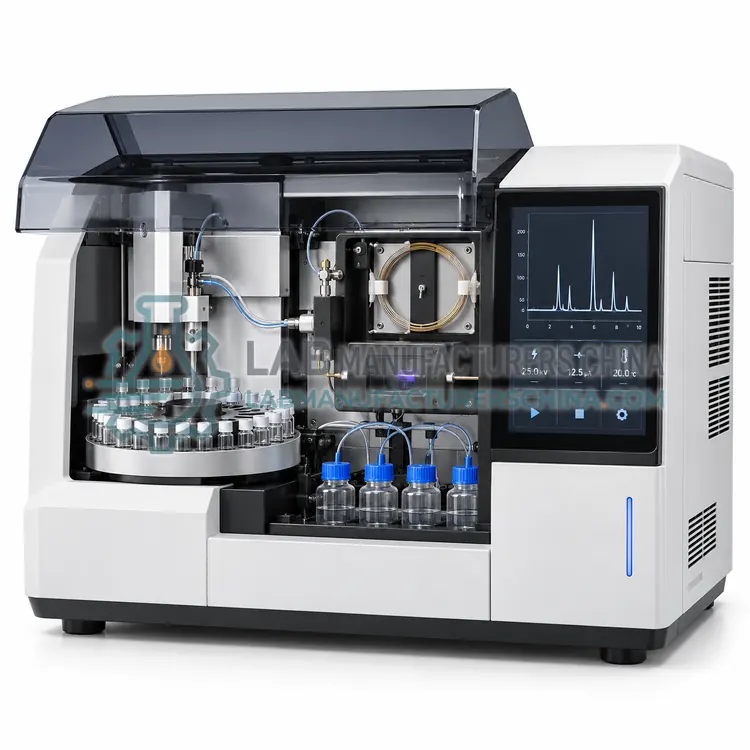
配紫外二极管阵列检测器的毛细管区带电泳系统
Price on request — FOB / CIF quoted per order
Prices depend on configuration, quantity and destination port.
| Detector | UV or diode array, 190–600 nm |
|---|---|
| Capillary internal diameter | 25–100 µm |
| Capillary length | 30–80 cm |
| Maximum voltage | ±30 kV |
| Maximum current | 300 µA |
| Temperature control | 15–60 °C, stability ±0.1 °C |
By Lab Manufacturers China Technical TeamLast reviewed Standards: USP <1053>, Ph. Eur. 2.2.47, IEC 61010-1
A single-capillary instrument with UV or diode-array detection at 190–600 nm that separates ions, peptides, drugs and charge variants by charge-to-size ratio. It is the general-purpose CE platform for method development and routine analysis.
A single-capillary instrument with UV or diode-array detection at 190–600 nm that separates ions, peptides, drugs and charge variants by charge-to-size ratio. It is the general-purpose CE platform for method development and routine analysis.
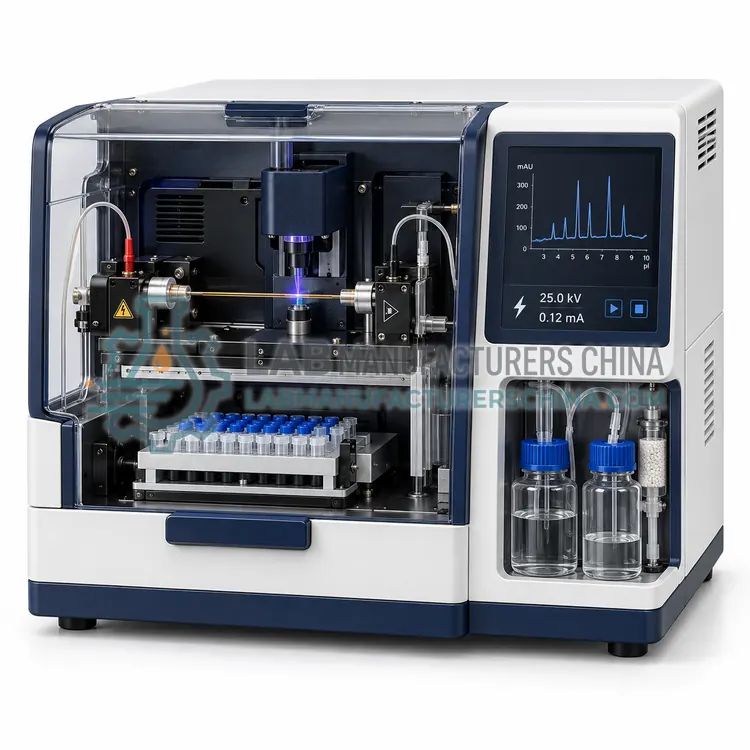
The CZE system is the simplest and most flexible capillary electrophoresis format. A single fused-silica capillary of 50 micrometres internal diameter and 30–60 cm length is held in a thermostated cartridge at 15–40 °C, with a detection window near the outlet. Voltage of up to 30 kV separates analytes according to their charge-to-size ratio in a buffer such as phosphate or borate. A diode-array detector records spectra between 190 and 600 nm, which helps confirm peak purity and identity. Hydrodynamic injection uses low pressure, while electrokinetic injection supports stacking for sensitivity. An autosampler with 48 to 100 vials supports unattended runs. Typical applications include inorganic and organic ions, amino acids, peptides, pharmaceuticals and their impurities, and enantiomeric separations with cyclodextrin additives.
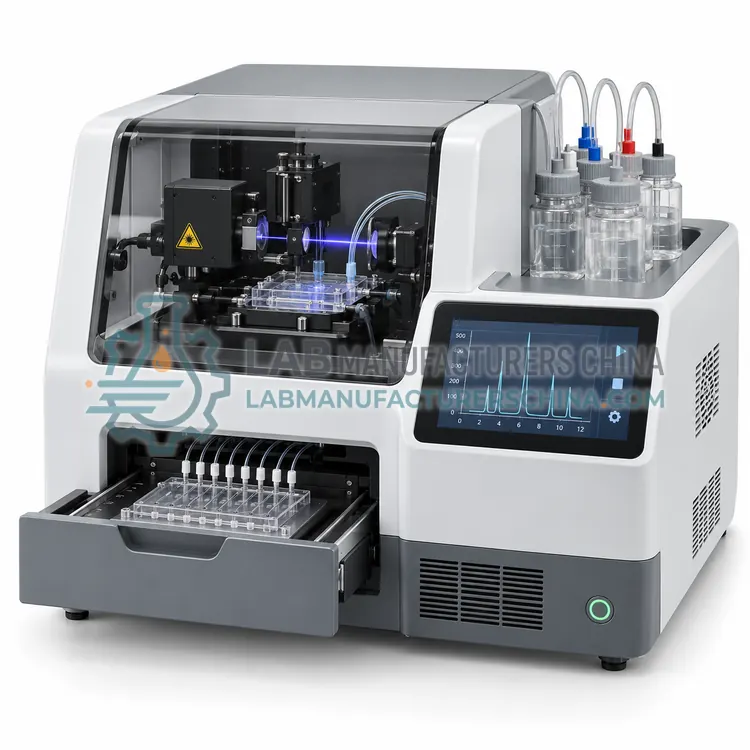
In capillary electrophoresis a fused-silica capillary of 25–100 micrometres internal diameter is filled with a background electrolyte or sieving polymer and connected between two buffer vials with electrodes. A few nanolitres of sample are injected hydrodynamically or electrokinetically and 5–30 kV is applied. The narrow bore dissipates heat efficiently, so high fields can be used, giving fast and sharp separations. Ions migrate according to their charge-to-size ratio, and in capillary zone electrophoresis electroosmotic flow from the charged silica wall carries all species toward the detector. Gel or polymer sieving separates DNA and SDS-protein complexes by size, while isoelectric focusing resolves proteins by pI. Detection is by UV absorbance or diode array, laser-induced fluorescence or mass spectrometry, and data are processed as electropherograms.
A typical capillary zone electrophoresis system with uv-dad detection configuration offers detector of UV or diode array, 190–600 nm, capillary internal diameter of 25–100 µm, capillary length of 30–80 cm, maximum voltage of ±30 kV, maximum current of 300 µA and temperature control of 15–60 °C, stability ±0.1 °C. Values are indicative of the product class; the exact figures for each configuration are confirmed on the quotation and the calibration documents supplied with the instrument.
The Capillary Zone Electrophoresis System with UV-DAD Detection is used in inorganic and organic ion analysis, pharmaceutical purity and impurities, peptide and amino acid separation and chiral separations. Across the wider Capillary Electrophoresis class, laboratories also deploy it for monoclonal antibody purity and charge variants, STR profiling for forensic identity and DNA fragment sizing and genotyping.
Relevant standards and methods include USP <1053>, Ph. Eur. 2.2.47, IEC 61010-1, IEC 60825-1, 21 CFR Part 11 and ISO 18385. Certification candidates for this model are CE, ISO 9001 manufacturing and IEC 61010-1 safety; each is to be confirmed for the specific configuration before shipment, and certificates are supplied only where they have been issued.
Install the instrument on a stable bench with clean power, controlled ambient temperature and, for fluorescence systems, stable laser and optics conditions. Condition new capillaries according to the method, and flush between runs to maintain reproducible electroosmotic flow. Use filtered, degassed buffers and keep vials free of particles, since blockages and bubbles are the most common faults. Replace capillaries, polymer and windows on schedule, and verify performance with size standards or system suitability mixtures. Regulated users should plan IQ/OQ/PQ, calibration and software validation, with audit trails under 21 CFR Part 11. Safety follows IEC 61010-1 with interlocked high-voltage compartments, and laser safety under IEC 60825-1 applies to fluorescence detectors.
Select a single-capillary CZE system for method development, small-molecule and peptide work and routine ion analysis. For DNA fragment or antibody size assays, choose a dedicated array or gel platform. Specify detector range, capillary format, temperature control, autosampler capacity and software validation features.
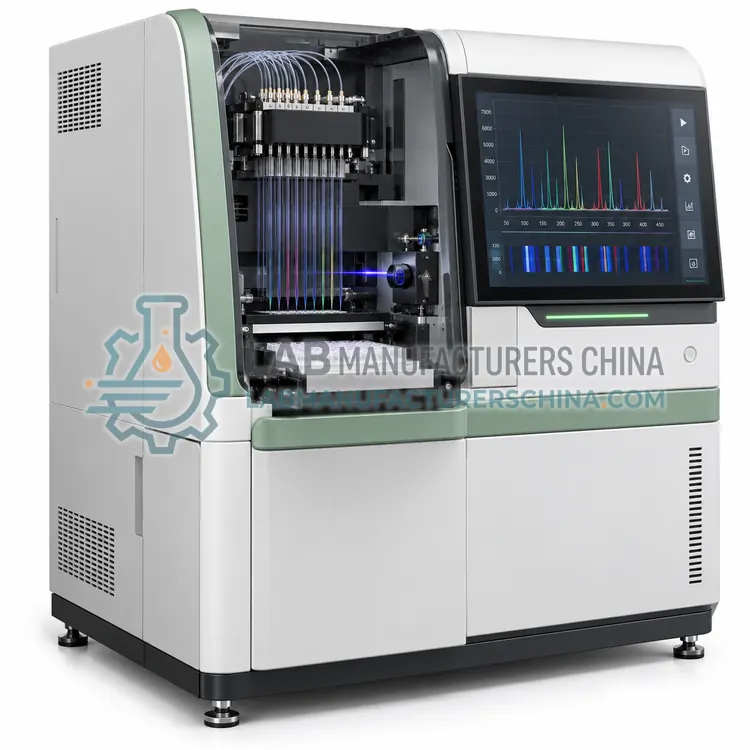
Choose by application first. Capillary zone electrophoresis with UV or diode-array detection covers small ions, peptides, drugs and charge variants. Multi-capillary array analyzers with laser-induced fluorescence suit STR typing, fragment analysis and sequencing. Gel-based CE-SDS is the standard for size purity of monoclonal antibodies, and capillary isoelectric focusing resolves charge heterogeneity. Microchip formats trade resolution for speed and low sample use. Compare capillary count, detection type and sensitivity, temperature control, injection repeatability, autosampler capacity, and the software's audit trail and validation package for regulated use. Also consider consumable cost, such as capillaries, polymer and buffers, and whether the supplier can provide IQ/OQ documentation and method transfer support.
| Detector | UV or diode array, 190–600 nm |
|---|---|
| Capillary internal diameter | 25–100 µm |
| Capillary length | 30–80 cm |
| Maximum voltage | ±30 kV |
| Maximum current | 300 µA |
| Temperature control | 15–60 °C, stability ±0.1 °C |
| Injection modes | Hydrodynamic (pressure) and electrokinetic |
| Injection volume | approx. 1–50 nL |
| Autosampler capacity | 48–100 vials |
| Migration time repeatability | RSD < 1% |
Indicative values for this product class. Final specifications are confirmed on the quotation and in the calibration documents supplied with the instrument.
CZE suits charged analytes such as inorganic ions, organic acids, amino acids, peptides, drugs and small proteins. Neutral molecules do not separate from each other without additives such as micelles or cyclodextrins.
Buffer viscosity and mobility change with temperature, so small variations shift migration times. Thermostating the capillary cartridge within about 0.1 °C keeps peak positions reproducible and allows reliable peak identification by migration time.
Because the optical path equals the capillary diameter, UV sensitivity is limited. Sample stacking, larger-diameter capillaries, bubble-cell or Z-shaped windows, and preconcentration techniques can increase sensitivity by an order of magnitude or more.
Capillary electrophoresis separates ions, proteins and nucleic acids in a narrow capillary with on-line detection. It is used for antibody purity and charge variant analysis, STR profiling, DNA fragment sizing, sequencing and the analysis of small ions, drugs and organic acids.
CE separates by charge-to-size ratio in an electric field using tiny sample volumes and no pumped mobile phase, giving high efficiency and low solvent use. HPLC separates by partitioning between mobile and stationary phases and handles larger volumes and neutral analytes more easily.
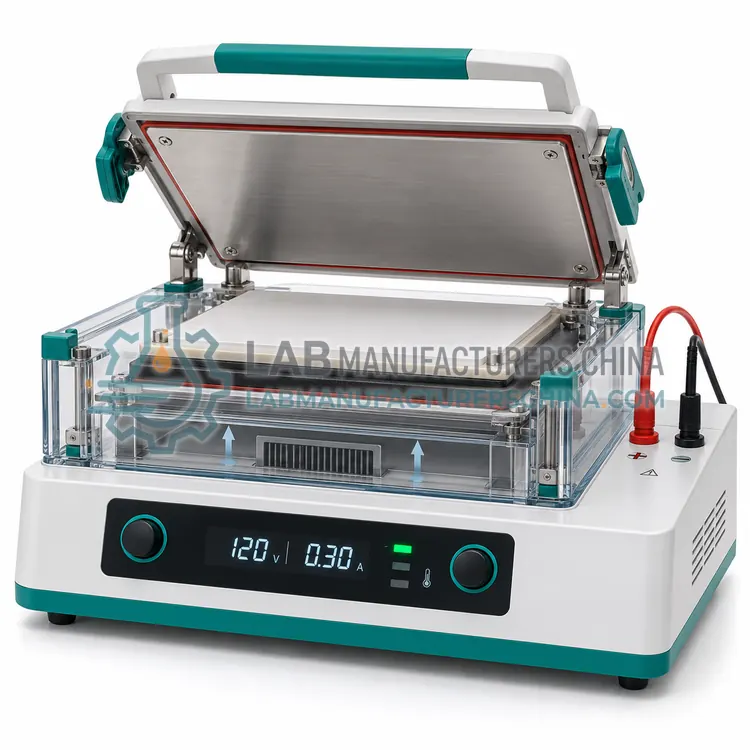
CE-SDS is capillary gel electrophoresis of SDS-denatured proteins in a sieving polymer. It separates fragments by molecular weight and is widely used to measure size purity of monoclonal antibodies, reduced and non-reduced, as a replacement for slab SDS-PAGE in quality control.
配激光诱导荧光的多毛细管阵列遗传分析仪
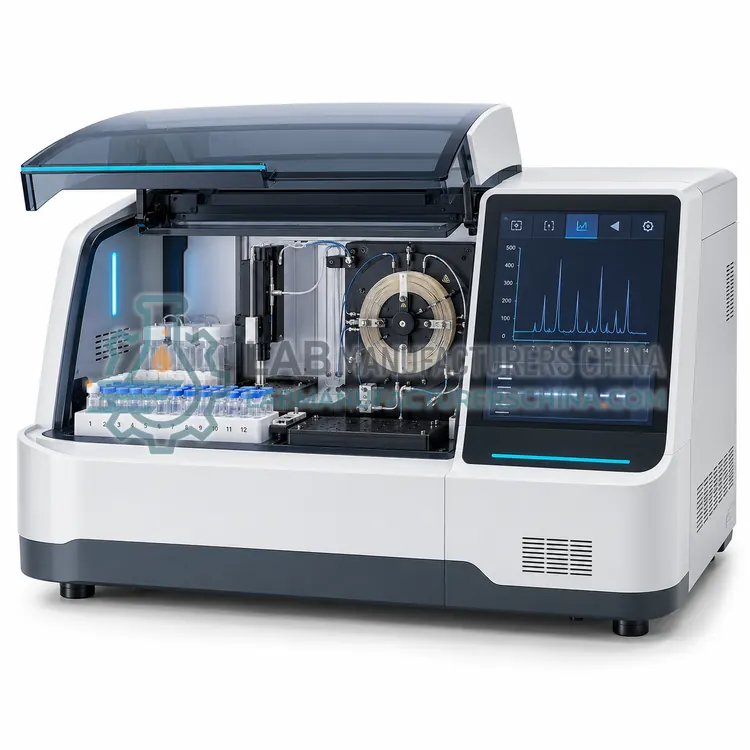
用于 CE-SDS 蛋白分析的毛细管凝胶电泳系统