Large-Capacity BOD Incubator
大容量 BOD 培养箱
- SKU BOI-0003
- BOD Incubators
- CE (to be confirmed)
- ISO 9001 manufacturing (to be confirmed)
- RoHS (to be confirmed)
Price on request — FOB / CIF quoted per order
Prices depend on configuration, quantity and destination port.
Key specifications
| Chamber volume | 400–1000+ L |
|---|---|
| Temperature range | 0–60 C, set at 20 C |
| Temperature uniformity | ±1–1.5 C |
| Temperature stability | ±0.5 C |
| Bottle capacity | 150–400 bottles |
| Cooling system | Compressor, air-cooled |
Request a quote Download brochure · to be provided
By Lab Manufacturers China Technical TeamLast reviewed Standards: IEC 61010-1, IEC 61010-2-010, DIN 12880
What is the Large-Capacity BOD Incubator?
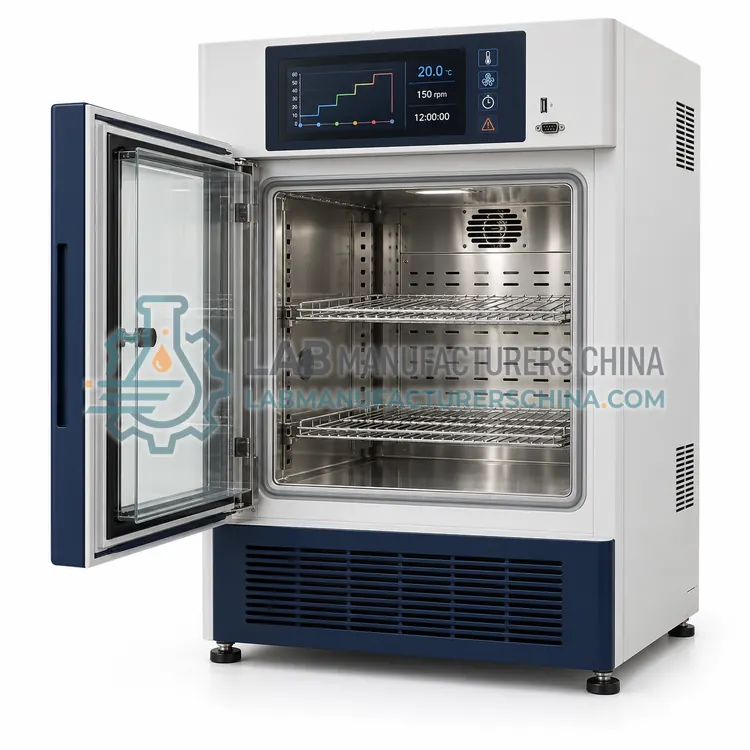
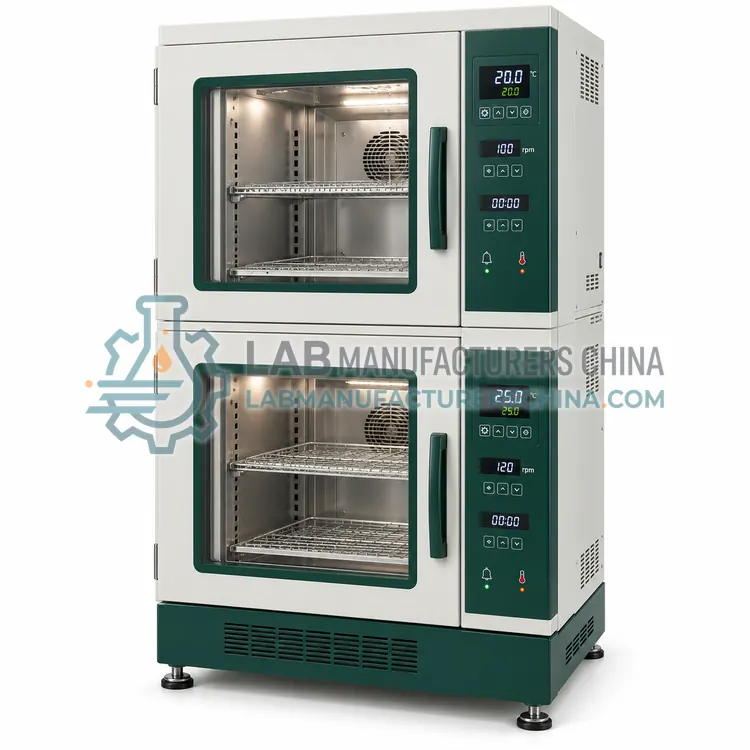
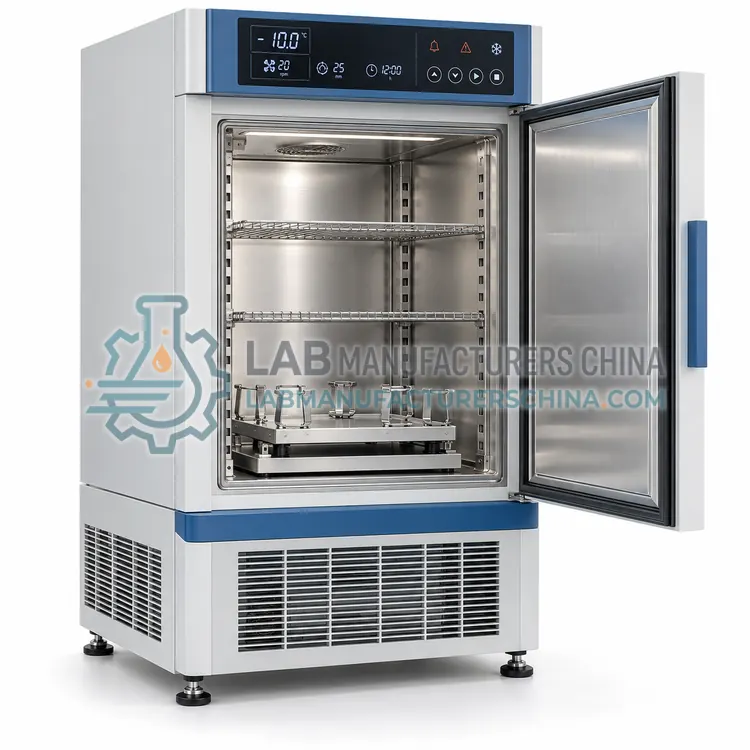
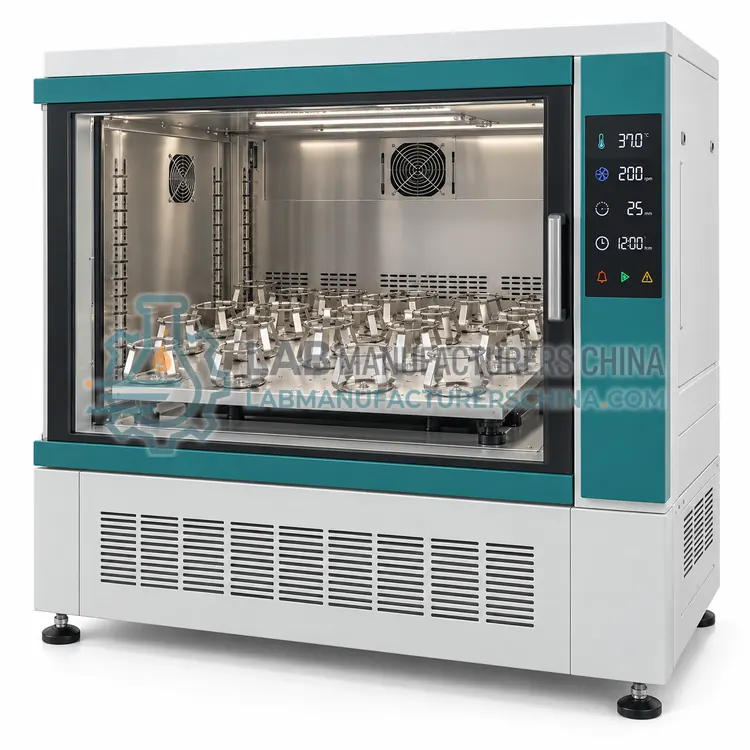
A large-capacity BOD incubator provides 400 to 1000 liters or more of refrigerated space for many BOD bottles at once. It is chosen when sample throughput is high and one chamber must hold the whole batch.
What is the Large-Capacity BOD Incubator?
A large-capacity BOD incubator provides 400 to 1000 liters or more of refrigerated space for many BOD bottles at once. It is chosen when sample throughput is high and one chamber must hold the whole batch.
Overview
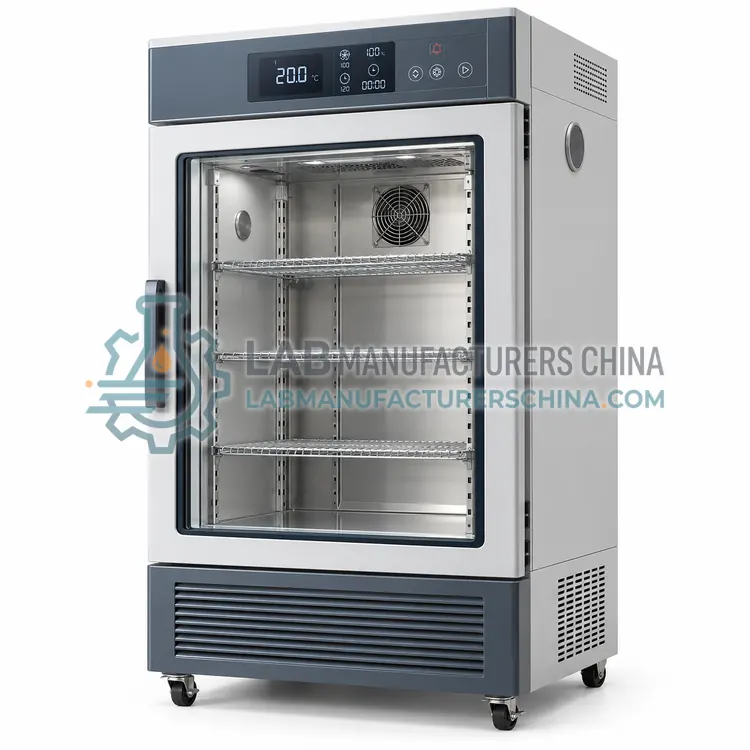
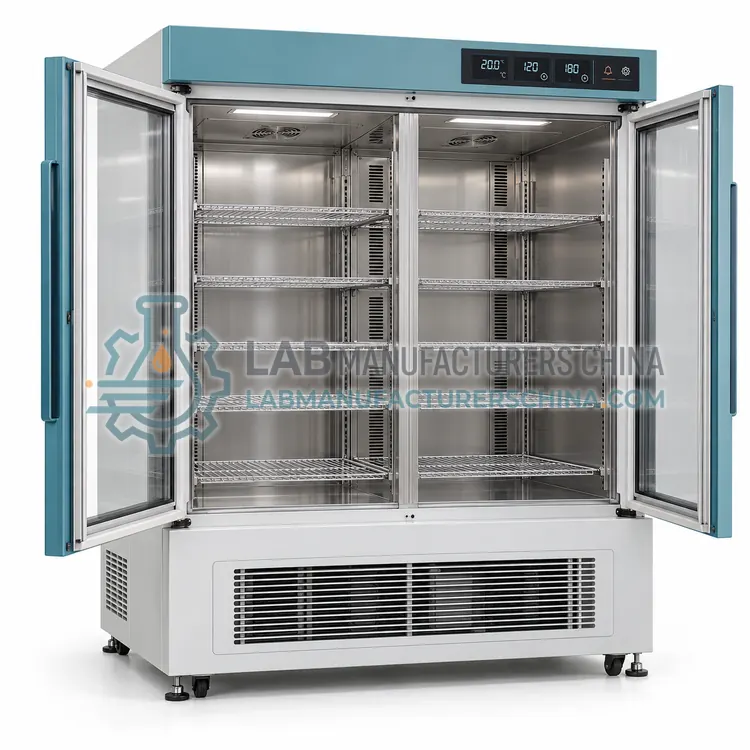
This incubator scales the refrigerated BOD chamber to 400 to 1000 liters or more, often floor standing with double doors and racks for hundreds of bottles. Strong cooling and forced-air circulation with multiple sensors hold 20 C within plus or minus 1 to 1.5 C even when fully loaded. Defrost and door heaters are managed to avoid excursions, and a compressor with adequate capacity recovers quickly after loading. Digital or programmable controllers with alarms and logging are standard. Racks or trays are configurable for 300 mL bottles or larger vessels. It serves municipal and industrial wastewater laboratories, contract environmental testing and any site where large numbers of BOD tests are incubated together.
How does it work?
A BOD incubator maintains a fixed setpoint, commonly 20 C, with compressor refrigeration and heating under PID control, so it holds temperature whether the room is warmer or cooler. Forced-air circulation keeps uniformity within plus or minus 0.5 to 1 C across the chamber, and a door heater or heated frame prevents condensation at the fixed low temperature. The interior is dark, since light can affect samples and encourage algae, and shelves or racks hold BOD bottles or other vessels. Defrost cycles are scheduled to avoid temperature excursions during the five-day test, and many models include a timer or chart for the incubation period. Alarms warn of temperature deviation, and some units log temperature continuously so a valid test can be demonstrated.
What are the key features?
- Chamber volume of 400 to 1000 liters or more
- Floor-standing with double doors and racks
- Multiple sensors for uniform 20 C control
- Strong cooling for fast recovery when loaded
- Configurable racks for 300 mL bottles
- Digital or programmable control with logging
What are the technical specifications?
A typical large-capacity bod incubator configuration offers chamber volume of 400–1000+ L, temperature range of 0–60 C, set at 20 C, temperature uniformity of ±1–1.5 C, temperature stability of ±0.5 C, bottle capacity of 150–400 bottles and cooling system of Compressor, air-cooled. Values are indicative of the product class; the exact figures for each configuration are confirmed on the quotation and the calibration documents supplied with the instrument.
Which applications is it used for?
The Large-Capacity BOD Incubator is used in municipal wastewater BOD testing, industrial effluent monitoring, contract environmental testing and high-volume regulatory compliance work. Across the wider BOD Incubators class, laboratories also deploy it for five-day BOD determination in water and wastewater, biochemical oxygen demand method training and influent and effluent monitoring.
Which standards and certifications apply?
Relevant standards and methods include IEC 61010-1, IEC 61010-2-010, DIN 12880, APHA 5210, ISO 5815-1 and ISO 9001. Certification candidates for this model are CE, ISO 9001 manufacturing and RoHS; each is to be confirmed for the specific configuration before shipment, and certificates are supplied only where they have been issued.
Place the incubator in a ventilated location with clearance for the condenser and door swing, away from heat sources and direct sunlight. Keep the interior dark and do not open the door during the incubation other than at defined checkpoints, since temperature recovery may alter the result. Verify the temperature at the working setpoint with a calibrated probe, and log it continuously where the method requires evidence. Clean spills promptly and disinfect as needed, taking care not to scratch the interior or leave residues that affect samples. Check the condenser, gaskets and door heater during scheduled service, and record all maintenance.
How do I select the right Large-Capacity BOD Incubator?
Select the large-capacity BOD incubator when a single chamber must hold hundreds of bottles and smaller units would require splitting the batch. Confirm floor loading, rack layout, door access and cooling capacity. In the RFQ, specify volume, bottle capacity, temperature tolerance and logging needs.
How does it compare with other BOD Incubators variants?
Choose a BOD incubator when a method specifies incubation at a fixed low temperature, most often the 20 C five-day BOD test, and when the laboratory needs to show that temperature was held. Set the required temperature and tolerance, then check uniformity at that point rather than a midpoint. Match chamber volume to bottle count and to the use of racks or shelves. Confirm defrost behaviour, since ice build-up or regular defrost cycles can disturb the incubation. Decide whether programmable control, dual chambers or temperature logging are needed for compliance. Check door type, alarms, data output and refrigerant type before ordering.
Full specifications
| Chamber volume | 400–1000+ L |
|---|---|
| Temperature range | 0–60 C, set at 20 C |
| Temperature uniformity | ±1–1.5 C |
| Temperature stability | ±0.5 C |
| Bottle capacity | 150–400 bottles |
| Cooling system | Compressor, air-cooled |
| Defrost | Automatic or scheduled |
| Recovery after loading | 10–30 min |
| Cooling power | 800 W–2 kW |
| Power supply | 220/380 V, 50/60 Hz |
Indicative values for this product class. Final specifications are confirmed on the quotation and in the calibration documents supplied with the instrument.
Applications
- Municipal wastewater BOD testing
- Industrial effluent monitoring
- Contract environmental testing
- High-volume regulatory compliance work
Key features
- Chamber volume of 400 to 1000 liters or more
- Floor-standing with double doors and racks
- Multiple sensors for uniform 20 C control
- Strong cooling for fast recovery when loaded
- Configurable racks for 300 mL bottles
- Digital or programmable control with logging
Frequently asked questions about Large-Capacity BOD Incubator
A 700-liter unit with racks typically holds 150 to 400 bottles of 300 mL, depending on rack design and spacing. Loading must still allow air circulation and stay clear of the evaporator, or uniformity at 20 C will suffer.
Typically ten to thirty minutes, depending on how many bottles were added and how warm they were. Loading bottles pre-equilibrated to near 20 C shortens recovery and reduces the risk of an overnight temperature excursion.
Units above about 2 to 3 kW usually require 380 V three-phase supply, which the largest models reach through cooling and heating power. The supply, earthing and ventilation should be confirmed before installation.
It incubates water and wastewater samples at a fixed low temperature, usually 20 C, for the five-day biochemical oxygen demand test and related methods. Its refrigerated, dark, uniform chamber keeps dissolved oxygen depletion attributable to biological activity rather than temperature or light.
The standard method fixes 20 C so results are comparable between laboratories and over time, because microbial activity and oxygen consumption depend strongly on temperature. The five-day period at 20 C approximates natural decomposition and is defined in APHA 5210 and ISO 5815.
Most methods require 20 C with a tolerance of about plus or minus 1 C, so uniformity within plus or minus 0.5 to 1 C across the chamber is typical. The unit should hold that tolerance during defrost and door openings, and temperature should be logged as evidence.
Related models