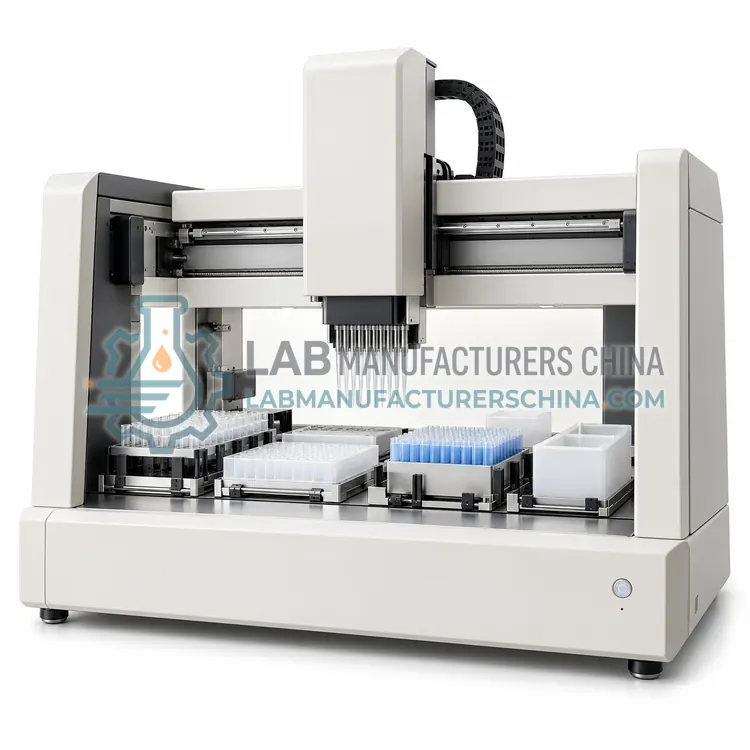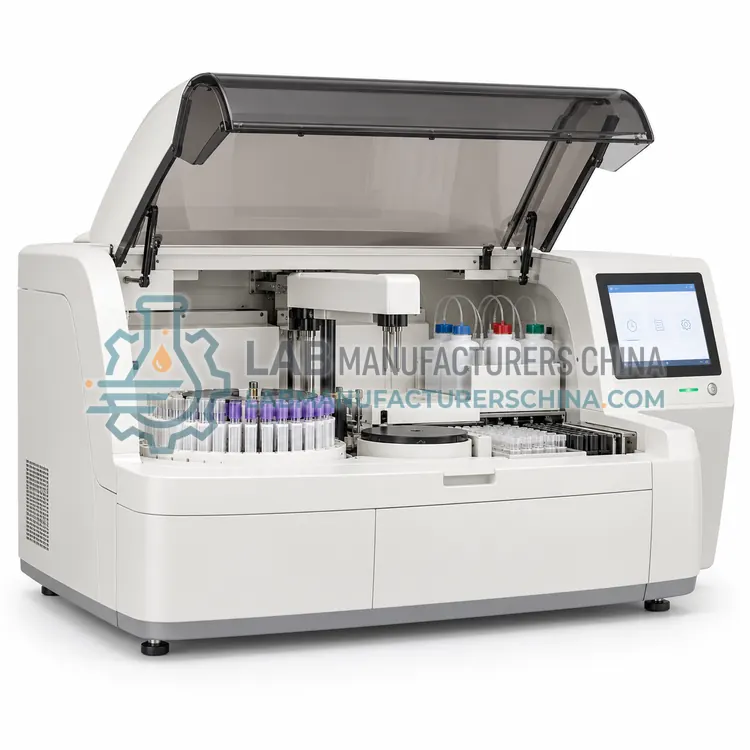
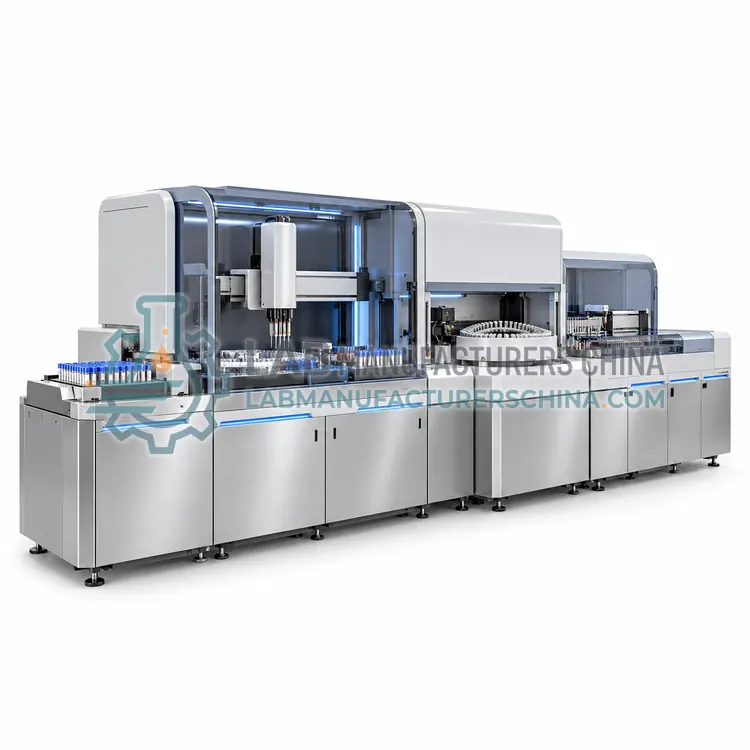
Modular Automated Analysis Line
模块化自动分析流水线
- SKU AUA-0005
- Automated Analyzers
- CE (to be confirmed)
- ISO 9001 manufacturing (to be confirmed)
Price on request — FOB / CIF quoted per order
Prices depend on configuration, quantity and destination port.
Key specifications
| Type | Modular automated analysis line |
|---|---|
| Throughput | Above 2000 tests/h |
| Modules | Centrifuge, decapper, analyzer |
| Track speed | Up to 3000 tubes/h |
| Sample handling | Sorting, aliquoting, storage |
| Middleware | Routing and result merging |
Request a quote Download brochure · to be provided
By Lab Manufacturers China Technical TeamLast reviewed Standards: IEC 61010-1 (safety requirements for electrical equipment), ISO 15189 (medical laboratories, quality and competence), ISO 17511 (traceability of calibrators and control materials)
What is the Modular Automated Analysis Line?
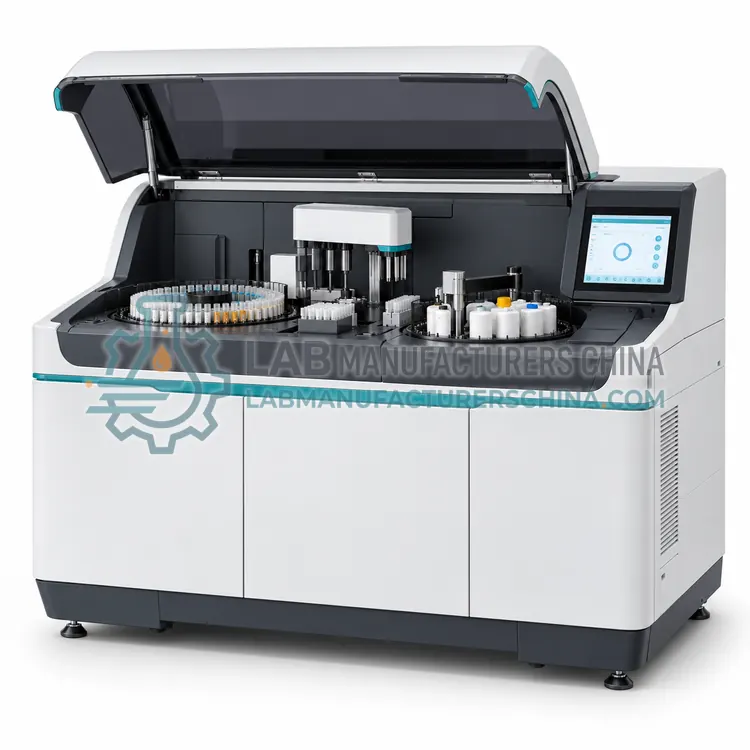
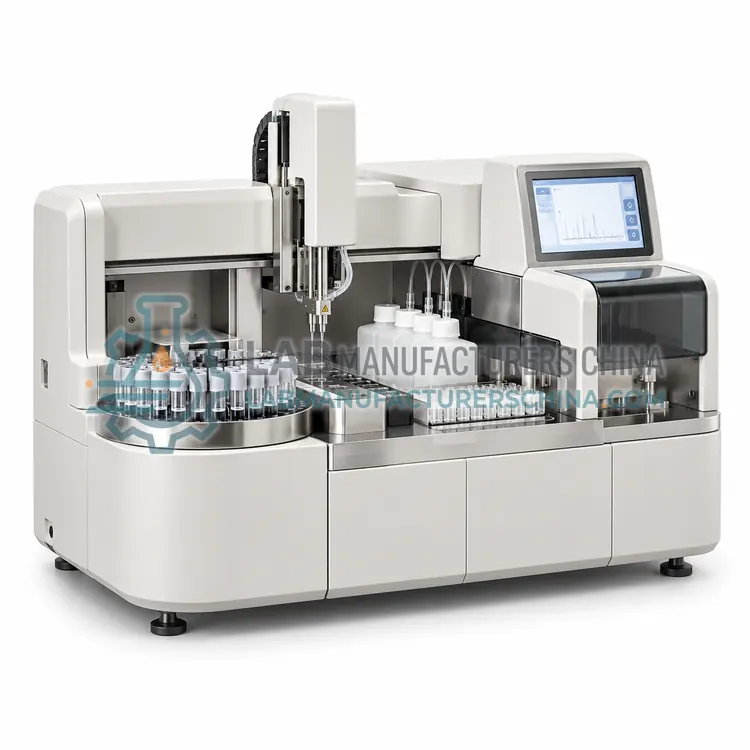
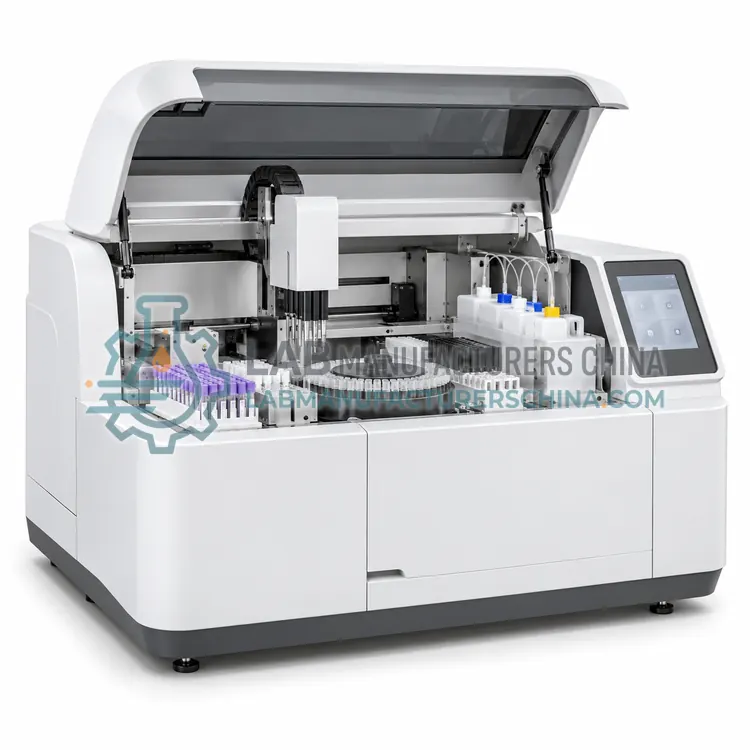
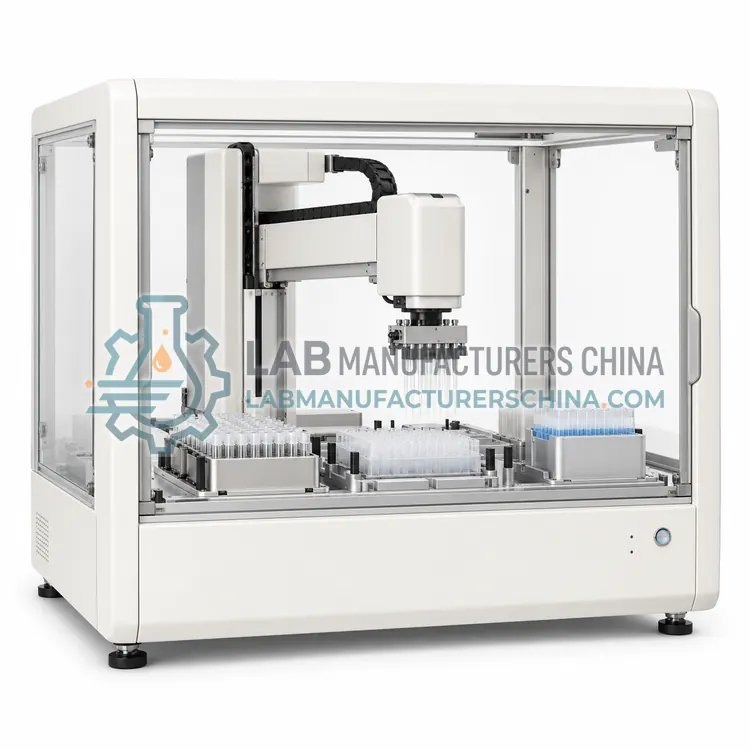
A modular automated analysis line links several analyzers and pre-analytical modules by a track and control software. It suits very high-volume laboratories needing one integrated workflow for very high-volume consolidated laboratory testing.
What is the Modular Automated Analysis Line?
A modular automated analysis line links several analyzers and pre-analytical modules by a track and control software. It suits very high-volume laboratories needing one integrated workflow for very high-volume consolidated laboratory testing.
Overview
The line connects centrifuge, decapper, aliquoter and analyzer modules with a track that moves barcoded tubes automatically, coordinated by middleware that routes each tube to the correct module and merges results. Throughput of the whole line can exceed 2000 tests per hour, with sample sorting, aliquoting, storage and recall capabilities. Middleware manages test rules, sample routing, result consolidation, quality control and autoverification, and interfaces to the LIS. Because the line is complex, it needs careful project planning, a stable environment, uninterruptible power, service contracts and trained staff. Benefits include reduced manual handling, fewer errors, shorter turnaround and better use of staff, but the investment and the downtime risk of a linked system must be assessed, and a defined plan for degraded operation is essential.
How does it work?
An automated analyzer moves samples from an autosampler into reaction or detection positions, adds reagent, incubates and measures a signal, then calculates and reports results. Sample tubes are identified by barcode, and the software maps each tube to the requested test panel. Liquid handling draws sample and reagent with syringes or pumps, mixes them in cuvettes or wells, and holds them at a controlled temperature so the reaction proceeds consistently. Detection may be photometric, turbidimetric, ion-selective, fluorescent or luminescent depending on the assay. Random-access analyzers can run different tests on different samples in any order, while batch and continuous-flow systems process similar tests together. Onboard reagents are tracked with volume and expiry data, and results are reported to the laboratory information system with quality-control flags and calibration status.
What are the key features?
- Track linking pre-analytical and analyzer modules
- Throughput above 2000 tests per hour
- Middleware routing and result merging
- Sample sorting, aliquoting and storage
- Autoverification and LIS interface
- Uninterruptible power and service contract
What are the technical specifications?
A typical modular automated analysis line configuration offers type of Modular automated analysis line, throughput of Above 2000 tests/h, modules of Centrifuge, decapper, analyzer, track speed of Up to 3000 tubes/h, sample handling of Sorting, aliquoting, storage and middleware of Routing and result merging. Values are indicative of the product class; the exact figures for each configuration are confirmed on the quotation and the calibration documents supplied with the instrument.
Which applications is it used for?
The Modular Automated Analysis Line is used in large hospital core laboratory, regional reference laboratory, consolidated testing networks and high-volume commercial laboratories. Across the wider Automated Analyzers class, laboratories also deploy it for clinical routine chemistry, immunoassay and hormone testing and water and environmental analysis.
Which standards and certifications apply?
Relevant standards and methods include IEC 61010-1 (safety requirements for electrical equipment), ISO 15189 (medical laboratories, quality and competence), ISO 17511 (traceability of calibrators and control materials), EU IVDR (in vitro diagnostic medical devices), 21 CFR Part 11 (electronic records and signatures) and CLIA (clinical laboratory improvement requirements). Certification candidates for this model are CE and ISO 9001 manufacturing; each is to be confirmed for the specific configuration before shipment, and certificates are supplied only where they have been issued.
Install with adequate bench or floor space, power quality and drainage where required, and confirm room temperature stability because it affects reaction rates. Run quality control at the defined frequency and review results before releasing patient or sample results, and monitor calibration and reagent expiry. Perform daily, weekly and periodic maintenance as specified, including probe cleaning, cuvette checks and fluid replacement. Verify analyzer performance on installation, after major service and on a defined schedule, covering accuracy, precision, carry-over and linearity. Define autoverification rules carefully and review flagged results. Keep records of calibration, maintenance, quality control and software changes for audit, and train operators on error recovery and shutdown.
How do I select the right Modular Automated Analysis Line?
Choose a modular line only where volume and consolidation justify the complexity, with a clear project and service plan. Confirm throughput, middleware and degraded operation. RFQ: daily volume, test menu, modules, automation level, connectivity and service.
How does it compare with other Automated Analyzers variants?
Start from the test menu, the daily and peak sample numbers, and the turnaround time required. Random-access analyzers suit mixed test menus and urgent samples, while batch analyzers suit high volumes of a few tests. Confirm the analyzer offers the assays you need, either onboard or through open channels, and check reagent stability, onboard capacity and calibration frequency. Review the sample and reagent volume per test, since these drive running cost, and check the walk-away time for unattended operation. Consider connectivity to the LIMS, quality-control handling, and whether the instrument supports reflex testing and autoverification. Confirm maintenance intervals, service response and the availability of calibrators and controls, and verify traceability of calibrators to a reference standard.
Full specifications
| Type | Modular automated analysis line |
|---|---|
| Throughput | Above 2000 tests/h |
| Modules | Centrifuge, decapper, analyzer |
| Track speed | Up to 3000 tubes/h |
| Sample handling | Sorting, aliquoting, storage |
| Middleware | Routing and result merging |
| Autoverification | Rule based |
| LIS interface | Bidirectional |
| Power | UPS recommended |
| Degraded mode | Documented plan required |
Indicative values for this product class. Final specifications are confirmed on the quotation and in the calibration documents supplied with the instrument.
Applications
- Large hospital core laboratory
- Regional reference laboratory
- Consolidated testing networks
- High-volume commercial laboratories
Key features
- Track linking pre-analytical and analyzer modules
- Throughput above 2000 tests per hour
- Middleware routing and result merging
- Sample sorting, aliquoting and storage
- Autoverification and LIS interface
- Uninterruptible power and service contract
Frequently asked questions about Modular Automated Analysis Line
It coordinates the modules: it reads test orders, routes tubes to the right analyzer, merges results from different instruments, applies quality rules and autoverification, and communicates with the LIS.
A documented procedure for running critical tests when the track or middleware fails, using standalone analyzers, manual loading or a backup method. It must be tested periodically, not only written.
Only when volumes are high enough and workflows are stable enough to benefit. Below a certain volume, standalone analyzers with good connectivity give most of the benefit at much lower cost and risk.
An instrument that automatically handles samples and reagents, performs reactions and detection, calculates results and reports them to the laboratory information system. It runs more tests with less manual work and better consistency.
When samples need a mixed test menu, urgent results or continuous loading. Random-access analyzers can run different tests on different samples in any order, whereas batch systems process similar tests together.
By accuracy, precision, linearity, carry-over and calibration checks using certified materials, at installation and on a defined schedule. Results are compared with acceptance criteria before the analyzer is used for reporting.
Related models