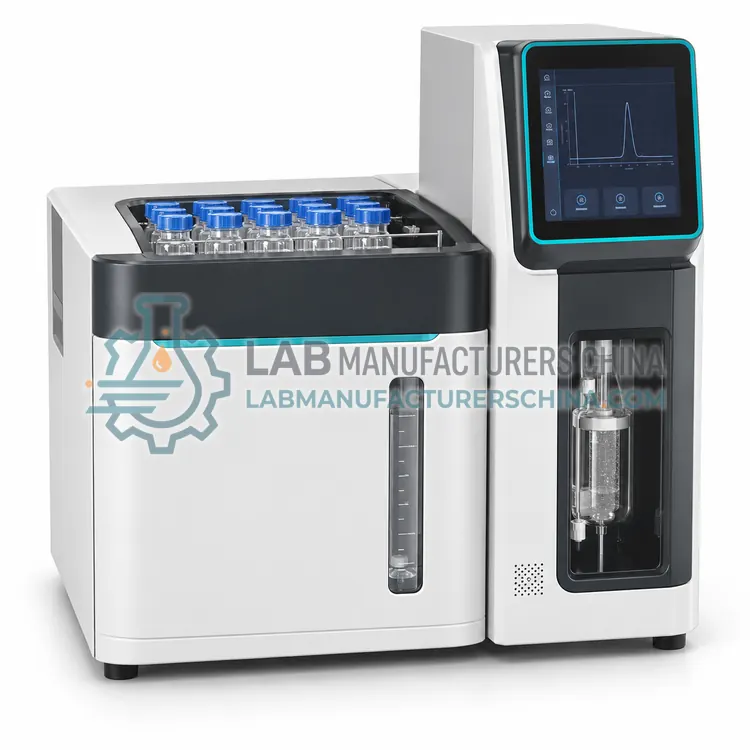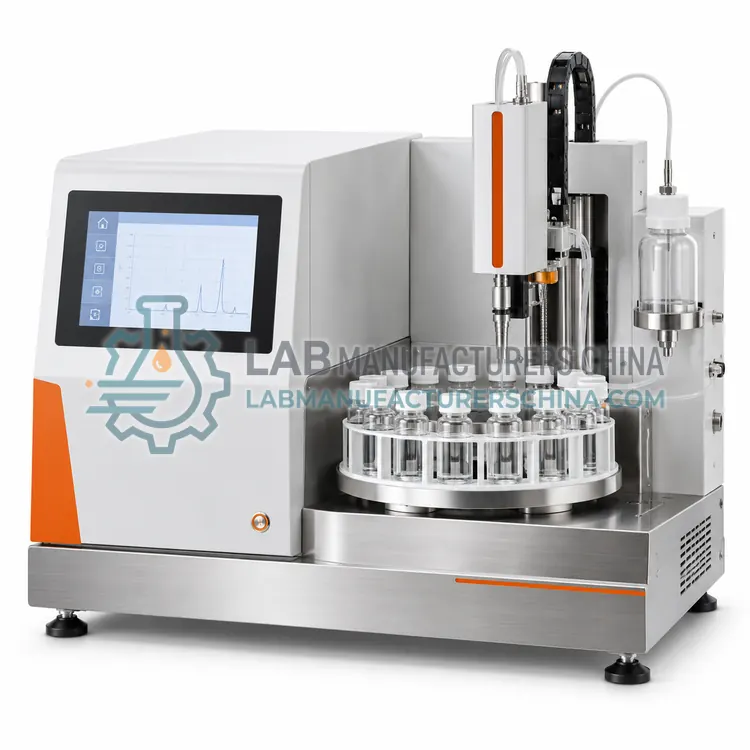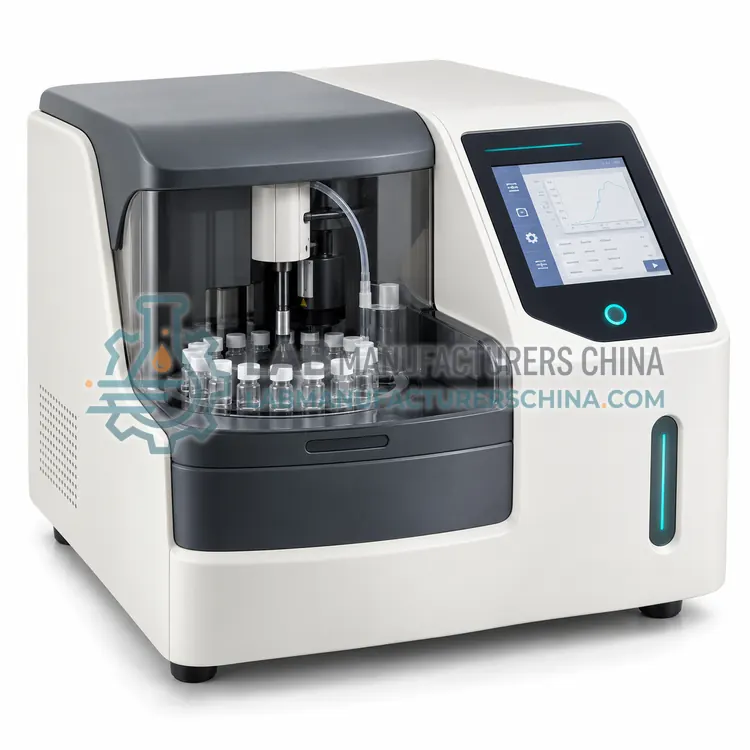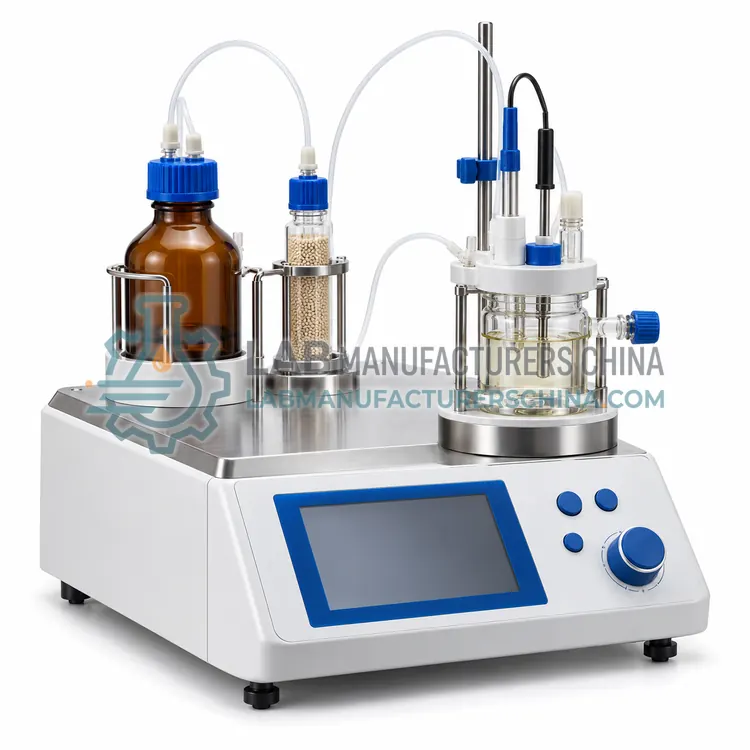
TOC Analyzer for Pharmaceutical Purified Water
纯化水总有机碳分析仪
- SKU TAN-0001
- TOC Analyzers
- CE (to be confirmed)
- IEC 61010-1 compliance (to be confirmed)
- ISO 13485 manufacturing (to be confirmed)
Price on request — FOB / CIF quoted per order
Prices depend on configuration, quantity and destination port.
Key specifications
| Measuring range | 0.001–50 mg/L |
|---|---|
| Limit of detection | about 0.001 mg/L |
| Oxidation principle | UV persulfate or combustion |
| Inorganic carbon handling | Sparging or differential measurement |
| Analysis time | about 3–10 min per sample |
| Calibration standard | Potassium hydrogen phthalate or sucrose |
Request a quote Download brochure · to be provided
By Lab Manufacturers China Technical TeamLast reviewed Standards: USP <643>, USP <645>, Ph. Eur. 2.2.44
What is the TOC Analyzer for Pharmaceutical Purified Water?
A TOC analyzer for pharmaceutical purified water measures organic carbon against the pharmacopoeial limit during routine water testing. It is chosen for batch checks of purified water used in production and laboratory work.
What is the TOC Analyzer for Pharmaceutical Purified Water?
A TOC analyzer for pharmaceutical purified water measures organic carbon against the pharmacopoeial limit during routine water testing. It is chosen for batch checks of purified water used in production and laboratory work.
Overview
Purified water is used throughout pharmaceutical production, so its organic carbon content is tested routinely against a limit of about 0.5 mg per litre. A laboratory TOC analyzer with UV persulfate or combustion oxidation measures the sample after removing or accounting for inorganic carbon, and reports the result against the specification. The method calls for a calibration curve from certified organic standards, a blank, and often a system suitability check using a standard at the limit concentration. Sample containers and handling are critical because a fingerprint or trace of detergent can add organic carbon. Results are recorded with the sampling point, time and calibration status so that the water system can be trended over time.
How does it work?
A TOC analyzer oxidises organic carbon in a water sample to carbon dioxide and measures the resulting gas. Oxidation is achieved by ultraviolet light with a persulfate reagent, by high-temperature combustion at 680 °C or above, or by a combination of these, and the carbon dioxide is quantified by conductivity after membrane separation or by a non-dispersive infrared detector. Because inorganic carbon such as dissolved carbonate also produces carbon dioxide, most instruments measure it separately, either by acidifying and sparging before oxidation or by a parallel channel, and report total organic carbon as the difference. Conductivity of the water itself, often expressed as a conductivity-to-TOC ratio, is an additional pharmacopoeial control for purified water and water for injection.
What are the key features?
- Measurement against the 0.5 mg/L pharmacopoeial limit
- UV persulfate or combustion oxidation
- Inorganic carbon removal or compensation
- Calibration with certified organic standards
- Limit concentration suitability check
- Results recorded with sampling point and time
What are the technical specifications?
A typical toc analyzer for pharmaceutical purified water configuration offers measuring range of 0.001–50 mg/L, limit of detection of about 0.001 mg/L, oxidation principle of UV persulfate or combustion, inorganic carbon handling of Sparging or differential measurement, analysis time of about 3–10 min per sample and calibration standard of Potassium hydrogen phthalate or sucrose. Values are indicative of the product class; the exact figures for each configuration are confirmed on the quotation and the calibration documents supplied with the instrument.
Which applications is it used for?
The TOC Analyzer for Pharmaceutical Purified Water is used in purified water batch testing, water system trend monitoring, laboratory water quality checks and raw water screening. Across the wider TOC Analyzers class, laboratories also deploy it for purified water monitoring, water for injection testing and cleaning validation.
Which standards and certifications apply?
Relevant standards and methods include USP <643>, USP <645>, Ph. Eur. 2.2.44, ICH Q2(R2), IEC 61010-1 and ISO 17025. Certification candidates for this model are CE, IEC 61010-1 compliance and ISO 13485 manufacturing; each is to be confirmed for the specific configuration before shipment, and certificates are supplied only where they have been issued.
Install the analyzer on a clean bench or in the water loop according to the manufacturer's requirements, and allow adequate warm-up and stabilisation before measurement. Use certified standards such as potassium hydrogen phthalate or sucrose for calibration, and verify performance with an independent standard and a blank at defined intervals. Keep sample containers clean and free of organic residue, and analyse promptly or preserve samples as the method requires, because organic contamination and microbial growth change results. For online units, maintain the sampling line, filters and valves, and verify that the reading tracks a manual reference. Record calibration, verification and maintenance, and investigate any excursion against the action limit.
How do I select the right TOC Analyzer for Pharmaceutical Purified Water?
Choose a laboratory analyzer when purified water is tested in batches and results are compared with the pharmacopoeial limit. Confirm measuring range, limit of detection, oxidation principle, analysis time and calibration standards. Check that sample containers and the procedure exclude organic contamination.
How does it compare with other TOC Analyzers variants?
Choose a TOC analyzer by the matrix, the required limit of detection and the measurement location. Laboratory instruments serve batch testing of purified water, water for injection and cleaning validation samples, and high-sensitivity combustion or UV persulfate models reach low microgram per litre levels. Online instruments are installed in a water loop, taking periodic samples automatically and alarming if the value drifts, which gives continuous assurance of a water system. Portable units are used for spot checks at points of use. Compare measuring range, limit of detection, oxidation principle, inorganic carbon handling, calibration standard, sample throughput and, for online units, interface and alarm options. Confirm compliance with pharmacopoeial chapter requirements and qualification documentation.
Full specifications
| Measuring range | 0.001–50 mg/L |
|---|---|
| Limit of detection | about 0.001 mg/L |
| Oxidation principle | UV persulfate or combustion |
| Inorganic carbon handling | Sparging or differential measurement |
| Analysis time | about 3–10 min per sample |
| Calibration standard | Potassium hydrogen phthalate or sucrose |
| Sample volume | about 5–20 mL |
| Power supply | 220 V, 50 Hz, about 0.3 kW |
Indicative values for this product class. Final specifications are confirmed on the quotation and in the calibration documents supplied with the instrument.
Applications
- Purified water batch testing
- Water system trend monitoring
- Laboratory water quality checks
- Raw water screening
Key features
- Measurement against the 0.5 mg/L pharmacopoeial limit
- UV persulfate or combustion oxidation
- Inorganic carbon removal or compensation
- Calibration with certified organic standards
- Limit concentration suitability check
- Results recorded with sampling point and time
Frequently asked questions about TOC Analyzer for Pharmaceutical Purified Water
The frequency is set by the water system validation and monitoring plan, often daily or at defined intervals at each sampling point, with more frequent testing after changes or excursions. Continuous online monitoring may replace or supplement manual sampling.
Organic carbon is easily introduced by fingerprints, detergent residue, plasticisers or dust, so containers should be dedicated, cleaned, and handled so that the inside of the cap and bottle are not touched. Even small contamination can exceed the limit.
First confirm the result with a repeat measurement and a fresh sample, and check for contamination and calibration status. If confirmed, the water system should be investigated, affected water quarantined and the deviation documented with corrective action.
It measures the concentration of organic carbon in water, expressed in milligrams or micrograms of carbon per litre. Organic carbon is an indicator of contamination by organic molecules or microorganisms, and pharmacopoeial limits apply to purified water and water for injection.
A commonly cited limit is 0.5 mg per litre of total organic carbon for purified water and water for injection, together with a conductivity specification. The exact requirement and test method come from the applicable pharmacopoeial chapter.
Because dissolved carbonates and carbon dioxide also form carbon dioxide when oxidised or acidified, and would be counted as organic carbon. Instruments remove or measure inorganic carbon before oxidation and report total organic carbon by difference, which is essential for accurate low-level results.
Related models