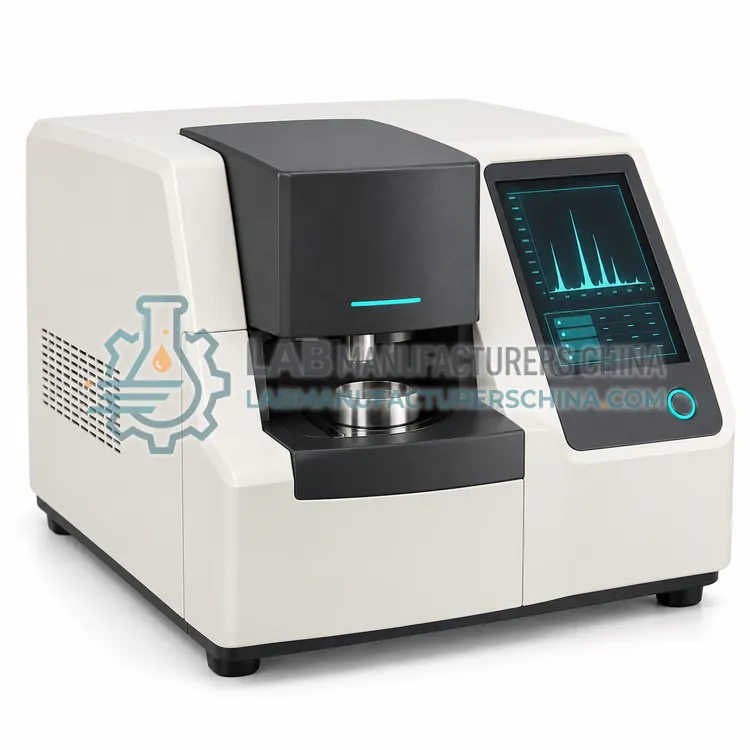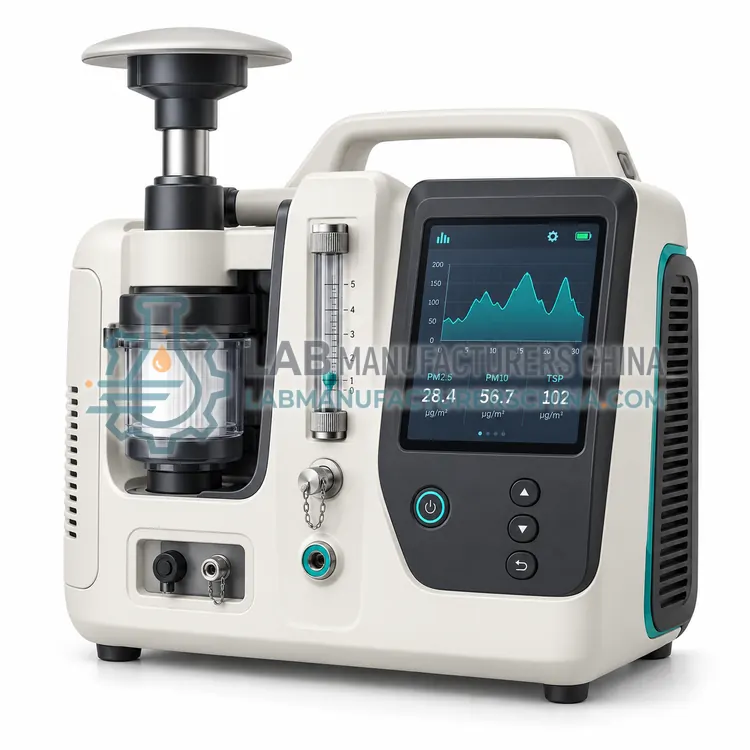
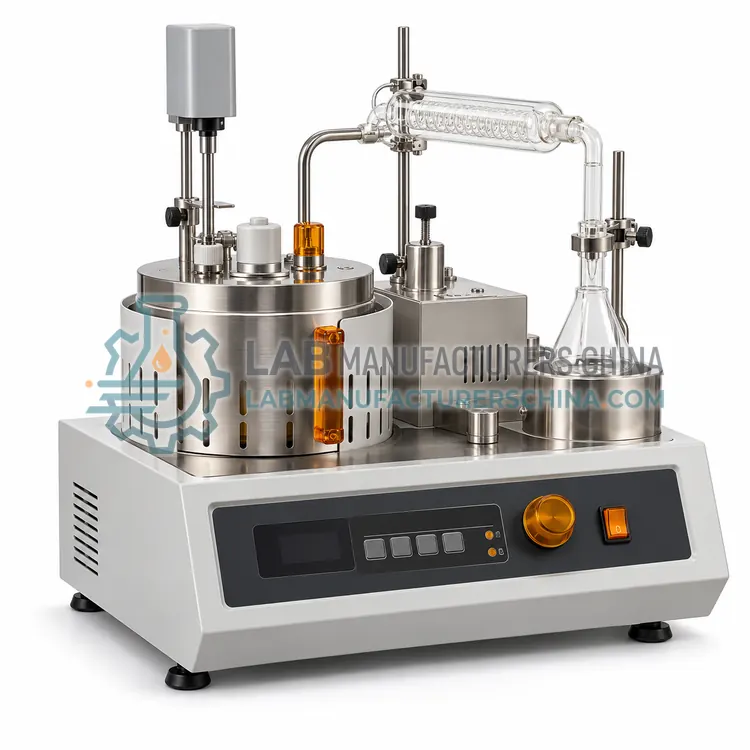
Mid-Infrared Soil Spectrometer
中红外土壤光谱仪
- SKU SOS-0005
- Soil Spectrometers
- CE (to be confirmed)
- RoHS (to be confirmed)
- ISO 9001 manufacturing (to be confirmed)
Price on request — FOB / CIF quoted per order
Prices depend on configuration, quantity and destination port.
Key specifications
| Measurement principle | Fourier transform mid-infrared reflectance |
|---|---|
| Spectral range | 4000–400 cm⁻¹ |
| Spectral resolution | 2–8 cm⁻¹ |
| Predicted properties | Organic carbon, carbonate, clay mineralogy |
| Measurement time | 1–5 min |
| Sample preparation | Dried and finely ground, or ATR |
Request a quote Download brochure · to be provided
By Lab Manufacturers China Technical TeamLast reviewed Standards: US EPA Method 6200, ISO 18227 (XRF elemental composition), ISO 13196 (EDXRF screening)
What is the Mid-Infrared Soil Spectrometer?
A Fourier transform infrared spectrometer that measures soil diffuse reflectance in the mid-infrared for composition prediction. It is the right choice for laboratories building strong calibrations for organic and mineral soil properties.
What is the Mid-Infrared Soil Spectrometer?
A Fourier transform infrared spectrometer that measures soil diffuse reflectance in the mid-infrared for composition prediction. It is the right choice for laboratories building strong calibrations for organic and mineral soil properties.
Overview
The mid-infrared soil spectrometer measures diffuse reflectance from about four thousand to four hundred wavenumbers, where fundamental molecular vibrations of carbonate, clay minerals, quartz, organic functional groups and water produce strong, sharp absorption bands. These fundamental bands carry more information than the overtones used in the near-infrared, so calibrations for organic carbon, carbonate, clay mineralogy and some nutrients can be strong, though the spectra are more affected by particle size and moisture and require careful sample preparation, usually drying and fine grinding. Instruments often use attenuated total reflectance or diffuse reflectance accessories, and chemometric models such as partial least squares relate spectra to reference values. Mid-infrared libraries are well established for soil, but regional calibration and reference samples remain necessary. The method is rapid and non-destructive after preparation.
How does it work?
Soil spectrometers use several spectroscopic principles. X-ray fluorescence excites atoms in the sample with X-rays, and each element emits characteristic fluorescence that an energy-dispersive detector identifies, giving elemental concentrations from sodium to uranium with little sample preparation. Portable instruments bring this capability to the field, while benchtop units give lower detection limits and better precision. Laser-induced breakdown spectroscopy focuses a laser to create a small plasma on the sample surface and reads the emitted atomic lines, which allows rapid multi-element measurement with minimal preparation. Visible and near-infrared and mid-infrared spectrometers measure diffuse reflectance, where overtones and combination bands of soil constituents such as clay minerals, carbonates, organic matter and water provide predictions through calibration models.
What are the key features?
- Fundamental mid-infrared bands carry detailed compositional information.
- Strong calibrations for carbonate, clay and organic carbon.
- Diffuse reflectance or attenuated total reflectance accessories.
- Chemometric models relate spectra to reference values.
- Fast and non-destructive after preparation.
- Complements near-infrared for difficult properties.
What are the technical specifications?
A typical mid-infrared soil spectrometer configuration offers measurement principle of Fourier transform mid-infrared reflectance, spectral range of 4000–400 cm⁻¹, spectral resolution of 2–8 cm⁻¹, predicted properties of Organic carbon, carbonate, clay mineralogy, measurement time of 1–5 min and sample preparation of Dried and finely ground, or ATR. Values are indicative of the product class; the exact figures for each configuration are confirmed on the quotation and the calibration documents supplied with the instrument.
Which applications is it used for?
The Mid-Infrared Soil Spectrometer is used in soil carbon and carbonate measurement, clay mineralogy assessment, soil spectral library development and research on soil organic matter composition. Across the wider Soil Spectrometers class, laboratories also deploy it for contaminated site screening, mining and geochemical exploration and precision agriculture soil mapping.
Which standards and certifications apply?
Relevant standards and methods include US EPA Method 6200, ISO 18227 (XRF elemental composition), ISO 13196 (EDXRF screening), ISO 17184 (NIR carbon and nitrogen) and ISO 10694 (organic carbon). Certification candidates for this model are CE, RoHS and ISO 9001 manufacturing; each is to be confirmed for the specific configuration before shipment, and certificates are supplied only where they have been issued.
Prepare samples consistently, because moisture, particle size, surface roughness and compaction all affect spectroscopic readings. For XRF, dry and grind the soil, use a thin sample over a support or a pressed pellet, and account for the sample matrix through calibration, fundamental parameters or a standard addition approach, since the method is comparative rather than absolute. For infrared methods, standardise drying and grinding and control temperature, because water dominates the spectra. Run certified reference materials, duplicates and blanks with each batch and verify calibration curves periodically. For XRF, comply with radiation safety requirements, including licensing, training, dosimetry, a radiation survey and secure storage. Record sample preparation, instrument settings and calibration used, and confirm important results with a laboratory reference method.
How do I select the right Mid-Infrared Soil Spectrometer?
Select the mid-infrared spectrometer when detailed organic and mineral composition predicts important properties and a strong local library can be developed. For lower-cost, faster scanning of large numbers, visible-near-infrared is often sufficient. In an RFQ, specify range, resolution, accessory and calibration library support.
How does it compare with other Soil Spectrometers variants?
Choose according to the target, the required detection limit and the portability needed. Portable XRF is the first choice for heavy metal screening and contamination mapping in the field, because it measures many elements directly with minimal preparation; it is less suited to light elements and to some elements that need very low detection limits. Benchtop XRF or inductively coupled plasma techniques are used for reference confirmation. Laser-induced breakdown spectroscopy suits rapid multi-element profiling and depth analysis with minimal sample handling but has higher detection limits. Visible-near-infrared and mid-infrared are used for organic matter, carbonate, clay and sometimes nutrient predictions, and depend entirely on a local calibration library. Consider radiation licensing for XRF, calibration and reference sample support, and whether the technique provides screening or reference data.
Full specifications
| Measurement principle | Fourier transform mid-infrared reflectance |
|---|---|
| Spectral range | 4000–400 cm⁻¹ |
| Spectral resolution | 2–8 cm⁻¹ |
| Predicted properties | Organic carbon, carbonate, clay mineralogy |
| Measurement time | 1–5 min |
| Sample preparation | Dried and finely ground, or ATR |
| Accessory | Diffuse reflectance or ATR |
| Calibration | Local chemometric library |
| Outputs | USB, Ethernet, LIMS export |
| Power supply | 220 VAC, 50 Hz |
| Operating temperature | 15–30 °C |
Indicative values for this product class. Final specifications are confirmed on the quotation and in the calibration documents supplied with the instrument.
Applications
- Soil carbon and carbonate measurement
- Clay mineralogy assessment
- Soil spectral library development
- Research on soil organic matter composition
Key features
- Fundamental mid-infrared bands carry detailed compositional information.
- Strong calibrations for carbonate, clay and organic carbon.
- Diffuse reflectance or attenuated total reflectance accessories.
- Chemometric models relate spectra to reference values.
- Fast and non-destructive after preparation.
- Complements near-infrared for difficult properties.
Frequently asked questions about Mid-Infrared Soil Spectrometer
The spectra contain fundamental vibrational bands of the actual molecules present, so information about carbonates, clay minerals and organic functional groups is direct and strong. Near-infrared relies on weaker overtones and combination bands, which carry less specific information.
Yes. Water absorbs strongly across the mid-infrared, so samples are dried, and spectra are often normalised to reduce moisture effects. Near-infrared is less affected, which is one reason it is preferred for rapid field scanning.
Soils are air-dried and finely ground, often to less than 0.15 millimetres, then presented in a diffuse reflectance cup or on an attenuated total reflectance crystal. Consistent preparation is essential because particle size alters scattering and band shape.
It measures elements from about magnesium or aluminium to uranium, including common heavy metal contaminants such as lead, arsenic, cadmium, chromium, copper and zinc, usually in milligrams per kilogram. Light elements and very low detection limits are more difficult.
Moisture, particle size and surface roughness change how radiation interacts with the soil, so inconsistent preparation adds error as large as the instrument's. Drying and standardised grinding, and a consistent sample presentation, are essential for comparable results.
Yes for infrared methods. Clay mineralogy, organic matter type, colour and parent material vary by region, so calibrations developed elsewhere predict poorly. Local samples with reference laboratory values build a library that matches the soils being measured.