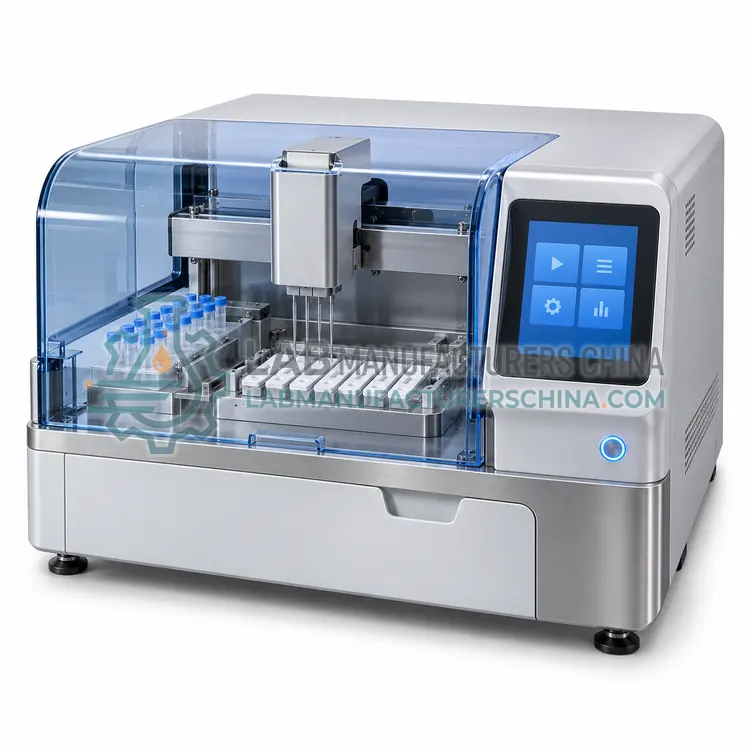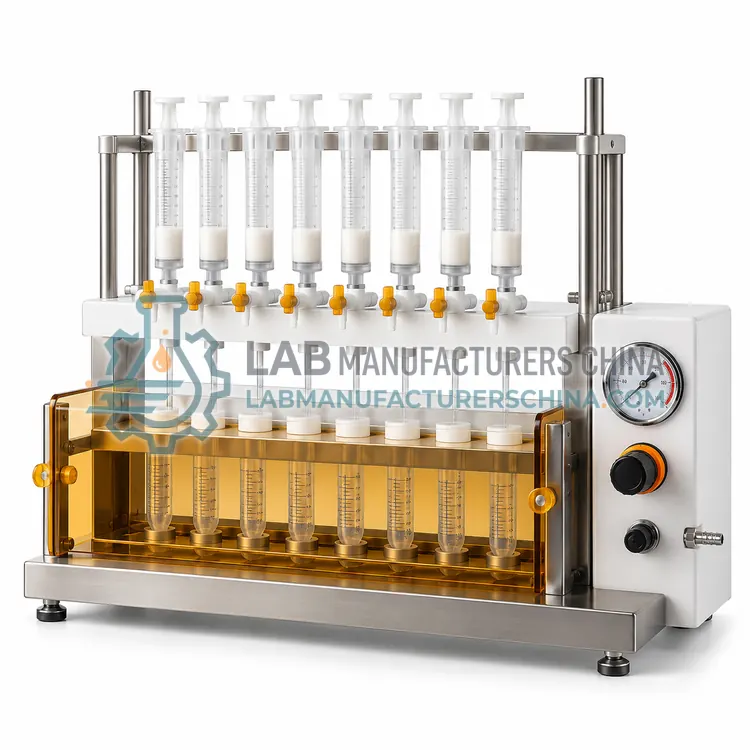
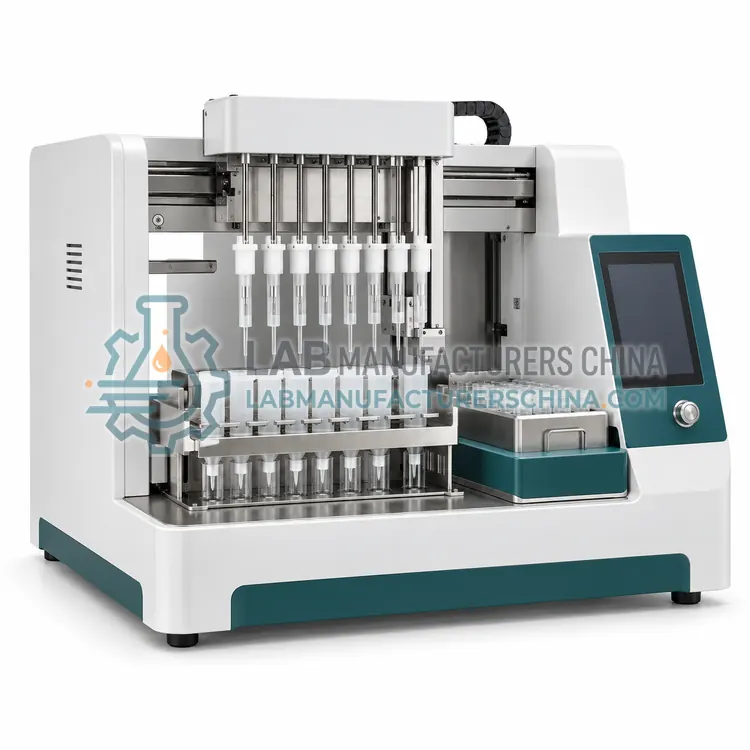
Automated SPE Workstation for Toxicology
毒理学用自动固相萃取工作站
- SKU SAE-0002
- Sample Preparation
- CE (to be confirmed)
- ISO 9001 manufacturing (to be confirmed)
Price on request — FOB / CIF quoted per order
Prices depend on configuration, quantity and destination port.
Key specifications
| Sample capacity | Up to 96–384 per run |
|---|---|
| Pipetting volume range | 5–1000 µL |
| Pipetting accuracy | ≤ 2 % at 100 µL |
| Precision (CV) | ≤ 1.5 % |
| SPE format | 96-well plate / cartridge |
| Processing time | 30–60 min per plate |
Request a quote Download brochure · to be provided
By Lab Manufacturers China Technical TeamLast reviewed Standards: ANSI/ASB Standard 036, ISO/IEC 17025, ISO 15189
What is the Automated SPE Workstation for Toxicology?
An automated SPE workstation performs sample loading, washing, drying and elution on cartridges or 96-well plates without operator intervention. It is used by laboratories that extract hundreds of toxicology samples per day.
What is the Automated SPE Workstation for Toxicology?
An automated SPE workstation performs sample loading, washing, drying and elution on cartridges or 96-well plates without operator intervention. It is used by laboratories that extract hundreds of toxicology samples per day.
Overview
The workstation combines a robotic liquid handling arm with a positive-pressure or vacuum SPE module. It aspirates samples from tubes, adds internal standards and buffers, optionally performs enzymatic hydrolysis, conditions the sorbent, loads the sample and runs wash and elution steps by programmed methods. Liquid level detection and clot detection protect against pipetting errors, and washing of fixed or disposable tips limits carryover. A 96-well plate can be processed in 30 to 60 minutes, and up to several plates can run in a batch. Software manages methods, barcode tracking and audit logs. Eluates can be dried and reconstituted on the same platform or transferred to autosampler vials. The cost and footprint are higher, and method transfer requires validation of each step, including pipetting accuracy and carryover checks.
How does it work?
Biological samples contain proteins, lipids and salts that interfere with chromatography and mass spectrometry, so drugs must be separated before analysis. Solid-phase extraction passes the sample through a sorbent bed that retains the drug, is washed to remove interferences and releases the drug with an elution solvent. Supported liquid extraction uses a diatomaceous earth support to perform liquid-liquid extraction without emulsions. Hydrolysis with acid, base or enzyme such as beta-glucuronidase releases conjugated drugs. Evaporation with heated nitrogen concentrates extracts, and derivatization may be needed for GC-MS. Hair is decontaminated, pulverized or cut and extracted to release incorporated drug. Automated liquid handlers pipette samples, internal standards and reagents with volume precision near 1 percent. Good preparation improves recovery, reproducibility and instrument uptime.
What are the key features?
- Robotic pipetting with liquid level and clot detection
- Integrated positive-pressure or vacuum SPE module
- Methods for loading, wash, dry and elute programmable by step
- Barcode tracking with audit log for chain of custody
- Batch processing of several 96-well plates
What are the technical specifications?
A typical automated spe workstation for toxicology configuration offers sample capacity of Up to 96–384 per run, pipetting volume range of 5–1000 µL, pipetting accuracy of ≤ 2 % at 100 µL, precision (CV) of ≤ 1.5 %, SPE format of 96-well plate / cartridge and processing time of 30–60 min per plate. Values are indicative of the product class; the exact figures for each configuration are confirmed on the quotation and the calibration documents supplied with the instrument.
Which applications is it used for?
The Automated SPE Workstation for Toxicology is used in high-volume toxicology laboratories, drug testing confirmation labs, forensic batch extraction and clinical LC-MS/MS workflows. Across the wider Sample Preparation class, laboratories also deploy it for urine and blood extraction for toxicology, hair testing preparation and workplace drug testing confirmation.
Which standards and certifications apply?
Relevant standards and methods include ANSI/ASB Standard 036, ISO/IEC 17025, ISO 15189, CLSI C62 and IEC 61010-1. Certification candidates for this model are CE and ISO 9001 manufacturing; each is to be confirmed for the specific configuration before shipment, and certificates are supplied only where they have been issued.
Validate each preparation method for recovery, matrix effects, precision and carryover, and use isotope-labeled internal standards added early. Keep consistent flow rates and drying times in SPE because variation changes recovery. Place evaporators and manifolds in a fume hood or use solvent vapor extraction, and follow biosafety procedures for blood and urine. Clean pipetting channels, needles and manifold ports regularly to avoid cross-contamination. Use calibrated pipettes and balances, verify temperature blocks with an independent thermometer, and document maintenance. For hair, decontamination steps must be defined and controlled. Keep chain-of-custody records and label every tube, plate and vial unambiguously.
How do I select the right Automated SPE Workstation for Toxicology?
Select an automated workstation when daily sample numbers make manual extraction a bottleneck or when traceability is essential. For smaller volumes, a positive-pressure manifold is more economical. In an RFQ, specify throughput, SPE format, pipetting range, barcode reading, software validation and solvent safety features.
How does it compare with other Sample Preparation variants?
Choose according to sample type, volume and downstream technique. Positive-pressure manifolds suit laboratories running tens of SPE samples with consistent flow, while automated SPE workstations suit hundreds of samples and reduce hands-on time. Nitrogen evaporators are needed whenever eluates must be concentrated or solvents exchanged, and their throughput is set by the number of positions and block temperature range. Hair testing requires a cryogenic or ball-mill pulverizer to achieve reproducible extraction. Liquid handlers add precision and traceability for calibrators, internal standards and dilutions. Check plate formats, such as 96-well, compatibility with consumables, carryover control, solvent resistance and the ability to log operations. Consider operator safety, because organic solvents and biological samples are present.
Full specifications
| Sample capacity | Up to 96–384 per run |
|---|---|
| Pipetting volume range | 5–1000 µL |
| Pipetting accuracy | ≤ 2 % at 100 µL |
| Precision (CV) | ≤ 1.5 % |
| SPE format | 96-well plate / cartridge |
| Processing time | 30–60 min per plate |
| Carryover | < 0.01 % |
| Detection | Liquid level, clot |
| Software | Methods, barcode, audit trail |
| Power supply | 220 V, 50/60 Hz |
Indicative values for this product class. Final specifications are confirmed on the quotation and in the calibration documents supplied with the instrument.
Applications
- High-volume toxicology laboratories
- Drug testing confirmation labs
- Forensic batch extraction
- Clinical LC-MS/MS workflows
Key features
- Robotic pipetting with liquid level and clot detection
- Integrated positive-pressure or vacuum SPE module
- Methods for loading, wash, dry and elute programmable by step
- Barcode tracking with audit log for chain of custody
- Batch processing of several 96-well plates
Frequently asked questions about Automated SPE Workstation for Toxicology
Automation can cut hands-on time by 70 to 90 percent for a full plate because the operator only loads tubes and reagents while the system runs the steps.
Carryover is controlled with disposable tips or intensive wash stations, blank samples placed between high-concentration runs, and carryover verification performed during method validation.
Many systems add enzyme and buffer and hold samples at a set temperature on a heated deck position. Incubation time and temperature should be validated for each method.
Biological samples contain proteins, salts and lipids that interfere with chromatography and mass spectrometry. Preparation removes these interferences, concentrates the drug and improves accuracy, sensitivity and instrument life.
Solid-phase extraction passes the sample through a sorbent that retains the drug, washes away interferences and then elutes the drug in a small solvent volume. It gives cleaner extracts than simple protein precipitation.
Many drugs are excreted as glucuronide conjugates. Enzymatic or chemical hydrolysis releases the free drug so that total drug concentration can be measured accurately.
Related models
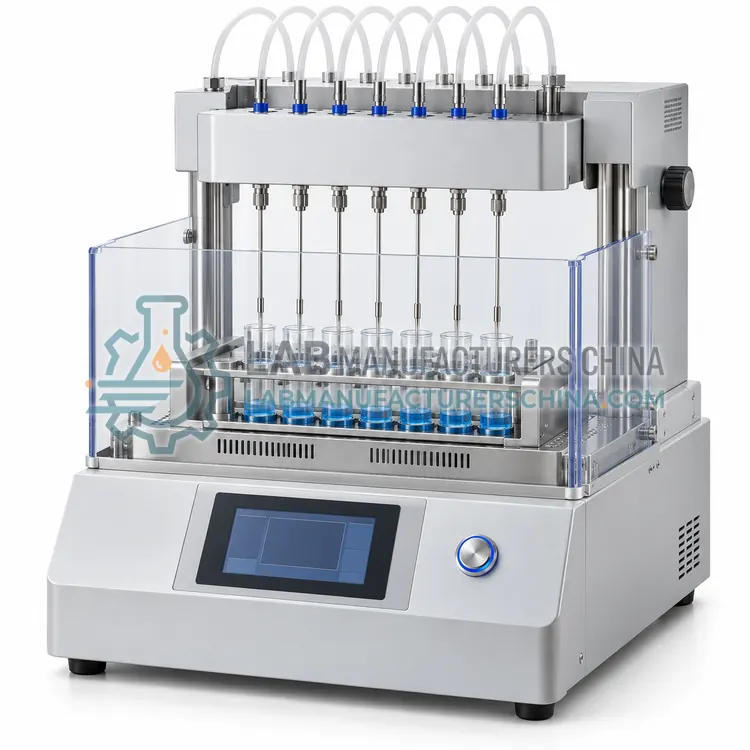
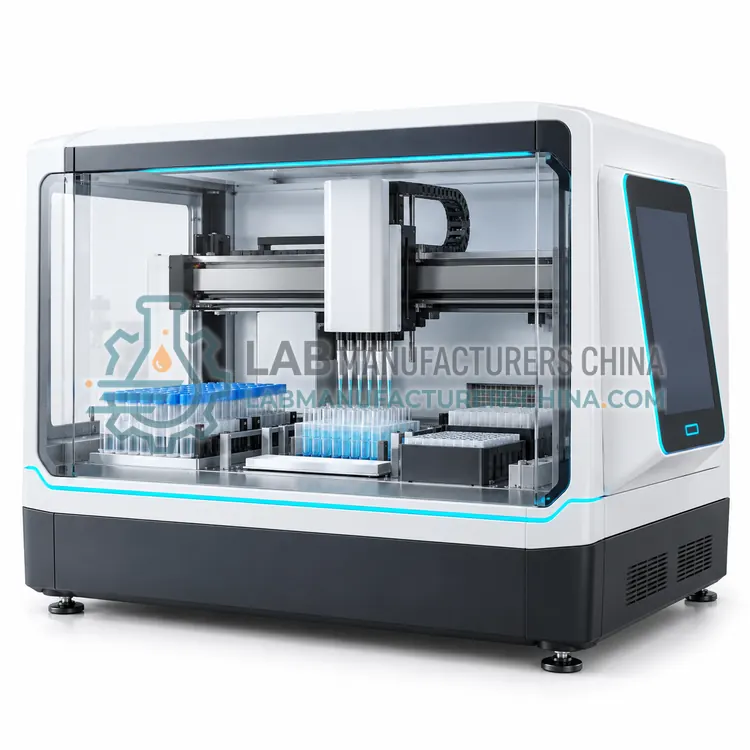
Automated Liquid Handling Workstation for Toxicology Sample Preparation
毒理样品前处理用自动液体处理工作站
- CE (to be confirmed)
- +1