
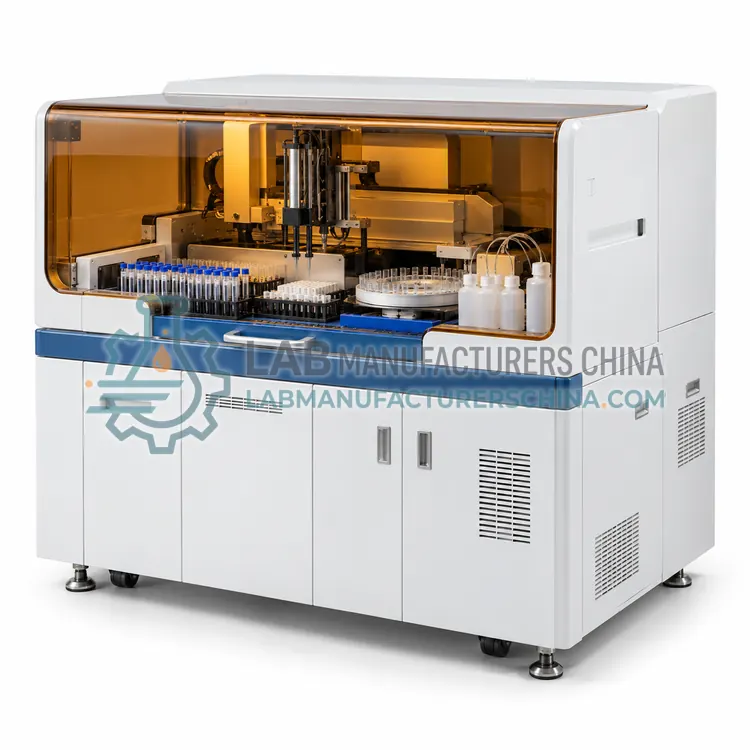
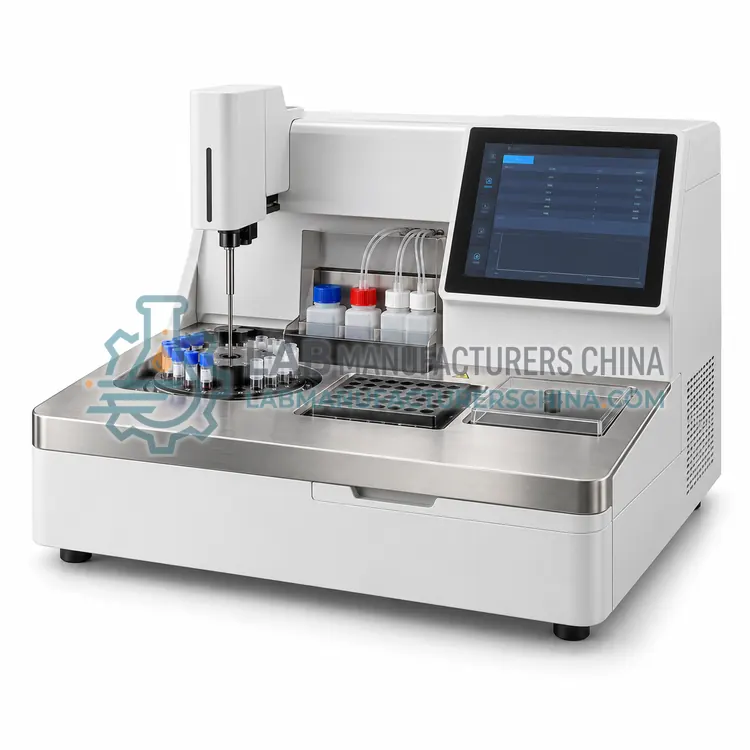
Semi-Automatic Coagulation Analyzer with Chromogenic Capability
具显色法功能的半自动凝血分析仪
- SKU SAC-0004
- Semi-Automatic Coagulation Analyzers
- CE (to be confirmed)
- ISO 13485 manufacturing (to be confirmed)
- NMPA class II registration (to be confirmed)
Price on request — FOB / CIF quoted per order
Prices depend on configuration, quantity and destination port.
Key specifications
| Detection principle | Clot detection plus chromogenic absorbance at 405 nm |
|---|---|
| Channels | 2 or 4 with shared photometer |
| Incubation temperature | 37 °C ±0.3 °C |
| Chromogenic range | 0–3.0 absorbance units at 405 nm |
| Supported chromogenic assays | Antithrombin, protein C, heparin in some models |
| Kinetic reading interval | From 5 s programmable |
Request a quote Download brochure · to be provided
By Lab Manufacturers China Technical TeamLast reviewed Standards: ISO 15189, CLSI H57, CLSI H21
What is the Semi-Automatic Coagulation Analyzer with Chromogenic Capability?
This analyzer adds a chromogenic channel that measures colour released from a synthetic substrate by a coagulation enzyme or inhibitor, enabling assays such as antithrombin and protein C. It suits laboratories that need inhibitor and factor assays without a fully automatic platform.
What is the Semi-Automatic Coagulation Analyzer with Chromogenic Capability?
This analyzer adds a chromogenic channel that measures colour released from a synthetic substrate by a coagulation enzyme or inhibitor, enabling assays such as antithrombin and protein C. It suits laboratories that need inhibitor and factor assays without a fully automatic platform.
Overview
Chromogenic assays use a synthetic peptide substrate that releases a coloured group, usually para-nitroaniline, when cleaved by thrombin, factor Xa or another coagulation enzyme. Absorbance at 405 nanometers is proportional to enzyme activity, and inhibitors such as antithrombin are measured by their effect on the generated activity. The analyzer therefore needs a photometer capable of reading at 405 nanometers in addition to the wavelengths used for clot detection, and the software must support kinetic reading and calibration models for these assays. Reaction times are longer than for clotting tests, and reagent volumes and incubation steps are defined precisely by the kit. Because chromogenic assays are less affected by fibrinogen concentration and sample turbidity, they complement clot-based tests and are often used to confirm or refine results.
How does it work?
A semi-automatic coagulation analyzer provides a temperature-controlled measuring position, usually at 37 degrees Celsius, a detection system and a timer. The operator pipettes plasma into the cuvette, incubates it, adds the reagent and starts the measurement. Optical instruments detect the increase in turbidity or the change in light scatter as fibrin strands form; mechanical instruments detect the change in movement or viscosity of a steel ball or magnetic particle; turbidimetric and chromogenic instruments measure light absorption changes from the fibrin network or from a coloured product released by a synthetic substrate. The analyzer stops the timer at the detection threshold and reports the clotting time in seconds, a ratio for prothrombin time or a concentration for fibrinogen. Because sample and reagent handling remain manual, pipetting accuracy and consistent incubation timing have a large influence on results.
What are the key features?
- Photometric channel reading at 405 nanometers
- Kinetic measurement of para-nitroaniline release
- Support for antithrombin and protein C assays
- Clot-based and chromogenic tests on one instrument
- Kit-defined incubation and reagent volumes
- Calibration models for activity and inhibitor assays
What are the technical specifications?
A typical semi-automatic coagulation analyzer with chromogenic capability configuration offers detection principle of Clot detection plus chromogenic absorbance at 405 nm, channels of 2 or 4 with shared photometer, incubation temperature of 37 °C ±0.3 °C, chromogenic range of 0–3.0 absorbance units at 405 nm, supported chromogenic assays of Antithrombin, protein C, heparin in some models and kinetic reading interval of From 5 s programmable. Values are indicative of the product class; the exact figures for each configuration are confirmed on the quotation and the calibration documents supplied with the instrument.
Which applications is it used for?
The Semi-Automatic Coagulation Analyzer with Chromogenic Capability is used in antithrombin activity measurement, protein C and protein S testing, heparin monitoring in some settings and thrombophilia screening support. Across the wider Semi-Automatic Coagulation Analyzers class, laboratories also deploy it for routine PT and APTT testing in clinics, anticoagulation monitoring with INR and pre-operative coagulation screening.
Which standards and certifications apply?
Relevant standards and methods include ISO 15189, CLSI H57, CLSI H21, CLSI EP05, ICSH recommendations on coagulation testing, IEC 61010-1 and IEC 61010-2-101. Certification candidates for this model are CE, ISO 13485 manufacturing and NMPA class II registration; each is to be confirmed for the specific configuration before shipment, and certificates are supplied only where they have been issued.
Place the analyzer on a level bench away from vibration and draughts, since both disturb optical clot detection, and allow the instrument to reach and hold 37 degrees Celsius before use. Verify performance at installation against a reference instrument or assigned plasma samples for prothrombin time, APTT and fibrinogen, and check the incubation temperature with an external thermometer. Daily work includes running normal and abnormal control plasma, checking reagent and cuvette lot numbers and recording all values. Reagents must be reconstituted, stored and expired strictly according to the instructions, and citrated plasma should be separated, frozen and thawed under controlled conditions because pre-analytical handling has a large influence on clotting times.
How do I select the right Semi-Automatic Coagulation Analyzer with Chromogenic Capability?
Specify this variant when the menu requires chromogenic assays such as antithrombin or protein C and a fully automatic analyzer is not justified. In the RFQ confirm the wavelengths available, the kinetic reading capability, the validated parameters for each chromogenic kit, and the supply of specific substrates and calibrators.
How does it compare with other Semi-Automatic Coagulation Analyzers variants?
Choose the detection principle according to the samples you receive: mechanical or magnetic detection tolerates icteric, hemolyzed and lipemic plasma, while optical detection is simpler and usually requires a clear sample. Then decide how many channels you need, because a four-channel instrument allows several patients or duplicate measurements in one run and reduces operator waiting time. Check the menu the instrument supports, especially whether fibrinogen, D-dimer or antithrombin assays are available, since not every semi-automatic platform can perform chromogenic or immunoturbidimetric tests. Confirm the sample and reagent volumes, the incubation temperature accuracy and the calibration requirements, and ask whether the analyzer stores calibrator values for each reagent lot.
Full specifications
| Detection principle | Clot detection plus chromogenic absorbance at 405 nm |
|---|---|
| Channels | 2 or 4 with shared photometer |
| Incubation temperature | 37 °C ±0.3 °C |
| Chromogenic range | 0–3.0 absorbance units at 405 nm |
| Supported chromogenic assays | Antithrombin, protein C, heparin in some models |
| Kinetic reading interval | From 5 s programmable |
| Sample volume | 20–100 µL depending on assay |
| Data storage | 1,000 results with kinetic curves |
| Interfaces | RS-232, USB, LAN with LIS option |
Indicative values for this product class. Final specifications are confirmed on the quotation and in the calibration documents supplied with the instrument.
Applications
- Antithrombin activity measurement
- Protein C and protein S testing
- Heparin monitoring in some settings
- Thrombophilia screening support
Key features
- Photometric channel reading at 405 nanometers
- Kinetic measurement of para-nitroaniline release
- Support for antithrombin and protein C assays
- Clot-based and chromogenic tests on one instrument
- Kit-defined incubation and reagent volumes
- Calibration models for activity and inhibitor assays
Frequently asked questions about Semi-Automatic Coagulation Analyzer with Chromogenic Capability
The coloured product of most chromogenic substrates is para-nitroaniline, which absorbs light near 405 nanometers. A photometer that cannot read that wavelength cannot perform the assay, and no wavelength substitution is possible because the absorption is a property of the product.
They measure different aspects of the coagulation system: clot-based tests reflect the overall fibrin formation process, while chromogenic tests measure the activity of a specific enzyme or inhibitor. Laboratories should report the method used, since reference intervals and cut-offs differ between the two approaches.
Substrates are often light sensitive and must be protected from direct light, reconstituted at the stated time and used within a short period. Reagent temperature at the start of the reaction also affects the rate, so kits specify equilibration and incubation steps that must be followed exactly.
Channels are usually shared, so tests are run in sequence rather than simultaneously, and the software schedules them according to the protocol requirements. Plan the daily workload so that long chromogenic incubations do not delay urgent clotting time results.
Typically prothrombin time, activated partial thromboplastin time, thrombin time and fibrinogen, with derived results such as the international normalised ratio. Chromogenic and immunoturbidimetric assays such as antithrombin and D-dimer are available only on platforms designed for them, so check the menu before purchase.
Two channels allow a patient sample and a control in one run, while four channels support duplicate measurements or several patients. More channels reduce waiting time but also increase reagent consumption, so choose according to daily sample count and the proportion of urgent requests.
Icteric, hemolyzed and lipemic plasma change light transmission and can delay or advance the detected clot point, and very low fibrinogen produces a weak signal. Mechanical or magnetic detection is less affected, and samples with these characteristics should be flagged or measured on such a system.
Related models
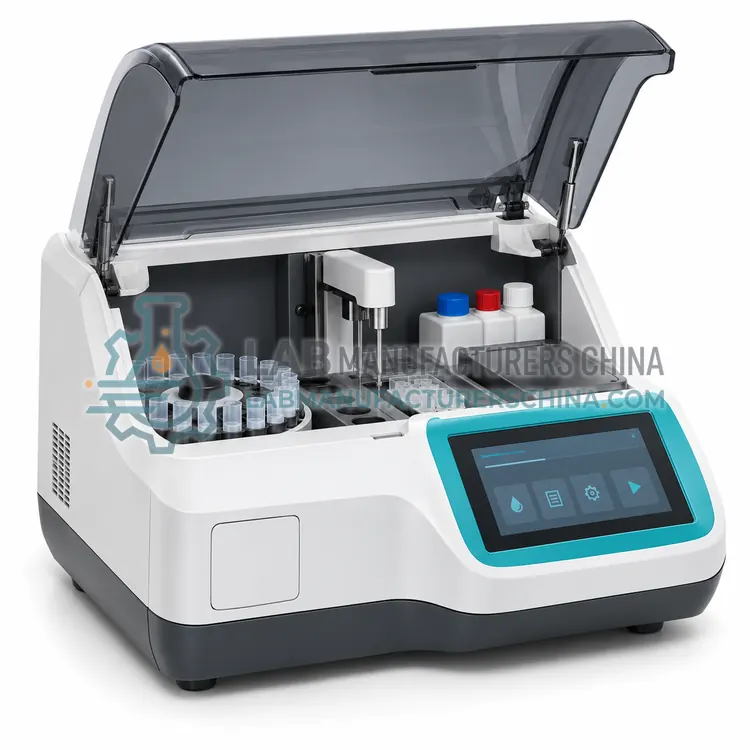
Semi-Automatic Coagulation Analyzer with Mechanical Clot Detection
机械凝固检测半自动凝血分析仪
- CE (to be confirmed)
- +2
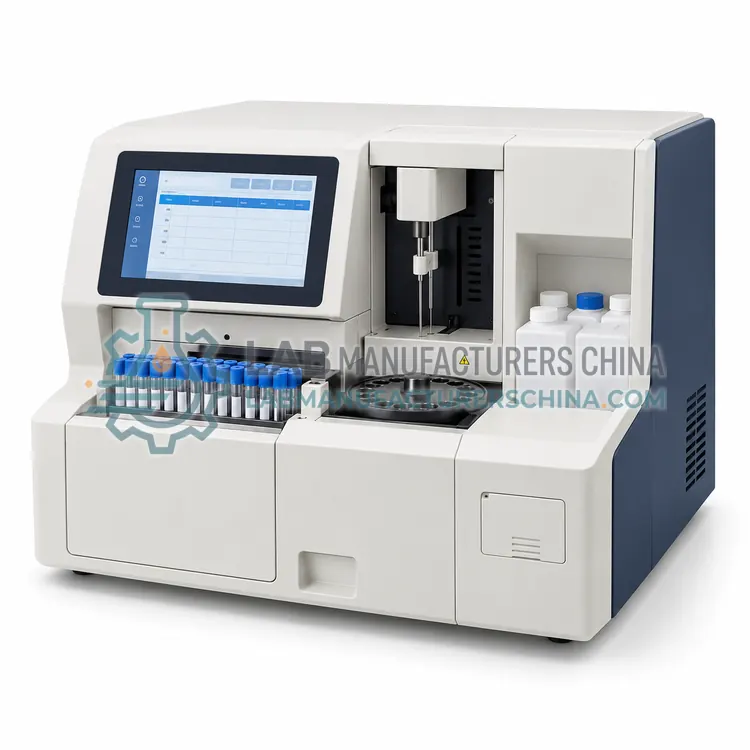
Fully Automated Coagulation Analyzer with Cap-Piercing Autoloader
带穿刺开盖进样器的全自动凝血分析仪
- CE (to be confirmed)
- +2