Low-Pressure Mercury Porosimeter for Macropore Analysis
大孔分析用低压压汞仪
- SKU POR-0002
- Porosimeters
- CE (to be confirmed)
- ISO 9001 manufacturing (to be confirmed)
Price on request — FOB / CIF quoted per order
Prices depend on configuration, quantity and destination port.
Key specifications
| Maximum pressure | 0.2 MPa |
|---|---|
| Pore diameter range | 7–400 µm |
| Vacuum level | ≤ 50 µmHg |
| Volume resolution | 0.1 µL |
| Pressure accuracy | ±1% of reading |
| Stations | 1 |
Request a quote Download brochure · to be provided
By Lab Manufacturers China Technical TeamLast reviewed Standards: ISO 15901-1, ASTM D4284, ASTM D4404
What is the Low-Pressure Mercury Porosimeter for Macropore Analysis?
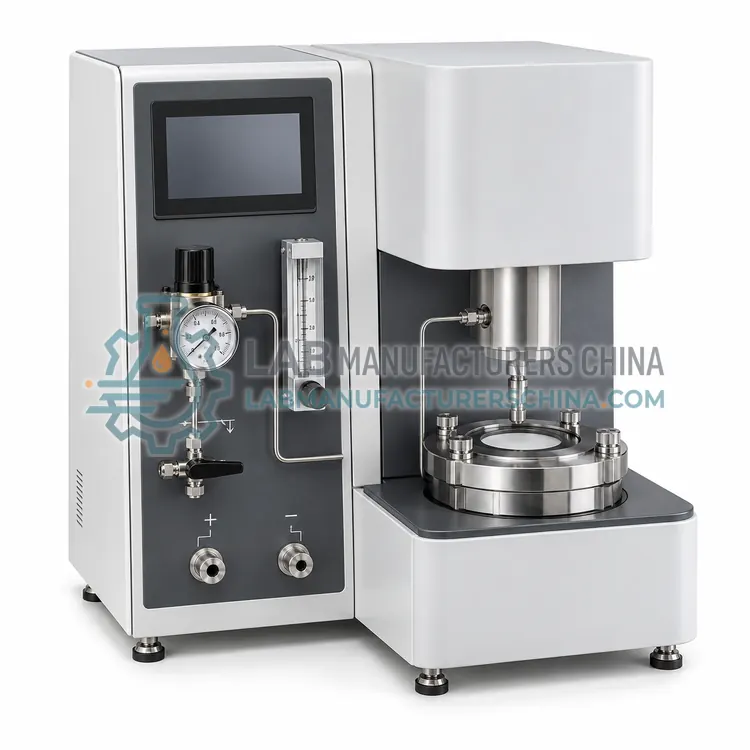
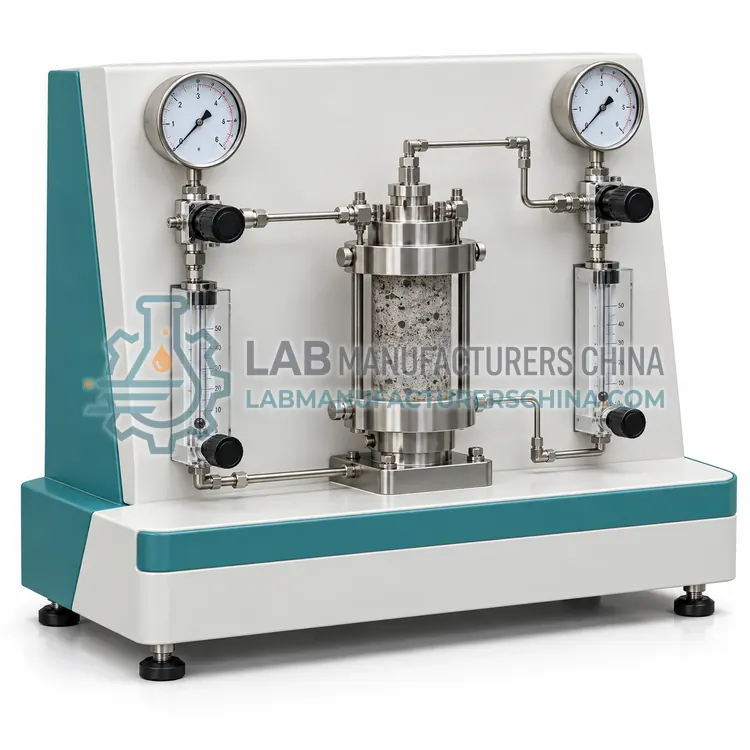
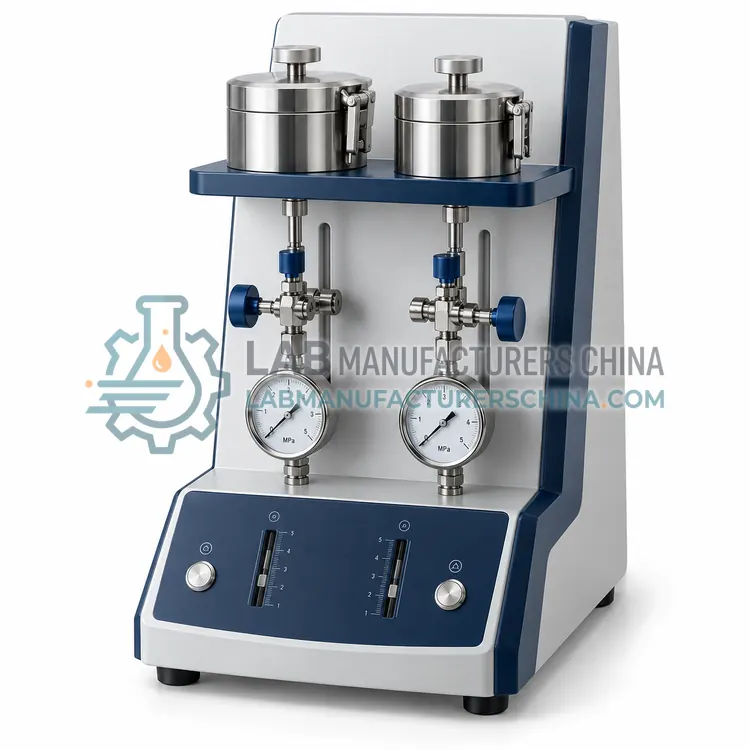
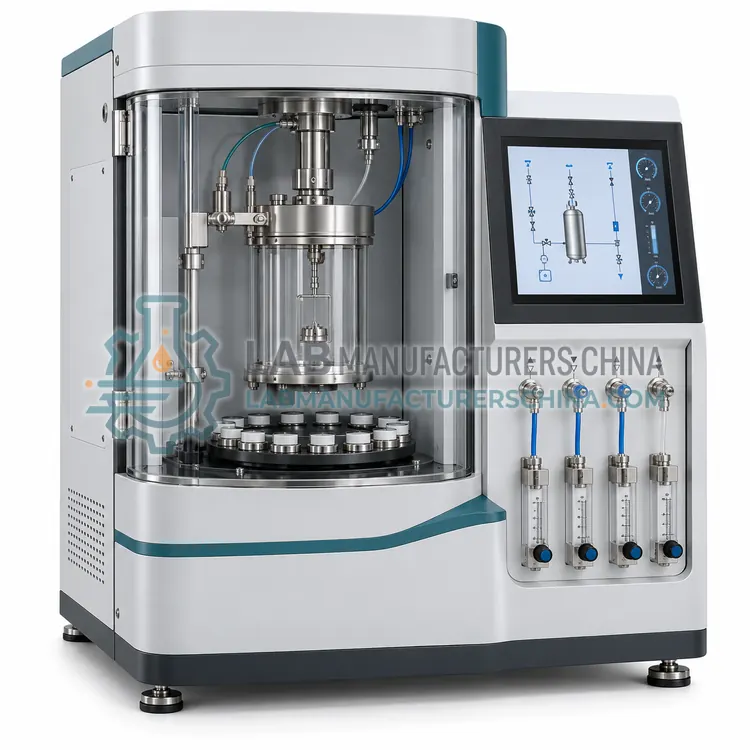
A compact mercury porosimeter limited to about 0.2 MPa that measures macropores from roughly 7 µm to 400 µm plus bulk density. It is suited to filters, foams, fibrous media, sintered metals and other coarse-pored materials where nanometer resolution is unnecessary.
What is the Low-Pressure Mercury Porosimeter for Macropore Analysis?
A compact mercury porosimeter limited to about 0.2 MPa that measures macropores from roughly 7 µm to 400 µm plus bulk density. It is suited to filters, foams, fibrous media, sintered metals and other coarse-pored materials where nanometer resolution is unnecessary.
Overview
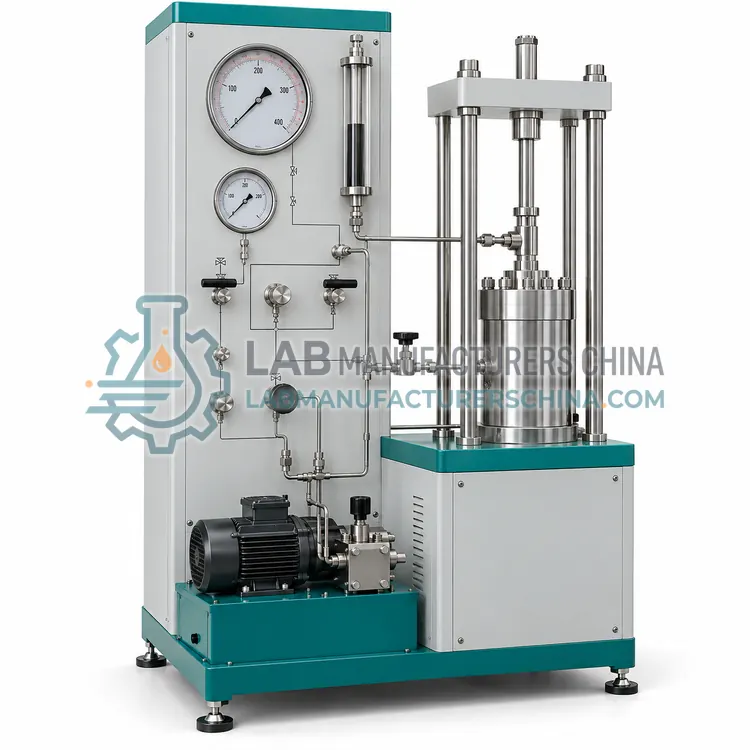
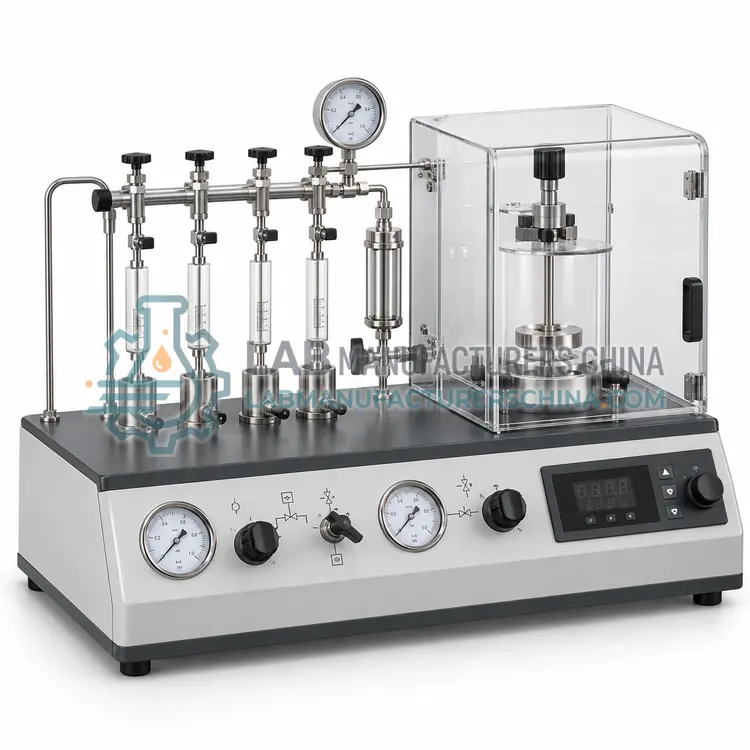
A low-pressure mercury porosimeter uses vacuum evacuation and gas pressure up to about 0.2 MPa to intrude mercury into coarse pores. Because no hydraulic intensifier is needed, the instrument is smaller, lower in cost and easier to maintain. The pore range typically runs from about 400 µm down to 7 µm by the Washburn equation. It also reports bulk volume and bulk density by mercury displacement, which is useful for materials that are porous through macropores, such as sintered metal filters, ceramic foams, nonwovens and some battery separators. Penetrometer sample cells are used in the same way as in a high-pressure system. Analysis takes around 20 to 40 minutes, and no high-pressure vessel inspection is required.
How does it work?
Mercury porosimetry exploits the fact that mercury does not wet most solids, so it enters pores only under pressure. The Washburn equation relates the applied pressure to the pore throat diameter, D = −4γcosθ/P, using a surface tension of 485 mN/m and a contact angle of about 130°. Pressure is increased stepwise from vacuum to 400 MPa while the intruded volume is recorded by a capacitance dilatometer, and extrusion on depressurization shows pore connectivity. Capillary flow porometry instead wets the sample with a low surface tension liquid and records the gas pressure needed to blow liquid from pores, giving through-pore size. Gas permeability systems measure flow through a sample at a known pressure difference, and helium pycnometers determine skeletal volume.
What are the key features?
- Vacuum and gas pressure up to 0.2 MPa for coarse pore intrusion
- Compact bench-top cabinet with a single analysis station
- Bulk density and bulk volume determination by mercury displacement
- Standard penetrometers shared with high-pressure instruments
- Touchscreen interface with automated data reduction
- Enclosed mercury path and waste collection bottle
What are the technical specifications?
A typical low-pressure mercury porosimeter for macropore analysis configuration offers maximum pressure of 0.2 MPa, pore diameter range of 7–400 µm, vacuum level of ≤ 50 µmHg, volume resolution of 0.1 µL, pressure accuracy of ±1% of reading and stations of 1. Values are indicative of the product class; the exact figures for each configuration are confirmed on the quotation and the calibration documents supplied with the instrument.
Which applications is it used for?
The Low-Pressure Mercury Porosimeter for Macropore Analysis is used in sintered metal filter characterization, ceramic foam and nonwoven media, bulk density of irregular solids and battery separator macroporosity. Across the wider Porosimeters class, laboratories also deploy it for ceramic and refractory pore analysis, filter and membrane pore size testing and catalyst pellet macropore distribution.
Which standards and certifications apply?
Relevant standards and methods include ISO 15901-1, ASTM D4284, ASTM D4404, ASTM F316 and ASTM D6226. Certification candidates for this model are CE and ISO 9001 manufacturing; each is to be confirmed for the specific configuration before shipment, and certificates are supplied only where they have been issued.
Mercury instruments need containment for vapor and spills, a dedicated sink or waste procedure, and staff training under local regulations. Samples must be dried and sized to fit penetrometers, and results depend on the assumed contact angle and surface tension. Correct for mercury compression and penetrometer expansion with blank runs. Calibrate pressure transducers annually and verify with a reference material of known pore size. Capillary flow systems need wetting liquids with documented surface tension and clean, dry gas. Place high-pressure units on a rigid bench and follow pressure vessel inspection rules.
How do I select the right Low-Pressure Mercury Porosimeter for Macropore Analysis?
Select this variant when specifications concern pores above about 7 µm or bulk density and no high-pressure data are needed. If the same laboratory also works on catalysts or fine ceramics, a high-pressure system is more economical overall. In an RFQ, specify pore range, sample geometry, penetrometer volumes and reporting standard.
How does it compare with other Porosimeters variants?
Choose by pore size range, sample form and the quantity that the specification reports. Mercury intrusion covers a broad span, about 3.6 nm to 400 µm, and suits rigid ceramics, rocks, cement and catalysts pellets. It is unsuitable for compressible or amalgamating samples and requires mercury handling controls. Capillary flow porometers suit membranes and filters where through-pore bubble point and mean flow pore size are required. Gas permeability testers give Darcy permeability of rocks and ceramics. Helium pycnometers supply true density and closed porosity. Check the number of high-pressure ports, maximum pressure, penetrometer volume options, automation, and whether reporting follows ISO 15901-1, ASTM D4284 or ASTM F316.
Full specifications
| Maximum pressure | 0.2 MPa |
|---|---|
| Pore diameter range | 7–400 µm |
| Vacuum level | ≤ 50 µmHg |
| Volume resolution | 0.1 µL |
| Pressure accuracy | ±1% of reading |
| Stations | 1 |
| Sample volume | Up to 15 mL |
| Analysis time | 20–40 min |
| Power supply | 220 V, 50 Hz |
| Footprint | ≈ 500 × 450 × 600 mm |
Indicative values for this product class. Final specifications are confirmed on the quotation and in the calibration documents supplied with the instrument.
Applications
- Sintered metal filter characterization
- Ceramic foam and nonwoven media
- Bulk density of irregular solids
- Battery separator macroporosity
Key features
- Vacuum and gas pressure up to 0.2 MPa for coarse pore intrusion
- Compact bench-top cabinet with a single analysis station
- Bulk density and bulk volume determination by mercury displacement
- Standard penetrometers shared with high-pressure instruments
- Touchscreen interface with automated data reduction
- Enclosed mercury path and waste collection bottle
Frequently asked questions about Low-Pressure Mercury Porosimeter for Macropore Analysis
It is enough when the pore sizes of interest are above about 7 µm or when only bulk density and macroporosity are required, such as with coarse filters, foams and nonwovens. Fine ceramics and catalysts need high pressure.
Usually not, because the pressure system and cabinet differ. Some manufacturers offer modular designs, but most laboratories buy a dedicated high-pressure unit if needs extend to mesopores. Confirm upgrade paths before purchase.
Bulk density is the sample mass divided by bulk volume. The instrument determines bulk volume by measuring how much mercury the filled penetrometer displaces at low pressure before mercury enters the pores, following ISO 15901-1 practice.
It measures pore volume, pore throat size distribution, bulk and skeletal density and porosity by forcing mercury into a solid under controlled pressure. Typical samples include ceramics, catalysts, rocks, cement and battery electrodes, with a range of about 3.6 nm to 400 µm.
It can be operated safely with enclosed penetrometers, vapor-tight waste handling, spill kits, ventilation and staff training. Because mercury is regulated, some laboratories prefer gas sorption or capillary flow techniques when the pore range allows.
The bubble point is the lowest gas pressure at which a continuous stream of bubbles passes through a wetted membrane. It corresponds to the largest through pore by the Washburn relation and is a standard integrity indicator for filters according to ASTM F316.
Related models