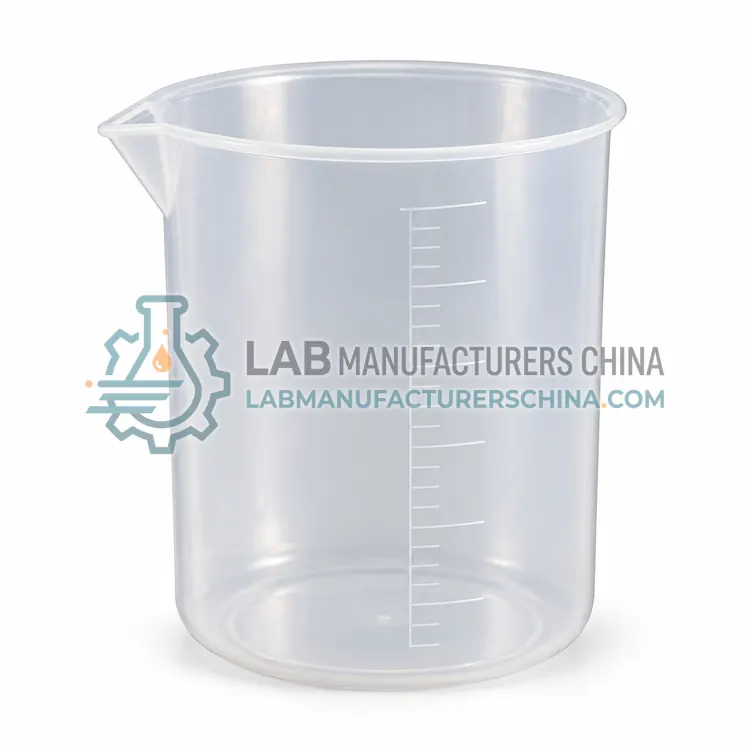
Polypropylene Beaker
聚丙烯烧杯
- SKU PLS-0001
- Plasticware
- CE (to be confirmed)
- ISO 9001 manufacturing (to be confirmed)
Price on request — FOB / CIF quoted per order
Prices depend on configuration, quantity and destination port.
Key specifications
| Material | Polypropylene |
|---|---|
| Capacity range | 50–5000 mL |
| Graduation | Approximate |
| Max temperature | 121 °C autoclave |
| Chemical resistance | Acids, bases, alcohols |
| Clarity | Translucent |
Request a quote Download brochure · to be provided
By Lab Manufacturers China Technical TeamLast reviewed Standards: USP <661> (plastic components and systems), USP <88> (biological reactivity tests), ISO 10993 (biological evaluation of medical devices)
What is the Polypropylene Beaker?
A polypropylene beaker is a lightweight, unbreakable vessel for mixing and holding acids and bases. It is chosen where glass breakage or chemical attack is a concern, and is autoclavable for repeated use.
What is the Polypropylene Beaker?
A polypropylene beaker is a lightweight, unbreakable vessel for mixing and holding acids and bases. It is chosen where glass breakage or chemical attack is a concern, and is autoclavable for repeated use.
Overview
The beaker is moulded from polypropylene, with a pour spout and approximate graduations, and is available in 50 mL to 5000 mL sizes. It resists most acids, bases and alcohols, tolerates autoclaving at 121 °C and is unbreakable, which suits field use, teaching and work with hydrofluoric acid, where glass would be attacked. Polypropylene is translucent rather than clear, so reading the meniscus is less precise, and graduations are approximate. It can be used with most organic solvents but swells or softens with some aromatics and chlorinated solvents, so compatibility should be checked. Because plastics adsorb some compounds and can leach additives, PP beakers are not the first choice for trace organic analysis, where glass is preferred.
How does it work?
Plasticware works because polymers can be moulded into precise, low-cost shapes and selected for specific properties. Polypropylene resists most acids, bases and solvents, tolerates autoclaving and is translucent but not optically clear, so it is used for beakers, bottles and carboys. Polycarbonate is clear and tough, so it is used for centrifuge bottles where the contents must be seen and the vessel must resist high g forces. Polystyrene is optically clear and rigid, which suits cell culture flasks and dishes, and is supplied sterile and sometimes treated for cell attachment. Polyethylene is flexible and used for wash bottles and tubing. Unlike glass, plastics can adsorb analytes, leach additives such as plasticisers, and scratch, so they are chosen for applications where inertness requirements are lower or where disposability reduces contamination risk.
What are the key features?
- Moulded polypropylene with spout
- Capacities 50–5000 mL
- Resists acids, bases and alcohols
- Autoclavable at 121 °C
- Unbreakable for field and teaching use
- Approximate translucent graduations
What are the technical specifications?
A typical polypropylene beaker configuration offers material of Polypropylene, capacity range of 50–5000 mL, graduation of Approximate, max temperature of 121 °C autoclave, chemical resistance of Acids, bases, alcohols and clarity of Translucent. Values are indicative of the product class; the exact figures for each configuration are confirmed on the quotation and the calibration documents supplied with the instrument.
Which applications is it used for?
The Polypropylene Beaker is used in acid and base handling, hydrofluoric acid work, field and teaching use and general mixing. Across the wider Plasticware class, laboratories also deploy it for reagent and buffer storage, cell culture and microbiology and centrifugation.
Which standards and certifications apply?
Relevant standards and methods include USP <661> (plastic components and systems), USP <88> (biological reactivity tests), ISO 10993 (biological evaluation of medical devices), ISO 13485 (medical device quality management), EN ISO 11607 (packaging for terminally sterilized devices) and ISO 11737 (sterilization of health care products). Certification candidates for this model are CE and ISO 9001 manufacturing; each is to be confirmed for the specific configuration before shipment, and certificates are supplied only where they have been issued.
Confirm the maximum temperature and autoclave compatibility of each polymer before use, since polypropylene tolerates about 121 °C and polystyrene does not. Avoid strong oxidising acids and solvents that cause environmental stress cracking, and test new polymer and chemical combinations before routine use. Use sterile techniques with culture ware and keep packaging intact until use, and do not reuse items intended for single use. Inspect bottles for crazing, cloudiness or odour, which can indicate chemical attack or leaching. Store plastics away from direct sunlight and heat, and keep certificates of analysis and sterility for regulated work. Where adsorption matters, run recovery checks with the analytes and the intended plastic before committing to a method.
How do I select the right Polypropylene Beaker?
Choose a PP beaker where breakage or chemical attack rules out glass, and check solvent compatibility. RFQ: capacities, autoclave needs, contents and temperature. Confirm the capacity and whether autoclaving is required. State the contents and maximum temperature.
How does it compare with other Plasticware variants?
Choose the polymer from the chemistry, the temperature and the visibility needed. Polypropylene is the general-purpose choice for acids, bases and most solvents, and it can be autoclaved. Use polycarbonate where clarity and impact strength matter, but avoid it with strong alkalis and some solvents that cause stress cracking. Use polystyrene only for aqueous and culture work, since it is attacked by many solvents. Choose sterile, pyrogen-free and cell-culture-treated grades where cells, media or clinical samples are involved, and confirm the certification. Match the volume, closure and centrifuge rating to the application, and check that the resin does not adsorb the analytes of interest. For trace work, ask for leachables and extractables data, and prefer low-binding surfaces for proteins and peptides.
Full specifications
| Material | Polypropylene |
|---|---|
| Capacity range | 50–5000 mL |
| Graduation | Approximate |
| Max temperature | 121 °C autoclave |
| Chemical resistance | Acids, bases, alcohols |
| Clarity | Translucent |
| Spout | Yes |
| Autoclavable | Yes |
| Avoid | Some aromatics and chlorinated solvents |
| Use | Mixing and holding |
Indicative values for this product class. Final specifications are confirmed on the quotation and in the calibration documents supplied with the instrument.
Applications
- Acid and base handling
- Hydrofluoric acid work
- Field and teaching use
- General mixing
Key features
- Moulded polypropylene with spout
- Capacities 50–5000 mL
- Resists acids, bases and alcohols
- Autoclavable at 121 °C
- Unbreakable for field and teaching use
- Approximate translucent graduations
Frequently asked questions about Polypropylene Beaker
No. The graduations are approximate and the translucent material makes the meniscus hard to read, so use a cylinder, flask or pipette when the volume matters.
Many organic solvents are fine, but some aromatics and chlorinated solvents soften or swell polypropylene. Check the chemical compatibility chart and test before using with a new solvent.
HF attacks glass, releasing fluorides and damaging the vessel, while polypropylene resists it. That makes PP the standard choice for HF digestion and cleaning work.
Polypropylene suits most acids, bases and reagents, tolerates autoclaving and is inexpensive. For organic solvents, confirm compatibility, and avoid polystyrene, which is attacked by many solvents.
Polycarbonate is sensitive to environmental stress cracking, especially with strong alkalis, some detergents and solvents, and after repeated autoclaving. Cracks appear as fine lines and can lead to failure.
The surface has been modified, usually by plasma or corona treatment, to make it hydrophilic so cells adhere and spread. Untreated polystyrene is used for suspension culture or non-adherent work.
Related models