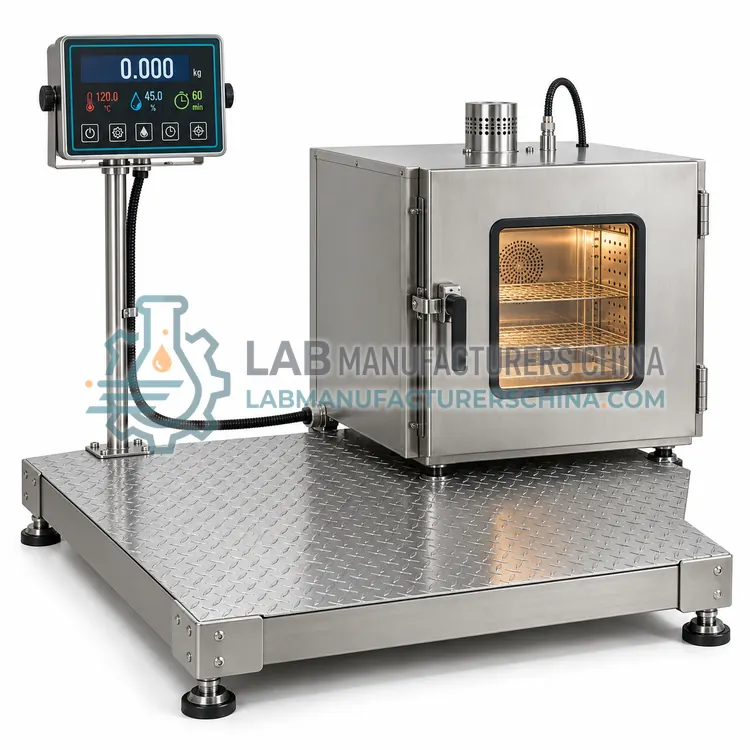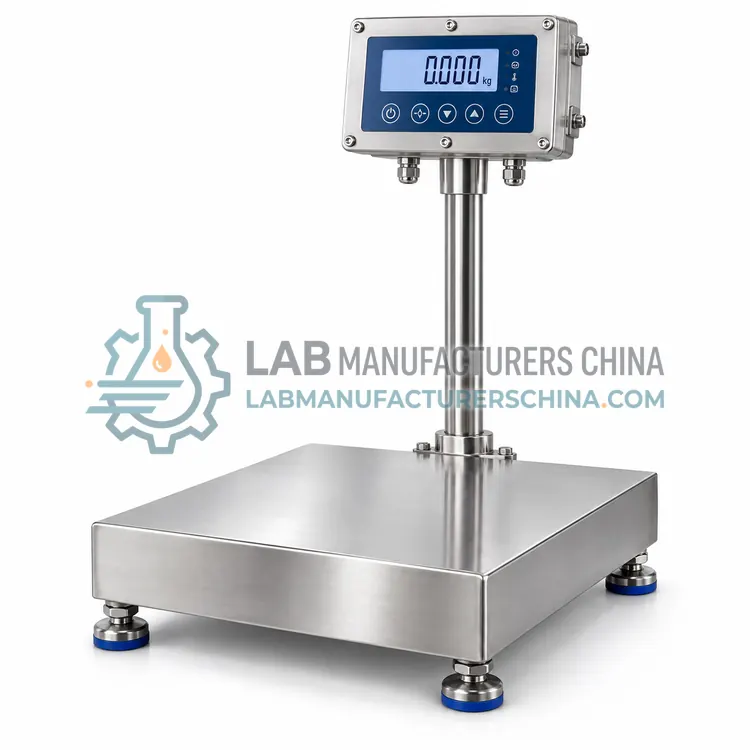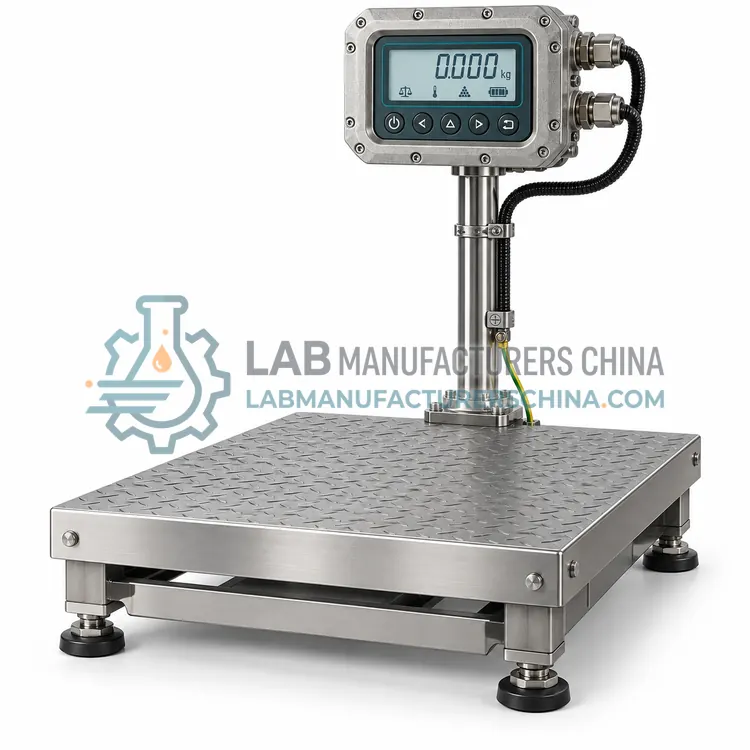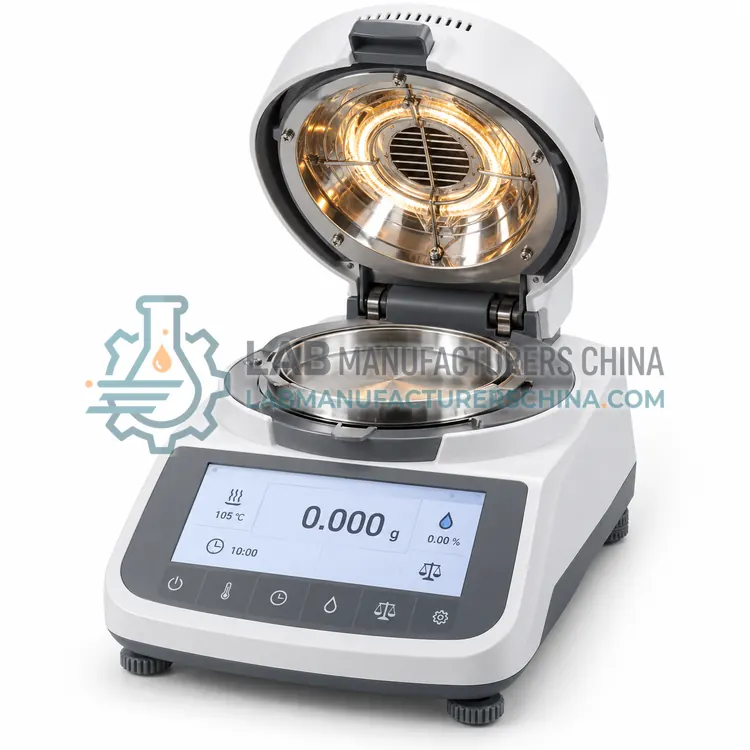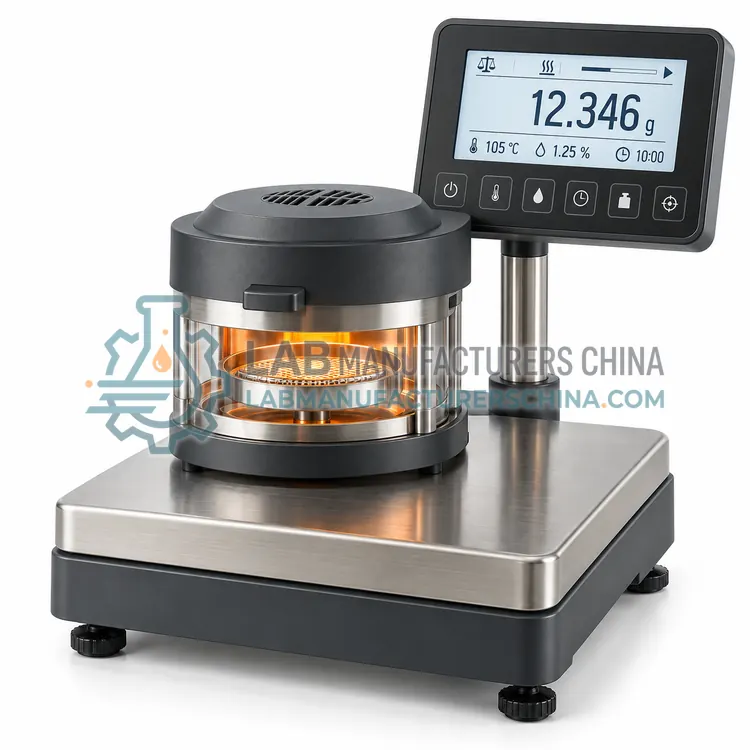
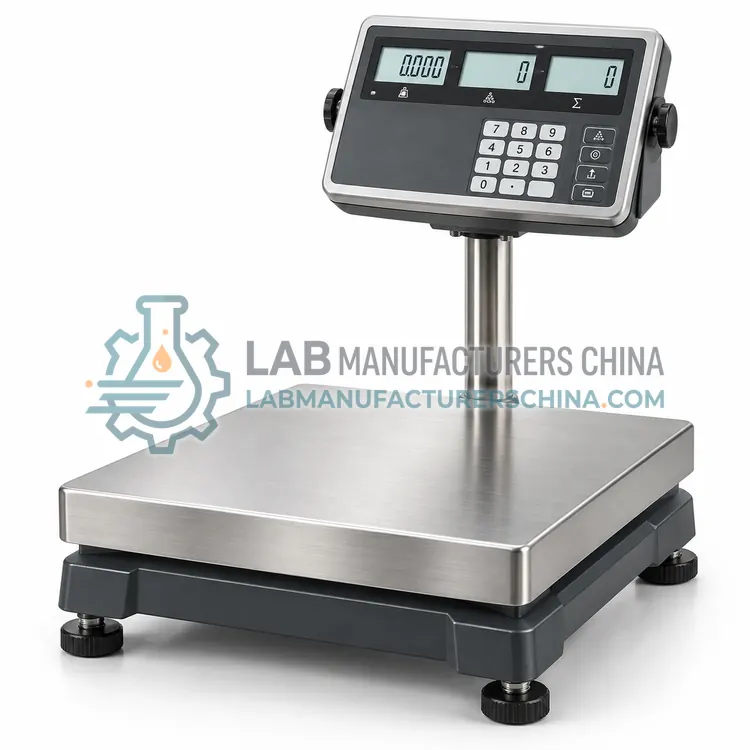
Counting Platform Balance
计数台秤
- SKU PLB-0005
- Platform Balances
- CE (to be confirmed)
- ISO 9001 manufacturing (to be confirmed)
- OIML R 76 type approval (to be confirmed)
Price on request — FOB / CIF quoted per order
Prices depend on configuration, quantity and destination port.
Key specifications
| Capacity | 3–150 kg |
|---|---|
| Readability | 0.01 g–5 g |
| Number of divisions | 30,000–300,000 |
| Minimum piece weight | ≈ 1–5 × readability |
| Sample size | 10–50 pieces |
| Platform size | 200 × 250 to 400 × 500 mm |
Request a quote Download brochure · to be provided
By Lab Manufacturers China Technical TeamLast reviewed Standards: OIML R 76-1, OIML R 60, EN 45501
What is the Counting Platform Balance?
A counting platform balance converts weight to piece count using the average unit weight of a sample. It is used for counting small parts, vials, consumables and components in inventory, dispatch and production where manual counting is slow and error-prone.
What is the Counting Platform Balance?
A counting platform balance converts weight to piece count using the average unit weight of a sample. It is used for counting small parts, vials, consumables and components in inventory, dispatch and production where manual counting is slow and error-prone.
Overview
A counting scale works by weighing a known number of pieces, typically 10 to 50, to compute average piece weight, then dividing total weight by that value. Counting accuracy depends on resolution and on piece-weight variation, so these scales have high divisions of 30,000 to 300,000 and low-noise electronics. Capacities range from 3 kg to 150 kg with platforms from 200 by 250 mm to 400 by 500 mm. The indicator has a large display of weight, piece count and unit weight, with automatic sample optimization that updates the average weight as pieces are added. Memory stores piece weights for frequently counted items, and alarms indicate target quantities. Dual-platform systems use a small platform for samples and a large one for bulk counting.
How does it work?
Platform balances use strain-gauge load cells. Each cell contains a metal spring element, such as aluminum or stainless steel, bonded with resistive strain gauges in a Wheatstone bridge. Load on the platform deforms the element, changing gauge resistance and producing a small voltage proportional to force. One to four cells support the platform, and a junction box sums their signals. The indicator amplifies and digitizes the signal, corrects for temperature and non-linearity, and displays mass. Overload stops protect the cells from shock, and a steel or stainless platform spreads the load. Calibration uses certified test weights, and corner-load adjustment compensates for off-center placement. Indicators may be attached by cable or wireless link and offer functions such as tare, counting, checkweighing and totalizing.
What are the key features?
- Average piece weight calculation from 10 to 50 sample pieces
- High divisions of 30,000 to 300,000 for small piece weights
- Automatic sample optimization that refines the average weight
- Memory for piece weights of frequently counted items
- Target quantity alarm and dual-platform configuration option
What are the technical specifications?
A typical counting platform balance configuration offers capacity of 3–150 kg, readability of 0.01 g–5 g, number of divisions of 30,000–300,000, minimum piece weight of ≈ 1–5 × readability, sample size of 10–50 pieces and platform size of 200 × 250 to 400 × 500 mm. Values are indicative of the product class; the exact figures for each configuration are confirmed on the quotation and the calibration documents supplied with the instrument.
Which applications is it used for?
The Counting Platform Balance is used in small parts and component counting, vial and consumable inventory, dispatch verification and production line quantity checks. Across the wider Platform Balances class, laboratories also deploy it for drum and container weighing, bulk material batching and incoming goods inspection.
Which standards and certifications apply?
Relevant standards and methods include OIML R 76-1, OIML R 60, EN 45501, IEC 60079-0, IEC 61010-1, GB/T 7724 and ISO 9001. Certification candidates for this model are CE, ISO 9001 manufacturing and OIML R 76 type approval; each is to be confirmed for the specific configuration before shipment, and certificates are supplied only where they have been issued.
Install on a flat, rigid floor or solid bench, and adjust feet until the platform sits evenly on every support. Avoid placing the scale where forklifts, vibrations or drafts disturb readings. Calibrate on site with certified test weights, ideally around 50 to 100 percent of capacity, and check corner loading. Protect cables from damage and moisture, and use junction boxes with appropriate ingress protection. Do not overload or drop heavy items on the platform, since shocks damage load cells. Inspect feet, cells and cables at regular intervals, and clean under the platform to prevent debris from blocking movement. For trade or regulated use, verification by the competent authority and sealing are required.
How do I select the right Counting Platform Balance?
Select a counting balance when quantities of uniform small items must be verified quickly. Count accuracy drops when piece weights vary by more than a few percent. In the RFQ, specify smallest piece weight, largest batch, division count, platform size and memory needs.
How does it compare with other Platform Balances variants?
Begin with the heaviest load including the container, then select a capacity about 20 to 30 percent above it, and pick a readability that gives at least 3,000 divisions for general use. Platform size should fit the largest vessel or pallet with margin. Choose material by environment: painted carbon steel for dry areas, stainless steel for wet or corrosive areas. Consider hazardous-area certification if flammable solvents are present, and ingress protection for washdown. Check the indicator functions such as checkweighing, counting and data output, and whether wireless or remote display is needed. For trade use, confirm legal-for-trade approval. Finally, confirm access, such as a ramp for floor models, and overload capacity for drum handling.
Full specifications
| Capacity | 3–150 kg |
|---|---|
| Readability | 0.01 g–5 g |
| Number of divisions | 30,000–300,000 |
| Minimum piece weight | ≈ 1–5 × readability |
| Sample size | 10–50 pieces |
| Platform size | 200 × 250 to 400 × 500 mm |
| Piece-weight memory | ≥ 100 items |
| Display | Backlit LCD, weight, count, unit weight |
| Interfaces | RS-232, USB |
| Power | AC adapter and rechargeable battery |
Indicative values for this product class. Final specifications are confirmed on the quotation and in the calibration documents supplied with the instrument.
Applications
- Small parts and component counting
- Vial and consumable inventory
- Dispatch verification
- Production line quantity checks
Key features
- Average piece weight calculation from 10 to 50 sample pieces
- High divisions of 30,000 to 300,000 for small piece weights
- Automatic sample optimization that refines the average weight
- Memory for piece weights of frequently counted items
- Target quantity alarm and dual-platform configuration option
Frequently asked questions about Counting Platform Balance
Accuracy depends on piece-weight uniformity and scale resolution. For pieces with variation below about 1 percent and a piece weight well above readability, counts are typically exact up to several hundred pieces, and errors grow with larger batches.
Use 10 to 50 pieces depending on uniformity. More pieces average out variation and improve the estimate, and sample optimization can refine it as items are added. Very light or irregular items need larger samples.
No. It assumes one part type with consistent weight, and mixed items give wrong counts. For multiple item types, store each item's piece weight in memory and count them separately.
A platform balance has a large platform and handles loads from several kilograms to tonnes with readability of 0.1 g to 1 kg, while a precision balance weighs up to a few kilograms at 1 mg to 0.01 g. Platform units use load cells and are built for robust use.
Add the heaviest load and its container, then choose a capacity 20 to 30 percent higher. Avoid excessive oversizing since resolution worsens. Verify the number of divisions, which should be about 3,000 or more for general use.
Corner load error is the difference in reading when the same mass is placed at different positions on the platform. It is adjusted at calibration, and good platforms keep it within a fraction of a division. Place loads near the center for best accuracy.
Related models