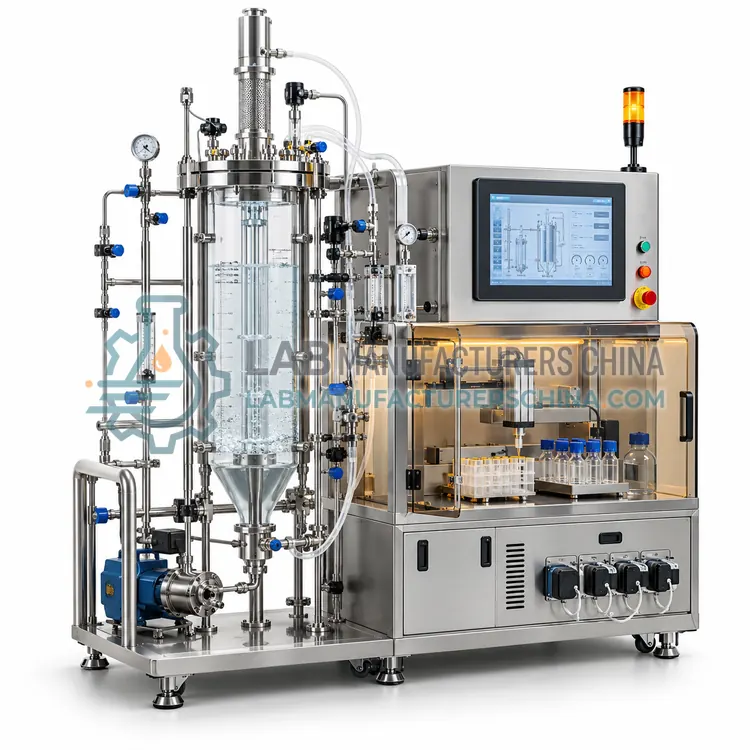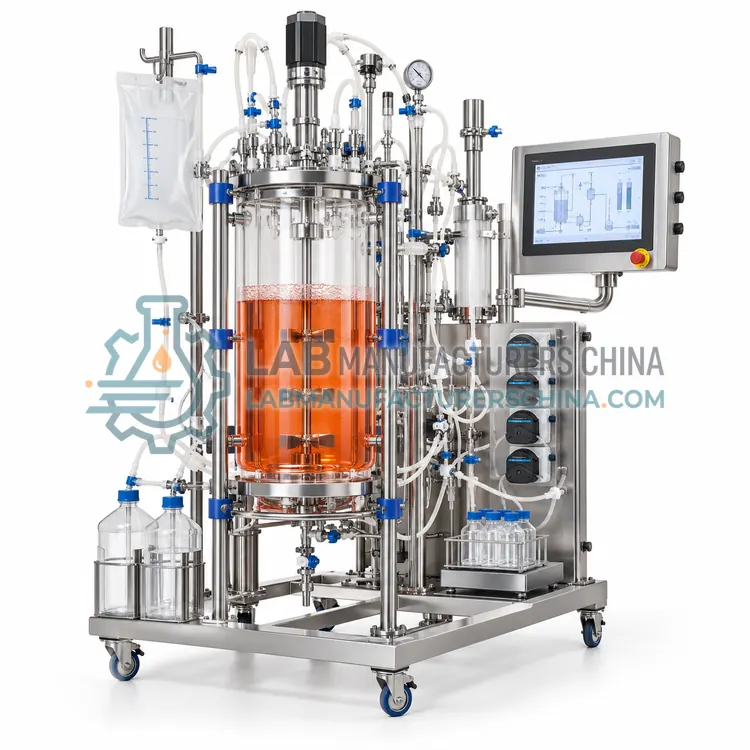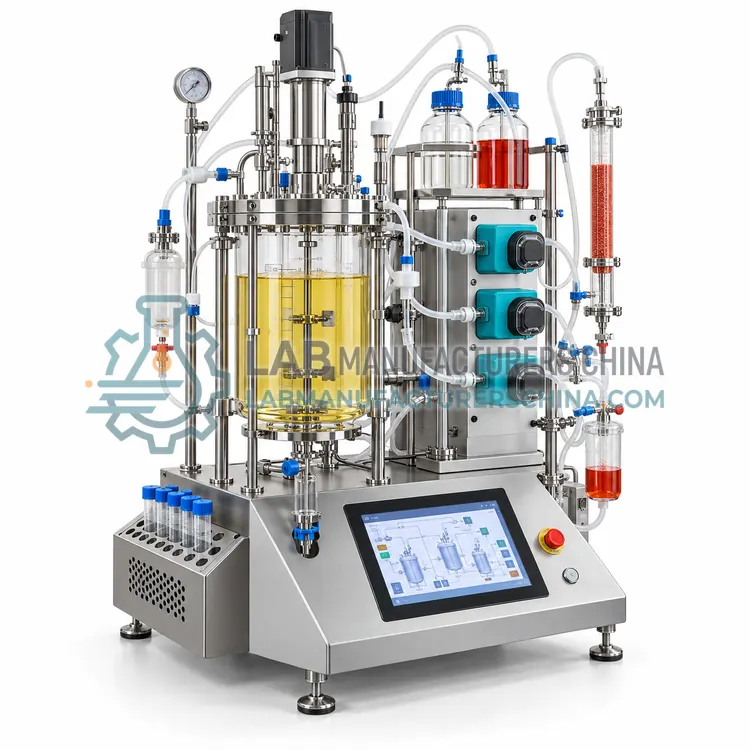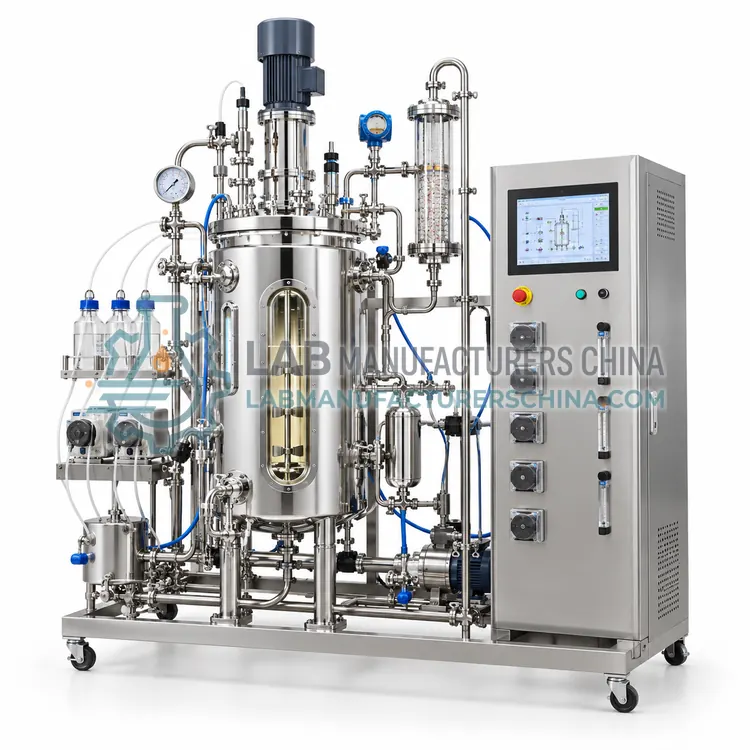
Pilot Two-Stage Fermentation System
中试两阶段发酵系统
- SKU PIF-0005
- Pilot Fermenters
- CE (to be confirmed)
- ISO 9001 manufacturing (to be confirmed)
- Pressure vessel compliance (to be confirmed)
Price on request — FOB / CIF quoted per order
Prices depend on configuration, quantity and destination port.
Key specifications
| Stage 1 volume | 10–100 L |
|---|---|
| Stage 2 volume | 50–500 L |
| Transfer method | Sterile pressure or pump |
| Temperature range | 10–60 °C, ±0.2 °C |
| pH control | Independent per stage |
| Dissolved oxygen control | Independent per stage |
Request a quote Download brochure · to be provided
By Lab Manufacturers China Technical TeamLast reviewed Standards: EU GMP Annex 1, EU GMP Annex 11, 21 CFR Part 11
What is the Pilot Two-Stage Fermentation System?
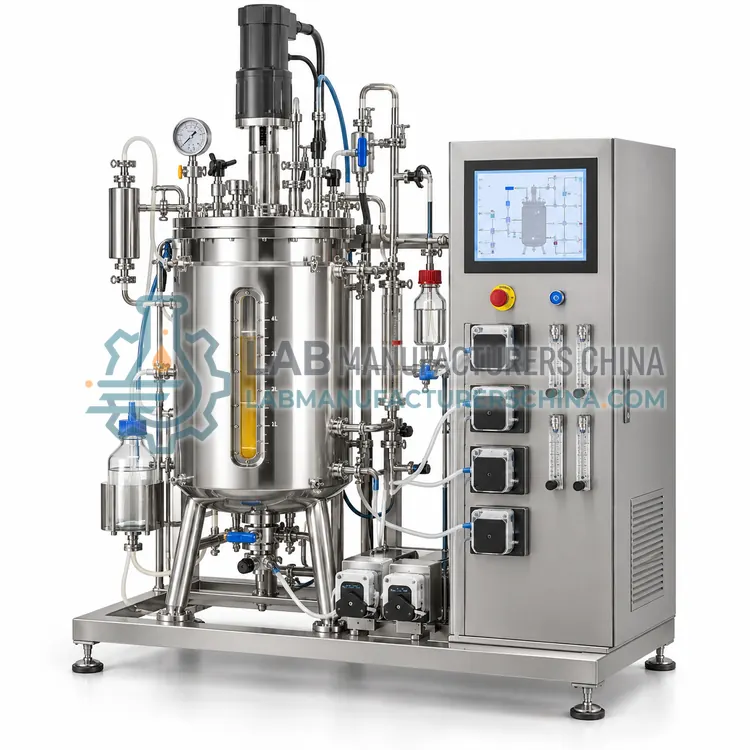
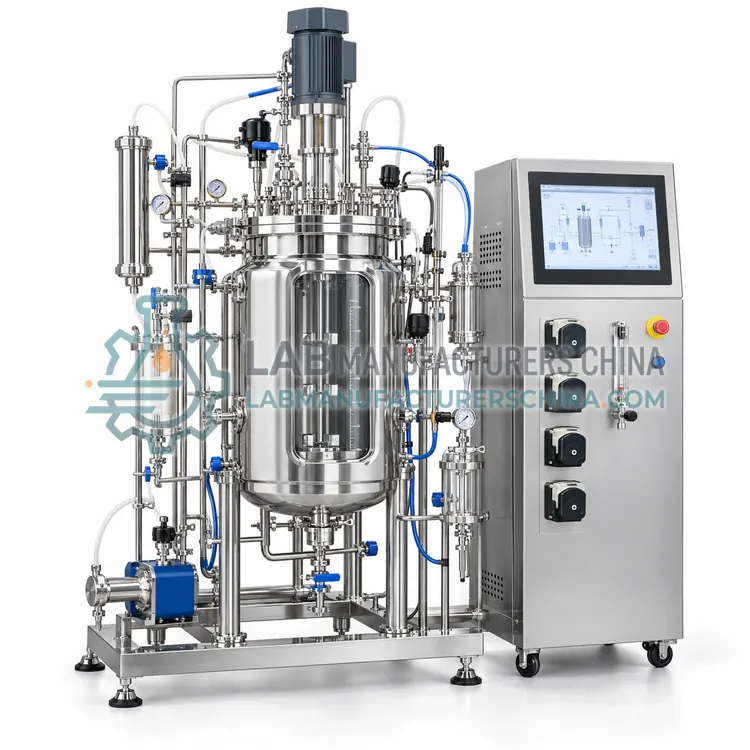
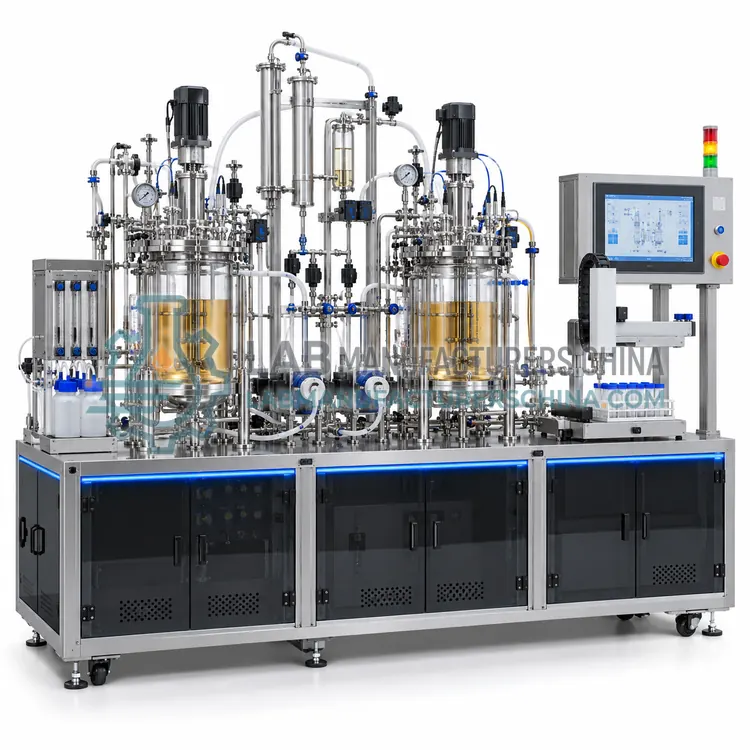
A pilot two-stage fermentation system connects a seed vessel to a production vessel so cells grow first and produce product under optimized conditions. It supports processes where growth and product formation need different conditions.
What is the Pilot Two-Stage Fermentation System?
A pilot two-stage fermentation system connects a seed vessel to a production vessel so cells grow first and produce product under optimized conditions. It supports processes where growth and product formation need different conditions.
Overview
A pilot two-stage fermentation system uses a smaller first-stage vessel to build a healthy, active inoculum or biomass, which is then transferred to a larger second-stage vessel for production. The stages can differ in medium, temperature, pH, aeration or inducer addition so that growth and product formation are optimized separately. Transfer may be by sterile pressure or pump through a sterilized line, and the receiving vessel must be ready with the correct medium and conditions. Control systems coordinate both vessels, and some designs run the second stage as fed-batch or continuous. Two-stage operation is common for secondary metabolites, recombinant protein induction and processes where a growth phase followed by a production phase improves yield. It requires careful timing, sterility during transfer and clear transfer criteria.
How does it work?
A pilot fermenter applies the same biological principles as a laboratory vessel but at a scale where mixing, oxygen transfer and heat removal behave differently. Agitation by a larger impeller and higher gas flow increase oxygen transfer, described by the volumetric mass-transfer coefficient, while a jacket or coil removes the greater metabolic heat load. Sensors for temperature, pH, dissolved oxygen, pressure and often foam or redox are placed so that readings represent the bulk liquid, and cascade control adjusts agitation, gas flow and back pressure to hold dissolved oxygen. Because mixing time and tip speed cannot all be kept equal to the laboratory scale, engineers choose the most critical criterion for the process and verify performance. Pilot vessels are usually stainless steel with clean-in-place and sterilize-in-place capability, and they include defined sampling and harvest points.
What are the key features?
- Seed vessel linked to a production vessel
- Independent control for each stage
- Sterile transfer between vessels
- Separate optimization of growth and production
- Second stage operable as fed-batch or continuous
What are the technical specifications?
A typical pilot two-stage fermentation system configuration offers stage 1 volume of 10–100 L, stage 2 volume of 50–500 L, transfer method of Sterile pressure or pump, temperature range of 10–60 °C, ±0.2 °C, pH control of Independent per stage and dissolved oxygen control of Independent per stage. Values are indicative of the product class; the exact figures for each configuration are confirmed on the quotation and the calibration documents supplied with the instrument.
Which applications is it used for?
The Pilot Two-Stage Fermentation System is used in secondary metabolite production, recombinant protein induction, seed train scale-up and two-phase process development. Across the wider Pilot Fermenters class, laboratories also deploy it for scale-up verification, pilot and clinical batch production and enzyme and metabolite production.
Which standards and certifications apply?
Relevant standards and methods include EU GMP Annex 1, EU GMP Annex 11, 21 CFR Part 11, 21 CFR Part 211, GB/T 150, USP <87>, USP <88>, ICH Q11 and IEC 61010-1. Certification candidates for this model are CE, ISO 9001 manufacturing and Pressure vessel compliance; each is to be confirmed for the specific configuration before shipment, and certificates are supplied only where they have been issued.
Qualify the vessel after installation with pressure and temperature tests and confirm cleaning and sterilization performance with documented procedures. Calibrate all probes and verify sensor placement so that readings reflect bulk conditions. Establish scale-up criteria before the first run, such as constant volumetric mass-transfer coefficient, tip speed or mixing time, and document which was chosen and why. Monitor foam, heat removal and dissolved oxygen closely, since these are the usual failure modes when moving up in scale. Keep batch records that capture setpoints, deviations and offline measurements. Manage utility supply, gaskets and seals as routine maintenance items, and review alarms after each campaign.
How do I select the right Pilot Two-Stage Fermentation System?
Choose a two-stage system when growth and production need different conditions or when a defined seed train must be established. In an RFQ specify both vessel volumes, transfer method, independent control requirements, sterilization design and coordination software.
How does it compare with other Pilot Fermenters variants?
Size the vessel to reproduce the most important laboratory parameter and to produce enough material for the next step, whether that is a clinical batch, a trial product quantity or data for production design. Decide between stainless steel, which suits repeated campaigns and higher pressures, and single-use, which shortens changeover. Confirm that the geometry, impeller type and gas handling can match the linear velocity or mass-transfer rate you intend to hold constant. List the control loops and their ranges, the number of feed, sampling and harvest ports, and whether redox, exhaust gas analysis or back-pressure control are needed. Evaluate clean-in-place and sterilize-in-place design, material certificates, records and the ability to transfer recipes to production vessels. Check service access and utility requirements before installation.
Full specifications
| Stage 1 volume | 10–100 L |
|---|---|
| Stage 2 volume | 50–500 L |
| Transfer method | Sterile pressure or pump |
| Temperature range | 10–60 °C, ±0.2 °C |
| pH control | Independent per stage |
| Dissolved oxygen control | Independent per stage |
| Sterilization | Sterilize in place with steam |
| Control | Coordinated multi-vessel control system |
Indicative values for this product class. Final specifications are confirmed on the quotation and in the calibration documents supplied with the instrument.
Applications
- Secondary metabolite production
- Recombinant protein induction
- Seed train scale-up
- Two-phase process development
Key features
- Seed vessel linked to a production vessel
- Independent control for each stage
- Sterile transfer between vessels
- Separate optimization of growth and production
- Second stage operable as fed-batch or continuous
Frequently asked questions about Pilot Two-Stage Fermentation System
A single vessel imposes the same conditions throughout, whereas two stages allow the growth phase and the production phase to use different media, temperatures and inducer timing. This often improves titre for secondary metabolites and induced recombinant products.
The transfer line is sterilized with steam, connections are made aseptically, and the receiving vessel is held at slight positive pressure during transfer. The receiving vessel is also prepared with sterile medium and verified conditions before the transfer begins.
Transfer usually occurs when the first stage reaches a defined cell density, growth stage or physiological state, which may be judged by optical density, cell count or metabolite level. Clear criteria keep batches consistent and avoid transferring too early or too late.
It verifies that a process developed at bench scale still behaves as expected at larger volume, and it produces enough material for clinical trials, product evaluation or production design. It also exposes scale-dependent effects such as oxygen limitation or poor heat removal.
Constant volumetric mass-transfer coefficient, constant tip speed, constant power per volume and constant mixing time cannot all be held at once. The team selects the criterion most related to product quality or yield, applies it, and verifies performance at the pilot scale before transferring to production.
Stainless steel suits repeated campaigns, high pressures and steam sterilization, and can be validated for many years of use. Single-use suits multi-product or clinical work where cleaning validation between products would be costly, but volume, pressure and extractables data must be considered.
Related models