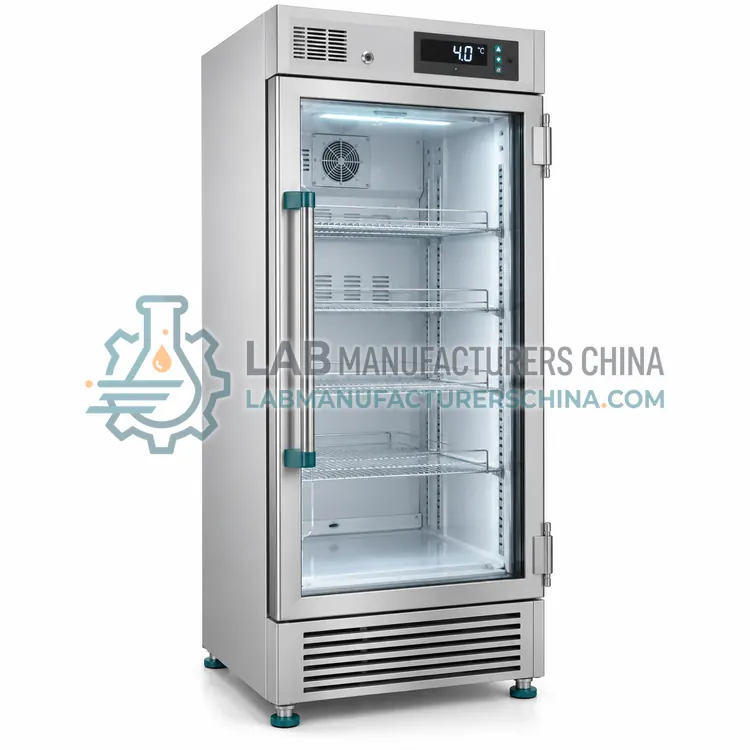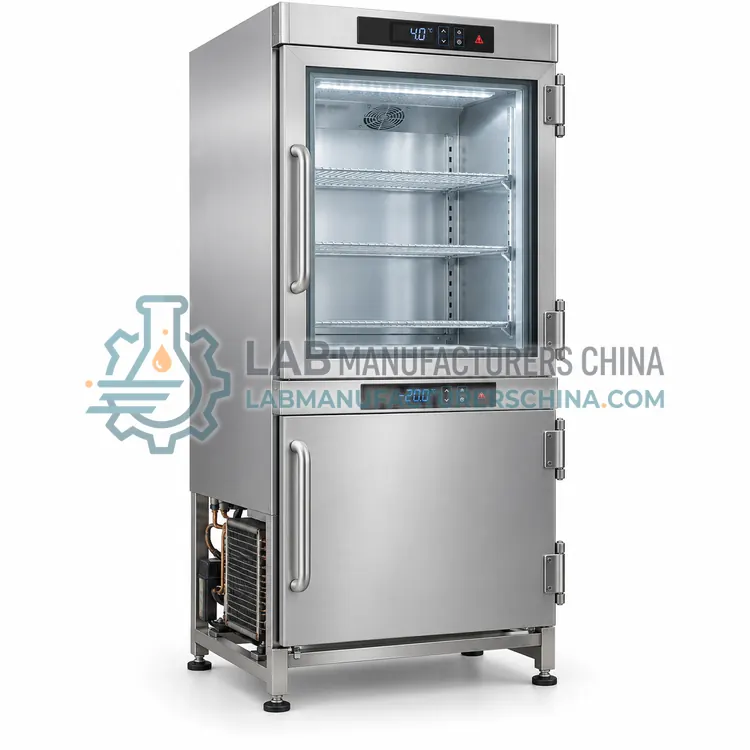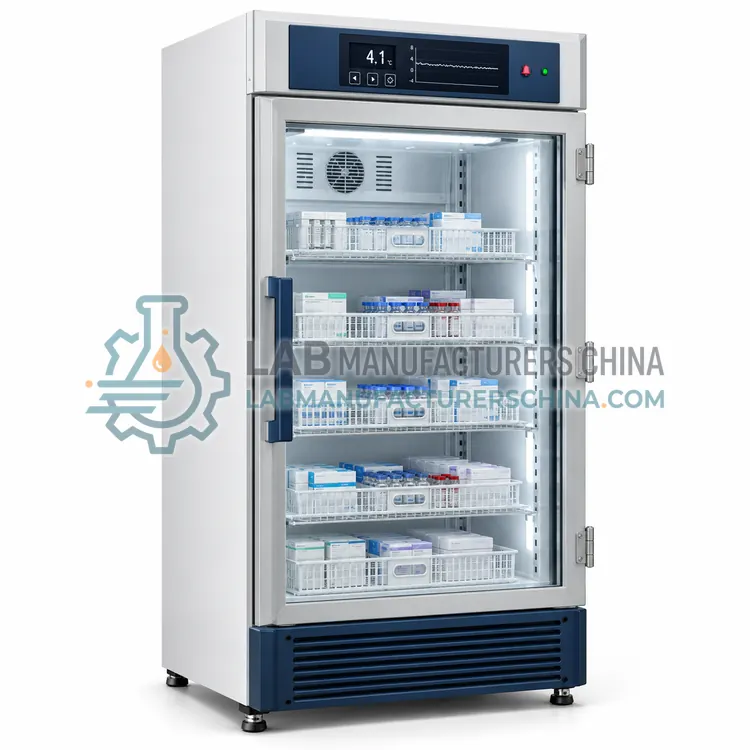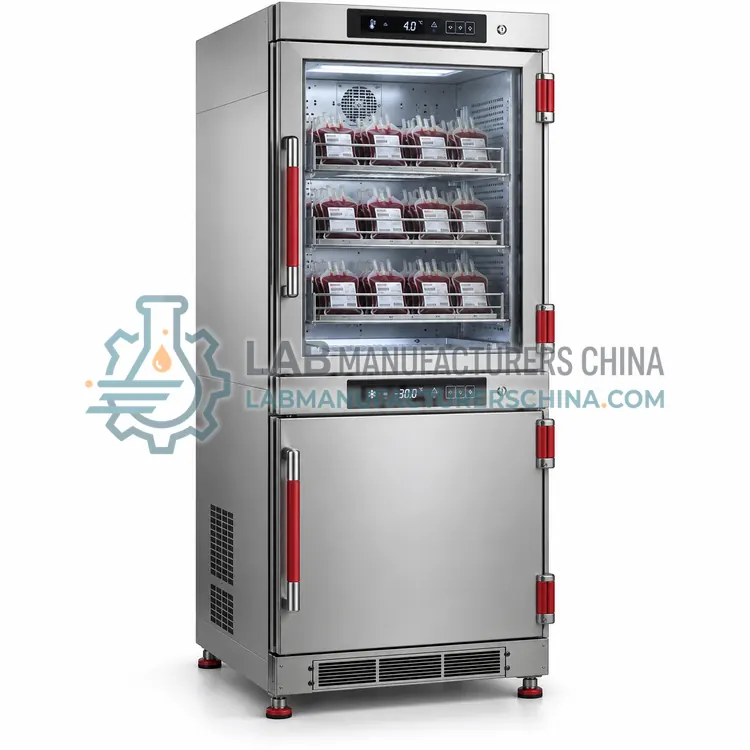
Double-Door Upright Pharmacy Refrigerator
双门立式药品冷藏箱
- SKU PHR-0003
- Pharmacy Refrigerators
- CE (to be confirmed)
- ISO 9001 manufacturing (to be confirmed)
- ISO 13485 manufacturing (to be confirmed)
Price on request — FOB / CIF quoted per order
Prices depend on configuration, quantity and destination port.
Key specifications
| Temperature range | 2–8 °C |
|---|---|
| Net volume | 800–1500 L |
| Compartments | 2 independent doors |
| Temperature uniformity | ≤ 3 K at 5 °C set point |
| Cooling method | Forced-air, dual evaporator fans |
| Refrigerant | R290 or R134a |
Request a quote Download brochure · to be provided
By Lab Manufacturers China Technical TeamLast reviewed Standards: WHO PQS E003 refrigerators and freezers, WHO Good Distribution Practices for pharmaceutical products (TRS 957 Annex 5), EU GDP Guidelines 2013/C 343/01
What is the Double-Door Upright Pharmacy Refrigerator?
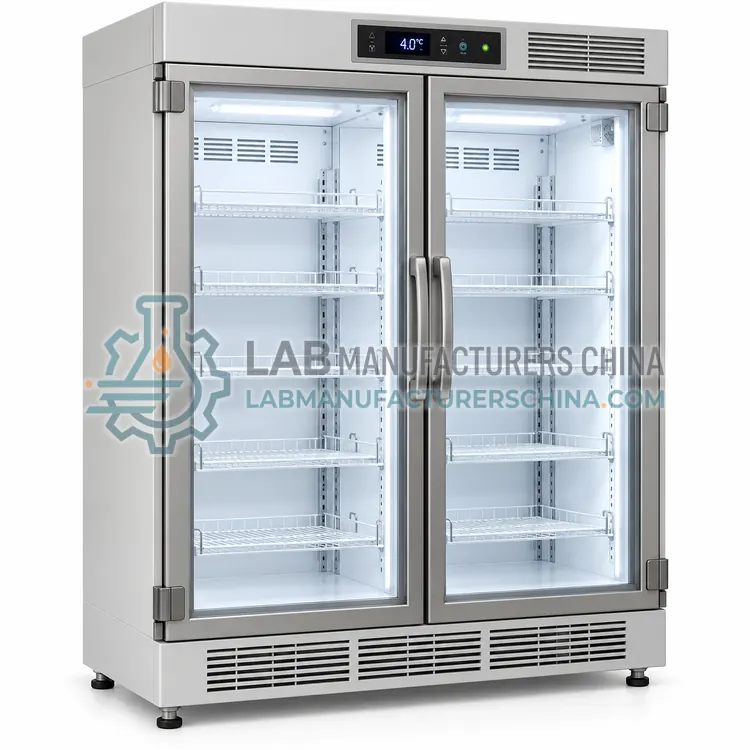
A large 2–8 °C upright with two doors and roughly 800–1500 L net volume, for central hospital pharmacies and distribution stores. Independent doors limit cold loss, and the larger evaporator supports frequent access and high stock turnover.
What is the Double-Door Upright Pharmacy Refrigerator?
A large 2–8 °C upright with two doors and roughly 800–1500 L net volume, for central hospital pharmacies and distribution stores. Independent doors limit cold loss, and the larger evaporator supports frequent access and high stock turnover.
Overview
A double-door upright offers 800–1500 L across two compartments, each with its own door and shelving, so opening one door disturbs only part of the cabinet. Higher-capacity compressors, often with two evaporator fans, recover to set point within roughly 15–30 minutes after a door opening at normal ambient temperature. Controllers frequently support dual sensors, a defrost cycle that avoids warm excursions, and automatic alarm dialling or relay output to a building monitoring system. The cabinet height is typically 1900–2000 mm, and some models include stainless interiors for easier cleaning. Drawer or basket options allow pharmacy picking by product type. Since the stock is large, a backup power plan or connection to a generator-backed circuit deserves particular attention.
How does it work?
A pharmacy refrigerator removes heat from an insulated cabinet with a vapour-compression circuit: a compressor, condenser, expansion device and evaporator circulate refrigerant, typically R600a, R290 or R134a. A fan moves air over the evaporator and through the cabinet, which equalises temperature and speeds recovery after door opening. A microprocessor controller reads an air or buffered probe and cycles the compressor around the set point, normally 5 °C. Independent sensors drive high and low alarms, door-ajar warnings and power-failure alerts. Insulation of polyurethane foam, a sealed door gasket and, in some models, a heated glass door limit heat gain and condensation. Data loggers record temperature for audit. Performance is judged by uniformity, stability, recovery time and hold-over during power loss.
What are the key features?
- Two independent compartments reduce cold loss on each door opening
- Two evaporator fans support recovery within about 15–30 minutes
- Dual sensors with relay output for building monitoring systems
- Stainless steel interior option for easier cleaning
- Drawer and basket options for picking by product type
What are the technical specifications?
A typical double-door upright pharmacy refrigerator configuration offers temperature range of 2–8 °C, net volume of 800–1500 L, compartments of 2 independent doors, temperature uniformity of ≤ 3 K at 5 °C set point, cooling method of Forced-air, dual evaporator fans and refrigerant of R290 or R134a. Values are indicative of the product class; the exact figures for each configuration are confirmed on the quotation and the calibration documents supplied with the instrument.
Which applications is it used for?
The Double-Door Upright Pharmacy Refrigerator is used in central hospital pharmacy, pharmaceutical distribution store, bulk vaccine holding and biologics stock storage. Across the wider Pharmacy Refrigerators class, laboratories also deploy it for hospital pharmacy stock, vaccine storage and insulin and biologics.
Which standards and certifications apply?
Relevant standards and methods include WHO PQS E003 refrigerators and freezers, WHO Good Distribution Practices for pharmaceutical products (TRS 957 Annex 5), EU GDP Guidelines 2013/C 343/01, USP <1079> Good Storage and Distribution Practices, IEC 61010-1 and ISO 13485. Certification candidates for this model are CE, ISO 9001 manufacturing and ISO 13485 manufacturing; each is to be confirmed for the specific configuration before shipment, and certificates are supplied only where they have been issued.
Install the cabinet on a level floor away from heat sources and direct sunlight, leaving the ventilation clearance in the manual, and let it stabilise for several hours before loading. Validate the cabinet by temperature mapping at empty and loaded conditions, and calibrate probes against a traceable reference at least annually. Clean the condenser every few months, check door gaskets and verify alarms regularly. Keep stock away from the evaporator outlet. Retain temperature records and excursion reports for the period required by your regulator. Good practice guidance, such as WHO and national pharmacy rules, sets expectations for monitoring and response.
How do I select the right Double-Door Upright Pharmacy Refrigerator?
Select a double-door model when stock exceeds about 500 L or when several staff access the cabinet throughout the day. Specify volume, door split, sensor count, relay or network output, and ceiling clearance for the taller cabinet. For regulated stock, add temperature mapping and alarm verification to the purchase requirements.
How does it compare with other Pharmacy Refrigerators variants?
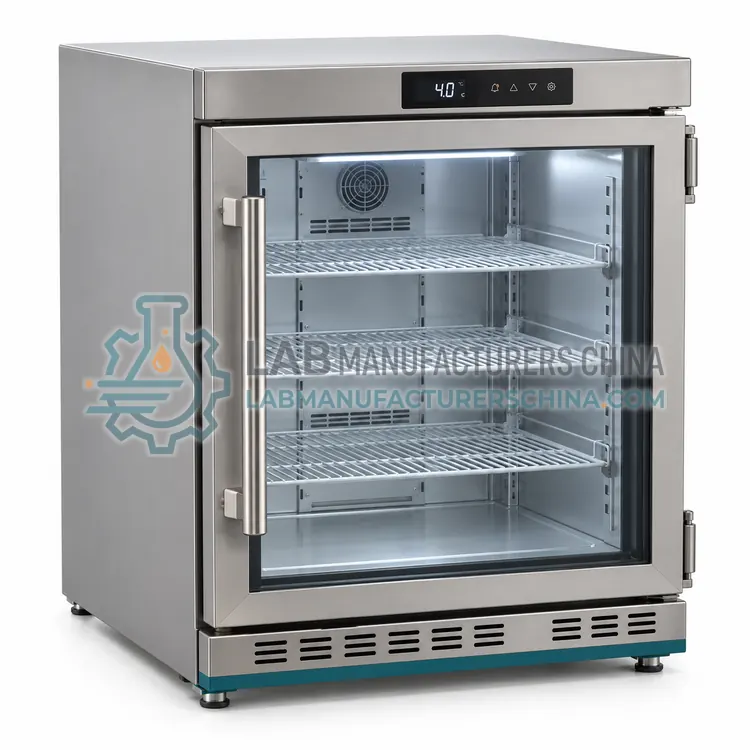
Start from what is stored and how much. Small volumes of routine medicines fit an undercounter unit, typical dispensary stock fits a single-door upright, and central stores need a double-door cabinet. Vaccines call for a dedicated model with buffered probe, data logging and verified hold-over time. Consider uniformity (about 3 K or better), recovery after door opening, alarm set, interface to monitoring systems and door type. Check whether the refrigerant and energy use match local rules, and confirm the ambient temperature range, since a cabinet rated for 32 °C may struggle in a hot storeroom. Combination units suit small sites with frozen items.
Full specifications
| Temperature range | 2–8 °C |
|---|---|
| Net volume | 800–1500 L |
| Compartments | 2 independent doors |
| Temperature uniformity | ≤ 3 K at 5 °C set point |
| Cooling method | Forced-air, dual evaporator fans |
| Refrigerant | R290 or R134a |
| Sensors | Dual, with independent alarm probe |
| Defrost | Automatic, off-cycle |
| External height | 1900–2000 mm |
| Power supply | 220–240 V, 50 Hz |
Indicative values for this product class. Final specifications are confirmed on the quotation and in the calibration documents supplied with the instrument.
Applications
- Central hospital pharmacy
- Pharmaceutical distribution store
- Bulk vaccine holding
- Biologics stock storage
Key features
- Two independent compartments reduce cold loss on each door opening
- Two evaporator fans support recovery within about 15–30 minutes
- Dual sensors with relay output for building monitoring systems
- Stainless steel interior option for easier cleaning
- Drawer and basket options for picking by product type
Frequently asked questions about Double-Door Upright Pharmacy Refrigerator
Each door exposes only its own compartment, so a smaller volume of cold air escapes per opening and the other compartment stays stable. This shortens recovery time and reduces compressor cycling compared with a single large-door cabinet of the same capacity.
A cabinet of this size typically draws 300–600 W and a high start-up current, so a dedicated circuit with a suitable breaker is advisable. Avoid sharing a circuit with other heavy loads, and consider an uninterruptible or generator-backed supply.
Many controllers provide a dry relay contact or RS-485 output that a building monitoring system can read for alarm status and temperature. Confirm the protocol and wiring with the manufacturer before installation, so the monitoring integrator can configure it correctly.
A pharmacy refrigerator is a cabinet that holds medicines, biologicals and vaccines at 2–8 °C. It differs from a domestic refrigerator by using forced-air circulation, calibrated controllers, alarms and optional data logging so stock stays within labelled limits and compliance can be shown.
Domestic refrigerators are not recommended for vaccines and sensitive medicines, because their temperature swings are wider and they lack alarms and records. Some can freeze items near the back wall. Use a purpose-built pharmacy refrigerator for regulated stock.
Most refrigerated medicines are labelled for 2–8 °C, so the cabinet is normally set near 5 °C to leave margin on both sides. Always check the labelled storage condition of each product, since a few products have narrower or different ranges.