Multiplex PCR System for Pathogen Panel Detection
病原体组合检测多重 PCR 系统
- SKU PCR-0004
- PCR
- CE (to be confirmed)
- ISO 13485 manufacturing (to be confirmed)
- IVDR (EU) 2017/746 (to be confirmed)
Price on request — FOB / CIF quoted per order
Prices depend on configuration, quantity and destination port.
Key specifications
| Optical channels | 4-6 |
|---|---|
| Multiplex targets | Up to 4-6 targets plus control |
| Block format | 96-well plate and 8-tube strip |
| Temperature uniformity | ±0.3 °C at 72 °C |
| Channels crosstalk | Below 1 percent with calibration |
| Detection sensitivity | 10-100 copies per reaction per target |
Request a quote Download brochure · to be provided
By Lab Manufacturers China Technical TeamLast reviewed Standards: ISO 13485 manufacturing, MIQE guidelines, CLSI MM03-A2
What is the Multiplex PCR System for Pathogen Panel Detection?
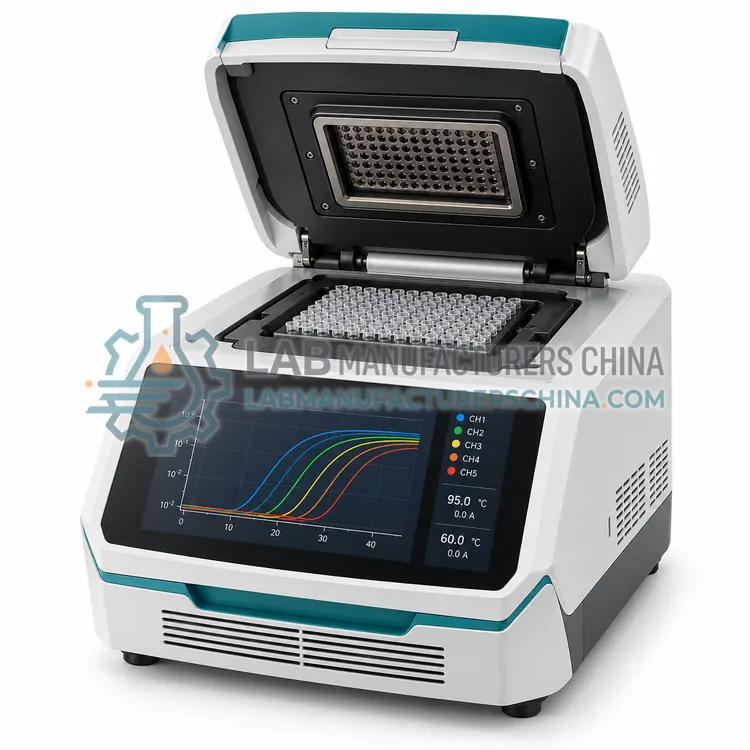
A real-time PCR instrument configured with four to six optical channels, panel software and validated reagent workflows to detect several pathogens in one reaction. It is used in clinical, veterinary and food safety testing.
What is the Multiplex PCR System for Pathogen Panel Detection?
A real-time PCR instrument configured with four to six optical channels, panel software and validated reagent workflows to detect several pathogens in one reaction. It is used in clinical, veterinary and food safety testing.
Overview
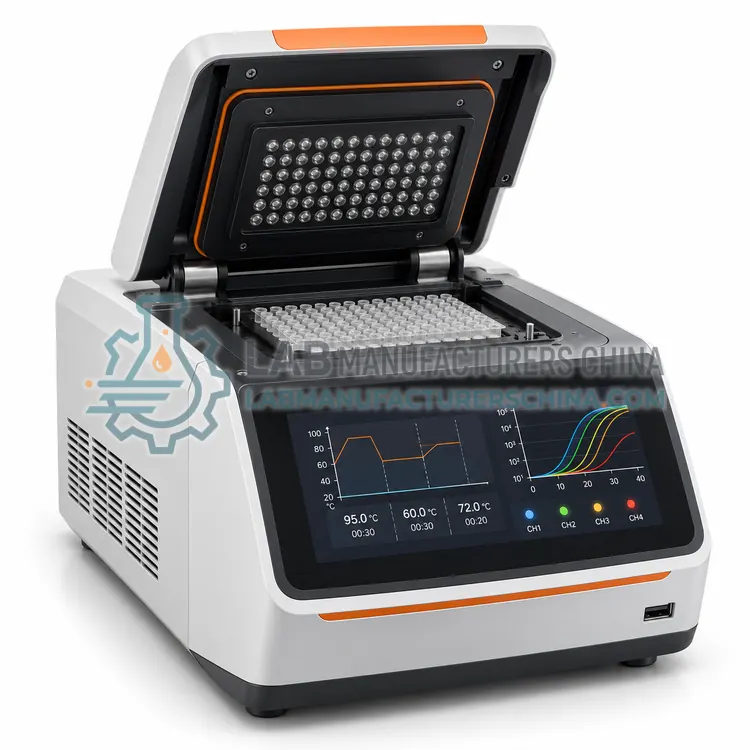
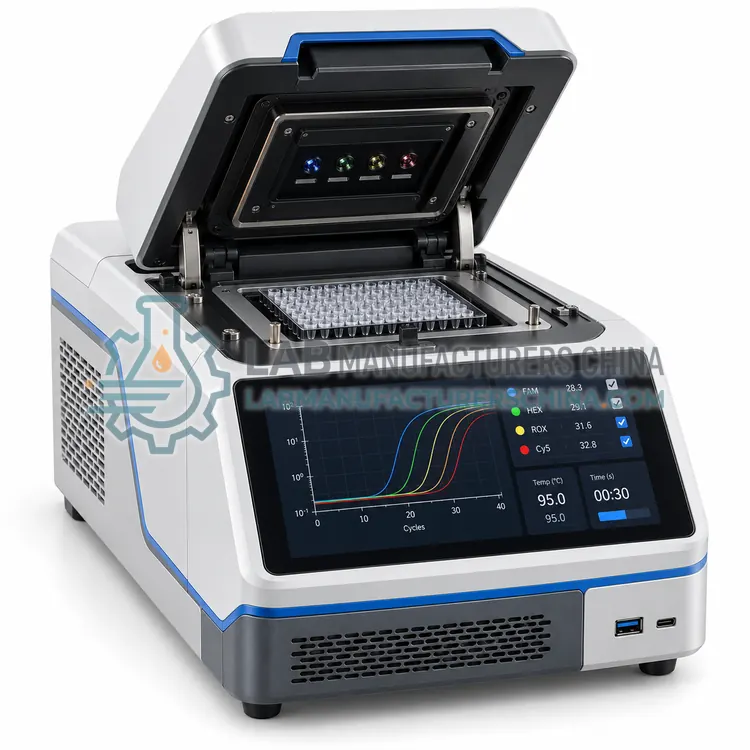
The multiplex panel system is built around a real-time PCR block with four to six optical channels so that several targets labelled with different fluorophores can be measured in the same well, alongside an internal amplification control. Filter sets, LED sources and crosstalk calibration ensure that signals from one channel do not leak into another, and dedicated software maps wells to panel targets, applies per-target thresholds and reports results as detected or not detected with Ct values. Workflows are usually supplied with primer and probe mixes, positive controls and extraction protocols, and the instrument accepts 96-well plates and sometimes 8-tube strips for lower throughput. Validation, contamination control and result interpretation follow the same rules as single-target assays, but panel design must avoid primer interactions between targets.
How does it work?
PCR copies a target sequence with a thermostable DNA polymerase such as Taq, two primers that flank the target, deoxynucleoside triphosphates and a buffer. A thermal block cycles the reaction from about 95 °C, where double-stranded DNA separates, to 50 to 65 °C for primer annealing, then 72 °C for extension. Repeating 25 to 45 cycles doubles the product each round, so amplification is exponential while reagents last. Endpoint cyclers read the product afterwards on a gel or capillary system, while real-time instruments measure fluorescence each cycle using an intercalating dye or a hydrolysis probe, and the cycle threshold reflects the starting template amount. Quantitative results need a standard curve or reference gene, and melting curve analysis checks product specificity or detects sequence variants by high-resolution melting. Reverse transcription adds a step for RNA targets.
What are the key features?
- Four to six optical channels for multiplexed targets.
- Crosstalk calibration between fluorophore channels.
- Panel software mapping wells to specific targets.
- Internal amplification control in every reaction.
- Reports Ct values and detected or not detected results.
- Compatible with 96-well plates and 8-tube strips.
What are the technical specifications?
A typical multiplex pcr system for pathogen panel detection configuration offers optical channels of 4-6, multiplex targets of Up to 4-6 targets plus control, block format of 96-well plate and 8-tube strip, temperature uniformity of ±0.3 °C at 72 °C, channels crosstalk of Below 1 percent with calibration and detection sensitivity of 10-100 copies per reaction per target. Values are indicative of the product class; the exact figures for each configuration are confirmed on the quotation and the calibration documents supplied with the instrument.
Which applications is it used for?
The Multiplex PCR System for Pathogen Panel Detection is used in respiratory and enteric pathogen panels, foodborne pathogen screening, veterinary infectious disease testing and water and environmental pathogen monitoring. Across the wider PCR class, laboratories also deploy it for gene expression analysis and transcript quantification, pathogen detection in clinical and food samples and genotyping and mutation screening.
Which standards and certifications apply?
Relevant standards and methods include ISO 13485 manufacturing, MIQE guidelines, CLSI MM03-A2, CLSI MM06-A2, IEC 61010-1 and IVDR (EU) 2017/746. Certification candidates for this model are CE, ISO 13485 manufacturing and IVDR (EU) 2017/746; each is to be confirmed for the specific configuration before shipment, and certificates are supplied only where they have been issued.
Keep pre-amplification and post-amplification work in separate areas with dedicated pipettes and filter tips, because carryover of amplicon is the main cause of false positives. Clean surfaces and equipment with fresh hypochlorite or a validated decontaminant, use UV where available and change gloves often. Calibrate block temperature and optical channels annually with a reference thermometer and dye plate, and check uniformity across the block. Verify performance with positive and negative controls and a standard curve in every run, and record Ct, efficiency and melt temperatures. Store primers and probes in small aliquots at the recommended temperature to avoid repeated freeze-thaw cycles, and protect fluorescent probes from light.
How do I select the right Multiplex PCR System for Pathogen Panel Detection?
Select this configuration when several targets must be reported from one sample, which saves reagent, sample and operator time. Confirm the number of channels needed for your panel including the internal control, ask for crosstalk data from a dye calibration plate, and check that the software supports the panel layouts and reporting format you use. Validate panel sensitivity per target before routine use.
How does it compare with other PCR variants?
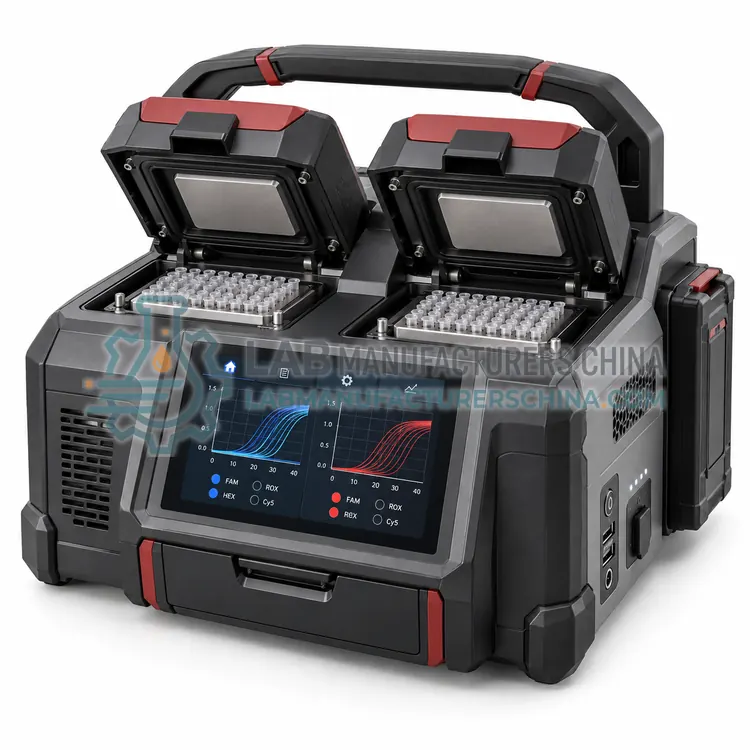
Decide first whether you need qualitative detection, relative or absolute quantification, or sequence variant discrimination, because that separates endpoint cyclers from real-time and melt systems. Next, set the number of optical channels, since multiplex panels need two to six channels and matching filter sets. Throughput follows the plate format: 96 wells suits most laboratories, while 384-well plates and automation fit high-volume screening. Check block type, maximum ramp rate, temperature uniformity and gradient capability, which help with new primer sets. For field work, consider size, power options and tolerance of ambient temperature. Confirm analysis software, export formats, primer and probe support, and the validation documentation your quality system requires.
Full specifications
| Optical channels | 4-6 |
|---|---|
| Multiplex targets | Up to 4-6 targets plus control |
| Block format | 96-well plate and 8-tube strip |
| Temperature uniformity | ±0.3 °C at 72 °C |
| Channels crosstalk | Below 1 percent with calibration |
| Detection sensitivity | 10-100 copies per reaction per target |
| Excitation range | 450-680 nm |
| Run time | 60-120 min for 45 cycles |
| Software | Panel mapping, thresholds, report generation |
| Power supply | 220 V, 50 Hz, 600-1,000 W |
Indicative values for this product class. Final specifications are confirmed on the quotation and in the calibration documents supplied with the instrument.
Applications
- Respiratory and enteric pathogen panels
- Foodborne pathogen screening
- Veterinary infectious disease testing
- Water and environmental pathogen monitoring
Key features
- Four to six optical channels for multiplexed targets.
- Crosstalk calibration between fluorophore channels.
- Panel software mapping wells to specific targets.
- Internal amplification control in every reaction.
- Reports Ct values and detected or not detected results.
- Compatible with 96-well plates and 8-tube strips.
Frequently asked questions about Multiplex PCR System for Pathogen Panel Detection
Practical limits are four to six targets including the internal control, because each needs a distinguishable fluorophore. Adding targets also raises the risk of primer interactions and reduced sensitivity for low-abundance targets.
If signal from one fluorophore bleeds into another channel, a negative target can appear positive. Dye calibration plates quantify this leakage, and software compensation or careful filter selection keeps it below about one percent.
Often yes, if the software supports editable panel definitions and the reagent mixes are open. Closed, target-specific cartridge formats limit flexibility, so confirm whether you can add or replace targets without replacing the instrument.
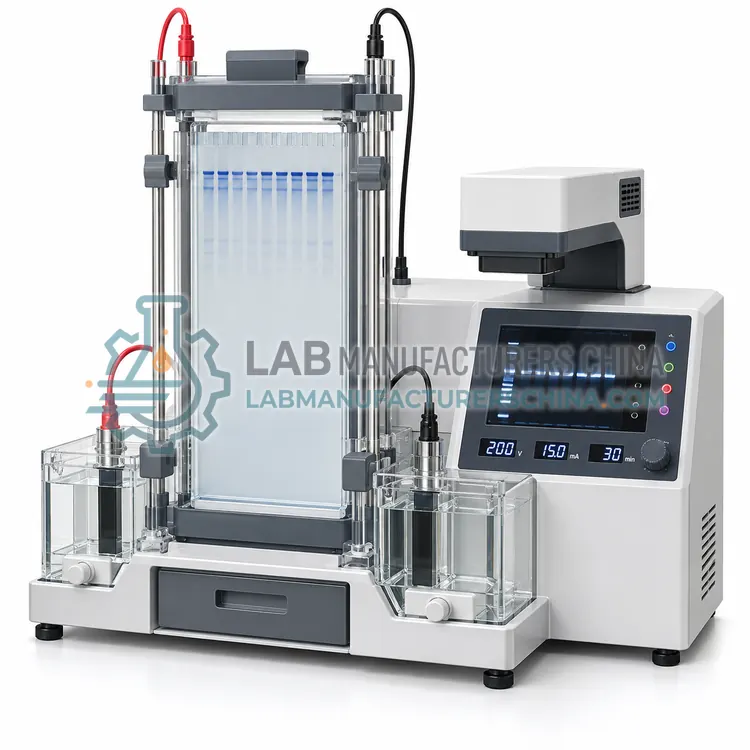
Endpoint PCR amplifies the target and the product is analysed afterwards, usually by gel electrophoresis. Real-time PCR measures fluorescence during each cycle, which gives quantitative data, a cycle threshold value and a melting curve without opening the tube.
Most protocols use 25 to 45 cycles. Fewer cycles are used for abundant targets or quantitative work, while more may be needed for low-copy templates. Excess cycles increase non-specific products and background fluorescence.
Wells at different temperatures amplify at different rates, which shifts cycle threshold values between replicates. Uniformity within about ±0.3 to 0.5 °C across the block keeps replicates comparable and improves quantitative accuracy.